
How to Pass a Retail Chain Sunglasses Vendor Review
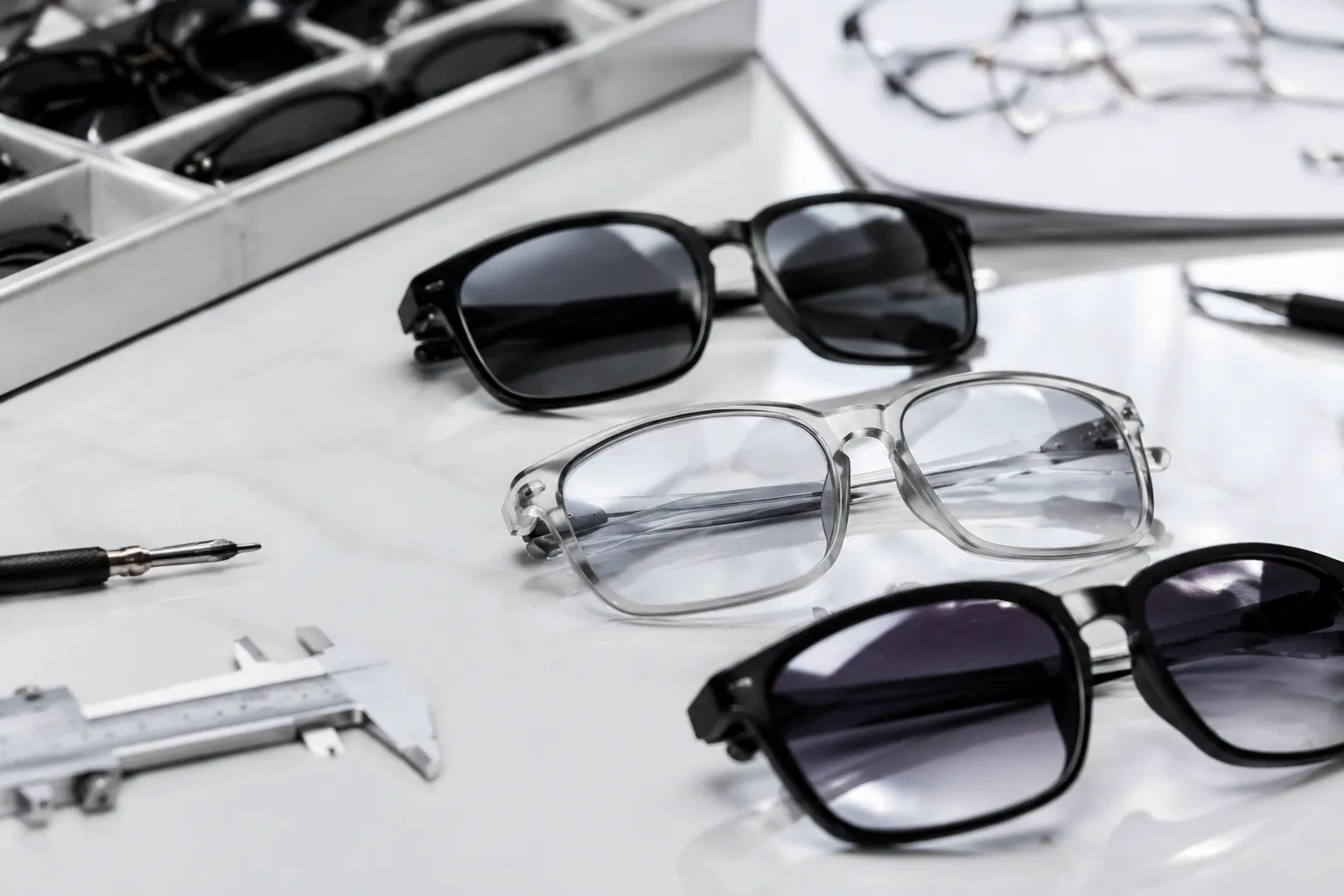
This guide is for brand owners, importers, distributors, and retailers trying to get a sunglasses line approved by a retail chain buyer. Attractive renders do not win review. Accurate specs do. So do complete paperwork, repeatable quality, and service levels that hold up under reorders. If you source from China, this article shows what chain buyers usually check, where suppliers fail, and how to build a program that can survive vendor review and replenishment.
What chain buyers screen for first
Retail chain vendor review usually starts with three questions: can you sell the same item again, can you prove it meets the required compliance standard, and can you deliver on time without changing the product from batch to batch. If any one of those breaks, approval slows down or stops.
For sunglasses, buyers usually check fit, lens performance, labeling, packaging, test reports, and whether the factory can support forecasted replenishment. They are not looking for a one-off sample hero. They want a controlled program with proof.
A supplier with in-house injection molding, acetate cutting, CNC milling, lens tinting, decoration, and QC can be easier to evaluate if those processes are actually controlled. Buyers care less about the machine list. They care about stable dimensions, stable color, stable lens transmission, and stable lead time.
Do not pitch "we can do everything." Pitch the exact style range, the compliance path, and the replenishment plan.
Buyers also look for practical limits. A low MOQ helps with initial testing, but chain programs usually need a clear price ladder and a realistic scale-up plan. If you cannot explain where the cost changes at higher quantities and what changes in production, the buyer may assume the quote is incomplete.
Build around one repeatable spec set
Most vendor reviews go better when the line is narrow. Pick a frame family, not a random mix of shapes. For example: one injection frame, one acetate frame, and one metal-acetate hybrid. Keep lens geometry and temple length consistent across the range so the chain can understand fit and presentation. Simple helps.
Use a controlled spec sheet for every SKU. At minimum it should lock down frame width, lens width, bridge, temple length, weight target, hinge type, lens category, coating type, logo method, carton count, and carton dimensions. If a buyer sees vague language like "premium material" or "high quality finish," they usually treat it as a sign that the supplier has not locked the product.
Practical tolerances matter. On sunglasses, small deviations are visible at retail. The production target should be tight enough that lens seating, temple symmetry, and opening force stay consistent from sample to bulk. If your supplier cannot explain how repeatability is controlled in molding, CNC machining, or acetate cutting, that is a risk.
Start with fewer colors. Three frame colors and two lens tints are usually easier to approve than a wide color set. Keep one core black, one tortoise or brown acetate look, and one seasonal color if the buyer asks for it.
- Lock one frame family first.
- Limit color count in the first submission.
- Use one logo method per model.
- Keep packaging consistent across SKUs.
Compliance file: what to submit
Compliance is where suppliers get into trouble by overstating what they can prove. Do not invent certifications. Only reference documents you can actually produce for the exact style and market.
For sunglasses, the relevant standards and credentials to organize around are CE EN ISO 12312-1, ANSI Z80.3, AS/NZS 1067, REACH, FDA registration, ISO 9001, and BSCI. Not every market requires all of them. The buyer will ask for the ones that apply to the destination and the product.
Chain buyers usually want the test report, scope, product mapping, and confirmation that the exact model they are buying matches the tested sample. If the sample was tested in one material and bulk is switched to another, the report may no longer be valid for the shipped product.
Organize the file by SKU and market. Europe generally requires attention to CE EN ISO 12312-1 and REACH. U.S. buyers often ask for FDA registration information and may request ANSI Z80.3 performance evidence. Australia and New Zealand buyers may ask for AS/NZS 1067. Keep the paperwork current and aligned to the product being offered.
REACH is material compliance, not a decorative badge. If a style uses pad printing, metal logo plates, coatings, or other decorated components, the supplier should be able to explain the material inputs and the risk points.
| Market | What buyers usually ask for | Supplier evidence to prepare |
|---|---|---|
| EU retail chains | CE EN ISO 12312-1, REACH | Test report, SKU match sheet, material declaration |
| U.S. retail chains | FDA registration, ANSI Z80.3 | Registration details, performance report, model BOM |
| Australia/NZ chains | AS/NZS 1067 | Conformity test report, model photos, packaging proof |
| Chain-level audits | ISO 9001, BSCI | Valid certificates, audit scope, factory address match |
Price architecture buyers can model
Retail chain buyers want a price ladder they can model. A flat quote for every quantity is a weak signal. Show how the cost changes at 300, 1000, and 5000+ pairs. That tells the buyer you understand material buying, line efficiency, and setup cost.
For a custom sunglasses line, the unit price depends on frame construction, lens specification, decoration, and packaging. A simple frame with basic tint and printed logo is not the same as an acetate style with CNC finishing and metal logo plates. If you state a target price, make it clear that it applies only to a defined spec.
Be explicit about cost drivers. Injection frames usually scale faster because mold cycles and material use are more predictable. Acetate styles often carry more labor in cutting, tumbling, polishing, and assembly. Extra decoration such as laser engraving, pad printing, or metal logo plates adds process steps and can increase waste risk.
Buyers also care about sample cost and whether sample credit is available against bulk. A sample in 7-10 days can be realistic if the factory already has core materials and a clear decoration method. If the sample needs new tooling or a new component, say so before promising the timeline.
- State the MOQ clearly: 50 pairs per design.
- Show price breaks at 300, 1000, and 5000+.
- Separate unit price from packaging and freight.
- Disclose whether molds or tooling are extra.
Lead times and where they slip
For chain programs, lead time is not just a number. It is a promise tied to store launch dates, advertising cycles, and replenishment windows. A sample lead time of 7-10 days and bulk lead time of 25-35 days can be workable if the spec is frozen and the order is technically simple.
The usual failure points are predictable. Artwork arrives late. The buyer changes lens tint after approval. Packaging is not signed off. Or the supplier discovers a hinge or lens supply issue after order placement. Those are not surprises. They are process gaps.
Keep the approval path short. First approve style, then sample, then packaging, then carton marks, then bulk. If all five move at once, the schedule becomes unstable. Chain buyers usually do not accept late packing changes because the warehouse and ticketing plan is already set.
If the factory has in-house injection molding, acetate cutting, CNC milling, lens tinting, decoration, and QC, that can reduce handoff delays. But the buyer still needs a written production schedule with checkpoints. Internal equipment does not replace production control.
- Approve the technical spec sheet.
- Confirm compliance documents for the target market.
- Sign off on sample and packaging together.
- Freeze artwork and carton markings.
- Start bulk only after pre-production confirmation.
QC checkpoints chain buyers expect
Retail chains do not want vague QC statements. They want to know where defects are caught and what happens when a lot fails. The strongest answer is a control plan with inspection points, defect categories, and rework rules.
On sunglasses, typical checks include lens insertion, scratch inspection, temple alignment, screw torque, opening and closing force, surface finish, logo placement, and packaging count. If you are shipping to multiple markets, also confirm that lens tint and labeling match the destination requirements.
In-house QC should not be only a final inspection. It needs upstream checks on molded parts, cut acetate parts, finished frames, and packed goods. That is how you catch drift before it becomes a carton of rejects.
Use AQL language only if you actually work to a defined sampling plan. Buyers appreciate clear inspection rules. They do not appreciate copied buzzwords without a real method behind them.
One missed screw torque check can become a store return problem later. Fixing it at the factory is cheaper than fixing it in retail.
If the buyer asks about defect handling, explain the rework path, isolation process, and replacement lead time. If you cannot replace a bad lot quickly, the chain may classify you as a higher-risk supplier.
How to present the line for review
When you submit, build the package as if the buyer will forward it to quality, sourcing, and operations, because they often do.
Include a concise line sheet, spec sheet, compliance file, pricing ladder, sample lead time, bulk lead time, packaging details, and factory capability summary. Keep every document aligned. If the line sheet shows one lens tint and the test report covers another, the buyer will notice immediately.
Do not bury the manufacturing story. Say what is made in-house and what is not. If the factory performs injection molding, acetate cutting, CNC milling, lens tinting, decoration, and QC internally, say that plainly. That tells the buyer where process control sits.
Only present service-level history if it is tracked and documented. Buyers value measurable fulfillment data. They do not value unsupported claims or memory-based performance statements.
- One PDF pack per market.
- One spec sheet per SKU.
- One price ladder per style family.
- One contact for technical and commercial follow-up.
A practical approval checklist
Use this list before you send anything to a retail chain buyer. It prevents avoidable misses.
| Item | Pass condition | Common failure |
|---|---|---|
| Product spec | Dimensions, materials, logo, packaging locked | Approximate details |
| Compliance | Correct market documents attached | Wrong report for the market |
| Sample | Matches bulk intent exactly | Sample upgraded beyond bulk |
| Pricing | Clear ladder at 300/1000/5000+ | Single vague quote |
| Lead time | Sample and bulk dates stated | No schedule, only asap |
If you can pass this list, you are already ahead of many suppliers. The buyer may still negotiate hard. That is normal. What they will not do is spend time rescuing a submission that is incomplete or inconsistent.
For chain-store work, boring wins. Stable specs, honest documents, controlled lead time, and clean QC beat clever sales language every time.
Have a custom sunglasses project in mind?
Send us your styles, target market and quantities and we will return a detailed quote with MOQ, lead time and a sample plan.
Get a QuoteWhy source this from Wenzhou with LumiShades
Wenzhou in Zhejiang Province is widely regarded as China’s eyewear manufacturing capital, producing a large share of the world’s sunglasses. That concentration matters to buyers: a deep local supply chain for acetate sheet, hinges, lens blanks, plating and packaging means shorter component lead times, easier color and material matching, and a workforce with decades of eyewear-specific skill. LumiShades has manufactured in this ecosystem since 2009, and our vertical integration — in-house injection molding, acetate cutting, CNC milling, lens tinting, decoration and quality control — means no part of your order is quietly subcontracted to a workshop you cannot audit.
For international buyers, that vertical control translates into accountability. When a single factory owns every step, defects are traced and fixed at source rather than bounced between vendors, and your specifications survive intact from first sample to bulk. We back this with 15+ years of experience, shipments to 60+ countries, more than 5 million pairs produced per year and a 98.5% on-time delivery rate. Our certifications — CE EN ISO 12312-1, FDA registration, ANSI Z80.3, AS/NZS 1067, REACH, ISO 9001 and BSCI audit — mean the compliance documentation your market requires already exists. Explore our manufacturing capabilities and quality control process to see how this works in practice.
Frequently asked questions
What is the minimum order for a chain-ready custom sunglasses program? A workable starting MOQ can be 50 pairs per design, but the buyer will usually care more about scale planning than the opening quantity. Give a clear ladder for 300, 1000, and 5000+ pairs so the buyer can judge whether the line can grow into a chain program.
Which compliance documents should I prepare first? Start with the documents that match the destination market and the exact SKU. For Europe, prepare CE EN ISO 12312-1 and REACH documents. For the U.S., prepare FDA registration information and any requested ANSI Z80.3 evidence. For Australia and New Zealand, prepare AS/NZS 1067 support.
How fast should samples and bulk be if I want retail review? A sample window of 7-10 days and bulk production of 25-35 days can be workable if the spec is frozen, the materials are available, and packaging is approved early. If the style needs new tooling or a new component, the schedule should be reset before approval.
What is the fastest way to fail vendor review? The fastest way to fail is to submit vague specs, mixed documents, or a sample that does not match the intended bulk product. Buyers look for consistency across the spec sheet, test report, sample, and packing details.
What makes a supplier easier to approve? A supplier is easier to approve when the product is tightly specified, the compliance file is market-specific, the QC checkpoints are documented, and the pricing ladder explains volume breaks. In-house control helps only if it is supported by clear records and repeatable output.
Can a supplier with multiple frame processes still be chain-ready? Yes, if each process is controlled and the final SKU is stable. Injection molding, acetate cutting, CNC milling, lens tinting, decoration, and QC all support approval when the supplier can show that the tested model, bulk model, and documents all match.
Ready to start?
Explore our aviator sunglasses or request a quote — our sales team replies within 12 hours.
Request a Quote