
Low-MOQ Private Label Sunglasses That Look Premium
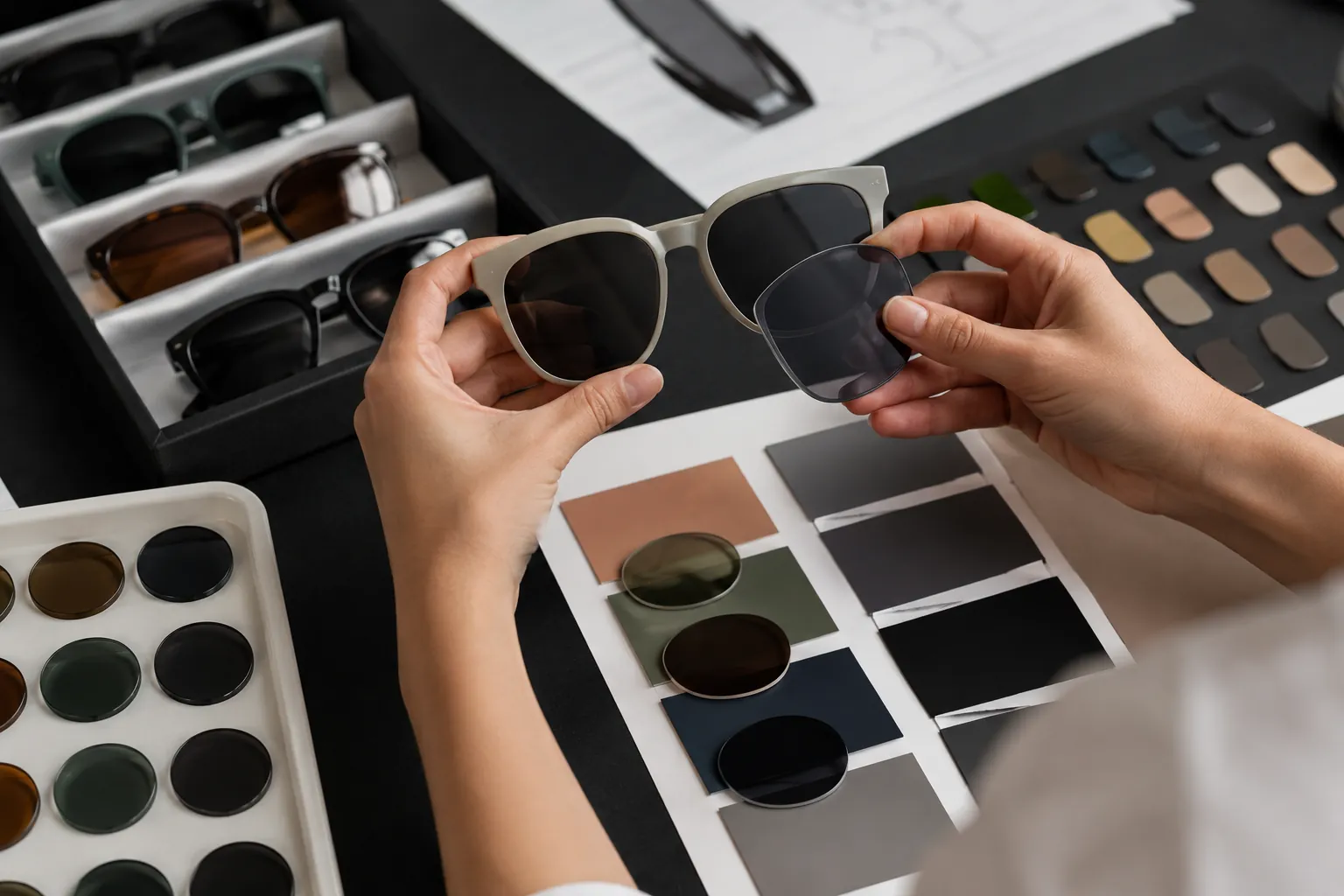
This guide is for brands, importers, distributors, and retailers that want to launch private label sunglasses without jumping into full custom development too soon. The goal is not just to place a small order. It is to make that order look like a credible retail line with consistent branding, dependable quality, and a practical path to repeat production. At low MOQ, premium results come from controlling the details buyers and end customers actually notice: frame platform, material, lens type, decoration method, packaging, compliance scope, and approval discipline. Get those decisions in the right order, and a small first run looks intentional. Get them wrong, and it looks patched together.
Start with a model strategy built for low MOQ
If your order volume is 50, 100, or 300 pairs per design, asking for a fully new mold is usually the wrong first move. New tooling adds cost, extends development time, and creates more approval points before you have even tested demand. For most first programs, a production-ready frame base is the smarter route.
That does not mean the product has to look generic. It means you start with an existing frame geometry that already has proven fit, hinge placement, and production repeatability, then customize the retail-facing details: frame color, lens tint, logo application, packaging, and limited hardware or finish options the factory can confirm without new tooling.
So ask a better sourcing question. Not just can this frame be customized. Ask which changes can be made without triggering tooling charges, longer setup time, or a more complicated approval cycle.
- Use an existing frame platform when speed, lower setup cost, and more predictable production matter more than exclusive geometry.
- Prioritize high-visibility changes such as lens color, frame finish, temple branding, pouch, case, and outer box.
- Avoid custom tooling too early unless you already have clear volume visibility and the supplier has confirmed the commercial case for mold development.
- Keep your first range narrow by launching 1 to 3 styles instead of too many SKUs at once. Fewer variations usually make approvals, packing control, and replenishment easier.
In practice, the best first orders limit variables. A clean silhouette with consistent polishing, accurate logo placement, and coordinated packaging will usually look more premium than a rushed custom design loaded with avoidable risk.
Spend on the details customers actually notice
At low MOQ, every added process has to earn its place. Some upgrades improve perceived value right away because the customer sees or touches them first. Others add cost and do very little for first impression.
| Upgrade option | Typical low-MOQ practicality | Retail impact | Cost effect |
|---|---|---|---|
| 1-color pad-printed temple logo | Commonly practical from 50 pairs | Clear brand visibility | Low |
| Laser engraving on temple | Practical from 50 pairs on suitable surfaces | More understated, premium look | Low to medium |
| Custom lens tint on existing frame | Practical if using standard commercial categories confirmed by the supplier | High visual differentiation | Low to medium |
| Branded pouch + retail box upgrade | Commonly practical from 50 pairs | High first-impression value | Low to medium |
| Metal logo plate or inlay | Better suited to stable repeat programs | High if executed well | Medium |
| New mold development | Usually a poor fit for entry MOQ | Potentially high | High |
If you have budget for only one meaningful upgrade, put it into finish quality and packaging consistency. Buyers notice cloudy lenses, rough edge cleanup, weak hinge feel, off-center prints, and flimsy boxes immediately. They do not usually reward a brand for paying mold cost on a new shape in a very small first run.
Use a simple rule: if the detail is touched, opened, worn, or photographed, it deserves priority. If the spend sits mostly inside hidden development work, question it.
For many low-MOQ programs, a strong value mix is simple: an existing frame shape, one controlled lens tint, a clean temple logo, a microfiber pouch, and a rigid or foldable case with a well-fitted retail carton. That is often enough to create a premium impression without adding avoidable complexity.
Choose materials and lens specs that behave well in small runs
Material choice affects cost, consistency, and how easily the factory can match the approved sample in bulk. Injection-molded plastic and acetate can both support premium private label sunglasses, but they behave differently in low-volume production.
Injection-molded frames are often the safer first choice when the mold already exists. The process is usually more repeatable, piece cost is easier to estimate, and scaling a successful style into repeat orders is more straightforward. That matters.
Acetate can deliver a heavier hand feel and stronger premium perception, but it usually involves more labor. Cutting, CNC shaping, tumbling, polishing, hinge fitting, and final adjustment all add process time. Acetate also brings natural variation, especially in patterned sheets. That is not necessarily a defect, but it needs to be understood and approved as part of the product standard.
- Injection-molded frame: often better for tighter budgets, more consistent repeat production, and simpler scaling.
- Acetate frame: often better for stronger perceived material value and a heavier feel, but usually at a higher unit cost and with more natural visual variation.
- Lens tint selection: first orders are usually easier to control when they stay with common commercial tints such as grey, brown, green, or smoke rather than more complex mirrored finishes.
- Hardware consistency: tested hinge construction and reliable fitting matter more than decorative complexity in an entry program.
Lens choice also needs discipline. A standard dark sun lens category may be a practical retail option for fashion sunglasses, but the exact category, transmittance, and labeling still have to match the target market and applicable standard. Mirrored coatings, flash lenses, and gradients may photograph well, but they add cosmetic and approval variables that make small runs harder to control.
When reviewing samples, check the lens edge finish, left-to-right tint consistency, appearance in daylight and indoor light, and whether the approved look can realistically be repeated across the full order quantity.
Build the branding stack in the right order
Premium private label sunglasses do not come from piling on random upgrades. They come from a branding stack that stays consistent from product to packaging. Approve what the end customer experiences in order: frame, logo, soft goods, case, then box.
- Frame branding: choose one primary logo position, usually outer temple, inner temple, or both. At low MOQ, simpler artwork usually reproduces more reliably than fine-line graphics.
- Decoration method: pad print is flexible and cost-efficient; laser engraving gives a quieter look on compatible surfaces; metal logo plates can look premium but add assembly and alignment risk.
- Temple information: confirm what must be marked for model reference, size, country of origin, lens category, or market-specific information before artwork is locked.
- Soft goods: a microfiber pouch or cloth with clean print often adds more perceived value than adding extra complexity to the frame.
- Outer packaging: use a sturdy box with controlled print color, correct fit, and no wasted bulk. Oversized packaging can make the product feel inefficient rather than premium.
A common mistake is approving the frame, pouch, and box separately. That is how logo size, print color, material tone, and overall hierarchy drift out of sync. Better to request a coordinated pre-production set showing the full product family together.
Also define a few clear acceptance standards before bulk starts. Specify logo position from a fixed reference point. Confirm whether the print finish is matte or gloss. State the intended black tone for packaging if color matching matters. Small details. Big difference.
Understand MOQ, unit economics, and lead-time tradeoffs before pricing
Low MOQ is useful for market testing, but it does not mean every configuration is efficient. Setup time, decoration work, and packaging complexity still have to be absorbed across a small number of units. That is why a 50-pair order can look premium only if the specification stays tight.
A practical way to think about pricing is by order stage. At 50 pairs per design, setup burden is high because artwork preparation, color confirmation, and packing work are spread over very few units. At 300 pairs, those fixed tasks are distributed more efficiently and packaging upgrades may be easier to justify. At higher volumes, factories may plan materials and production time more efficiently, but actual pricing still depends on frame construction, lens specification, branding method, packaging, and destination requirements.
| Order stage | Typical use case | Main cost pressure | Typical lead time |
|---|---|---|---|
| 50 pairs per design | Market test, boutique capsule, pilot launch | Setup and decoration spread over few units | Supplier-dependent; confirm sampling and bulk schedule before deposit |
| 300 pairs per design | First serious launch | Packaging and logo upgrades still matter, but efficiency improves | Supplier-dependent; confirm schedule after sample approval |
| 1000 pairs per design | Core SKU build | Better material planning and production efficiency | Depends on booking, season, and component readiness |
| 5000+ pairs per design | Replenishment and chain retail | Production scheduling and capacity allocation | Depends heavily on factory capacity planning and seasonal demand |
For pricing, ask the useful question: can this exact specification preserve margin after decoration, packaging, freight, duty, customs handling, and local fulfillment are included? Small orders often look inexpensive at the frame-only level but get less efficient once the full landed cost is clear.
Then work backward from the date you need stock in your warehouse, not the date the factory says production will finish. Final packing, export handling, freight booking, transit, customs clearance, and local delivery all affect the real launch calendar. One late artwork change or barcode revision can hold up shipment even if the product itself is done.
Treat compliance and labeling as product decisions
Sunglasses are regulated consumer products in many markets. So compliance needs to be built into the product specification from the start, not handled as a last-minute document request. Lens category, transmittance, labeling language, market destination, and even the exact lens treatment can affect what the product must be and how it has to be marked.
Relevant references may include CE EN ISO 12312-1, ANSI Z80.3, AS/NZS 1067, REACH, and FDA registration where applicable to the company and product channel. Factory system credentials such as ISO 9001 and social compliance programs such as BSCI may also matter to professional buyers, but they do not replace product-level compliance.
- CE EN ISO 12312-1: a key reference for non-prescription sunglasses sold in markets that apply this framework.
- ANSI Z80.3: an important US reference for non-prescription sunglasses performance and labeling.
- AS/NZS 1067: relevant for programs intended for Australia and New Zealand.
- REACH: relevant where chemical substance restrictions apply.
- FDA registration: should be checked carefully for the supplier entity and the product category involved rather than used as a broad marketing claim.
Ask a precise question: which tests, declarations, and markings apply to this exact frame-and-lens combination for this exact destination market? A grey lens, brown lens, and mirrored lens may not share identical labeling or category treatment. The same goes for inner-temple marking, importer information, warnings, and country-specific text.
Confirm compliance scope before final artwork is released. Do it early. That helps prevent rework on inner-temple printing, carton labels, or inserts after production has already started.
Control the quality points that make cheap products look cheap
Premium appearance at low MOQ depends less on design ambition and more on process control. Most of the problems that make a product look inexpensive are predictable. They should be checked at defined stages.
- Logo drift: print or engraving sits too high, too low, or too close to the hinge compared with the approved sample.
- Color mismatch: bulk production looks warmer, cooler, darker, lighter, or more transparent than the approved standard.
- Lens inconsistency: left and right lenses show uneven tint, poor edge finishing, or visible fit differences.
- Hinge feel variation: some units open too loosely while others feel too stiff or misaligned.
- Surface defects: swirl marks, burrs, sink marks, polishing issues, or rough cleanup at molding or trimming points.
- Packaging downgrade: a good frame is packed into a weak box or poorly sized pouch, which weakens the first impression.
Ask the supplier how quality control is structured. A disciplined process should include checks after molding or frame shaping, after polishing, after lens fitting, after logo application, and again before final packing. If decoration is done in-house, alignment problems may be easier to catch before cartons are sealed.
It is also sensible to approve a golden sample and then request either in-line production photos or a pre-shipment sample pulled from bulk. That can catch obvious issues such as shifted logos, changed lens tone, or packaging substitutions before the order is released for shipment.
For first orders, a narrow specification is a quality-control tool in itself. Fewer colors, fewer decoration treatments, and fewer packaging variations mean fewer ways for bulk production to drift from the approved standard.
A practical first-order structure for a premium low-MOQ program
A realistic first program should be commercially disciplined, visually coherent, and easy to repeat if sell-through is strong. One practical structure is two existing frame styles with controlled quantities per style, one commercial lens tint per style, one logo method, a branded microfiber pouch, a foldable or rigid case, and a printed retail box. Keep colors controlled: black, tortoise, crystal smoke, or another standard tone the supplier can reproduce consistently.
This is enough to look intentional at retail while keeping cost and approval risk under control. No new molds. No overloaded spec. Just a first run built around the details the customer will actually notice.
A practical sourcing flow for that type of order looks like this:
- Select 3 to 5 proven frame bases that fit your target positioning and price architecture.
- Shortlist 2 final styles after checking finish quality, hinge feel, fit, and logo surface suitability.
- Approve frame color, lens tint, logo method, pouch, case, and box as one coordinated set.
- Review samples, record all corrections clearly, and consolidate revisions into one documented approval round where possible.
- Lock the final specification sheet before deposit so artwork, labeling, and packaging dimensions do not drift.
- Confirm production timing, shipment method, and destination labeling requirements before bulk starts.
This is how smaller buyers avoid spending like a custom product developer while ordering like a market tester. Keep the first program tight. If it sells, then add more colors, upgraded decoration, acetate options, or a true custom shape in the next cycle.
Have a custom sunglasses project in mind?
Send us your styles, target market and quantities and we will return a detailed quote with MOQ, lead time and a sample plan.
Get a QuoteWhy source this from Wenzhou with LumiShades
Wenzhou in Zhejiang Province is widely regarded as China’s eyewear manufacturing capital, producing a large share of the world’s sunglasses. That concentration matters to buyers: a deep local supply chain for acetate sheet, hinges, lens blanks, plating and packaging means shorter component lead times, easier color and material matching, and a workforce with decades of eyewear-specific skill. LumiShades has manufactured in this ecosystem since 2009, and our vertical integration — in-house injection molding, acetate cutting, CNC milling, lens tinting, decoration and quality control — means no part of your order is quietly subcontracted to a workshop you cannot audit.
For international buyers, that vertical control translates into accountability. When a single factory owns every step, defects are traced and fixed at source rather than bounced between vendors, and your specifications survive intact from first sample to bulk. We back this with 15+ years of experience, shipments to 60+ countries, more than 5 million pairs produced per year and a 98.5% on-time delivery rate. Our certifications — CE EN ISO 12312-1, FDA registration, ANSI Z80.3, AS/NZS 1067, REACH, ISO 9001 and BSCI audit — mean the compliance documentation your market requires already exists. Explore our manufacturing capabilities and quality control process to see how this works in practice.
Frequently asked questions
Can I build a premium private label sunglasses program at only 50 pairs per design? Yes, but the specification needs discipline. The most practical approach is to use an existing frame platform and focus budget on visible upgrades such as lens tint, temple branding, pouch, case, and retail box. Before placing the order, ask the supplier to confirm three points in writing: which customizations are available without new tooling, what the minimums are for each decoration or packaging component, and what the sample approval process will be. That gives you a clearer costing basis and helps prevent late changes that make a very small order inefficient.
Which branding method works best at low MOQ: pad print, laser engraving, or metal logo plate? For most low-MOQ programs, pad print is the most flexible and cost-efficient starting point because it works on many frame surfaces and is relatively easy to approve visually. Laser engraving can also work well when the frame material and finish support a clean, readable result and you want a more understated look. Metal logo plates can look premium, but they add components, alignment risk, and assembly steps, so they are usually better suited to repeat programs with stable volume. Ask the supplier for close-up samples of the exact logo method on the exact frame material you plan to order, then approve logo size, position, and finish against a reference sample.
How should I compare injection-molded frames and acetate for a first order? Compare them across four practical criteria: unit cost, visual consistency, perceived material value, and repeat-order scalability. Injection-molded frames are usually easier to control on cost and repeatability, which makes them a safer first-order choice for many buyers. Acetate can offer a heavier feel and stronger premium perception, but it usually costs more and can show natural variation in pattern and color. Ask the supplier which existing models are available in each material, request samples of both, and evaluate hinge feel, polishing quality, weight, and how much variation is normal before approving bulk.
What compliance documents should I request before bulk production? Request documents that match your exact destination market and the exact product configuration you are ordering. Depending on the market, that may include test reports or declarations referencing CE EN ISO 12312-1, ANSI Z80.3, AS/NZS 1067, and REACH, along with confirmation of any applicable FDA registration status. Also ask the supplier to confirm required inner-temple markings, country-of-origin marking, warnings, importer details, and carton labeling before artwork is finalized. A practical buyer checklist is simple: target market, lens category, required standard, required labeling text, and the name and date of the supporting compliance file.
How do I keep the approved sample from drifting during bulk production? Approve one complete golden sample that includes frame, lenses, logo, pouch, case, and retail box together rather than approving each item separately. Then issue a written specification sheet covering color references, logo placement, lens tint, packaging dimensions, and any required markings. Before shipment, request either in-line production photos or a bulk pull sample and ask the supplier to confirm QC checkpoints for lens consistency, decoration alignment, hinge tension, cosmetic finish, and final packing. The more specific the approval record, the easier it is to hold bulk production to the same standard.
Ready to start?
Explore our round sunglasses or request a quote — our sales team replies within 12 hours.
Request a Quote