
Build Sunglasses Packaging by Price Tier
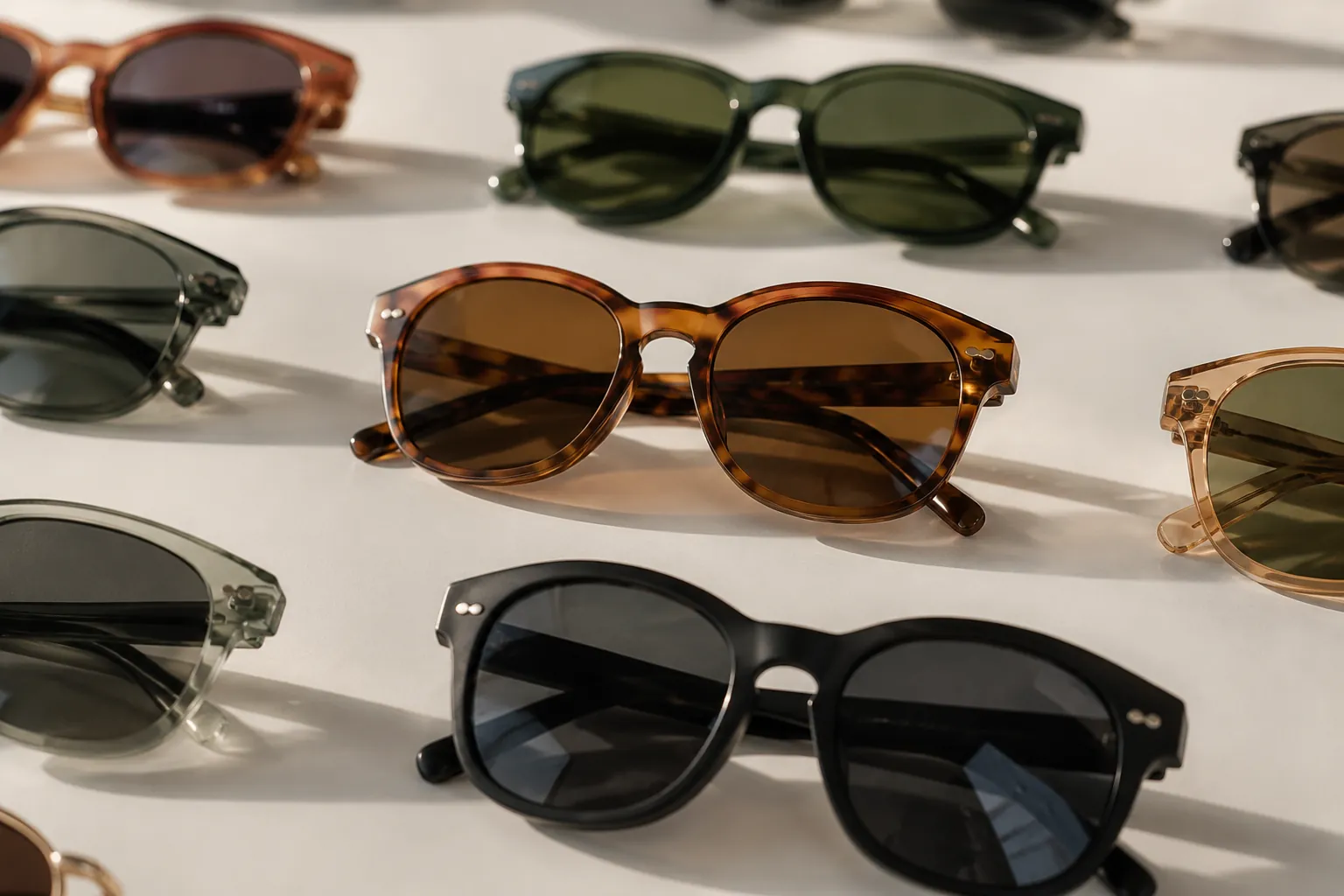
This guide is for brand owners, importers, distributors, and retailers buying custom sunglasses in volume. The aim is simple: stop choosing packaging item by item. Build one packaging system that fits the product price tier, target margin, sales channel, and compliance plan. Done well, packaging protects the sunglasses, controls freight cube, supports labeling, and keeps the brand experience consistent. Done badly, it adds bulk, creates extra handling, delays approvals, and makes a decent product look disorganized.
Start with unit economics and freight math
Most packaging mistakes start the same way. The buyer approves a nice-looking box first, then adds a pouch, cloth, insert, and extra labels later. No one checks the full landed cost until too late.
Work in this order: target retail price, sales channel, ex-factory product cost ceiling, shipping method, then packaging components. A price-led injection-molded sunglasses program should not use the same packaging architecture as a higher-priced acetate style for boutique retail. The real question is not whether a component looks good on its own. It is whether it fits the frame cost, retail position, and channel expectation.
Before approving any structure, ask for final packed unit dimensions, estimated units per master carton, and master carton dimensions. This is not a detail. It is cost control. A small packaging upgrade can reduce carton efficiency and push freight cost up fast. If a larger box cuts units per carton or increases pallet count, the true cost of the change may be far higher than the quoted piece-price difference.
Also decide early what the packaging must do. Is it only for factory-to-warehouse transport? Or must it also work as retail presentation, ecommerce presentation, or both? Those are different jobs. The right structure changes with the job.
Match the packaging architecture to the price tier
Think in systems, not loose items. The structure should match frame quality, target margin, and selling environment. The table below is a planning guide, not a rulebook.
| Tier | Typical sunglasses program | Suggested packaging structure | Typical packaging approach | Main trade-off |
|---|---|---|---|---|
| Budget | Promo, chain retail, distributor bulk orders, price-led ecommerce | Folding carton or printed polybag, microfiber pouch, basic cloth or pouch-as-cloth, barcode label, short care card | Keep structures simple, compact, and easy to relabel by SKU if needed | Better cube efficiency, less shelf impact |
| Mid-range | Private-label collections, DTC brands, giftable retail | Printed carton, drawstring pouch or EVA case, separate branded cloth, hangtag or barcode label, 2-panel insert | Balance presentation with transport efficiency and approval control | Better presentation, more components to manage |
| Premium | Acetate frames, boutique retail, capsule drops, limited editions | Rigid or shoulder box, quality pouch or hard case, thicker cloth, multi-panel insert, model-specific or serialized labels | Use only when frame quality, channel, and price support it | Higher labor, higher cube, more transit risk if overbuilt poorly |
Budget packaging does not have to look cheap. A clean folding carton with disciplined print often looks better than a badly made rigid box. Mid-range is where many private-label eyewear programs sit because it gives a stronger brand presentation without a heavy freight penalty. Premium packaging works only when the sunglasses and the channel justify it. If the frame is entry-level and promotion-led, oversized premium packaging sends the wrong signal and eats margin.
Define the job of each packaging component
Every element should do a specific job. If two components solve the same problem, one may be unnecessary.
- Outer box: creates the first visual impression, protects the packed unit, and affects carton efficiency. Common folding-carton materials include SBS or CCNB. Check internal clearance against actual frame size and temple shape so lenses and hinges are not stressed during insertion.
- Pouch or case: usually provides the most day-to-day value after purchase. Microfiber pouches are a common default because they are compact and functional. EVA or hard cases improve crush resistance but take more space and may complicate packout.
- Cleaning cloth: gets frequent use and repeated brand exposure. If printed, confirm the decoration method does not make the cloth stiff or reduce cleaning performance.
- Labels: carry barcode, model, color, and importer details where required. A fixed label plan reduces hand relabeling and SKU errors in the warehouse.
- Insert: carries care instructions, product information, and market-specific notes. It should be readable, version-controlled, and aligned with shipment documents and target market requirements.
Good systems remove duplication. If the box already shows model and color clearly, a large extra hangtag may add little value. If the pouch carries the main branding, the outer box can stay simple. For ecommerce, inserts often matter more because shelf presence matters less.
Choose materials that hold up in real handling
Most packaging failures are practical, not theoretical. Scuffed boxes. Weak glued corners. Odor complaints. Lint on lenses. Poor print adhesion. Decorative parts that come loose. That is where problems start.
For folding cartons, surface finish affects both appearance and durability. Matte lamination can hide fingerprints better. Gloss can make color look stronger. Soft-touch coatings may feel premium, but they can mark easily. If using spot UV or similar contrast effects, check that they do not cross score lines in a way that causes cracking after folding.
Rigid boxes can increase perceived value, but they also introduce more variables: wrap alignment, board quality, fit tolerance, and transit performance. A premium-looking box is still a bad box if the tray fit is too tight, the sunglasses shift in transit, or the corners crush in master cartons.
For pouches, microfiber is a common low-risk choice because it is familiar, compact, and functional. PU or faux leather can look more premium, but check odor, rub resistance, and color transfer risk. For hard cases, review hinge action, opening pressure, lining cleanliness, and real fit with the packed sunglasses.
Decoration method matters too. Pad printing is common for simple logos on cases and pouches. Screen printing works well on flatter areas. Heat transfer may suit more detailed graphics on microfiber. Metal logo plates can look strong, but attachment method and edge finishing need close review. Approve details for durability, not just sample appearance.
Build compliance into the insert and label plan early
Packaging is not just presentation. It also carries product information, traceability, and market-specific labeling. The exact wording depends on the target market and retail channel, but buyers should plan space for product identity, model and color coding, barcode, importer or distributor details where required, and lens-use or care guidance.
For regulated markets, keep packaging text aligned with the standards and documents the shipment actually uses. Frameworks commonly referenced in sunglasses programs include CE EN ISO 12312-1, ANSI Z80.3, AS/NZS 1067, REACH, FDA registration, ISO 9001, and BSCI. These are not interchangeable. Product claims should reflect the actual testing and regulatory status of the shipment. Quality-management or social-audit certifications are not product-performance claims.
The basic rule is the one buyers ignore most often: do not print claims the shipment paperwork does not support. A common mistake is copying old wording from a previous supplier file without checking whether the current model, lens configuration, target market, and test documents still match.
Readability matters as much as accuracy. If one insert covers several markets, make sure the text is still legible and easy to navigate. Keep compliance copy separate from brand copy. People should be able to find care and use information fast.
- Confirm target markets before artwork begins.
- List required product, inner-pack, and master-carton labels by market and channel.
- Match every printed claim to approved test reports and shipment paperwork.
- Approve one master label matrix covering all model, color, and barcode variants.
Control lead times, MOQ, and approval bottlenecks
In many private-label eyewear projects, packaging becomes the slowest part of the order. The sunglasses may be ready for production while box artwork, insert text, barcode assignments, or case sourcing are still unresolved.
The usual delay points are artwork revisions, dieline approval, text edits, Pantone confirmation, print proofing, and version control across labels and inserts. If the frame uses an existing shape and a standard lens setup, packaging can easily become the critical path.
| Packaging item | Typical risk point | What to approve early | Schedule impact |
|---|---|---|---|
| Printed outer box | Color mismatch, dieline errors, late text edits | Final artwork, color references, packed dimensions, board spec | Medium |
| Microfiber pouch | Logo placement, print sharpness, drawstring quality | Fabric type, hand feel, print size, closure method | Low to medium |
| Hard case | Material odor, hinge alignment, closure pressure | Material swatch, opening-closing test, internal fit | Medium to high |
| Insert and labels | Compliance text errors, barcode mismatch, version confusion | Master content sheet, SKU matrix, final file naming | Low if organized, high if late |
For lower-MOQ runs, simpler systems are usually safer: one standard box size, one standard pouch format, and one master insert with controlled variable labels. As volume rises, buyers have more room to separate cloth from pouch, upgrade print finishing, or use more tailored structures. Still, add complexity only if margin and operations can support it.
One frame platform, three packaging systems
Take one sunglass shape and sell it through three channels: a discount chain, a DTC brand site, and a boutique limited run. The frame platform may stay mostly the same. The packaging should not.
Channel 1: distributor volume order. Use a compact folding carton or another space-efficient presentation format, a microfiber pouch, a short care card, and a barcode label in a fixed position. The goal is fast packing, clean SKU handling, and efficient carton loading.
Channel 2: ecommerce brand. Use a better-finished printed carton, add a pouch plus separate cloth if the unboxing experience matters, and include a short insert with care information and concise brand copy. This improves perceived value without forcing a bulky rigid-pack format.
Channel 3: boutique limited run. Consider a rigid box or more premium case only if frame quality and selling price justify it. Add a higher-grade pouch or case, a thicker cloth, and a model-specific insert. Serialized labels can make sense if the retailer or campaign will actually use them operationally or in storytelling.
The point is simple. More material does not mean better packaging. Better means the choices match the frame, the channel, and the margin structure.
Use a full packed sample to catch rework before production
Before bulk production, ask for one full packed pre-production sample with all packaging elements assembled. Do not approve separate components laid flat. That is not enough. The real problems show up only when the sunglasses are packed, labeled, closed, and handled as a finished unit.
- Does the frame fit the pouch or case without stressing hinges or rubbing the lenses?
- Is there enough clearance inside the box for smooth insertion and removal?
- Can the cleaning cloth be removed and reinserted without damaging the box or insert?
- Are barcode, model, and color labels readable and placed consistently?
- Do packaging colors match approved references under normal viewing conditions?
- Does the insert wording match the compliance file, online listing, and shipment paperwork?
- Are packed dimensions confirmed for carton planning and freight calculation?
- Has transit performance been reviewed for stacking, drop risk, and parcel handling where relevant?
Use the sample review to check the whole packed unit, not just the eyewear. Many avoidable claims begin after final eyewear QC, during packout and transport. If the first full sample shows unresolved label changes, poor fit, lint transfer, or closure issues, stop there. Fix the system before the print run. Bulk production rarely fixes packaging that was never resolved at sample stage.
Practical rule: approve packaging only after you confirm fit, labeling, readability, and packed dimensions on one complete sample made with the planned production method.
Good sunglasses packaging should do three things well: help the product sell, help it survive transport, and stay manageable across SKUs at the right cost. If it does those three jobs, it works.
Have a custom sunglasses project in mind?
Send us your styles, target market and quantities and we will return a detailed quote with MOQ, lead time and a sample plan.
Get a QuoteWhy source this from Wenzhou with LumiShades
Wenzhou in Zhejiang Province is widely regarded as China’s eyewear manufacturing capital, producing a large share of the world’s sunglasses. That concentration matters to buyers: a deep local supply chain for acetate sheet, hinges, lens blanks, plating and packaging means shorter component lead times, easier color and material matching, and a workforce with decades of eyewear-specific skill. LumiShades has manufactured in this ecosystem since 2009, and our vertical integration — in-house injection molding, acetate cutting, CNC milling, lens tinting, decoration and quality control — means no part of your order is quietly subcontracted to a workshop you cannot audit.
For international buyers, that vertical control translates into accountability. When a single factory owns every step, defects are traced and fixed at source rather than bounced between vendors, and your specifications survive intact from first sample to bulk. We back this with 15+ years of experience, shipments to 60+ countries, more than 5 million pairs produced per year and a 98.5% on-time delivery rate. Our certifications — CE EN ISO 12312-1, FDA registration, ANSI Z80.3, AS/NZS 1067, REACH, ISO 9001 and BSCI audit — mean the compliance documentation your market requires already exists. Explore our manufacturing capabilities and quality control process to see how this works in practice.
Frequently asked questions
Should budget sunglasses always use a polybag instead of a box? No. The right choice depends on the sales channel, protection needs, barcode handling, and freight plan. A folding carton usually gives better shape protection and cleaner retail presentation than a polybag, and it can make SKU labeling easier. A polybag may still suit very price-sensitive bulk programs or cases where outer-pack presentation does not matter. Ask the supplier to compare three points before deciding: packed dimensions, units per carton, and transit damage risk.
At what order size does premium packaging start to make sense? There is no fixed quantity threshold. Premium packaging makes sense when the retail price, product quality, and channel can support the higher piece cost, larger packed size, and added handling. The practical test is straightforward: compare the packaging upgrade against expected gross margin, freight impact, and presentation value in the real sales channel. For online sales, also check whether the better box improves the delivered experience enough to justify the extra cube and transit risk.
Can one packaging system work across multiple sunglass colorways? Yes. In many programs, it should. The most efficient setup is one box structure and one core artwork file across the range, with variants controlled through a clear SKU label matrix for model, color, and barcode. Before approving that approach, confirm that all colorways fit the same internal dimensions and that warehouse staff can identify each variant quickly without opening the package. Separate printed boxes by colorway usually make sense only when volume is high enough to justify the extra complexity.
What packaging item causes the most avoidable delay? Usually printed boxes or inserts, because they combine artwork, text approval, barcode control, and version management. To reduce delay, lock the dieline, final copy, barcode list, and naming convention early. Then approve one master content sheet showing exactly which claims, model codes, and market-specific details belong on each item. That step cuts late-stage confusion between design, sourcing, and compliance teams.
How should compliance information be handled on packaging? Treat packaging copy as controlled information, not filler. First, confirm the target market for the shipment. Then map each required claim or label element to the supporting documents for that product. If the sunglasses are sold against CE EN ISO 12312-1, ANSI Z80.3, or AS/NZS 1067 requirements, the wording should match the approved product documents for that market. REACH, FDA registration, ISO 9001, and BSCI should also be used accurately and only for what they actually cover. The safest process is to keep one approved compliance text file and check packaging artwork against it before print approval.
Ready to start?
Explore our aviator sunglasses or request a quote — our sales team replies within 12 hours.
Request a Quote