
Mirror Lens Colors by Market: What Actually Sells
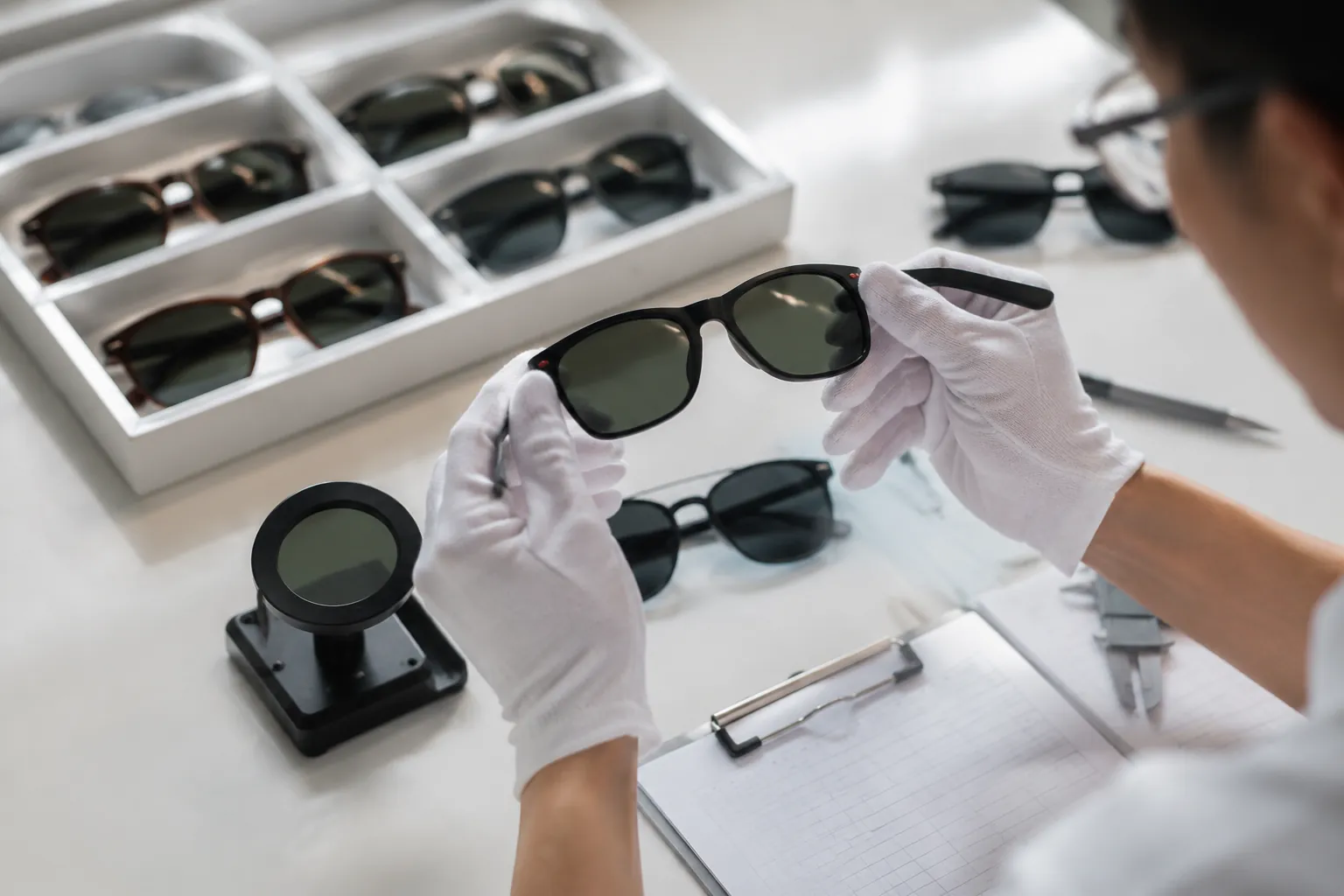
This guide is for brand owners, importers, distributors, and retail buyers planning mirrored sunglasses by market. The goal is simple: choose mirror lens colors that fit the channel, support sell-through, and limit compliance, sampling, and inventory risk. Mirror finish is not just a style detail. It changes shelf impact, category fit, replenishment logic, and how many SKUs a program can carry without getting messy. In bulk buying, those choices show up fast in aging stock, markdowns, and repeat-order confidence.
Start with the buying decision, not the color card
Many buyers start with taste: what looks good on a swatch, what appears on social feeds, or what the sales team likes. That is a weak way to build a mirrored-lens program. Start with the role of the SKU instead.
Mirror finish changes first impression fast. Compared with a standard smoke or brown lens, it usually has more impact under retail lighting and in product photography. That can help in beach shops, tourist stores, festival retail, outdoor chains, and sport displays. In conservative optical or everyday lifestyle channels, the same finish may narrow appeal.
Before choosing color, assign each SKU one job: core volume, seasonal fashion, or sport utility. Then match the mirror color to that job. Silver and blue are often the safest core options because they pair easily with black, crystal, gunmetal, navy, and many sport frame colors. Gold, green, red, and rainbow usually work better as directional options for seasonal, event-driven, or trend-led programs.
For private-label assortments, do not put every mirror option on every frame. Keep the frame count tight. Keep the lens specs controlled. Use mirror color as limited variation, not open-ended expansion. That reduces SKU sprawl, simplifies carton planning, and makes MOQ planning easier.
In practice, approve mirror color after channel mapping and before final sample lock. That is the point where preference gives way to commercial control.
Which mirror colors tend to work in which markets
No mirror color wins everywhere. Climate, channel, age profile, price point, and frame styling all affect demand. Still, broad patterns are useful for planning.
| Mirror color | Typical market fit | Best frame pairings | Main risk |
|---|---|---|---|
| Silver | Broad use across North America, Europe, travel retail, and sport-driven assortments | Black, crystal, gunmetal, matte navy, clear acetate | Can feel undifferentiated if frame shape or merchandising is weak |
| Blue | Coastal markets, outdoor retail, men's assortments, sport channels | Black, navy, smoke, translucent gray | Too many similar blue options can make the assortment repetitive |
| Gold | Resort programs, summer fashion capsules, gift-oriented or trend-led assortments | Amber acetate, tortoise, champagne, rose-gold metal | More limited everyday appeal outside peak season |
| Green | Outdoor styling, utility-inspired fashion, unisex capsules | Olive, black, clear, matte brown | Can be more region-sensitive depending on frame color and styling |
| Red or rainbow | Youth fashion, event retail, promotional drops, novelty-oriented displays | Black, white, clear, bold sporty frames | Short selling window and weaker continuity for replenishment |
If a program covers multiple countries or channels, it is usually safer to build around silver or blue first. Then add only one higher-risk fashion color per frame unless a clear customer segment supports more. That gives the range some variety without making it hard to replenish.
Channel and age profile matter too. Men's sport programs often take darker frames with cooler mirrors. Women's summer fashion capsules may support gold or warmer metallic tones more easily. Kids' and family assortments usually need simpler, more wearable finishes because the purchase decision is often made by a parent or gift buyer.
Use history where you have it. Compare sell-through by frame family, price tier, and channel before you expand color count.
Seasonality changes the right mirror mix
Plan mirror programs around selling windows, not annual averages. A mirror finish that works in peak summer may be too directional for late-season replenishment.
In spring and early summer, buyers often want visible newness. Silver, blue, and selected gold mirrors are common launch choices because they read clearly on shelf and online. Peak summer can support stronger fashion colors in resort, festival, and vacation-driven channels, especially on lightweight wraps or bold acetate styles. Late summer and early autumn usually call for a tighter mix built around silver, smoke-based combinations, and darker frame pairings that feel more seasonless.
For southern hemisphere deliveries or holiday-led launches, reverse the calendar and work back from in-store date. Make mirror decisions early enough for tint confirmation, coating approval, and inspection planning. If the buyer wants a specific shade rather than a standard stock look, build in extra sampling and approval time before bulk release.
- Lock mirror color at the sampling stage, not after sales samples are already circulating.
- Book core mirror colors first when bulk timing is tight.
- Use small MOQ test orders for fashion mirrors before committing wider volume.
- Do not assume a late-season reorder on a fashion color will arrive in time to sell at full price.
A workable calendar leaves enough room for one approval cycle, packaging confirmation, and freight planning. If a trend color is approved late, goods may arrive after demand fades. Even if the style itself is sound.
The lens stack matters more than most buyers expect
Mirror appearance is only the top layer. Final performance and consistency depend on the full lens construction: substrate, base tint, mirror coating, and any added hard coating or polarization.
Many mass-market sunglasses use polycarbonate lenses because they are light and impact resistant. Other materials may be used depending on the product brief. Either way, mirror consistency depends on process control. The same mirror color can look very different depending on the base tint under it. A blue mirror over a smoke base usually reads cooler than a blue mirror over a brown base. Gold over a light base can look brighter than gold over a darker one.
That is why a digital mockup is not enough for final approval. Screen calibration, studio lighting, and image editing can all distort mirror density and hue. Approve a physical pre-production sample made with the actual lens construction intended for bulk.
Review samples under defined lighting conditions, such as neutral daylight and the front lighting used for QC. Ask the supplier to specify the lens substrate, base tint, mirror finish, and whether a hard coat or polarization is included. Keep a sealed reference sample and written approval notes for repeat orders.
Check cosmetic consistency too. The two lenses in a pair should match visually. Obvious left-right variation, haze, pinholes, blotching, or coating defects visible under normal inspection conditions should not pass. If branding is applied to the frame, confirm that pad printing, laser marking, foil, or other decoration still looks right next to a reflective lens finish.
Compliance and spec checks before you scale
Mirror coating does not remove the need for standard sunglass compliance. The finished product still has to meet the requirements of the destination market, and the buyer should verify the right documents before shipment.
- CE EN ISO 12312-1 for sunglasses sold in relevant CE-marked markets.
- ANSI Z80.3 for sunglasses sold into the US market where this standard is applied.
- AS/NZS 1067 for Australia and New Zealand where applicable.
- REACH for restricted substances in relevant materials and components.
- FDA registration for supplier record purposes in the US where applicable.
- ISO 9001 as a quality-management indicator at the factory level.
- BSCI as a social compliance audit framework where buyers require it.
Two checks need extra attention with mirrored lenses. First, visible light transmission and lens category still have to match the intended use and labeling. A lens that looks dark from the front is not automatically in the category the buyer assumes. Second, left-right uniformity should be reviewed carefully because coating variation is easier to spot on reflective surfaces.
Ask for clear QC checkpoints for lens color, coating consistency, scratch review, assembly appearance, and logo placement. Define viewing distance, lighting condition, and carton-level assortment checks. For import programs, also confirm packaging language, country-of-origin marking, and test-report retention requirements before bulk release.
Fixing compliance issues before shipment is cheaper. Much cheaper.
Assortment planning: how many mirror SKUs is enough
Many mirrored assortments fail for a simple reason: too many color variants and too little depth in the options that actually reorder. In most cases, fewer mirror colors with better volume discipline produce stronger sell-through.
A practical opening structure is one frame in two mirror options, with a third color added only when the channel supports it. A sport frame might launch in silver mirror and blue mirror, with green tested only if the outdoor customer base justifies it. A fashion aviator may work in silver and gold without needing a fourth color that complicates the buy.
MOQ structure should support testing, not overcommitment. Small opening orders help buyers compare color performance in live retail conditions. If one mirror color clearly outperforms another in the same frame, future replenishment should move toward the proven option instead of preserving equal depth for visual symmetry.
Simple rule: if a mirror color is unlikely to earn a repeat order, it should not take a large share of the opening buy.
Use early tests to separate visual appeal from commercial durability. A mirror color may photograph well and still underperform in everyday retail. Keep the core tight. Test directional shades with discipline. Let reorder data decide what expands.
Lead time, sampling, and the cost of late color changes
Mirror lens programs are manageable when color, lens construction, and packaging decisions are made early. They get expensive when changes come after sample approval or after bulk planning starts.
| Stage | Typical timing | What to confirm | What goes wrong if delayed |
|---|---|---|---|
| Sampling | Project-dependent; often about 7-10 days for standard developments | Frame color, base tint, mirror finish, logo method, fit check | Sales sample approved before the actual production lens stack is fully defined |
| Pre-production approval | Before bulk start | Final lens appearance under standard light, packaging, labeling, decoration placement | No clear physical standard if bulk appearance is disputed later |
| Bulk production | Project-dependent; often about 25-35 days for standard orders | QC checkpoints, carton split by SKU, assembly sequence, shipment date | Rework, mixed lots, and shipment delay |
| Late color revision | Adds time and cost | New sample or approval standard, possible rematching of lens finish and packaging | Production queue reset, missed season, or higher freight pressure |
Decoration can affect timing too. Pad printing may be efficient for simple branding, while laser marking may suit certain metal parts better. Foil and heat-transfer effects can add styling value but require tighter placement control. On mirrored products, small alignment issues often stand out more because the lens already draws the eye.
For repeat orders, continuity depends on documented references. Keep the approved sample, record the lens construction, and require sign-off before bulk materials are committed. That is the best protection against a second run drifting warmer, cooler, lighter, or denser than the first.
Assume late mirror changes will affect more than lens processing. They can also disrupt decoration checks, packaging confirmation, and shipment planning.
A practical buying framework for your next mirror collection
If you need a simple process, use this framework.
- Pick the channel first. Sport, beach, fashion boutique, chain retail, and optical each tolerate different levels of mirror intensity.
- Set one core mirror. Silver or blue is often the safest starting point for broad market use.
- Add one secondary mirror only if it serves a clear purpose. Gold for resort, green for outdoor styling, red or rainbow for short seasonal programs.
- Approve the full lens construction. Confirm the substrate, base tint, mirror finish, and whether hard coating or polarization is included.
- Check compliance by destination. Verify CE EN ISO 12312-1, ANSI Z80.3, AS/NZS 1067, REACH, FDA registration, and any buyer-required factory documents such as ISO 9001 or BSCI.
- Test small, then scale. Use low-MOQ trials where possible, review actual sell-through, and move proven colors into larger orders while the season is still open.
This framework is built to reduce avoidable mistakes. Nothing more. Mirror lenses perform best when buyers treat them as a styling, specification, and inventory decision at the same time.
The short version: keep core mirrors tight, approve the real lens stack, verify destination compliance, and let reorder data decide whether fashion colors deserve a bigger role.
Have a custom sunglasses project in mind?
Send us your styles, target market and quantities and we will return a detailed quote with MOQ, lead time and a sample plan.
Get a QuoteWhy source this from Wenzhou with LumiShades
Wenzhou in Zhejiang Province is widely regarded as China’s eyewear manufacturing capital, producing a large share of the world’s sunglasses. That concentration matters to buyers: a deep local supply chain for acetate sheet, hinges, lens blanks, plating and packaging means shorter component lead times, easier color and material matching, and a workforce with decades of eyewear-specific skill. LumiShades has manufactured in this ecosystem since 2009, and our vertical integration — in-house injection molding, acetate cutting, CNC milling, lens tinting, decoration and quality control — means no part of your order is quietly subcontracted to a workshop you cannot audit.
For international buyers, that vertical control translates into accountability. When a single factory owns every step, defects are traced and fixed at source rather than bounced between vendors, and your specifications survive intact from first sample to bulk. We back this with 15+ years of experience, shipments to 60+ countries, more than 5 million pairs produced per year and a 98.5% on-time delivery rate. Our certifications — CE EN ISO 12312-1, FDA registration, ANSI Z80.3, AS/NZS 1067, REACH, ISO 9001 and BSCI audit — mean the compliance documentation your market requires already exists. Explore our manufacturing capabilities and quality control process to see how this works in practice.
Frequently asked questions
Which mirror lens color is safest for a new market launch? Silver is usually the safest starting point because it works across more frame colors, channels, and age groups than most fashion mirrors. Blue is often the next-best option, especially for sport, coastal, and men's assortments. If you are entering an untested market, start with one core color, review sell-through by frame, and add a second mirror only after you have real reorder data.
Do mirror coatings change compliance requirements? No. A mirror finish does not replace normal sunglass compliance. The finished product still needs to meet the destination-market requirements that apply to the complete sunglass, including lens performance and labeling. For buyer action: ask the supplier which standard applies to your market, request the related test documents, confirm visible light transmission category, and make sure the approved sample matches the tested construction.
Can I approve mirror color from a digital mockup? No. Use digital mockups for concept review, range planning, or artwork placement only. Final mirror approval should be based on a physical sample built with the actual substrate, base tint, mirror coating, and any hard coat or polarization intended for bulk production. For repeatability, keep one sealed approved sample and reference it during pre-production approval and final inspection.
What MOQ should I use for testing mirror colors? Use the lowest practical MOQ the supplier offers for a real market test, especially on fashion colors with uncertain replenishment value. The goal of the first order is to compare sell-through, not to maximize unit economics. Test one frame in one or two core mirrors first, then expand only the colors that earn repeat demand. When requesting MOQ options, ask the supplier to separate minimums by frame, lens color, logo method, and packaging, because each can affect flexibility.
How much extra time do mirrored lenses add to production? The time impact depends on the lens construction, supplier process, and whether the mirror is a standard finish or a custom-approved shade. In many standard programs, the bigger risk is not the coating step itself but delayed approval of the lens stack, packaging, or labeling. To control timing, ask for a production calendar covering sampling, pre-production approval, bulk lead time, and inspection. Do not assume a mirror color can be changed late without affecting shipment date.
Ready to start?
Explore our aviator sunglasses or request a quote — our sales team replies within 12 hours.
Request a Quote