
Mirror Lens Failure Controls for Sunglass Buyers
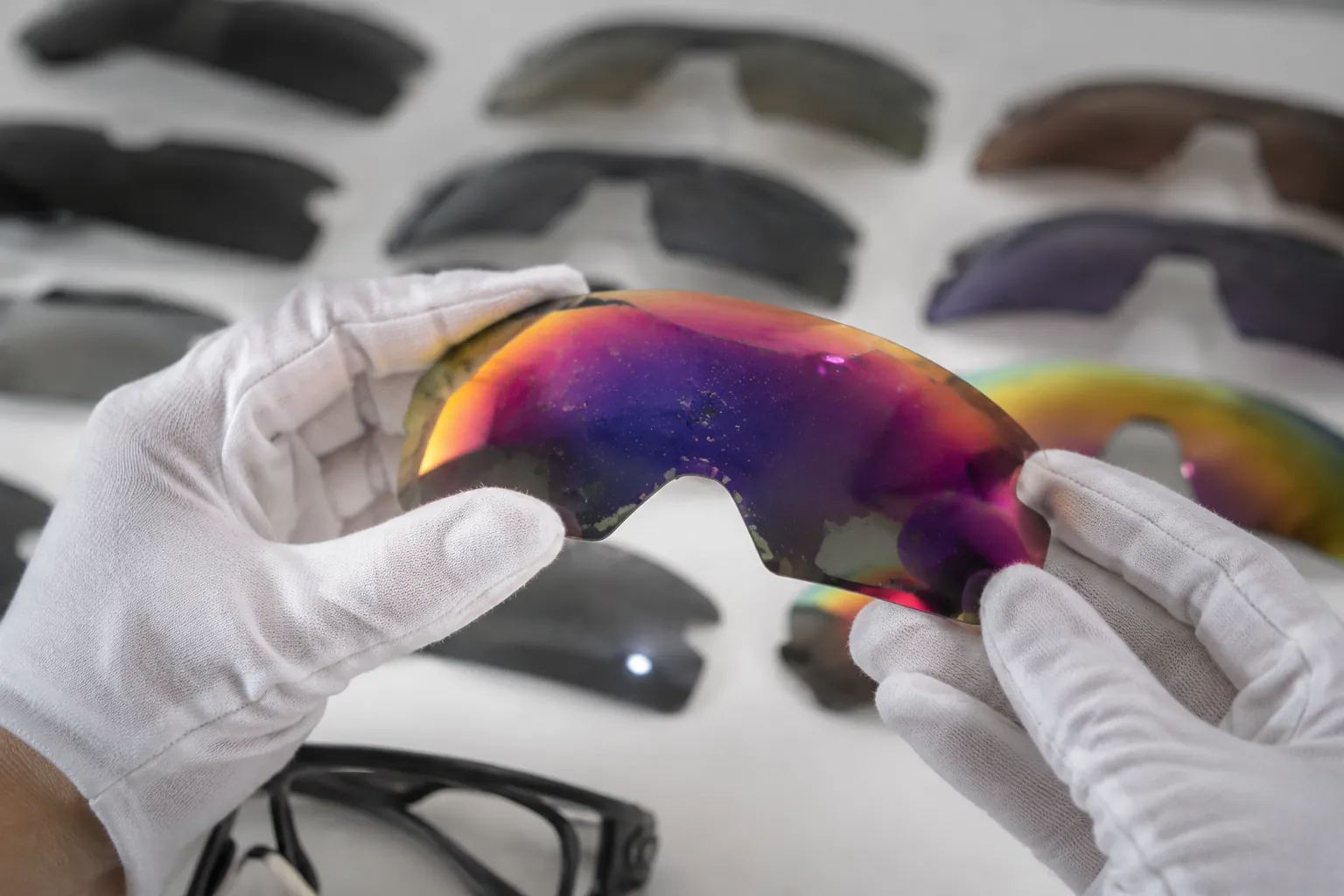
This guide is for brand owners, importers, distributors, and retail buyers sourcing mirrored sunglasses in volume. Mirror lenses can look fine on a sample card and still fail later in assembly, packing, transit, or store handling. That is common. Most complaints trace back to a short list of controllable issues: weak adhesion, visible scratching, color shift, edge damage, or poor protection after coating. The business problem is larger than appearance alone. A mirror lens that marks during packing, varies from lot to lot, or chips at the edge can trigger rework, delayed launches, claims, and markdowns that wipe out any savings from a low quote. The practical goal is simple: define the lens stack, cosmetic standard, sample approval method, and QC checkpoints before bulk production starts.
Start With the Failure Map, Not the Color Card
Most buyer complaints about mirror lenses are not really about color choice. They are about durability, appearance drift, and handling damage that shows up after assembly or after goods reach stores. If the approval standard is only "match this sample visually," the factory still has too much room to interpret what passes.
Mirror coatings usually fail in a small number of ways: poor adhesion to the base lens or hard-coat layer, fine scratching during assembly or packing, uneven reflectivity caused by deposition variation, edge peel or chipping after cutting or mounting, and chemical damage from sweat, sunscreen, alcohol-based wipes, or unsuitable cleaners. None of this is random. These are process failures, and buyers should treat them that way.
Material choice changes the risk profile. Polycarbonate is widely used because it is lightweight and impact resistant, but mirror adhesion depends heavily on surface cleanliness, hard-coat quality, and cure control. TAC polarized lenses use a laminated construction, so lamination stability, heat, and pressure control also affect the final result; if the stack is unstable, buyers may see edge lift, haze, or optical inconsistency. Acrylic can produce a bright mirror look, but in many programs it tolerates rough handling less well than a controlled polycarbonate lens with a suitable hard coat.
For sourcing purposes, mirror coating should be specified as a finish system, not a cosmetic add-on. State the lens substrate, hard-coat requirement, mirror color reference, acceptable lot variation, edge condition after insertion, protective packing method, and shipment-release inspection points. Leave those items out of the PO or spec sheet, and the buyer and factory can inspect the same lens and still disagree about whether it passes.
Where Mirror Coatings Break Down on the Factory Floor
A failure-modes review is more useful here than generic sourcing advice because the weak points are specific and repeatable.
- Adhesion failure: the mirror layer does not bond consistently to the coated lens surface. Typical signs include rub-off, pinholes, patchy reflectivity, or flaking near the edge. Common causes include poor substrate cleaning, unstable hard-coat cure, contamination, or inconsistent deposition conditions.
- Scratch visibility: mirrored surfaces reveal fine scratches much faster than plain smoke or brown tints. A handling mark that is barely noticeable on a standard tint can be obvious on silver, blue, or gold mirror.
- Color inconsistency: blue, green, red, gold, and multicolor mirrors are sensitive to coating thickness and chamber stability. Small process variation can make bulk goods look darker, warmer, cooler, or less reflective than the approved sample.
- Edge damage: after cutting, beveling, groove insertion, or screw-mount assembly, the coating can chip or lift at the perimeter if tooling is rough or insertion force is too high.
- Chemical attack: some mirror finishes can haze, stain, soften, or lose appearance after contact with sunscreen oil, perspiration, alcohol-based wipes, or unsuitable cleaning fluids.
Returns are often described simply as "bad coating," but the coating stage is not always the real source of the problem. Dirty substrate before deposition, an under-cured hard coat, contaminated wiping cloths, trays without separators, an over-tight frame groove, or mirror-to-mirror contact in transit can all produce the same field complaint later. Good sourcing review maps the risk step by step: after tinting, after hard coat, after mirror deposition, during edge cutting, during insertion, during final wipe-down, and inside the export carton.
That matters because each failure point needs a different control. If the problem is adhesion, better packing will not fix it. If the problem is assembly scratching, changing mirror color alone will not fix it either.
The Upfront Specs That Prevent Most Complaints
If the goal is fewer claims, the lens stack has to be specified in plain purchasing language. "PC mirror lens" is too vague for a bulk order.
- State lens material clearly: PC, TAC polarized, nylon, or acrylic. If polarized, state that explicitly and confirm where the mirror layer sits within the lens construction.
- Require a hard coat under the mirror layer: for most retail programs this should be standard, especially on PC. Without it, scratch visibility and adhesion risk usually increase.
- Define the color standard: approve against a retained master sample viewed under consistent daylight-equivalent lighting, typically around 6000K to 6500K. If the style is highly color-sensitive, retain both a physical standard and reference photos taken under fixed lighting.
- Set cosmetic tolerance: specify whether minor edge marks are allowed after insertion and where. Many buyers allow limited non-front-facing edge marks on lower-price programs but require no visible front-facing peel or chip at normal inspection distance on retail programs.
- Set scratch and rub expectations: define the required visual condition after assembly and after a basic dry wipe or rub check on sampled units. If the buyer wants a specific internal test, write that method into the specification.
- Confirm the base lens category and compliance target: mirrored appearance does not replace legal lens performance. Visible light transmission, UV performance, and labeling still have to match the intended market.
For international buyers, this is not just paperwork. Mirrored lenses are still sunglasses subject to product requirements in many markets. Confirm the destination market and target standard at quotation stage, such as CE EN ISO 12312-1, ANSI Z80.3, or AS/NZS 1067 where applicable, and align supporting compliance documents such as REACH declarations when required for the program. FDA registration can also matter for U.S. import documentation, depending on how the importer handles filing obligations. Find a compliance mismatch after bulk starts, and correction gets slow and expensive.
One approval rule is worth making standard: approve both a loose-lens sample and a finished-frame sample. Loose lenses show coating quality in isolation. Finished samples show what cutting, insertion, cleaning, and packing do to that same coating in real production.
A Practical Spec Table Buyers Can Put Into the PO
The table below is not legal text. It is buying-control language meant to reduce disputes after shipment.
| Spec Item | Basic Fashion Order | Mid-Tier Retail Order | Higher-Control Program |
|---|---|---|---|
| Lens substrate | PC tinted mirror | PC with hard coat plus mirror | TAC polarized or premium PC with hard coat plus mirror |
| Appearance approval | One approved master sample | Master sample plus retained color reference under fixed lighting | Golden sample plus retained first-bulk production standard |
| Color variation tolerance | Commercially acceptable visual match | No obvious lot shift at arm's-length inspection under 6500K light | Tight lot control with approval required for visible shift |
| Scratch control | Visual check after assembly | Visual check plus dry rub check on sample lot | Visual check plus defined rub and handling checks before packing |
| Edge quality | Minor non-front-facing edge marks allowed | No visible front-facing edge peel at normal inspection distance | Tight bevel and insertion control with AQL review on edge defects |
| Packing protection | Standard polybag | Individual frame sleeve or protective bag | Protected packing with separators to prevent mirror-to-mirror contact |
| Typical MOQ logic | Suitable for simpler custom runs | Better fit for stable color and packing control | Usually used where tighter consistency justifies added controls |
| Cost effect | Lowest unit cost, higher cosmetic risk | Moderate cost increase for better yield protection | Higher unit cost but lower return exposure |
Cost usually rises with control level. Entry-level mirror programs can be quoted at relatively low volumes, but lower-volume orders often allow less process stabilization, fewer retained references, and less room for extra protective handling. As control requirements increase, so do handling time, reject risk, and packing cost. If a buyer asks for retained golden samples, extra lens protection, stricter color review, or multiple pre-production approval rounds, unit price will usually rise for clear operational reasons. Cheap mirror lenses often become expensive later.
Use MOQ discussions carefully. MOQ alone does not guarantee consistency, but higher-volume production can make it easier for a factory to hold a stable setup, control packing methods, and justify tighter in-line checks. The real question is not only "What is the MOQ?" It is "What level of process control is included at that volume?"
What to Check During Sampling and Pre-Production
Sampling is where disciplined buyers separate appearance approval from production approval. A factory may provide an attractive sample quickly, but that sample protects the buyer only if it is reviewed as a process reference, not as a showroom piece.
Before bulk approval, buyers should ask for these checks:
- Outdoor appearance review: inspect mirror color in daylight as well as under indoor lighting. Some mirrors look acceptable under office LEDs and shift noticeably outdoors.
- Indoor wearer view: confirm that the view through the lens is commercially acceptable and free from visible distortion, haze, or lamination defects.
- Surface wipe check: use a clean microfiber cloth on the mirror face to see whether the finish shows immediate hairline marking or wipe trails under normal handling.
- Assembly check: inspect the edge area near the groove, drill point, or screw area for lift, chip, or peel after lens insertion.
- Chemical spot check: confirm the coating response to the approved cleaning method and, where relevant to the program, limited contact with likely consumer contaminants such as sunscreen or perspiration simulation.
Then freeze the standard properly. Keep one signed approval sample at the factory and one with the buyer. For repeat programs, ask the factory to retain a first-bulk production sample as the reorder reference, not only the original development sample. That point matters because mirror appearance can drift from run to run even when the SKU name stays the same.
If the program also includes logo application or other decoration, process sequence matters. Temple printing, laser marking, foil work, metal logo fitting, and trim assembly all add handling steps. Buyers should confirm whether any post-lens process creates extra contact risk near the lens face and whether added protection is used before final packing.
Production, Packing, and Lead-Time Logic
Many mirror lenses pass the coating stage and fail later. The gap between a good sample and a poor shipment is often assembly discipline, not chemistry alone.
Key production risk points include lens cutting and beveling, frame insertion force, final cleaning, and carton packing. Rough cutting tools or poor edge clean-up can start perimeter peel. If the frame groove is too tight, workers may flex the frame excessively or press directly on the lens face during insertion. Dirty cloths or repeated wiping can create visible micro-scratches quickly. In packing, mirror-to-mirror contact inside bags or cartons is a common source of transit rub marks, especially on oversized shield styles and sharp-corner fashion lenses with more exposed surface area.
Lead time should be quoted with those realities in mind. A standard mirrored sample may be possible within 7 to 10 days. Bulk production is often quoted around 25 to 35 days for standard materials and standard colors, but actual timing depends on the factory schedule, approval speed, and product complexity. Buyers should allow more time when any of the following are involved:
- non-standard mirror shades that require more than one color approval round
- TAC polarized constructions with tighter appearance control
- new molds or complex frame shapes that increase insertion risk
- special packaging designed to prevent lens-to-lens contact
- multiple logo or decoration processes that add post-lens handling
Late color correction is usually slower and more expensive than tighter signoff before bulk starts. Approve a borderline sample, then try to tighten standards after production begins, and the result is often delay, extra sorting, or a compromise shipment.
Tie QC to Real Return Risk
Inspection should focus on the defects that create consumer complaints, not only the defects that are easiest to count on a table. A generic final random inspection is often too blunt for mirrored styles.
A better QC approach is to divide issues into three groups:
- Critical: compliance failure, unsafe lens breakage risk, wrong lens category, or UV performance not matching the approved standard.
- Major: visible coating peel, obvious scratch in the main viewing area, severe color mismatch from the approved sample, front-facing rub marks, or delamination on polarized mirror constructions.
- Minor: small edge imperfection outside normal wearing view, slight cosmetic variation visible only at close angled inspection, or a light edge handling mark allowed by the agreed standard.
For market access, confirm that the finished product matches the required standard for the destination market, such as CE EN ISO 12312-1, ANSI Z80.3, or AS/NZS 1067 where applicable. Chemical compliance such as REACH should also be documented where relevant, particularly for frame materials, coatings, inks, nose pads, and other skin-contact components. FDA registration can be relevant for U.S. import documentation, but buyers should still verify their own labeling and entry obligations with their compliance or customs team.
If returns on mirrored styles have been high, ask the factory for pilot-run defect photos by category before shipment release. Also ask when inspection is being done. Timing matters. A lens that passes after coating can still fail after assembly or before packing. On higher-control programs, buyers should request confirmation of checks both after assembly and before final packing, because that is where many mirror-surface defects become visible.
The Lowest-Cost Fix Is Usually Better Instructions
Buyers often assume the answer is to change factory or demand a "stronger mirror." Sometimes the better fix is simpler: write better controls, use a proven material stack, and pay for protection where damage actually occurs.
The sourcing logic is straightforward. If the order is price-led, keep the mirror color simple, use a stable lens substrate, avoid unnecessary downstream handling, and tighten packing instructions first. If the order is brand-led or intended for chain retail, spend more on hard-coat performance, retained color standards, edge-condition control, and protected packing. Put those controls in place before bulk production, not after complaints arrive.
When evaluating suppliers, buyers should verify which parts of the process the factory controls directly and which parts are outsourced. They should also review whether the factory can support the documentation and management systems the program requires, such as ISO 9001 or BSCI where relevant to the sourcing policy, in addition to product-level compliance requirements. No factory can reliably meet an undefined standard. Mirror coating failures usually come from vague approvals, incomplete specifications, or QC methods that do not match actual return risk.
Have a custom sunglasses project in mind?
Send us your styles, target market and quantities and we will return a detailed quote with MOQ, lead time and a sample plan.
Get a QuoteWhy source this from Wenzhou with LumiShades
Wenzhou in Zhejiang Province is widely regarded as China’s eyewear manufacturing capital, producing a large share of the world’s sunglasses. That concentration matters to buyers: a deep local supply chain for acetate sheet, hinges, lens blanks, plating and packaging means shorter component lead times, easier color and material matching, and a workforce with decades of eyewear-specific skill. LumiShades has manufactured in this ecosystem since 2009, and our vertical integration — in-house injection molding, acetate cutting, CNC milling, lens tinting, decoration and quality control — means no part of your order is quietly subcontracted to a workshop you cannot audit.
For international buyers, that vertical control translates into accountability. When a single factory owns every step, defects are traced and fixed at source rather than bounced between vendors, and your specifications survive intact from first sample to bulk. We back this with 15+ years of experience, shipments to 60+ countries, more than 5 million pairs produced per year and a 98.5% on-time delivery rate. Our certifications — CE EN ISO 12312-1, FDA registration, ANSI Z80.3, AS/NZS 1067, REACH, ISO 9001 and BSCI audit — mean the compliance documentation your market requires already exists. Explore our manufacturing capabilities and quality control process to see how this works in practice.
Frequently asked questions
Do mirrored lenses scratch more easily than regular tinted lenses? They often scratch more visibly, and that is what matters in retail. The mirror layer makes fine handling marks easier to see, even when the base lens hardness is similar to a non-mirrored tinted lens. For buying control, ask the supplier to confirm the substrate, require a hard coat where appropriate, review a finished-frame sample after assembly, and specify the packing method so the lens face stays protected through transit.
Should I approve a loose lens sample or only a finished sunglasses sample? Approve both, and keep both as references. A loose lens shows coating quality, color, and reflectivity without assembly influence. A finished sample shows what happens after cutting, insertion, wiping, decoration, and packing. Approve only one, and you leave a gap. The practical method is to sign off one loose-lens master, one finished-frame master, and one written cosmetic standard covering edge marks, scratches, and color tolerance.
What is the biggest cause of mirror coating complaints in bulk orders? Usually it is a chain of weak controls rather than one isolated defect. Common contributors are poor surface preparation, unstable hard-coat cure, contamination before deposition, excessive insertion pressure, repeated final wiping, and packing that allows lens contact. To act on this, buyers should ask the factory where the lens is checked: after coating, after assembly, and before packing. If the supplier cannot show those checkpoints clearly, return risk is higher.
Will tighter mirror coating specs increase MOQ? Not necessarily. Tighter specifications usually affect unit price, approval time, reject rate, and inspection workload before they affect MOQ. What buyers should confirm is whether the quoted MOQ includes the controls they need: retained approval samples, fixed lighting for color review, stricter edge inspection, and protective packing. The useful question is not just minimum quantity, but what level of process control is included at that quantity.
How much time should I allow for custom mirrored lens development? For a standard color on a familiar frame, a sample may be possible in 7 to 10 days and bulk may be quoted around 25 to 35 days. That range is only a planning baseline. Allow more time for non-standard mirror colors, repeated color approvals, TAC polarized constructions, new molds, or upgraded protective packaging. Buyers should also allow time for compliance testing or document review when the destination market requires standards such as CE EN ISO 12312-1, ANSI Z80.3, or AS/NZS 1067.
Which compliance points matter for mirrored sunglasses? The mirror finish does not change the basic compliance framework. Buyers should match the finished product to the destination market requirements, which may include CE EN ISO 12312-1, ANSI Z80.3, or AS/NZS 1067 for product performance, and REACH where relevant for chemical compliance. FDA registration can also be relevant for U.S. import documentation, depending on the importer's filing structure. In practical terms, buyers should confirm the target market at RFQ stage, align visible light transmission and UV performance with that market, and make sure labeling and supporting documents are reviewed before bulk release.
Ready to start?
Explore our wayfarer sunglasses or request a quote — our sales team replies within 12 hours.
Request a Quote