
Gradient Polarized Lenses: Margin Gain or Return Risk?
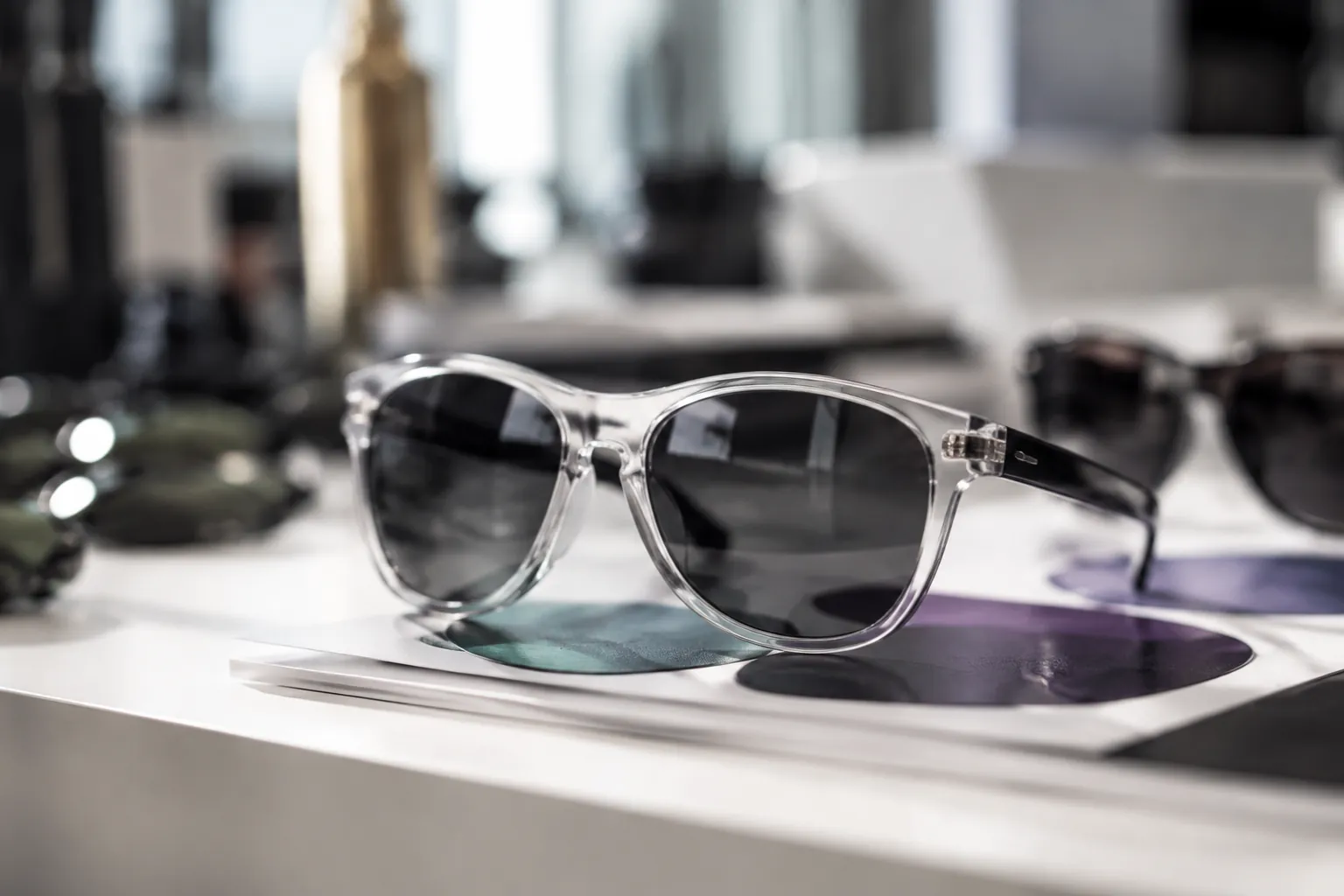
This guide is for brand owners, importers, distributors, and retailers deciding whether gradient polarized lenses belong in a commercial sunglass line. The choice is not just aesthetic. Gradient polarization can raise perceived value, support a good-better-best assortment, and justify a higher retail price in the right channel. It can also drive avoidable returns if the use case, gradient depth, frame geometry, and product messaging do not match. The framework below stays close to sourcing reality: how these lenses behave in production, where they fit commercially, where they fail, and which specifications reduce post-sale surprises.
Start with the failure mode, not the look
Gradient polarized lenses often get approved because the sample looks premium. Darker at the top. Lighter at the bottom. Polarized. The upgrade cue is obvious. That matters, but it is not enough reason to launch.
Customers buy sunglasses for a job: driving, beach, boating, city wear, or general outdoor use. If that job is unclear, returns follow. Fast.
The main risk is expectation mismatch. Many customers read polarized as a promise of strong glare reduction and a dark sunglass look across the full lens. A gradient lens may still deliver full UV protection, but if the lower zone is visibly lighter, some buyers read that as weak tint rather than intentional design. The complaint is then about perceived performance, not compliance.
Return comments are predictable: the lens feels lighter than expected, the lower area is not dark enough, or my phone or in-car display looks strange. Those are usually positioning problems, not factory defects. Polarized lenses can affect the appearance of some LCD and in-car screens depending on viewing angle, and a gradient makes the tint difference easier for the user to notice.
Commercially, gradient polarized works best when the product has a narrow, clearly explained role. It works worst as a generic all-purpose SKU sold with weak imagery, thin copy, or no staff explanation. If the channel cannot explain the trade-off in one sentence, solid polarized is usually the safer bet.
Where gradient polarization earns its place
Some product lines have a real use for gradient polarized lenses. The darker upper zone helps cut overhead brightness. The lighter lower zone can feel more comfortable for dashboard viewing, reading, or face visibility in mixed light. Polarization reduces reflected glare from roads, water, windshields, and other flat reflective surfaces. Put together, that can make sense. But only if the end use is clear.
- Driving styles: often a good fit when the customer wants glare reduction without a uniformly dark lens.
- Resort and lifestyle lines: the visible gradient adds shelf appeal and can support a premium presentation over basic flat-tint styles.
- Women's fashion and premium unisex programs: these ranges often merchandise gradient lenses more easily than functional sport lines because the fade reads as a design feature.
- Assisted retail environments: sales staff can explain that the upper zone is darker by design and that the lower zone is intentionally lighter for comfort in mixed lighting.
In assortment planning, gradient polarized is usually strongest as a selective trade-up, not a default lens across every frame. It tends to suit oversized metal frames, acetate fashion styles, navigator shapes, and moderate-wrap driving frames better than aggressive sport wraps. On those shapes, the fade usually looks intentional and premium rather than visually uneven.
For buyers building a price ladder, this lens type typically sits above solid tint non-polarized and above entry-level solid polarized. It stays below performance categories built around specialized lens materials, advanced coatings, or sport-specific construction. That matters. The lens has to earn margin through a clear customer benefit, not visual novelty alone.
Where it creates dissatisfaction
Gradient polarized lenses also have clear failure zones. In the situations below, they often create more service work than sales upside.
- Sports and heavy outdoor use: many customers want consistent darkness across the full field of view and see a lighter lower zone as a compromise.
- Online-first assortments with weak imagery: if the product photos do not show the gradient clearly, customers may assume they ordered a solid polarized lens.
- Budget price points: if the retail price leaves little room for feature explanation, the added lens cost may not translate into a meaningful premium.
- Deep-wrap or high-base frames: on strongly curved shapes, the gradient can look uneven after edging and assembly.
- Screen-heavy use cases: polarization can affect the visibility of some LCD and in-car display panels depending on viewing angle, and users usually blame the sunglasses.
Frame geometry matters more than many buyers expect. A gradient approved on a flat sample lens can look different once edged into a large butterfly shape or a wrapped frame. The same nominal fade may appear shorter, steeper, or visually off-center after mounting. So approve against the final frame shape. Not a loose lens blank. Not a raw swatch.
The rule is simple: if the customer wants one easy message, do not choose a lens that needs a long explanation. In mass channels, solid polarized usually leads to fewer returns and fewer after-sale questions.
Solid polarized vs gradient polarized
| Option | Best use case | Main buyer benefit | Main return risk | Typical ex-factory lens cost impact |
|---|---|---|---|---|
| Solid tint, non-polarized | Entry-price fashion lines | Lowest lens cost, easiest message | Glare complaints in strong sun | Base cost |
| Solid polarized | Driving, fishing, general outdoor use | Clear glare-reduction story, broad acceptance | Screen visibility complaints on some devices | Higher than base cost; exact increase depends on material, construction, and volume |
| Gradient tint, non-polarized | Fashion, city wear, resort lines | Premium appearance without polarizing construction | Customers expecting stronger glare control | Higher than base cost; exact increase depends on tint process and volume |
| Gradient polarized | Premium lifestyle and driving-fashion crossover | Higher perceived value, comfort in mixed light | Confusion about lower-zone darkness and display effects | Usually above both base non-polarized and comparable solid polarized styles |
For most private label programs, the key question is not whether gradient polarized is optically better in every situation. It is whether the extra cost, extra QC sensitivity, and extra explanation create enough retail upside to justify the added complexity.
On small runs, the cost difference is more obvious. On larger runs, pricing may improve, but the expectation risk does not disappear.
At factory level, moving from a basic sunglass to a gradient polarized style usually adds cost through lens construction, tint control, and tighter visual inspection. Actual pricing varies by lens material, frame shape, quantity, color consistency requirements, packaging complexity, and the supplier's process. Buyers should request side-by-side quotes for solid polarized and gradient polarized in the same frame. That gives a real margin comparison instead of a guess.
Spec points that decide whether the lens is safe to sell
If you choose this lens type, do not approve it from a beauty shot alone. Approve it through a written specification, a signed sample, and a defined acceptance standard.
- Visible light transmission target: specify the target for the darker upper zone and the lighter lower zone, not just a general tint description. If the bottom portion is too light for the intended customer, the lens may be seen as under-tinted even when compliant.
- Gradient transition height: define where the fade should sit on the mounted lens in the finished frame, especially relative to the wearer's line of sight.
- Left-right color consistency: require matching density and hue across the pair, because small differences are easier to spot on fashion gradients than on solid dark lenses.
- Polarization performance: ask the supplier to confirm that the lens construction is polarized and that left and right lenses are visually consistent.
- Material behavior: TAC, polycarbonate, nylon, and other constructions do not always tint or present contrast in the same way. A color approved on one substrate may not look identical on another.
- Compliance alignment: confirm that the finished style is designed and tested for the destination market where relevant, including standards such as CE EN ISO 12312-1, ANSI Z80.3, and AS/NZS 1067, plus chemical requirements such as REACH. If the product is sold into the United States, importers may also ask the factory about FDA registration status where applicable to the supplier's operations.
- Supplier systems: if quality-management or social-compliance screening matters to your program, ask whether the factory holds certifications such as ISO 9001 or BSCI. These do not replace product testing, but they may be part of supplier approval.
- Packaging language: state both polarized and gradient on tags, boxes, and product page copy so customers understand that the lower zone is intentionally lighter.
Color choice shapes customer perception too. Gray gradients usually read cleaner and more neutral, which suits unisex and driving lines. Brown gradients can feel warmer in fashion assortments. Green-based tones may also work commercially, but the fade needs to stay visible enough to justify the added process control. If the transition is too subtle, the buyer pays for complexity without getting a clear shelf benefit.
A capable supplier should issue a golden sample and agree on an appearance tolerance window. That matters because a lens that looks acceptable under indoor lighting can look much lighter outdoors. If the acceptable range is not agreed in advance, normal production variation can turn into a retail dispute later.
How factory process affects consistency and lead time
Gradient polarized lenses are not a simple catalog box to tick. They depend on process control.
A typical factory flow includes frame production, raw lens preparation, polarized lens construction or sourcing, gradient tinting to the approved profile, any required surface treatment, edging to final frame shape, assembly, decoration, final inspection, and packing.
The most sensitive stage is usually gradient appearance. The supplier needs a clean transition without obvious banding, patchiness, or left-right mismatch. On wrapped, oversized, or strongly curved lenses, a fade that looked balanced on a lab sample can look different after edging. That is why the pre-production sample should use the actual frame geometry and final lens shape, not a generic lens chip.
Lead time depends heavily on approvals, material availability, and packaging readiness. Buyers should ask the factory to break timing into sample development, sample revision if needed, bulk material preparation, production, final inspection, and packaging completion. New custom lens colors, multiple logo applications, or custom accessories can delay shipment even if lens production itself is on track.
Decoration affects coordination as well. Common methods include pad printing on temples, laser marking on metal parts, foil stamping on cases, heat transfer on pouches, and applied logo hardware. These steps do not normally change lens optics, but they do affect inspection sequence and final pack-out timing. For first orders with custom lenses and custom accessories, it is prudent to request both indoor and outdoor confirmation photos of the approved sample before bulk release, or a shipped confirmation sample if timing allows.
That extra approval step is usually cheaper than a season of avoidable returns. Never sign off a gradient lens under office lighting alone.
A simple assortment and pricing framework
Use gradient polarized as a range-management tool, not as decoration on every style. The strongest programs treat it as a selective trade-up lens with a defined role in the assortment.
- Entry tier: solid tint non-polarized for highly price-sensitive channels and promotional business.
- Core tier: solid polarized for the broadest customer acceptance and the clearest value message.
- Trade-up tier: gradient polarized on selected shapes where the appearance supports a higher shelf price or stronger online presentation.
This structure helps sales teams explain good-better-best quickly while helping sourcing teams keep complexity under control. Trial quantities can be useful for market feedback, but buyers should confirm with the supplier how minimum order quantity, lens color count, packaging variation, and decoration choices affect price and consistency. Larger orders may improve unit economics, but they only make sense once the SKU has proven sell-through and the product message is clear.
For distributors and large retailers, give the team a one-line script: darker at the top for sun, lighter at the bottom for comfort, polarized to reduce glare. If that sentence does not fit the channel, the lens may be too complicated for the account. Clarity sells.
Pre-order checklist before bulk placement
Before issuing the purchase order, confirm the details that prevent avoidable problems later.
- Confirm the end use clearly: fashion, driving, resort, boating, or general outdoor.
- Approve the exact gradient color, density, and transition on the final frame shape, not on a raw lens swatch.
- Check whether the lower lens area is dark enough for your customer base and retail positioning.
- Confirm left-right symmetry and transition placement, especially on oversized or wrapped frames.
- Request the compliance documents relevant to your market, such as CE EN ISO 12312-1, ANSI Z80.3, AS/NZS 1067, and REACH where applicable.
- Ask whether the supplier can provide supporting company credentials your program requires, such as ISO 9001, BSCI, or confirmation of FDA registration status where relevant.
- State packaging and product-page wording clearly: polarized, gradient, UV protection, and care notes.
- Prepare your sales team and customer service team for screen-visibility questions caused by polarization on some devices.
- Lock sample sign-off before final packaging print and before bulk lens tinting begins.
- Plan MOQ by style and colorway carefully. Slow-moving gradient colors usually create more inventory risk than basic solid dark polarized styles.
Done well, gradient polarized lenses can support a stronger margin ladder and give a collection a more premium face. Done carelessly, they create preventable returns from customers who expected a dark, all-purpose polarized lens. That is the real buying decision.
Have a custom sunglasses project in mind?
Send us your styles, target market and quantities and we will return a detailed quote with MOQ, lead time and a sample plan.
Get a QuoteWhy source this from Wenzhou with LumiShades
Wenzhou in Zhejiang Province is widely regarded as China’s eyewear manufacturing capital, producing a large share of the world’s sunglasses. That concentration matters to buyers: a deep local supply chain for acetate sheet, hinges, lens blanks, plating and packaging means shorter component lead times, easier color and material matching, and a workforce with decades of eyewear-specific skill. LumiShades has manufactured in this ecosystem since 2009, and our vertical integration — in-house injection molding, acetate cutting, CNC milling, lens tinting, decoration and quality control — means no part of your order is quietly subcontracted to a workshop you cannot audit.
For international buyers, that vertical control translates into accountability. When a single factory owns every step, defects are traced and fixed at source rather than bounced between vendors, and your specifications survive intact from first sample to bulk. We back this with 15+ years of experience, shipments to 60+ countries, more than 5 million pairs produced per year and a 98.5% on-time delivery rate. Our certifications — CE EN ISO 12312-1, FDA registration, ANSI Z80.3, AS/NZS 1067, REACH, ISO 9001 and BSCI audit — mean the compliance documentation your market requires already exists. Explore our manufacturing capabilities and quality control process to see how this works in practice.
Frequently asked questions
Are gradient polarized lenses suitable for driving collections? Yes, they can work well in driving and driving-lifestyle collections if the positioning is clear. The darker upper zone can help with overhead brightness, while the lighter lower zone may feel more comfortable when checking dashboards or moving through mixed light. Before approval, ask the factory for a mounted sample in the final frame, review it outdoors and inside a vehicle if possible, and make sure the packaging and product page state clearly that the lower portion is intentionally lighter.
Do gradient polarized lenses cost much more than solid polarized lenses? Usually they cost more, but the exact difference depends on lens material, frame curvature, lens size, color, order quantity, and the supplier's process. Do not rely on generic percentage estimates. Ask for a side-by-side quote for the same frame in solid polarized and gradient polarized, and confirm whether the quote includes sample charges, packaging, testing, and any added QC requirements for color consistency. That gives a better basis for margin planning.
What should I ask the factory to control during sampling? Ask the factory to control the gradient appearance on the finished frame, the relative darkness of the upper and lower zones, left-right color consistency, and overall visual uniformity under both indoor and outdoor light. Request photos of the actual mounted sample from the front and while worn, and if possible obtain a golden sample with written approval notes. Also confirm which lens material is being used, because the same color can look different across TAC, polycarbonate, or nylon constructions.
Can these lenses meet export compliance requirements? Yes, if the finished sunglasses are designed, labeled, and tested for the destination market. Depending on where you sell, buyers commonly ask about compliance with CE EN ISO 12312-1, ANSI Z80.3, AS/NZS 1067, and chemical requirements such as REACH. The key point is that compliance applies to the finished product, not only to the loose lens material. Before placing bulk, ask the supplier which test reports and declarations they can provide for the exact style you are buying.
What is the biggest cause of returns on gradient polarized styles? The most common cause is customer misunderstanding, not a true defect. Buyers often expect a uniformly dark polarized lens and are surprised when the lower part is lighter by design, or they notice screen-visibility changes caused by polarization. To reduce those returns, make the gradient visible in product photography, state both polarized and gradient in packaging and online copy, and give sales teams a short explanation they can repeat consistently.
Ready to start?
Explore our wayfarer sunglasses or request a quote — our sales team replies within 12 hours.
Request a Quote