
Why Polarized Sunglasses Fail in Bulk Production
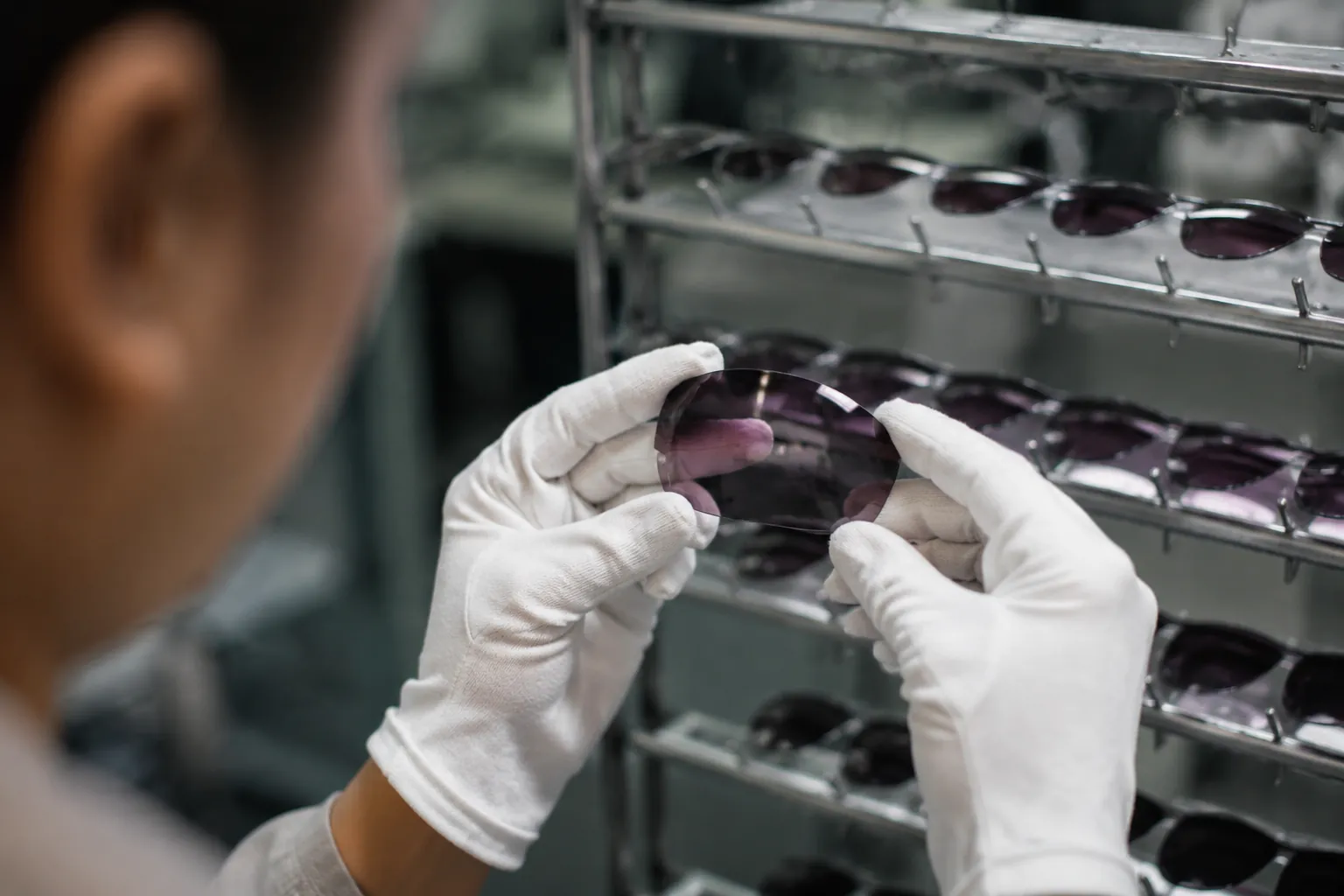
This guide is for brand owners, importers, distributors, and retail buyers ordering custom polarized sunglasses in volume. The real risk is rarely an obviously bad prototype. It is the bulk run that looks fine at first, then fails after edging, frame insertion, heat exposure, storage, or incoming inspection. In polarized programs, the most common failures are haze, rainbow stress distortion, delamination, and polarization axis error. These defects usually trace back to lens construction, coating control, frame curvature, groove tolerance, assembly pressure, or weak final QC. The sections below show where these problems start, what buyers should ask, and where to put control points before deposit, during sampling, and before shipment.
Map the failure points before sample approval
Polarized sunglasses usually fail in four predictable ways: haze, rainbow distortion, delamination, and polarization axis misalignment. These are not random cosmetic defects. They are process signals.
Haze can point to lamination issues, coating variation, contamination, or heat stress. Rainbow patterns usually mean mechanical stress after edging or mounting. Delamination points to weak bonding, poor edge sealing, or too much heat. Axis errors come from poor orientation control during cutting, edging, or pair matching.
That matters because a polarized lens is not a generic part. Performance depends on lens material, lamination method, coating stack, frame design, and assembly control. A clean-looking sample proves very little unless it uses the same lens build, frame geometry, and mounting method planned for bulk production.
Review the program in the same order the factory builds it.
- Confirm lens construction: TAC laminated polarized, PC polarized, nylon polarized, CR-39 polarized, or another build.
- Define optical and cosmetic standards before sampling, including haze limits, scratch standards, and edge condition.
- Confirm base curve and frame groove design match the lens material and thickness.
- Check left-right polarization axis consistency before and after mounting.
- Stress the sample with reasonable heat and handling checks before bulk approval.
- Require final inspection focused on lenses, not only frame finish, hinges, and logo placement.
MOQ and process control are linked. A small pilot order can help validate a new frame-lens combination with less exposure. Bigger volumes improve cost only if the lens build and assembly process are stable. A cheap quote is meaningless if lens construction, hard-coat quality, or mounting tolerance is not controlled and documented.
Haze usually starts in lamination, coating, or frame stress
Haze is a low-contrast, slightly milky appearance that reduces visual sharpness. It makes a lens look cheap even if the tint is acceptable. Buyers often miss it under office lighting. Then the complaints start later.
In polarized production, haze usually comes from a short list of causes.
- Uneven adhesive spread or weak bonding in laminated TAC lenses.
- Dust, oil, or humidity contamination before lamination or hard-coat application.
- Excess heat during lens forming, edging, drying, or storage.
- Coating thickness variation, especially inconsistent hard-coat application.
- Micro-stress from forcing the lens into a groove that is too tight or uneven.
TAC polarized lenses are common because they can deliver good optics at a competitive cost. But they are more sensitive to heat history and adhesive consistency than some monolithic lens types. If the frame front has strong wrap, or if groove dimensions vary, the mounted lens can develop internal stress and apparent haze after assembly. Loose-lens inspection alone is not enough.
Ask for two checks. First, inspect loose lenses against a light box or matte white background before assembly. Second, inspect finished sunglasses after lens insertion under the same conditions. Some factories check only loose lenses and miss stress-induced haze created during mounting.
Ask direct process questions. What groove dimensions are being used? What edging allowance is planned? Is heat used during insertion, and on which frame materials? If operators are force-fitting lenses to compensate for weak frame tolerance, optical quality can drop fast.
Prevention is simple. Write the optical and cosmetic standard into the approval process, require clean lamination and coating conditions, and confirm that the chosen polarized construction suits the frame curve and rim design. Do not assume the lowest-cost polarized option will stay stable in a tightly wrapped fashion frame or a narrow rim profile.
Rainbow distortion usually means mounting stress
Buyers call this defect an oil-slick effect, rainbow wave, or colored interference pattern. In production, it is usually stress birefringence. The polarized lens is under uneven pressure, often near the edge, bridge, or upper rim after assembly. The raw lens may be fine. The finished product is not.
Two stages cause most of the problem. First, edging. If the lens is cut too large for the effective eye wire opening or groove, stress builds as soon as the lens is inserted. Second, design mismatch. A lens that looks acceptable in a lightly curved sample can distort once mounted in a front curve that exceeds what the lens material or thickness can handle.
If rainbow patterns appear mainly near the rim or bridge, suspect assembly pressure before blaming the raw lens sheet.
Buyers should request a mounted-lens cross-polarized check on pre-production samples. It is a practical screen. View the finished sunglasses through a polarized reference filter, a simple crossed-polarizer setup, or another controlled polarized viewing method. Stress patterns show up quickly and can be compared across frame materials, colors, and lens builds.
This matters even more when testing different frame constructions. Injection-molded fronts, acetate fronts made by cutting and CNC processing, and mixed-material combinations do not hold lens pressure the same way. Secondary processes such as paint curing, metal logo insertion, or other heated decoration steps can also affect groove consistency and final lens fit.
At sampling stage, compare stress behavior across colorways and constructions before scaling up. A pre-production failure is useful. It exposes an unstable lens-frame combination before mass production. Fixing groove design, lens thickness, or material choice here is far cheaper than sorting packed goods later.
Delamination is about heat resistance and adhesion control
Delamination means the layers of a polarized lens begin to separate. In TAC constructions, this may show as edge bubbling, cloudy patches, silvering, or partial peeling after heat exposure. It often does not appear during final packing. It shows up later in a hot warehouse, inside a vehicle, or during transit when container temperatures rise.
Buyers need to understand the construction trade-offs. Polarized lenses are not all the same.
| Lens construction | Typical strength | Main failure risk | Best use case |
|---|---|---|---|
| TAC polarized | Good optical clarity and cost efficiency | Delamination, haze, or edge bubbling if heat and adhesive control are weak | General fashion, lifestyle, promotional programs |
| PC polarized | Light weight and high impact resistance | Stress rainbow distortion and surface scratching if hard coat is poor | Sport, youth, active frames, lower breakage-risk programs |
| Nylon polarized | Very good optics, flexibility, and premium feel | Higher material cost and tighter process control requirements | Premium sport and performance eyewear |
| CR-39 polarized | Good optical quality and stable visual performance | Heavier and less impact-resistant than PC | Higher-end fashion where optics are prioritized over impact resistance |
Prevention starts with matching lens type to end use, then checking process discipline. Ask what thermal exposure the lens will see during coating cure, lens shaping, assembly, and storage. Ask whether the factory has already run the same lens construction in the same frame shape. If not, treat the order as a new process combination. Because it is.
For shipment-sensitive orders, require a retained approval sample from the actual production batch, not just from development. Compare finished goods against that retained sample for edge integrity, clouding, and optical appearance before release. An early sample does not protect you if lamination quality or coating control shifts later in production.
Axis misalignment ruins glare control even if the frame looks fine
A polarized lens works only if the filter axis is oriented correctly and consistently. If left and right lenses are misaligned, wearers may get uneven glare reduction, visual discomfort, or visible contrast differences between eyes. This defect is easy to miss in quick visual inspection because the sunglasses can still look clean.
The error can start upstream when polarized sheets or blanks are cut without preserving orientation marks. It can also happen during edging if operators lose the reference position, or later if mixed lots are paired without axis verification. In larger runs, traceability matters. If lens lots are pooled without clear identification, isolating the source of inconsistent glare performance becomes much harder.
The fix is simple. Put axis alignment into the specification sheet and inspection plan. Do not leave it implied. State the intended axis orientation and require checks after edging and again after mounting. If the product is intended for driving or general outdoor use, the axis should match the design intent across both lenses and all production lots.
Also tie the lens program to market compliance. If the product will be sold into regions requiring CE EN ISO 12312-1, ANSI Z80.3, or AS/NZS 1067, your review cannot stop at tint color or logo. Match the test documents to the exact frame-lens combination being ordered, especially if lens category, mirror coating, base curve, material, or thickness changes between SKUs. If your importer or retailer also requires chemical or system compliance, verify whether REACH, FDA registration, ISO 9001, or BSCI documentation is part of the supplier approval package, and confirm what each document actually covers.
Lock down three control gates: deposit, bulk, shipment
The biggest buyer mistake is checking everything at the end. By then, lens defects are already built into the product. Split the control plan into three gates.
- Before deposit: Confirm lens construction, visible light transmission target or lens category, base curve, lens thickness, intended market, decoration methods, packaging format, and required compliance documents. If the product is intended for driving, fishing, beach, or sport use, state that clearly because end use affects lens selection.
- Before bulk production: Approve pre-production samples made with the real lens construction, not a substitute lens used only to speed up sampling. Check haze, stress rainbow, axis consistency, edge condition, logo durability, and lens fit in the actual frame. Review more than one piece if possible, especially when the frame has wrap or tight grooves.
- Before shipment: Inspect by lot using an agreed inspection plan. Check random pairs for visual defects, axis consistency, frame-lens fit, hinge function, labeling, and packaging pressure points. Review carton loading because excessive compression or heat retention can worsen lens issues during transit.
Lead time matters here. A short sample window may be enough for visual approval, but not enough for heat observation or stress checks unless the buyer asks for them. Bulk timing is also more reliable when lens sourcing, lamination, edging, frame production, and final assembly are controlled and traceable rather than spread across uncontrolled subcontractors.
Cost matters too. Unit pricing often improves at higher volumes, but the lowest nominal cost does not matter if failure rates trigger sorting, replacement, return claims, or compliance risk after delivery. In polarized programs, process stability usually matters more than a small unit-price gap.
Use a defect-control checklist, not assumptions
Use this checklist with your supplier for both pilot runs and repeat programs.
- Ask for the exact polarized lens construction, not just the word polarized.
- Confirm whether the sample lens uses the same material and coating stack planned for bulk production.
- Match the lens material to the frame curve, eye shape, groove design, and rim tension.
- Require mounted-sample inspection for rainbow stress patterns under cross-polarized viewing.
- Inspect both loose and assembled lenses for haze.
- Check edge condition for early bubbling, whitening, or separation signs.
- Require left-right axis consistency checks during production and final packing.
- Verify market-specific compliance documents for the exact product configuration.
- Keep a sealed approval sample from mass production, not only from development stage.
- Define rejection standards for lens cosmetics, optical defects, fit, and decoration durability before production starts.
Buyers often overspend on visible extras while under-specifying the lens system. Pad print, silk print, laser marking, metal logo plates, and similar decorations are easy to approve visually. Lens quality is harder to judge, so it often gets less scrutiny. That is the wrong priority. Decoration affects appearance. Lens failure affects performance, claims, and returns.
If one supplier offers a much lower quote than the rest, ask what changed. The savings may come from a different lens construction, thinner or weaker coating, looser cosmetic standards, less axis checking, or weaker lamination control. The right approach is simple: make the sample prove the production method, not just the look. If the factory controls key processes in-house, visibility and accountability may improve, but the buyer still has to define the checks. Most polarized lens failures can be reduced before shipment if the process is specified early and verified at the right stages.
Have a custom sunglasses project in mind?
Send us your styles, target market and quantities and we will return a detailed quote with MOQ, lead time and a sample plan.
Get a QuoteWhy source this from Wenzhou with LumiShades
Wenzhou in Zhejiang Province is widely regarded as China’s eyewear manufacturing capital, producing a large share of the world’s sunglasses. That concentration matters to buyers: a deep local supply chain for acetate sheet, hinges, lens blanks, plating and packaging means shorter component lead times, easier color and material matching, and a workforce with decades of eyewear-specific skill. LumiShades has manufactured in this ecosystem since 2009, and our vertical integration — in-house injection molding, acetate cutting, CNC milling, lens tinting, decoration and quality control — means no part of your order is quietly subcontracted to a workshop you cannot audit.
For international buyers, that vertical control translates into accountability. When a single factory owns every step, defects are traced and fixed at source rather than bounced between vendors, and your specifications survive intact from first sample to bulk. We back this with 15+ years of experience, shipments to 60+ countries, more than 5 million pairs produced per year and a 98.5% on-time delivery rate. Our certifications — CE EN ISO 12312-1, FDA registration, ANSI Z80.3, AS/NZS 1067, REACH, ISO 9001 and BSCI audit — mean the compliance documentation your market requires already exists. Explore our manufacturing capabilities and quality control process to see how this works in practice.
Frequently asked questions
How can I tell if a polarized sample is likely to fail later in bulk? Do not review only the loose lens or a single showroom sample. Ask the supplier to provide finished pre-production samples made with the exact lens material, coating stack, thickness, and frame construction intended for bulk. Then check four things: haze under strong diffuse light, rainbow stress near the rim and bridge under cross-polarized viewing, edge integrity for bubbling or separation, and left-right polarization consistency. Also ask whether the sample came from the same production route planned for mass production or from a temporary substitute process. If the supplier cannot confirm that, the sample has limited predictive value.
Are TAC polarized lenses always a bad choice for bulk orders? No. TAC polarized lenses are widely used because they can balance optics and cost well. The risk is not the material name itself but the quality of lamination, adhesive control, edge finishing, coating application, and heat exposure during assembly and transit. TAC can perform well in bulk if the frame curve is appropriate, the groove fit is controlled, and the supplier has stable lamination and QC procedures. Ask what TAC structure is being used, how edge quality is checked, and whether the same construction has already been validated in the same frame style.
What should I put on a purchase order for polarized sunglasses besides color and logo? Include the full lens specification and the inspection basis. At minimum, state lens construction, lens color, visible light transmission target or lens category, polarization requirement, intended axis orientation, lens thickness, base curve, frame material, intended market, required standards such as CE EN ISO 12312-1, ANSI Z80.3, or AS/NZS 1067 where applicable, any REACH requirement, packaging format, approved sample reference, and final inspection requirements. If your supplier holds documents such as FDA registration, ISO 9001, or BSCI, identify whether those are part of your vendor approval file, but do not treat them as substitutes for product-specific lens QC.
Can polarization defects appear after goods leave the factory? Yes. Delamination, edge bubbling, and some haze issues may appear only after heat exposure during warehousing, transport, or retail storage. That is why buyers should ask for a retained sample from the actual production batch and should review packed goods, not only bench samples before packing. If the route includes hot-climate storage or ocean freight, ask the supplier what checks were done on the final mounted lens and whether the chosen lens construction is known to be stable for that use case.
Does compliance testing guarantee there will be no haze or rainbow distortion? No. Compliance testing and production QC are different controls. Standards such as CE EN ISO 12312-1, ANSI Z80.3, and AS/NZS 1067 address defined safety and performance requirements, but they do not replace process checks for mounting stress, cosmetic haze, lamination variation, or batch consistency. A buyer should still require in-process inspection, mounted-lens stress checks, and comparison against approved production samples. Use compliance documents to confirm regulatory fit for the target market, and use QC checkpoints to control actual production quality.
Ready to start?
Explore our wayfarer sunglasses or request a quote — our sales team replies within 12 hours.
Request a Quote