
Gradient, Solid, or Flash Mirror Lenses: Buyer Guide
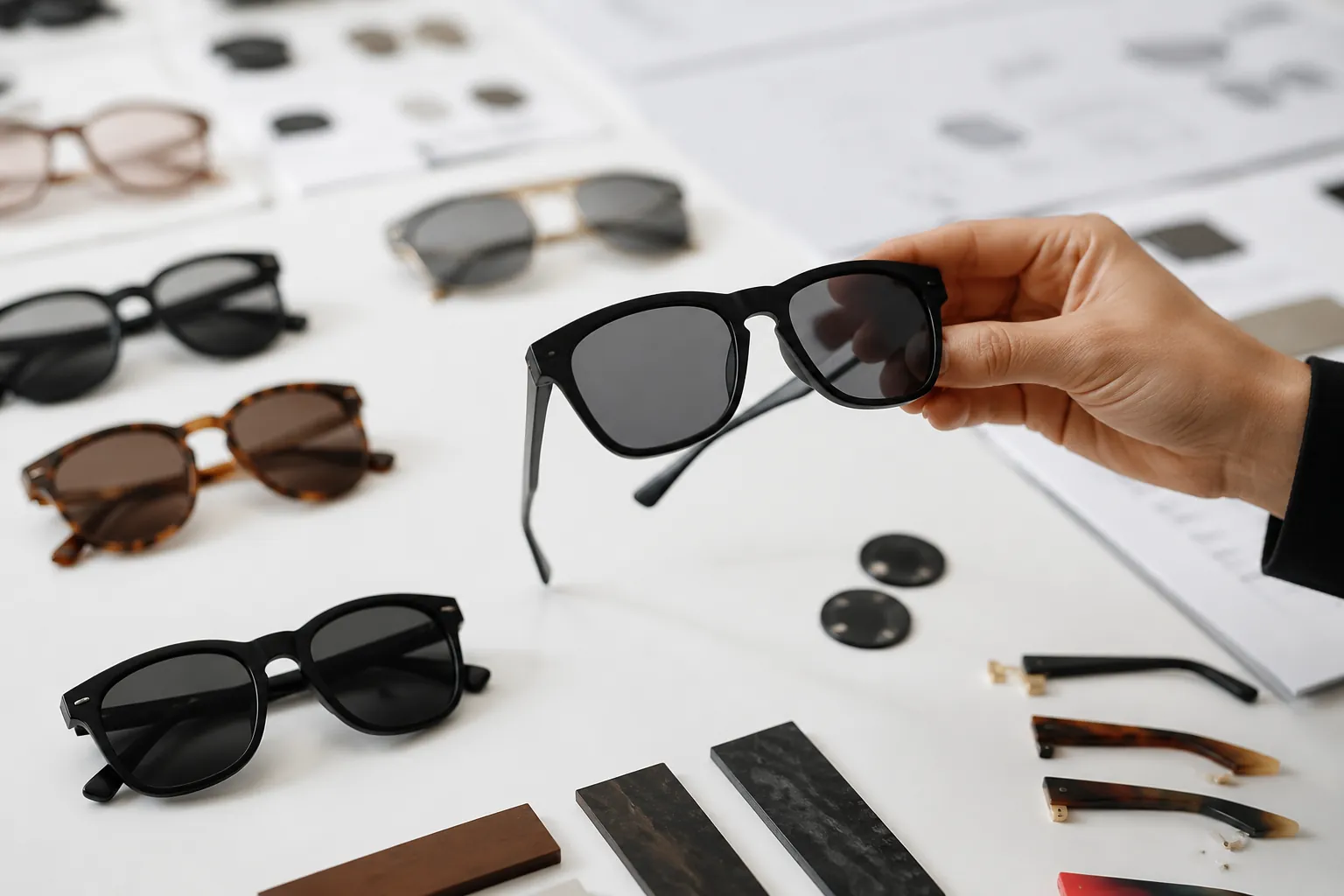
This guide is for brand owners, importers, distributors, and retail buyers sourcing custom sunglasses at volume. It explains how gradient, solid, and flash mirror lens effects change unit cost, process difficulty, lead time, cosmetic reject risk, durability, and compliance review. Decide lens effect early. It affects more than looks. It also affects margin, packing, claims, and reorder stability. The goal is simple: choose an effect that fits the retail price, holds up in actual use, meets destination-market requirements for the finished product, and still works after freight, duties, and returns.
Start with the retail tier, not the effect
Many buyers start by asking which lens effect looks best. For sourcing, that is usually the wrong question. Start with the retail band, the ex-factory cost limit, the expected return rate, and the customer's tolerance for cosmetic wear after purchase.
For entry-price programs, solid tint is usually the safest choice. It is easier to control in production, easier to repeat across reorders, and less likely to trigger appearance complaints after shipping or store handling. Gradient can add perceived value without changing the basic lens category, but it needs tighter control. Top density, fade length, and left-right matching all matter. Flash mirror has strong shelf impact. It also adds a reflective surface that is easier to mark and harder to inspect.
That changes the buying logic. Low-price promotional programs, off-price retail, chain-store private label, and travel-retail basics often fit solid tint best. Mid-tier fashion programs can justify gradient or a light flash mirror if front-facing appearance helps sell-through. Higher visual-tier assortments can support stronger mirror effects, but only if the buyer accepts tighter cosmetic standards, slower approvals, and a higher cost position.
- Solid tint: best for price-sensitive programs, replenishment styles, kids' sunglasses, and sports basics where repeatability matters more than novelty.
- Gradient tint: best for fashion-led shapes where front-facing appearance supports the sale and the brand can manage moderately tighter process control.
- Flash mirror: best for trend capsules, visual-merchandising programs, and seasonal collections where display impact is a primary selling tool.
That order matters. Lens effect is not just decoration. It changes process difficulty, inspection time, packing needs, and the risk of post-sale complaints.
What changes on the factory floor
These three effects are not just color choices. They can change the production route, the control points, and the usual reasons for rejection.
A standard solid lens is usually the most direct option. The lens is molded or cut, edged to shape, cleaned, tinted or otherwise brought to the target color and transmission, surface-treated if required, then inspected and assembled. On a basic polycarbonate or TAC sunglass program, this is often the easiest route to keep stable. The main controls are color consistency, visible light transmission target, edge finish, and correct lens orientation after insertion.
A gradient lens needs a controlled color transition from top to bottom. That means controlling the parameters that determine where the fade starts, how dark the top area becomes, and how closely the left and right lenses match. Small shifts in positioning or timing can move the fade line enough to be obvious, especially on oversized fashion shapes, high-base curves, and very light lower fades. Because the effect is intentionally uneven, visual approval standards must be clearer than for a plain solid lens.
Flash mirror adds a reflective surface layer after the base lens color is set. Depending on the factory route, that mirror effect may be applied by vacuum deposition or a similar coating process. The key point for buyers is simple: mirror adds another visible cosmetic surface. It can be rejected for tone inconsistency, haze, pin marks, rub marks, edge exposure, or scratches that would not exist on a plain solid lens.
Material choice matters too. Polycarbonate is common because it is light and impact resistant, but the final look depends heavily on coating quality and handling control. Acrylic appears in some fashion programs, but surface durability should be reviewed carefully. Nylon and TAC are also used in specific performance or polarized constructions, with different cost and process effects. On a mirror program, the interaction among lens material, surface treatment, assembly handling, and packing often matters more than the mirror color itself.
Cost, MOQ, and lead-time trade-offs
There is no universal price for any lens effect. Frame material, lens base material, polarization, hardware, logo treatment, and packaging all affect the final cost. Still, the commercial pattern is consistent: solid tint is usually the lowest-risk option, gradient sits in the middle, and flash mirror usually costs more because process time, cosmetic sensitivity, and reject pressure rise.
| Lens effect | Typical MOQ fit | Relative unit cost | Yield risk | Typical lead-time pressure | Common cost driver |
|---|---|---|---|---|---|
| Solid tint | Low to high volume | Lowest | Low | Lowest | Base tint and standard inspection |
| Gradient tint | Low to high volume | Medium | Medium | Moderate | Extra color-control and matching time |
| Flash mirror | Usually more efficient at scale | Highest | Highest | Highest | Additional coating, surface protection, and cosmetic rejects |
MOQ depends on the supplier's equipment, material purchasing model, and sampling workflow. In small runs, setup time and approval effort take a larger share of unit cost. As volume increases, material planning and inspection flow usually improve. Even so, mirror programs tend to carry more commercial risk than solid programs because more of the value sits in appearance, not just basic function.
Lead time shifts as well. Solid tint is usually the easiest to sample and repeat. Gradient can slow approval because fade position and top density need explicit confirmation. Mirror can add more time because buyers often need to approve both the underlying tint and the reflected appearance under standard inspection light. One common sourcing mistake is changing the lens finish after sample sign-off. Moving from solid to gradient, or from one mirror tone to another, often reopens appearance approval and may also require a packing review.
Keep the commercial math clear. Solid is easiest to protect inside a tight margin. Gradient can add retail value with manageable extra risk. Flash mirror can work, but only if the price leaves room for stricter cosmetic review, more protective packing, and a realistic reject allowance.
Durability is where mirror lenses get filtered out
Visual appeal wins the first order. Wear resistance decides whether the style repeats.
Solid tinted lenses usually hold up best in daily handling because there is no reflective top layer to show rub marks or fine scratches as easily. If the lens material and surface treatment are suitable, gradient lenses can perform much the same because the effect is a tint variation, not a separate exposed finish. Flash mirror is different. Even when made correctly, the reflective layer is more likely to show fine scratches, wipe marks, carton rub, and abrasion from weak case quality or loose bulk packing.
That does not mean buyers should avoid mirror. It means they should match mirror to the use case. Fashion sunglasses sold for occasional wear have a different risk profile from sport sunglasses carried loose in a car console, beach bag, or backpack. A strong blue or silver flash mirror on a low-price item may look good at unboxing and still create claims later if the retail packaging and use environment are rough.
Durability also depends on the full construction around the lens. Tight frame grooves can create insertion marks at the edge. Loose bagging can allow lens-to-lens or lens-to-frame rub in transit. Weak outer cartons can increase vibration damage on mirror surfaces during export freight. Buyers choosing mirror should assume they may need microfiber pouches, individual bagging, cleaner work-in-process handling, and stronger master-carton packing.
- Choose solid for kids, travel-retail basics, convenience-channel programs, and price-driven replenishment where handling abuse is predictable.
- Choose gradient for women's fashion, classic acetate shapes, and styles where a softer face presentation supports the retail story.
- Choose flash mirror for trend product, seasonal capsules, and strong visual-display programs where appearance is the main selling point.
- Upgrade packing when choosing mirror: microfiber pouch, individual bagging, separated orientation in carton cells, and better outer-carton protection reduce rub damage.
Compliance applies to the finished lens
Some buyers treat lens effect as cosmetic and compliance as separate paperwork. That is a mistake. The finished sunglass lens still has to meet the destination-market requirement after tinting, coating, assembly, and final inspection.
For sunglasses programs, buyers commonly ask for alignment with CE EN ISO 12312-1, ANSI Z80.3, and AS/NZS 1067, depending on market. Material-related requests may include REACH. For the US market, some buyers also ask about FDA registration for the supplier, but that does not replace product-level verification of the actual lens-frame configuration being sold. Supplier management systems and social-compliance credentials such as ISO 9001 and BSCI may matter for vendor qualification, but they are not substitutes for finished-product review.
Lens effect can influence visible light transmission and appearance consistency. A dark solid smoke lens may fall into a different transmission category from a fashion gradient with a lighter lower section. Mirror coatings mainly change outside appearance, while transmission class is still determined primarily by the underlying lens. Do not assume compliance from a sales color name. Terms such as "Category 3 smoke" or "blue flash mirror" are only descriptions until supported by the relevant test record for the finished specification.
Ask the factory to confirm the result on the actual production build: lens material, base tint, mirror or non-mirror finish, frame wrap, and any polarization layer used. This matters even more when the assortment includes multiple darkness levels, multiple mirror colors, or one frame sold into more than one market.
The safer approach is simple. Tie approval to the exact SKU being produced, not just to the factory's general credential list.
How to choose by buying scenario
The fastest way to decide is to work backward from the commercial brief, not from inspiration images.
- Set the retail target first. If the retail ceiling is low and the margin is already tight after packaging and freight, solid tint is usually the default choice.
- Define the selling environment. Busy display walls, airport retail, and online thumbnails often reward gradient and mirror because they stand out more than plain smoke lenses.
- Estimate handling abuse. If the product will be tried on heavily in-store, sold without a pouch, or shipped in value packaging, strong mirror becomes riskier.
- Check the reorder plan. Core programs benefit from the effect with the easiest color repeatability. That usually favors solid tint, then gradient, then mirror.
- Match effect to material. A low-cost polycarbonate fashion program often carries gradient more safely than an aggressive mirror if post-sale wear is a concern.
- Lock the sample exactly. Approve the final lens effect on the actual frame, with the actual logo application and packaging plan, before bulk starts.
In practical terms: if margin is tight, use solid. If the product needs more display appeal and can absorb some extra process risk, use gradient. If the collection depends on visual punch and the retail price can support stricter cosmetic QC, better packing, and some yield loss, use flash mirror.
QC points buyers should put on the purchase order
Many lens-effect disputes start with vague paperwork. "Blue mirror" is not a production standard. Neither is "light fashion gradient." The factory needs clear approval points, and the buyer needs them recorded before bulk starts.
Define the lens effect clearly in both approval records and bulk QC instructions. That usually includes base lens color, target darkness range or transmission target where relevant, gradient direction if applicable, mirror tone, acceptable left-right variation, scratch standard, and packing method. Buyers should also ask whether final cosmetic QC is done before lens insertion, after insertion, or both, because some defects only show after assembly pressure is applied.
Useful tolerances can still be simple. For example, require left and right gradient fade lines to appear visually matched under the agreed inspection light, mirror tone to match the approved sealed sample, and no obvious scratches visible at the normal inspection distance defined in the QC standard. The point is not to write lab language into the PO. The point is to give production, QC, and any third-party inspector the same reference.
- For solid lenses: confirm color name, darkness range or transmission target, acceptable batch variation, and whether minor edge color shift after insertion is acceptable.
- For gradient lenses: confirm top density, fade length in visual terms or by millimeter reference from the lens top, bottom clarity, and left-right match standard.
- For flash mirror: confirm mirror color, reflectivity appearance, acceptable edge exposure, scratch standard, and whether microfiber pouch or individual bagging is mandatory.
- For all lenses: confirm compliance target, logo placement, assembly orientation, inspection stage, sampling level, and approved reference sample code or date.
A short, precise PO cuts post-shipment arguments and turns the approved sample into a real control document.
A practical shortlist for most buyers
If you need a simple rule, use this one.
Choose solid tint if the order is cost-sensitive, repeatable, and expected to survive heavy handling. It is usually the safest option for large-volume basics, first-time replenishment programs, and value retail where returns can erase margin fast.
Choose gradient if the frame shape is fashion-led and the lens needs to soften the face look without pushing too far up in cost or cosmetic risk. It often works well on women's acetate, metal-acetate mixed styles, and classic oversized shapes where front-facing appearance matters more than rugged use.
Choose flash mirror if the product needs immediate display impact and the retail price leaves room for stricter cosmetic control, better packing, and some expected yield loss. Keep the program disciplined: fewer colorways, stable timeline, clear approvals, and realistic expectations on wear resistance.
That is the trade-off. More visual impact usually means more process complexity. Buyers who account for that early usually get more predictable landed results, fewer cosmetic claims, and better reorder consistency.
Have a custom sunglasses project in mind?
Send us your styles, target market and quantities and we will return a detailed quote with MOQ, lead time and a sample plan.
Get a QuoteWhy source this from Wenzhou with LumiShades
Wenzhou in Zhejiang Province is widely regarded as China’s eyewear manufacturing capital, producing a large share of the world’s sunglasses. That concentration matters to buyers: a deep local supply chain for acetate sheet, hinges, lens blanks, plating and packaging means shorter component lead times, easier color and material matching, and a workforce with decades of eyewear-specific skill. LumiShades has manufactured in this ecosystem since 2009, and our vertical integration — in-house injection molding, acetate cutting, CNC milling, lens tinting, decoration and quality control — means no part of your order is quietly subcontracted to a workshop you cannot audit.
For international buyers, that vertical control translates into accountability. When a single factory owns every step, defects are traced and fixed at source rather than bounced between vendors, and your specifications survive intact from first sample to bulk. We back this with 15+ years of experience, shipments to 60+ countries, more than 5 million pairs produced per year and a 98.5% on-time delivery rate. Our certifications — CE EN ISO 12312-1, FDA registration, ANSI Z80.3, AS/NZS 1067, REACH, ISO 9001 and BSCI audit — mean the compliance documentation your market requires already exists. Explore our manufacturing capabilities and quality control process to see how this works in practice.
Frequently asked questions
Does flash mirror always mean a polarized lens? No. Flash mirror and polarization are separate specifications. Flash mirror describes a reflective surface appearance on the outside of the lens. Polarization describes a filter construction that reduces certain types of glare. A lens can be mirrored without being polarized, and a polarized lens can be sold without any mirror finish. On a purchase order, list them separately so the factory cannot treat one as implied by the other.
Which lens effect is safest for a first order at 300 to 500 pairs? Solid tint is usually the safest starting point because it is generally the easiest to match, inspect, and repeat. If you are placing a first order at 300 to 500 pairs, solid reduces the number of variables that can go wrong during approval and bulk production. Gradient can still work at that volume, but only if you approve the fade position, top darkness, and left-right match on the actual frame before bulk release. Mirror can work too, but it should be chosen only if shelf impact is central to the program and the packaging protects the surface adequately.
Do gradient lenses increase lead time? They can. Gradient lenses require more approval on fade position, top density, and left-right consistency than solid lenses. If the target is vague, sampling may take longer because the buyer and factory are reacting to appearance rather than working from a precise reference. To reduce delay, approve one sealed sample on the exact frame, state the inspection light condition, and record whether the fade reference is visual only or tied to a millimeter position from the top of the lens.
What should I approve in the sample before bulk production? Approve the exact lens effect on the actual production configuration: frame, lens material, lens color, darkness or transmission target where applicable, mirror or non-mirror finish, logo application, and packaging method. For gradient, confirm fade direction, top density, and left-right match. For mirror, confirm reflected tone, edge appearance, and surface quality under the agreed inspection light. Also record whether the approved sample is the master reference for third-party inspection, because that avoids arguments later.
Can a low-price program still use mirror lenses? Yes, but it should be evaluated carefully. Mirror adds cosmetic sensitivity, can increase reject risk, and often needs better packing to avoid rub damage. A low-price program can still use mirror if the visual effect is commercially important, the surface standard is realistic, and the packaging is specified to protect the lens during transit and store handling. Before approval, ask the supplier to confirm the exact mirror appearance, packing method, and the finished-product compliance basis for that SKU.
Ready to start?
Explore our square sunglasses or request a quote — our sales team replies within 12 hours.
Request a Quote