
Choose the Right Logo Method for Custom Sunglasses
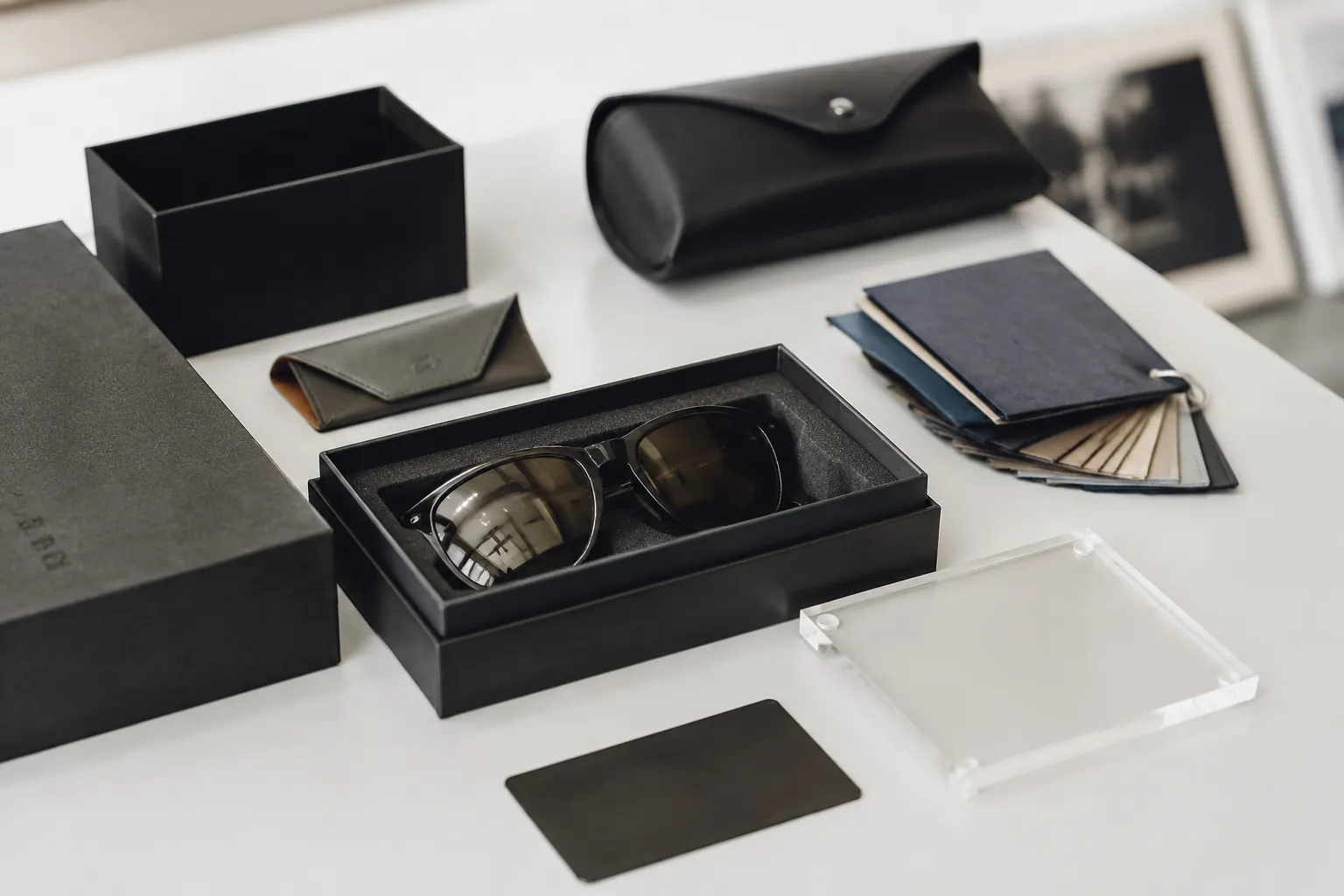
This guide is for brand owners, importers, distributors, and retail buyers comparing branding options for custom sunglasses. Choose the logo method before sample approval, not after artwork is finalized. Decoration can affect temple geometry, fixture design, reject risk, unit cost, and how the product looks after normal use. It is not a minor add-on. A frame can pass assembly and lens inspection, then still look wrong for its price point if the branding feels too cheap or wears too fast. The right choice depends on retail positioning, order volume, frame material, logo visibility, and the factory's ability to control the process.
Start With Retail Positioning, Not the Artwork
Many buyers start by sending a logo file and asking which methods are possible. That is usually the wrong first step. Start with retail positioning instead: price band, expected in-hand feel, and how much visible branding contributes to perceived value. A one-color print may be fine on an event sunglass. The same treatment can look underfinished on an acetate style meant for a premium shelf.
Most custom sunglasses programs rely on three common methods: pad printing, laser engraving, and applied metal logo plates. All three can work. The real question is fit. Does the method match the frame construction, selling price, and expected product life? Decoration can also change engineering decisions upstream. A logo plate may need a recess and enough temple thickness to support it. Engraving needs a stable logo zone. Printing needs a surface that allows consistent ink adhesion.
If a collection covers more than one retail tier, one branding method across every SKU is not always the best choice. Entry-level seasonal styles may use print. Carryover mid-market styles may use engraving. Premium styles may justify plates. That is normal. Product architecture and brand presentation do not stay the same across price bands.
- Pad printing usually fits entry-price programs, promotional drops, chain retail, and volume styles where logo color matters and cost control is strict.
- Laser engraving usually fits mid-market to premium styles that need a cleaner, more permanent mark without adding a separate component.
- Metal logo plates usually fit premium positioning where tactile hardware and stronger brand presence support a higher wholesale and retail price.
If the factory controls molding, acetate processing, decoration, and QC in-house, the decision is easier. The logo method can be built into the frame from the start instead of added late in sampling.
Head-to-Head: Value, Cost, and Wear Resistance
This is the comparison most buyers need before approving samples. Exact cost and timing vary by artwork size, color count, frame construction, logo location, and factory capability. The ranges below are indicative only. Confirm them against the actual frame and logo.
| Method | Best Retail Positioning | Typical Added Cost per Pair | Durability in Use | Lead Time Impact | Main Process Risks |
|---|---|---|---|---|---|
| Pad printing | Entry to mid-market | Usually the lowest-cost option; exact adder depends on color count, print positions, setup, and order volume | Fair to good; strongly affected by ink system, surface preparation, cure, and abrasion at touch points | Usually low after artwork approval; may add time for plate setup and adhesion checks | Wear-through, edge chipping, color variation, and poor adhesion on difficult surfaces |
| Laser engraving | Mid-market to premium | Usually higher than basic print but lower than a separate metal component; exact adder depends on cycle time and material response | Good to very good when the material engraves cleanly and the mark does not rely on a surface-applied ink | Low to moderate; may add time for fixture setup and parameter testing | Low contrast, burn halo, whitening, rough edges, or show-through on thin parts |
| Metal logo plates | Premium, giftable, brand-forward product | Usually the highest-cost option because it adds a component, finishing, assembly, and stricter inspection | Very good when the pocket, attachment method, and alignment are engineered correctly | Usually the greatest impact because plate fabrication, finishing, inspection, and assembly must be added to the schedule | Misalignment, plate loss, sink marks, adhesive failure, and visible gaps around the recess |
Volume changes the math quickly. On a small pilot run, setup and handling costs usually dominate. At higher volumes, engraving or plates may be easier to justify if they support the target retail price, improve presentation, or reduce cosmetic complaints.
Compare the same frame in all relevant methods before making the final call. That makes the tradeoff clearer. Sometimes the upgrade is real. Sometimes it is just extra cost on a showroom sample.
Pad Printing: Low Entry Cost, High Process Dependence
Pad printing is widely used because it is flexible, fast, and cost-efficient. It can reproduce small logos, spot colors, and fine details on many frame types. Its weakness is simple: the mark sits on the surface. So adhesion, cure quality, and abrasion resistance matter more than the first sample photo.
On injection-molded plastics such as TR90 or polycarbonate, the print area usually needs proper cleaning and may require a compatible primer or ink system, depending on the substrate and finish. On acetate, polishing residue or wax can reduce adhesion if surface preparation is inconsistent. On soft-touch or rubber-coated finishes, some coatings are difficult to print reliably. Test that early. Not after sample sign-off.
Geometry matters too. Flat or gently curved areas are easier to control than narrow, sharply curved temples. Multi-color prints raise registration risk. If a buyer wants a metallic look, the result usually comes from metallic ink rather than actual hardware. That can be fine on promotional styles. It often looks less convincing on premium product.
Use pad printing when the product needs visible color, the logo supports a campaign or seasonal program, and the retail target does not justify added hardware. It also works well when sampling speed and low setup cost matter. Buyers should ask for practical checks, not just clean images:
- Dry-rub or abrasion check after full cure using the factory's documented internal method
- Adhesion tape check on the actual production material and finish
- Sweat, oil, or handling evaluation for logos placed on inside-temple touch areas
- Color approval against an agreed reference under a defined light source
Printing is often the easiest method to add. It can also become expensive fast if poor adhesion turns saleable frames into cosmetic rejects.
Laser Engraving: Durable, but Material-Sensitive
Laser engraving is often the most practical middle-ground option for buyers who want cleaner branding and better wear resistance without the cost and assembly complexity of added hardware. Instead of depositing ink, it alters the surface to create a permanent mark. That usually makes it less vulnerable than print to rubbing, skin oils, and routine handling.
The trade-off is visibility. Engraving does not create a colored logo unless it is followed by a fill process, which adds cost and another quality variable. The result depends on the contrast created by the base material. On some glossy acetates or coated metal parts, that can look sharp and restrained. On some matte injected plastics, the logo may read too softly unless the parameters are tuned carefully and the material responds cleanly.
Process control is critical. Material composition, surface finish, coating thickness, and part thickness can all change the result. Too little energy can produce a weak or inconsistent mark. Too much can create halo, whitening, rough edges, gloss change, or visible marking on the reverse side of a thin temple. Test on the actual production material. A similar-looking substitute is not enough.
Choose engraving when the logo does not need bright color, the brand wants a quieter premium look, and long-term cleanliness matters more than high shelf visibility. Buyers should confirm the appearance under normal retail lighting and ask the factory to lock approved process parameters to the exact material and finish used in bulk production.
Metal Logo Plates: Strongest Value Signal, Tightest Tolerance Window
Metal logo plates create the clearest immediate value signal because customers usually notice hardware before they notice a printed or engraved detail. That is why plates are common on premium sunglasses, giftable sets, and styles where branding is part of the purchase decision. But this is not a simple decorative upgrade. It changes part design, machining, assembly, and inspection from the start.
A reliable plate program begins with temple design. The logo area needs enough width, wall thickness, and stability to support either a recess or a defined bond area. Thin sporty temples can be difficult because they may not provide enough land area for secure attachment or a clean visual seat. If the frame was not designed for a plate, adding one late in development raises reject risk.
Attachment matters as much as appearance. Adhesive-only construction can work when the surface and bond area are appropriate, but many buyers prefer some form of mechanical location such as pins, tabs, or controlled pocket geometry to reduce drift during assembly. Plate edge quality matters too. The part should feel intentional in hand, not sharp, loose, or unfinished.
QC for logo plates is stricter than many buyers expect. Position should be checked against a fixed datum, not by eye alone. Common inspection points include:
- Alignment: consistency side to side and distance from hinge or temple end
- Flushness: no visible proud edge, rocking, or uneven seating
- Bond integrity: no lifting after the factory's defined handling or adhesion check
- Surface quality: no scratches, plating defects, burrs, or glue overflow
Plates can justify their added cost when the frame architecture supports them and the retail positioning needs them. If the base product feels cheap, a metal plate usually makes that mismatch more obvious.
How Branding Changes MOQ, Price, and Lead Time
Branding changes sourcing math, not just styling. A supplier may offer a low MOQ for the frame itself, but the right decoration method still depends on how setup cost, yield risk, and assembly time behave at the target order volume. Evaluate decoration at the same time as frame construction and packaging. Those factors shape landed cost and schedule together.
As a practical rule, small trial quantities are useful for market testing, influencer programs, or concept validation, but they are not always the most efficient volume for premium branding. Setup cost for printing plates, fixtures, engraving programs, or metal components has less production to absorb it. At larger volumes, upgraded decoration often makes more sense if the finished look supports the retail plan.
Lead time usually moves the same way. A straightforward print or engraving program may fit within a normal sample development window if artwork, size, and position are clear. Metal plates usually add more time because a separate component has to be made, finished, inspected, and assembled. Any late change to plate design or finish can stretch the schedule further.
Smart buyers ask for three quotes on the same frame:
- Pad print on one side and both sides
- Laser engraving at the same approximate logo size
- Logo plate with a clear specification for finish, thickness, and attachment method
That side-by-side quote shows whether the premium method is justified at the planned order size instead of simply looking better on a sample table.
Tie Compliance and Material Checks to the Branding Method
Decoration should never interfere with compliance markings, mandatory information, or the structural integrity of the frame. Buyers still need to verify that the finished product and documentation match the destination market and the actual frame-lens configuration being sold. Depending on market and channel, that may involve requirements or documentation tied to standards such as CE EN ISO 12312-1, ANSI Z80.3, or AS/NZS 1067. Branding does not replace those basics.
Material behavior is central. Injection-molded plastics, acetate, and metal respond differently to ink adhesion, laser energy, and bonded hardware. A deep engraving near a stress-prone hinge area can hurt cosmetic quality even if the part still functions. A plate placed on a thin temple section can create sink, distortion, or weak attachment. A printed mark can fail cosmetically while the sunglass still meets optical requirements. That leaves the buyer with compliant but hard-to-sell inventory.
Before bulk approval, request documented checks tied to the chosen route:
- Location drawing showing decorative marks versus required markings, with dimensions from a fixed datum.
- Method-specific durability check, such as abrasion and adhesion evaluation for print, parameter confirmation for engraving, or attachment verification for bonded plates.
- Signed golden sample for logo size, position, color or finish, edge quality, and surrounding surface appearance.
Also confirm whether any material or finish changed between prototype and bulk. A change in acetate batch, coating, resin grade, or finishing process can alter logo outcome even if the artwork stays the same. Buyers who treat decoration as a controlled manufacturing step avoid many late-stage quality disputes.
A Simple Framework for the Final Choice
If the choice still feels unclear, reduce it to four buying questions. First, what should the customer notice first? If the answer is logo color and shelf visibility, printing is usually the strongest starting point. If the answer is restraint, permanence, and a quieter premium look, engraving is often the better fit. If the answer is hardware presence and a stronger giftable feel, plates deserve serious review.
Second, how long must the branding keep its intended appearance? A short campaign run may tolerate surface printing. A carryover style expected to stay in market longer may benefit from engraving or a well-engineered plate. Third, what is the real cost target at the actual order volume? Small orders magnify setup cost. Larger orders make upgraded decoration easier to defend. Fourth, what can the frame physically support? A thin performance temple may print well but not hold a plate securely. A thicker acetate temple may support all three methods.
One rule prevents a lot of waste: do not use a premium logo method to rescue a weak product. Decoration should reinforce value already present in the frame, lens, fit, packaging, and compliance readiness. If the underlying product feels cheap, a metal plate usually exposes the mismatch. When frame construction and branding method line up, the result looks intentional, durable, and commercially coherent.
Have a custom sunglasses project in mind?
Send us your styles, target market and quantities and we will return a detailed quote with MOQ, lead time and a sample plan.
Get a QuoteWhy source this from Wenzhou with LumiShades
Wenzhou in Zhejiang Province is widely regarded as China’s eyewear manufacturing capital, producing a large share of the world’s sunglasses. That concentration matters to buyers: a deep local supply chain for acetate sheet, hinges, lens blanks, plating and packaging means shorter component lead times, easier color and material matching, and a workforce with decades of eyewear-specific skill. LumiShades has manufactured in this ecosystem since 2009, and our vertical integration — in-house injection molding, acetate cutting, CNC milling, lens tinting, decoration and quality control — means no part of your order is quietly subcontracted to a workshop you cannot audit.
For international buyers, that vertical control translates into accountability. When a single factory owns every step, defects are traced and fixed at source rather than bounced between vendors, and your specifications survive intact from first sample to bulk. We back this with 15+ years of experience, shipments to 60+ countries, more than 5 million pairs produced per year and a 98.5% on-time delivery rate. Our certifications — CE EN ISO 12312-1, FDA registration, ANSI Z80.3, AS/NZS 1067, REACH, ISO 9001 and BSCI audit — mean the compliance documentation your market requires already exists. Explore our manufacturing capabilities and quality control process to see how this works in practice.
Frequently asked questions
Which branding method holds up best on sunglasses used daily? In most cases, laser engraving and a well-engineered metal logo plate hold up better than pad printing in daily use. Engraving usually lasts well because the mark is created in the material rather than applied on top of it. A plate can also perform well if the temple was designed for it and the attachment method is validated. Pad printing can still be the right choice, but buyers should ask the factory for documented abrasion and adhesion results on the exact production material and finish, not just a clean-looking sample.
At what order size does a metal logo plate start to make commercial sense? There is no fixed break point. It depends on frame price, brand positioning, plate design, and the factory's setup cost. In practice, plates are harder to justify on very small trial runs because component setup, assembly, and stricter QC add cost quickly. They usually make more sense when order volume is large enough to spread those costs or when the retail strategy clearly depends on a hardware-led premium look. Ask for a side-by-side quote for print, engraving, and plate on the same frame, then compare the added cost against the intended wholesale and retail price.
Can I use the same logo artwork for printing, engraving, and plates? Usually yes as a starting file, but often not without adjustment. Fine lines, tight spacing, and very small counters that print well may disappear in engraving or fill in on a small metal plate. Ask the supplier to review minimum stroke width, spacing, corner detail, and final logo size separately for each method before sampling. The most practical approval route is method-specific artwork confirmation plus a physical sample of each option on the actual frame.
Does decoration choice affect bulk lead time? Yes. Pad printing and laser engraving usually add less lead-time pressure once artwork, position, and fixtures are approved, although both may still require setup and material testing. Metal plates often add the most time because a separate component has to be manufactured, finished, inspected, and assembled. To control schedule risk, buyers should confirm whether the plate is custom-made, whether finish approval is required before assembly, and whether any secondary tooling or pocket revision is needed on the frame.
How should I approve a decoration sample before bulk production? Approve against a signed golden sample backed by technical documentation. At minimum, ask for a location drawing with dimensions from a fixed datum, a clear definition of logo size and finish, and a method-specific durability record such as adhesion or abrasion results for print, locked engraving parameters for the approved material, or attachment verification for plates. Also confirm that the approved sample uses the same frame material, surface finish, and branding method planned for bulk production. Visual approval alone is not enough for repeatable quality.
Ready to start?
Explore our sport wrap sunglasses or request a quote — our sales team replies within 12 hours.
Request a Quote