
Nose Pads and Fit Specs That Reduce Sunglasses Returns
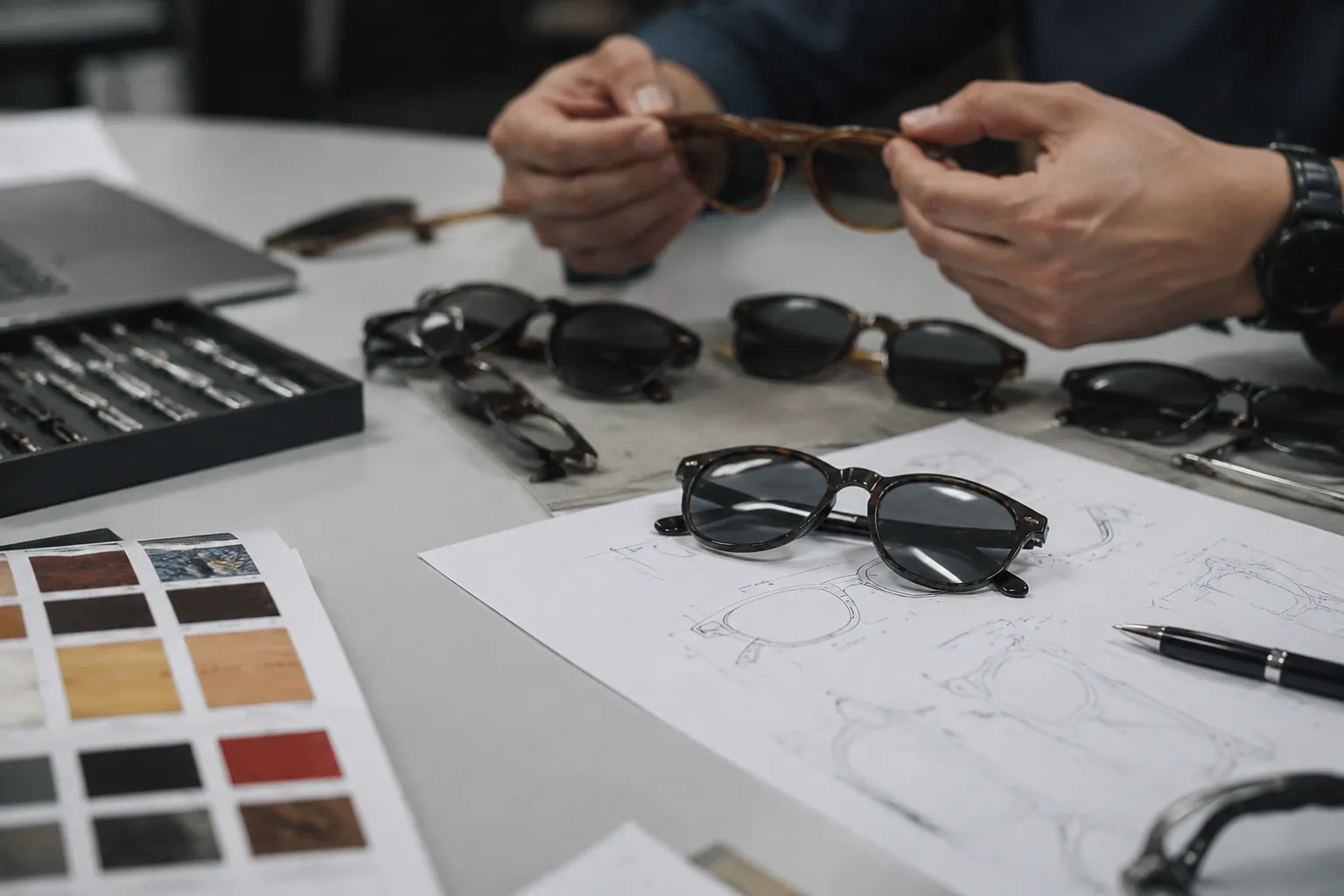
This guide is for brands, importers, distributors, and retailers selling private-label sunglasses who keep hearing the same complaint: the frame looks right, but it does not wear well. Small fit details cause many comfort-related returns, especially bridge pressure, temple pinch, and slippage. Get the pads, tips, and geometry right early, and you can cut complaints without reworking the whole frame line.
Why fit details drive returns
Most sunglasses returns are not about lens tint or frame shape. They are about comfort. A frame that sits too high, pinches at the temples, or slides during normal wear will be called uncomfortable even if it looks fine in photos and passes visual inspection.
For B2B buyers, that creates avoidable cost: exchanges, service tickets, low ratings, and repeat fit complaints. The answer is usually not a new silhouette. It is better control of the contact points: nose pads, temple tips, opening force, and front balance.
Treat fit as a product requirement. Not a vague preference. Your supplier should be able to explain how bridge shape, temple geometry, and contact materials are built into the frame, then show how those choices are checked during sample approval and production.
Start with the wearer profile
Do not use one fit package for every market. Define the main wearer group before asking for tooling or material changes. A teen fashion line, a pharmacy program, a workwear promotion, and a premium retail acetate frame do not need the same contact priorities.
- Low bridge and flatter facial structure: needs more nose support and less forward slide.
- Higher bridge or narrower face: needs lower pad pressure and better temple control.
- All-day wear: needs softer contact points and balanced weight distribution.
- Sport or active use: needs grip without hard pressure marks.
If your market covers several groups, build two or three fit variants instead of forcing one universal spec. That is usually easier to manage than a pile of preventable returns. Small changes to pads, temple geometry, or bridge shape often solve the problem without changing the full frame design.
Nose pad options and what they change
Nose pads are not cosmetic. Material, angle, width, and projection change how the frame sits and how its weight lands on the face. For injected frames, you may use a molded nose area or add-on pads. For metal and mixed-material frames, pad choice is one of the main fit controls.
| Option | Best use | Comfort effect | Trade-off |
|---|---|---|---|
| Soft silicone pads | Long wear, higher bridge sensitivity | Reduces point pressure and can help limit slipping | May show dirt or oil more easily if the finish is poor |
| Harder PVC or TPR-style pads | Fashion frames, lower-cost programs | Stable, simple, and cost-conscious | Less forgiving on sensitive skin |
| Integrated molded nose rest | Acetate or injection frames | Clean look, fewer parts | Less adjustable after molding |
| Adjustable metal pad arm | Premium or corrective-style fit | Fine-tunes angle and spread | Adds assembly steps and QC time |
Start with three numbers: pad width, pad thickness, and pad angle. Too narrow, and pressure rises fast. Too soft and too wide, and the frame can drift. Ask for wear testing on at least two bridge types before you approve mass production.
Temple tips: a small part that drives complaints
Temple tips matter more than many buyers expect. They decide where the frame finishes contact and whether the wearer feels pressure behind the ear. A stiff tip can make a light frame feel harsh. A softer tip can improve comfort, but only if the length and bend angle are right.
Focus on three factors: tip length, tip material, and curl shape. Short tips can dig in. Longer tips spread contact better, but if they run too long they can interfere with hair or shift on smaller heads. Soft overmolded tips can help grip, but the bonding has to hold and the part has to pass basic durability checks.
For volume programs, ask the factory to lock temple tip hardness, curve radius, and insertion depth in the spec. If the tip detail drifts between sample and bulk, return rates can move with it.
Fit specs to put on the drawing
Many buyers approve a sample by eye and never lock the fit numbers. That is where production drift starts. Put the critical dimensions in the tech pack. Not every number needs a tight tolerance, but the contact points do.
- Bridge width and pad spacing: define the target bridge zone for the main wearer group.
- Temple opening force: make sure the frame is not too tight out of the box.
- Tip angle and wrap: keep the rear end from digging into the mastoid area.
- Front balance: check whether the frame wants to slide forward when worn.
- Surface finish at contact points: avoid sharp parting lines, sink marks, or gloss mismatch on skin-touch areas.
A capable factory should turn those points into tooling, assembly, and QC checkpoints. That matters in private-label programs, where you need repeatable comfort across multiple runs, not one sample that happened to feel right once.
Material choices that affect wearability
Material choice affects both comfort and compliance. Silicone can feel softer, but it also attracts dust and can show contamination if process control is weak. Acetate can feel smooth and premium, but only if edges are milled and polished correctly. Injection-molded parts can be consistent, but the mold has to support the intended contact geometry.
For overseas buyers, compliance is part of the fit brief. If the sunglasses are sold in Europe, the product should be assessed against CE EN ISO 12312-1 and the material system should align with REACH requirements. For the U.S. market, buyers commonly ask for FDA registration and ANSI Z80.3 alignment. For Australia and New Zealand, AS/NZS 1067 is the relevant reference. ISO 9001 and BSCI support process and social compliance, but they do not replace product testing or market-specific requirements.
Ask for material declarations covering pads, tips, inks, and soft-touch coatings. One small compound can create a compliance failure even when the frame looks correct.
How to brief the factory and sample correctly
Sample approval is where many programs go wrong. Buyers approve the look, skip wear testing, then find the fit problem after shipment. The better process is simple.
- Send a reference frame if you already know the fit you want.
- State the target wearer group and the head-size range you want to address.
- Specify pad material, tip material, and any soft-touch overmold.
- Ask for at least two bridge variants if the market is broad.
- Wear-test samples for 15 to 30 minutes, not just a brief try-on.
- Check pressure marks, slip, and ear fatigue after wear.
Use the sample stage to confirm comfort under realistic conditions. If the factory handles tooling, molding, finishing, and QC in-house, fit changes are often faster because the revision stays inside one production flow.
Cost, MOQ, and lead-time trade-offs
Fit improvements cost money, but the increase is usually manageable if you plan early. Most added cost comes from extra parts, secondary assembly, or more QC steps. Not from the idea itself. At volume, unit economics often improve once the program is stable.
| Fit choice | Typical impact on cost | MOQ / change risk | Best use case |
|---|---|---|---|
| Standard molded contact points | Lowest | Low risk at MOQ 50+ | Entry-price fashion and promo |
| Soft silicone nose pads | Moderate | Stable if the spec is locked | All-day wear, retail programs |
| Adjustable pad arms | Higher | More assembly and QC steps | Premium, broad face-fit range |
| Overmolded temple tips | Moderate to higher | Bonding and durability testing required | Sports, outdoor, slippery climates |
On larger orders, pricing often improves with quantity, but exact cost still depends on frame construction, material choice, decoration, and testing requirements. Lead times usually shorten only after sample approval and material readiness are locked. Change fit details late, and you usually pay in time before you pay in cost.
Treat fit changes like any other production variable. Lock the spec. Approve the wear test. Then release the order. That discipline protects margin and reduces avoidable returns.
Have a custom sunglasses project in mind?
Send us your styles, target market and quantities and we will return a detailed quote with MOQ, lead time and a sample plan.
Get a QuoteWhy source this from Wenzhou with LumiShades
Wenzhou in Zhejiang Province is widely regarded as China’s eyewear manufacturing capital, producing a large share of the world’s sunglasses. That concentration matters to buyers: a deep local supply chain for acetate sheet, hinges, lens blanks, plating and packaging means shorter component lead times, easier color and material matching, and a workforce with decades of eyewear-specific skill. LumiShades has manufactured in this ecosystem since 2009, and our vertical integration — in-house injection molding, acetate cutting, CNC milling, lens tinting, decoration and quality control — means no part of your order is quietly subcontracted to a workshop you cannot audit.
For international buyers, that vertical control translates into accountability. When a single factory owns every step, defects are traced and fixed at source rather than bounced between vendors, and your specifications survive intact from first sample to bulk. We back this with 15+ years of experience, shipments to 60+ countries, more than 5 million pairs produced per year and a 98.5% on-time delivery rate. Our certifications — CE EN ISO 12312-1, FDA registration, ANSI Z80.3, AS/NZS 1067, REACH, ISO 9001 and BSCI audit — mean the compliance documentation your market requires already exists. Explore our manufacturing capabilities and quality control process to see how this works in practice.
Frequently asked questions
What fit change usually reduces the most complaints on private-label sunglasses? The nose interface is often the first place to improve. Changing pad material, pad width, or pad angle can solve sliding and pressure complaints without changing the whole frame. Start with wear testing, then compare at least two bridge options before locking production.
Can one sunglasses model work for low-bridge and regular-bridge buyers? Sometimes, but not always. If your market includes both bridge types, it is usually safer to keep the front frame the same and offer two bridge or pad variants. That gives you more control over comfort without building a completely separate style.
What should I ask for in the sample stage? Ask for the bridge, temple-tip, and contact-point options that affect wear comfort. Then test the samples for 15 to 30 minutes in real use conditions. Review pressure marks, slip, and ear fatigue, and confirm the final fit details in writing before mass production.
Does a softer nose pad always mean better comfort? No. A pad that is too soft can slide, collect dirt, or lose stability. The right choice depends on bridge shape, frame weight, and the wearer's activity level. Comfort comes from the balance of softness, shape, and stability, not softness alone.
How do compliance needs affect pad and tip materials? The material system has to match the destination market and the compliance claim. CE EN ISO 12312-1, REACH, FDA registration, ANSI Z80.3, and AS/NZS 1067 each carry different expectations for testing, material control, or market suitability. Ask the supplier for declarations and test reports that match the exact market you are selling into.
Ready to start?
Explore our aviator sunglasses or request a quote — our sales team replies within 12 hours.
Request a Quote