
Pre-Shipment Durability Tests That Matter Most
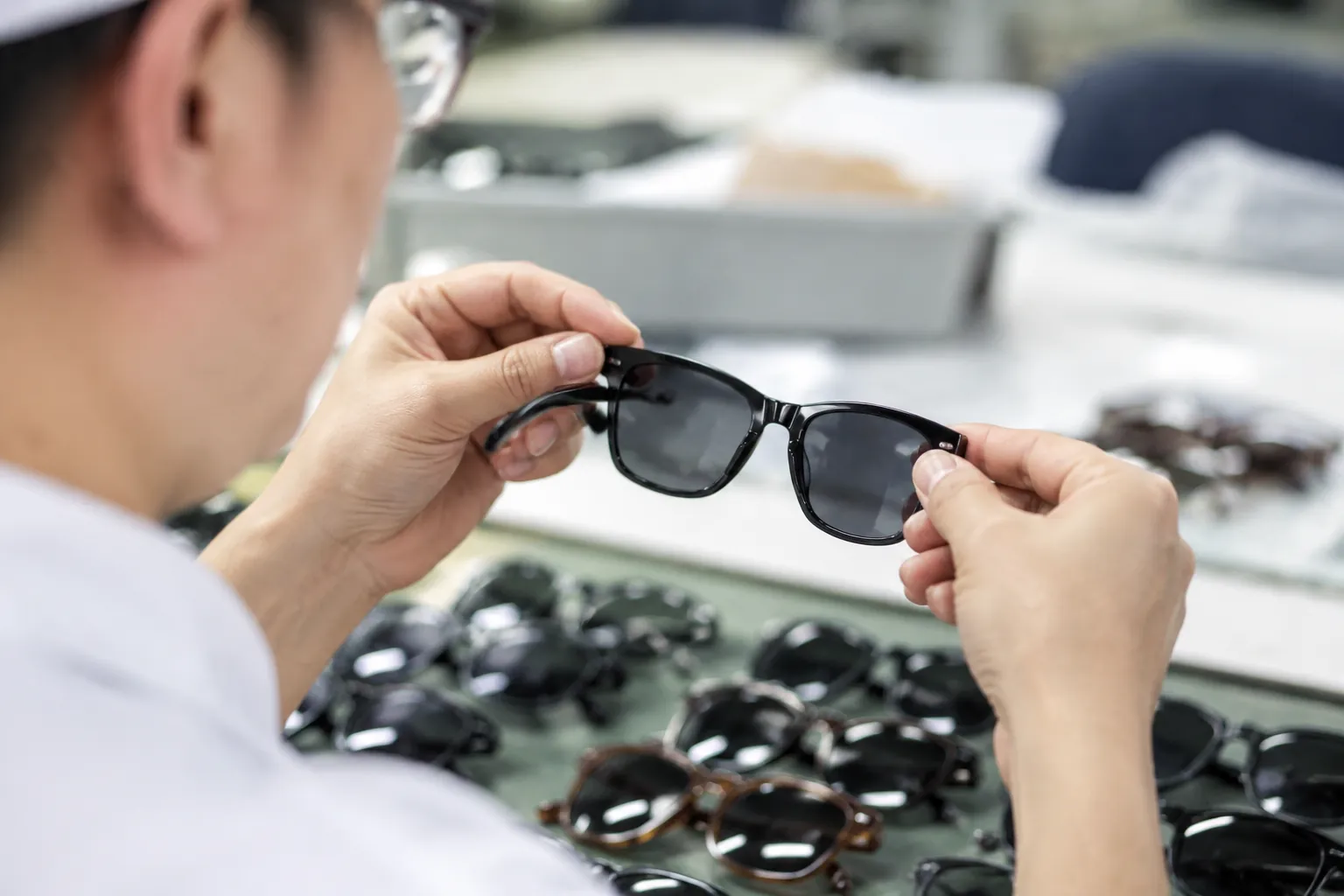
This guide is for brand owners, importers, distributors, and retailers buying custom sunglasses in volume. The real question is not whether to test. It is which pre-shipment checks do the most to reduce returns, rework, and claims on live orders. For many programs, the highest-value durability controls are hinge-life, torque or twist resistance, and drop or impact-retention checks, backed by alignment and cosmetic inspection. The goal is simple: turn those checks into a release framework with clear pass criteria, practical sampling, and material-specific judgment before goods leave the factory.
Start with likely failures, not a long test menu
Buyers often ask a factory or lab to run a long list of tests and still miss the defects that trigger the first wave of complaints. That is wasted effort. A better approach is to start with the failures most likely to show up soon after goods reach the market: loose hinges, bent or splayed temples, and lenses that shift or come out during handling or minor impact.
That is why three checks usually matter most on routine sunglasses orders:
- Hinge-life test: repeated opening and closing to expose screw loosening, hinge plate movement, spring-hinge fatigue, or poor insert retention.
- Torque or twist test: controlled force on the frame front and temples to reveal brittleness, weak bonding, stress whitening, cracking, or permanent deformation.
- Drop or impact-retention test: a controlled check to confirm that the frame-lens assembly stays intact after an agreed impact condition.
For many fashion, promotional, and casual retail sunglasses, a practical priority order is:
- Hinge-life, because hinge looseness and temple play are common causes of early complaints.
- Torque resistance, because weak builds may survive packing but fail in store handling or first wear.
- Drop or impact-retention, because retention risk depends heavily on frame geometry, lens fit, and packaging.
That order is not fixed. Sport wraps, high-base lenses, thin-rim metal fronts, and heavier lens constructions can make retention risk more critical. Test for the failure mode most likely to damage the order. Do not collect reports for their own sake.
Traceable manufacturing and QC records make test results more useful. If a unit fails, the buyer should be able to link the problem back to a process step such as hinge routing depth, lens groove consistency, or assembly torque setting.
What each durability check tells you
These checks do different jobs. One good result does not cover the others.
| Test | Typical method before shipment | What it checks | Common weak point found | Why buyers should care |
|---|---|---|---|---|
| Hinge-life test | Repeated open-close cycling on selected samples using an agreed internal method | Repeated-use durability of hinge, screw retention, insert stability, and temple fit | Loose screws, hinge plate movement, spring fatigue, temple play | Helps identify assemblies likely to generate early post-delivery complaints |
| Torque / twist test | Controlled outward and inward force on temples and front, followed by alignment recheck | Resistance to deformation, cracking, and visible stress | Cracked acetate near hinge area, stress marks in molded plastics, bent metal front, weak core bonding | Finds builds that appear acceptable in carton but distort during handling |
| Drop / impact-retention test | Controlled drop or agreed impact condition on selected finished samples | Integrity of frame-lens assembly after impact | Lens ejection, rim crack, brittle bridge failure, edge chip, decoration damage | Reduces transit, handling, and first-use breakage risk |
| Visual and alignment QC | Fixture or flat-surface check plus cosmetic inspection under defined light conditions | Assembly symmetry, lens seating, finish quality, branding condition | Skewed front, uneven temple height, logo defects, poor polish, lens seating gaps | Stops obvious rejects that formal durability checks may not capture |
A frame may pass a basic drop check and still fail after short use because the hinge screw backs out. Another may survive hinge cycling but lose the lens because lens size or groove consistency varies across production. That is why a practical release plan combines durability checks with dimensional and cosmetic review.
Buyers should also ask which styles are structurally high risk. Injection-molded PC and TR behave differently from acetate. Metal combinations add solder points, rim screws, and finish-related risks. The test plan should follow material, hinge construction, and lens-fit method, not just order value or a generic checklist.
Set pass criteria with numbers, not vague wording
Pre-shipment controls break down when pass standards are subjective. Agree the thresholds before production starts, ideally when the approval sample is signed off.
- Drop or impact-retention pass: no frame fracture, no lens ejection, no unsafe sharp edge, hinge remains functional, and any visible damage stays within the agreed cosmetic standard.
- Torque test pass: no crack, no unacceptable visible stress in saleable areas, no permanent twist beyond the agreed alignment tolerance, and temples still open and close normally.
- Hinge-life pass: no screw loss, no hinge plate separation, no insert pull-out, no excessive play, and hinge movement remains usable and consistent.
- Post-test alignment pass: front skew and left-right temple height difference remain within the agreed tolerance on the defined inspection method.
Useful controls should be product-specific and written into the quality agreement. Examples include:
- Left-right temple opening feel and symmetry consistent with the approved sample.
- No visible lens seating gap in saleable zones beyond the buyer-factory agreed limit.
- No unacceptable wobble, skew, or rocking when checked by the agreed flat-surface or fixture method.
- For logo plates, prints, or foil marks, no lifting, curl, or loss after the agreed handling, rub, or tape check where that check is specified.
Sample size matters too. Many buyers use random pulls from packed finished goods rather than relying only on line samples. That is sensible. Functional failures should carry more weight than minor cosmetic defects, because one lens-retention or structural failure can point to a wider assembly problem. The sampling plan should be agreed in advance, documented, and applied the same way across lots.
Material and construction change the failure mode
A test result means little without context. Different constructions fail in different ways.
Injection-molded PC often gives stable repeatability, but thin sections around hinge areas or groove corners can show visible stress or cracking if molding conditions or part design are weak. A PC frame may pass visual inspection and then show stress whitening during torque testing before a crack appears.
TR often performs well in flexibility checks, but that can hide the real weak point. In many TR constructions, the main risk is the embedded hinge insert, anchor design, or screw retention rather than front flexibility.
Acetate can be durable, but only if sheet quality, machining, hinge routing, polishing, and heat forming are controlled. Over-polishing or aggressive material removal near the hinge area can reduce thickness and increase the chance of later cracking.
Metal sunglasses bring a different set of risks: solder joint integrity, lens retention screws, plating durability, and return-to-shape performance after stress. A metal front can fail functionally without cracking if the bridge or eyewire stays permanently distorted after torque.
| Material / construction | Typical strength | Typical weak point | What to watch in testing |
|---|---|---|---|
| PC injection molded | Good dimensional repeatability | Bridge and groove-corner brittleness, hinge-area stress | Visible stress, corner crack, lens retention after drop or impact |
| TR | High flexibility and wearer comfort | Embedded hinge insert and screw retention | Hinge cycling, insert movement, recovery after twist |
| Acetate | Strong premium feel, polish, and color depth | Hinge routing area, rivet zone, over-thinned sections | Crack near hinge, plate movement, permanent temple spread |
| Metal / combo | Thin profile and precise styling | Solder joints, rim screws, plating, permanent distortion | Alignment drift, screw loosening, finish damage after handling |
Process visibility matters here. If the factory can trace molding, machining, lens fitting, decoration, assembly, and final QC, root cause is easier to isolate. That makes corrective action more credible than a generic claim that the issue came from handling.
Build the test plan around risk, not just order size
Not every order needs the same test burden. The right plan depends on whether the design is new, whether construction has changed, how many variants sit in the lot, and how much corrective action is still possible before shipment.
| Order type | Typical situation | Recommended checks | Commercial logic |
|---|---|---|---|
| New design pilot | First production run of a new frame construction | 100% visual inspection, alignment check, torque and drop or impact-retention checks on selected samples, hinge-life review on approval and bulk samples | Use the pilot to identify structural weakness before repeating the design at scale |
| Repeat style, new logo or color | Known construction but changed decoration, lens, or finish | Random packed-carton pull, hinge check, torque test, decoration adhesion review, lens seating verification | The frame may be proven, but decoration, coating, lens, or assembly settings may have changed |
| Large retail program | Multi-lot or multi-day production of the same style | In-line QC, pre-shipment sampling from finished goods, formal pass/fail records, packaging review where pack-out changed | Lot consistency and process drift become the main risks |
In practice, buyers should focus less on quantity alone and more on risk concentration. A small order with a new hinge construction can deserve closer scrutiny than a larger repeat program with stable tooling and documented history. The cost of failure is usually obvious: retail returns, rework, delayed launch, and replacement freight often cost far more than a targeted pre-shipment check.
Lead time matters too. Durability expectations should be frozen at sample approval, not after goods are packed. If hinge type, lens fit, decoration method, or tolerance limits remain open late in production, the buyer is left choosing among rework, delay, discount, or shipment risk.
Decoration and assembly are common hidden failure points
Not every durability complaint starts with the base frame. Decoration and assembly details often create the failure the customer actually sees.
Pad print can fail because of poor surface preparation or weak curing. Hot foil can lift at the edges if temperature, pressure, or substrate consistency is off. Laser marking is often more stable, but it can expose cosmetic inconsistency on coated or plated surfaces. Metal logo plates add adhesive and bonding risk. If a logo detaches during handling, that is a real quality failure.
Assembly settings matter just as much. Low screw torque can lead to early hinge looseness. Too much torque can create binding or thread damage. Lens fitting can also create delayed failures. An oversized lens may over-stress the rim. An undersized lens may look acceptable but eject during twisting or impact.
Pre-shipment QC should therefore include:
- Verification that the decoration method matches the approved sample and artwork position.
- Agreed handling, rub, or tape review on printed, foiled, or bonded branding areas where applicable.
- Check of left-right opening feel and hinge resistance consistency.
- Post-fitting lens seating review around the full eyewire or groove.
- Packed-goods sampling, because packaging pressure or tray design can distort temples and fronts.
When failures appear, corrective action should point to the process. A loose hinge may require an assembly torque review or a hinge-component check. A shifting lens may require review of lens sizing, groove condition, or fitting method. A recurring logo lift issue may come from cure conditions, surface contamination, or adhesive selection.
Compliance supports QC. It does not replace it
Durability testing and market compliance belong in the same shipment file, but they answer different questions. Durability checks ask whether the actual lot is assembled well enough to survive shipping, handling, shelf exposure, and early use. Compliance standards ask whether the product category meets the relevant legal or market requirements.
For sunglasses, buyers commonly reference CE EN ISO 12312-1, ANSI Z80.3, and AS/NZS 1067 for applicable sunglass performance requirements. Supply-chain and management documentation may also include REACH declarations, FDA registration where relevant to importer or facility records, and factory system or social compliance records such as ISO 9001 or BSCI.
Ask for two separate evidence sets: product-category compliance documents and lot-specific QC records for the shipment you are approving.
This avoids a common mistake. A buyer receives a valid standards report, assumes the lot is ready to ship, and skips lot-level functional checks. Then the shipment arrives with hinge looseness, alignment drift, or lens-retention issues caused by production variation. A compliance report may satisfy legal, retail, or customs needs. It does not prove that the specific bulk lot was assembled correctly.
Write shipment-hold triggers into the PO and QC checklist
If durability checks are meant to drive shipment decisions, hold triggers need to be written into the purchase order, quality agreement, or final inspection protocol before production starts. Otherwise every failure becomes a negotiation.
- Lens retention failure in any tested sample: hold shipment and review lens size, groove condition, bevel condition, frame geometry, and fitting method.
- Crack or unacceptable visible stress at the hinge area after torque: hold shipment if it appears in saleable areas or affects function, because it is likely to worsen in use.
- Hinge looseness trend across sampled units: review screw torque control, insert retention, hinge consistency, and any specified locking process.
- Alignment drift beyond agreed tolerance after testing: check front warpage, temple forming, assembly consistency, and packaging pressure.
- Logo plate, foil, or print detachment: review curing, surface preparation, adhesive choice, and handling controls.
For final release, the buyer should confirm that:
- The approved sample matches bulk in material, hinge type, lens specification, and decoration method.
- Required compliance files are complete and current for the destination market.
- Random samples were pulled from packed goods, not only from in-line production.
- Hinge-life, torque, and drop or impact-retention checks were completed on the correct variants, especially where lens colors or decoration methods differ.
- No sample showed lens ejection, structural crack, unsafe edge, or unacceptable hinge play.
- Post-test alignment remained within the agreed tolerance and cosmetics remained saleable.
- The QC record identifies date, lot, style, color, quantity checked, inspection method, result, and corrective action where applicable.
The value of pre-shipment durability control is straightforward. It catches process drift while the factory can still contain it. That is cheaper than letting the customer find the weakness first.
Have a custom sunglasses project in mind?
Send us your styles, target market and quantities and we will return a detailed quote with MOQ, lead time and a sample plan.
Get a QuoteWhy source this from Wenzhou with LumiShades
Wenzhou in Zhejiang Province is widely regarded as China’s eyewear manufacturing capital, producing a large share of the world’s sunglasses. That concentration matters to buyers: a deep local supply chain for acetate sheet, hinges, lens blanks, plating and packaging means shorter component lead times, easier color and material matching, and a workforce with decades of eyewear-specific skill. LumiShades has manufactured in this ecosystem since 2009, and our vertical integration — in-house injection molding, acetate cutting, CNC milling, lens tinting, decoration and quality control — means no part of your order is quietly subcontracted to a workshop you cannot audit.
For international buyers, that vertical control translates into accountability. When a single factory owns every step, defects are traced and fixed at source rather than bounced between vendors, and your specifications survive intact from first sample to bulk. We back this with 15+ years of experience, shipments to 60+ countries, more than 5 million pairs produced per year and a 98.5% on-time delivery rate. Our certifications — CE EN ISO 12312-1, FDA registration, ANSI Z80.3, AS/NZS 1067, REACH, ISO 9001 and BSCI audit — mean the compliance documentation your market requires already exists. Explore our manufacturing capabilities and quality control process to see how this works in practice.
Frequently asked questions
If I can only choose one durability check before shipment, which should it be? For most fashion sunglasses, start with a hinge-life check. It is one of the most practical ways to detect loose screws, weak hinge assembly, insert movement, and temple play before shipment. To make it useful, do not just ask whether the sample passed. Define the cycling method in advance, record the sample IDs tested, and require a post-test check for play, smooth opening, screw retention, and alignment.
Do compliance reports like CE EN ISO 12312-1 replace factory durability checks? No. A compliance report and a pre-shipment durability check serve different purposes. Standards such as CE EN ISO 12312-1, ANSI Z80.3, and AS/NZS 1067 address product-category requirements. They do not confirm that the bulk lot in front of you has stable hinge assembly, good lens retention, acceptable alignment, or secure decoration. Ask for both: the relevant compliance documents and the lot-specific QC records for the shipment being approved.
Should I test approval samples or packed bulk goods? Both, if possible. Approval-sample testing helps confirm that the design and construction are fundamentally sound. Packed-bulk testing confirms that the actual shipment was produced consistently and that packing did not introduce distortion or damage risk. If you must choose one stage for release control, use random pulls from packed finished goods, because those samples represent what will actually ship.
What are practical alignment tolerances to agree before shipment? Use a written tolerance that matches the frame design, inspection method, and approved sample. Do not copy a generic number across all styles. Define exactly how alignment will be checked: flat surface, fixture, or both; whether lenses must be installed; and what counts as unacceptable wobble, skew, or temple height difference. The buyer and factory should sign off on that method at sample approval so the same rule is used at final inspection.
How early should durability criteria be agreed with the factory? At sample approval stage, before bulk production starts. That is when the buyer should freeze the hinge type, material, lens fit method, decoration process, test method, pass criteria, and shipment-hold triggers. If those points are left open until final inspection, any failure becomes harder to resolve because the practical options are usually limited to rework, delay, discount, or shipment against risk.
Ready to start?
Explore our rimless sunglasses or request a quote — our sales team replies within 12 hours.
Request a Quote