
How to Check a Valid Sunglasses Test Report
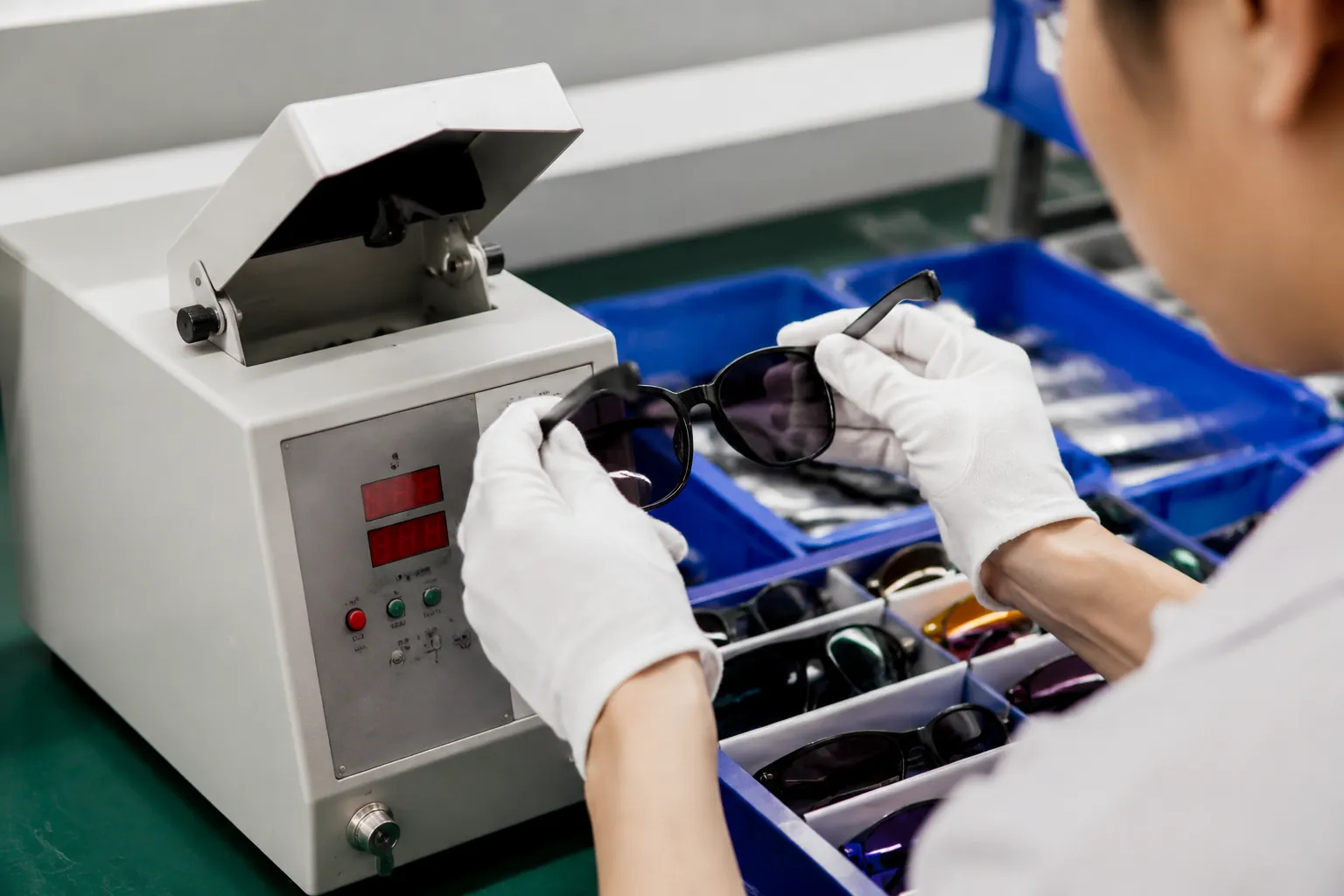
This guide is for importers, brand owners, distributors, and retail buyers approving custom sunglasses before shipment. A lab report helps only if it clearly matches the exact product you are buying, cites the right standard for your market, and still applies after any material, lens, or decoration change. So do not stop at a pass result. Check model traceability, material details, visible light transmission, lens category, physical safety results, labeling, and final packaging control. For private label and fully custom eyewear, that review can reduce the risk of customs questions, retailer rejection, relabeling, or retesting after production is finished.
Start with one blunt question: does the report match the exact product?
Your first check is not technical. It is identity control. A sunglasses report can be genuine and still be useless if it was issued for a different frame, different lens material, different tint, or an earlier build.
At minimum, the report should show the model number, product description, frame material, lens material, lens color or tint reference, applicant or manufacturer name, and report date. For a custom order, the description must be specific enough to separate one build from another. Fashion sunglasses is too vague. Injected PC frame, smoke TAC polarized lens, matte black finish, metal logo plate is far more useful.
Small changes matter. A switch from acetate to injected polycarbonate can affect fit, heat behavior, and lens retention. A switch from TAC to nylon or PC lenses can affect impact performance, optical characteristics, and transmission. A late decoration change can create chemical or sharp-edge issues.
For custom programs, ask the supplier to link the report to your approved pre-production or golden sample. Simple rule: the tested sample should carry the same internal model code used on the PO, packing list, carton label, and factory QC sheet.
- Check the model code on the report, carton label, and packing list.
- Check frame material and lens material against the approved sample and BOM.
- Check lens tint reference, not just a generic color name such as grey.
- Check whether pad print, hot stamp, metal logo plate, or laser engraving was added after testing.
- Check the report date against tooling changes, supplier changes, and any confirmed material change.
If these fields do not line up, stop there. A PDF alone proves nothing.
The standard on the report must fit the destination market
Buyers often ask for a test report as if there were only one kind. There is not. The report should cite the standard that applies where the sunglasses will be sold.
Common references include EN ISO 12312-1 for Europe, ANSI Z80.3 for the US market, and AS/NZS 1067 for Australia and New Zealand. These standards cover similar ground such as transmission, UV protection, and physical safety. They are not interchangeable. A report prepared for one market may not satisfy another market, retailer, or platform.
Also keep product standards separate from chemical and management documents. REACH addresses restricted substances in relevant materials and components. ISO 9001 and BSCI describe management or social audit status, not product-level sunglass performance. FDA registration is not a model-specific sunglasses test report either.
| Document or standard | What it covers | What it does not prove |
|---|---|---|
| EN ISO 12312-1 | Sunglasses performance, optical properties, and labeling for Europe | Factory audit status or chemical compliance by itself |
| ANSI Z80.3 | Sunglasses performance criteria commonly used for US market review | EU labeling acceptance or REACH conformity |
| AS/NZS 1067 | Sunglasses and fashion spectacles requirements for AU/NZ | Automatic acceptance in EU or US channels |
| REACH documentation | Restricted substances in applicable materials, coatings, paints, and components | Optical performance, UV transmission, or lens category |
| ISO 9001 / BSCI | Management system and social compliance context | That this exact SKU passed sunglass testing |
If you plan to sell the same product in more than one market, define the testing scope before sample approval. That is usually cheaper than fixing compliance gaps after bulk production.
The optical section must show transmission, UV, and lens category
This is where weak report files often fall apart. A usable sunglasses report should state the measured visible light transmission result and identify the corresponding lens category under the cited standard. If that section is missing, you cannot confirm how dark the tested lens was or whether the product labeling is accurate.
Transmission can change when the tint, mirror coating, gradient, or lens construction changes. A claim such as UV400 on a quotation or sample card is not a substitute for a report tied to the actual model and lens build.
Custom orders often run into trouble after aesthetic revisions. A buyer approves one tint, then asks for a darker or lighter look before bulk production. It seems minor. It may not be. The measured transmission can shift enough to change lens category and labeling.
Ask for measured values, not just Pass. The report should let you compare the tested lens with the approved sample and the final packaging claim.
- Confirm the report states visible light transmission as a numeric result.
- Confirm the lens category on the report matches packaging, instructions, and online product copy.
- Confirm the tested tint matches the approved sample or internal tint code used in production.
- If tint, coating, polarization film, or gradient changed after approval, ask whether the product was retested.
If the category on the report and the category on the insert do not match, treat that as a release issue. Wrong consumer information creates avoidable compliance problems.
Mechanical and impact sections should reflect the real build
Many sourcing teams focus on UV and overlook physical safety. Do not. The report should include the mechanical, robustness, or impact-related sections required by the cited standard, not just optical transmission data.
The real build matters here. Injected PC frames, acetate frames, and metal frames do not behave the same way in production. Lens edge thickness, groove geometry, rim closure, hinge torque, and hardware attachment can all affect whether the tested sample truly represents bulk goods.
Changes that can affect report relevance include a different lens material, a revised frame groove, a different base curve, new decorative hardware, or a different assembly method. A sample may pass. Later production may still fail to match it.
| Build element | Typical risk if changed after testing | Why buyers should care |
|---|---|---|
| Lens material changed from TAC to PC | Different impact behavior and optical characteristics | The original report may no longer describe the shipped product |
| Acetate groove over-polished | Lower lens retention force | Bulk may no longer match the tested build |
| Injected frame shrink variation | Lens seat tolerance drift | Can create stress, looseness, or assembly inconsistency |
| Metal logo plate or rivet added late | Sharp edge or coating compliance issue | A decoration change can trigger extra review or retesting |
Ask the supplier how the tested build is controlled during production. Useful evidence includes first-article approval, internal specifications, lens fitting checks, and confirmation that production parts match the tested sample. A pass report matters only if the shipped product stays the same.
Labeling, warnings, and packaging artwork belong in the file
A usable compliance file is more than lab result pages. It should also include the labeling and artwork that communicate the test outcome correctly in market.
Typical items to review include product marking, insert card, polybag label, barcode label if used, outer carton marks, lens category statement, warning text, care instructions, and country-of-origin marking where required by the destination market or sales channel. The exact wording and format may vary by market. The key point is simple: the packaging must match the report.
A common failure is version control. The product passes testing, but the packaging team uses an old insert copied from another SKU. Another common issue is a private label branding change made after testing, without checking whether the revised insert still reflects the correct category statement or warning language.
Before balance payment or shipment release, ask for a final document pack that includes the report, any declaration or compliance statement used in your records, and the exact artwork approved for packed goods. If the final insert or label does not match the tested product category or warnings, fix it before shipment.
Use a pre-shipment checklist before you release bulk
Use this review sequence for both stock modifications and fully custom projects. It takes far less effort to run this check before shipment than to correct errors after arrival.
- Match the PO item number to the report model number.
- Match frame material, lens material, and color or tint to the approved sample.
- Confirm the report names the correct standard for the destination market.
- Check visible light transmission and lens category data.
- Check UV performance and any required warning statements.
- Check mechanical or impact-related sections are present and not omitted.
- Review REACH or other required chemical files for coatings, paints, logo plates, and plastic components.
- Review final product artwork and packaging artwork against the report conclusions.
- Confirm no material, lens, hardware, or decoration change was made after testing without review.
- Hold shipment if any field is generic, blank, or linked to another SKU.
Do not treat compliance as a last-minute admin task. If you wait until booking or dispatch to ask for matching reports and artwork, even a small mismatch can delay release.
Know the difference between a paperwork defect and a real production risk
Not every issue means the sunglasses are unsafe. Not every issue is harmless paperwork either. Buyers need to separate document problems from product problems fast so the right action happens before shipment.
| Finding | Likely type | What to do next |
|---|---|---|
| Model number on report differs from PO | Document control problem | Request corrected traceability or the correct report before shipment |
| Lens tint changed after sample approval | Possible product and document problem | Check transmission and category impact, then require retest if needed |
| REACH file missing for coated logo plate | Compliance file gap | Ask for component-level chemical documentation |
| Report shows pass but packaging uses wrong category warning | Labeling problem | Correct artwork and inspect packed goods before release |
| Frame material on report is acetate but bulk is injected PC | Serious product mismatch | Stop shipment and require testing on the actual build |
The commercial impact is different in each case. A label correction may be quick. A wrong-material report may require fresh testing and can affect the whole shipment. Set the rules early: define the required standard, identify the exact SKU to be tested, require change notification for any lens, frame, hardware, or decoration adjustment, and require a final document pack before shipment approval.
Have a custom sunglasses project in mind?
Send us your styles, target market and quantities and we will return a detailed quote with MOQ, lead time and a sample plan.
Get a QuoteWhy source this from Wenzhou with LumiShades
Wenzhou in Zhejiang Province is widely regarded as China’s eyewear manufacturing capital, producing a large share of the world’s sunglasses. That concentration matters to buyers: a deep local supply chain for acetate sheet, hinges, lens blanks, plating and packaging means shorter component lead times, easier color and material matching, and a workforce with decades of eyewear-specific skill. LumiShades has manufactured in this ecosystem since 2009, and our vertical integration — in-house injection molding, acetate cutting, CNC milling, lens tinting, decoration and quality control — means no part of your order is quietly subcontracted to a workshop you cannot audit.
For international buyers, that vertical control translates into accountability. When a single factory owns every step, defects are traced and fixed at source rather than bounced between vendors, and your specifications survive intact from first sample to bulk. We back this with 15+ years of experience, shipments to 60+ countries, more than 5 million pairs produced per year and a 98.5% on-time delivery rate. Our certifications — CE EN ISO 12312-1, FDA registration, ANSI Z80.3, AS/NZS 1067, REACH, ISO 9001 and BSCI audit — mean the compliance documentation your market requires already exists. Explore our manufacturing capabilities and quality control process to see how this works in practice.
Frequently asked questions
Can I use one sunglasses test report for multiple colors of the same frame? Only if the tested variants are genuinely equivalent in the areas covered by the report. Different lens tints, mirror coatings, gradients, or lens constructions can change visible light transmission and lens category. Compare each colorway against the tested lens specification. If the lens differs, ask the supplier or lab whether additional testing or a variant assessment is required. Do not assume that the same frame makes the report valid for every color.
Is FDA registration enough for importing sunglasses into the US? No. FDA registration is not a substitute for a sunglasses performance report. For US market review, buyers typically ask for testing against ANSI Z80.3 and should confirm that the report matches the exact model being shipped. Treat FDA-related paperwork and product test reports as separate document types, and ask your importer, retailer, or compliance adviser what additional records your channel requires.
What is the most common red flag in a supplier's report file? A generic product description that does not clearly match the ordered goods. If the report does not identify the exact model, frame material, lens material, and tint, you cannot reliably link it to your shipment. Ask for a corrected report or supporting traceability documents before approving production release or final payment.
Should REACH be on the same report as EN ISO 12312-1? Not necessarily. EN ISO 12312-1 covers sunglasses performance and labeling. REACH documentation usually addresses restricted substances in specific materials or components such as plastics, coatings, paints, or metal parts. Review them together in the compliance file, but they are often issued as separate documents using different test methods or laboratories.
If a supplier changes only the logo plate or decoration, do I need a new report? Possibly. A decoration change may affect chemical compliance, sharp-edge risk, coating composition, or the overall construction described in the report. Ask what changed: material, plating, adhesive, shape, attachment method, or placement. Then compare that change against the original test scope. If the change affects safety, materials, or labeling relevance, require updated documentation and, if necessary, retesting before shipment.
Ready to start?
Explore our aviator sunglasses or request a quote — our sales team replies within 12 hours.
Request a Quote