
Bulk Custom Sunglasses Cost Guide for Buyers
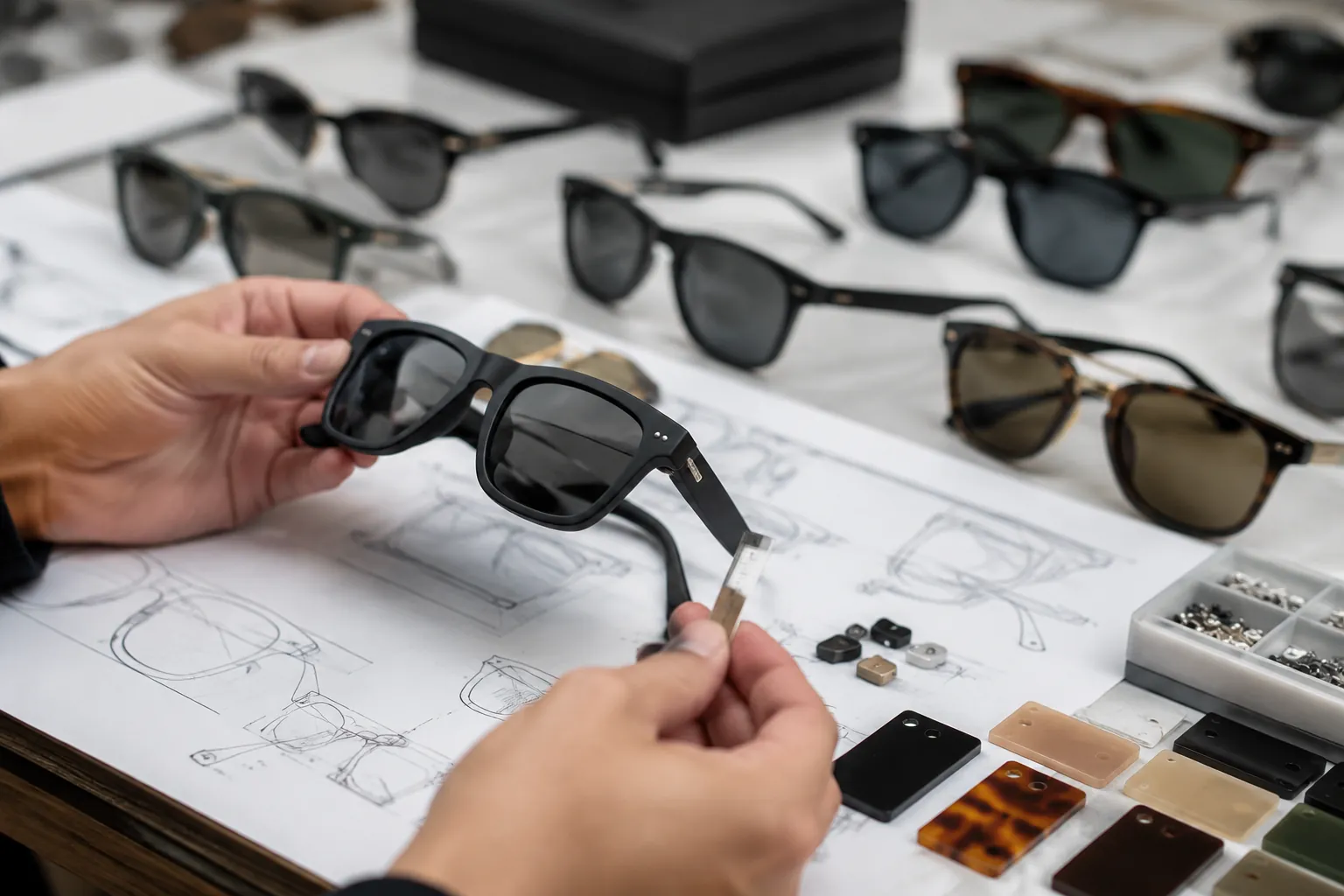
This guide is for brand owners, importers, distributors, and retailers buying custom sunglasses in volume. It explains the main cost drivers in a bulk quote: tooling, frame and lens materials, decoration, packaging, compliance, quality control, yield loss, and shipping. The goal is simple: help you compare suppliers on a like-for-like basis, separate one-time charges from repeat unit costs, and spot which specification changes are likely to affect price, lead time, or risk. Exact numbers vary by design, market, and factory process. The reliable way to buy well is to understand the logic behind each line item and confirm it in writing during quotation and sample approval.
What makes up the cost of custom sunglasses
Most bulk sunglass quotations combine one-time charges and repeat unit cost. Many buyers compare only the ex-works pair price and miss development, decoration setup, testing, packaging, and expected reject loss. That distorts the comparison. A quote that looks cheaper at first can end up costing more once those items are included.
At factory level, the main cost buckets are usually these:
- Tooling and setup: injection molds, acetate cutting patterns, CNC fixtures, logo plate tooling, print plates, and sample preparation.
- Raw materials: frame materials such as TR90, polycarbonate, or acetate; lenses such as tinted, polarized, TAC, or nylon; hinges, screws, nose pads, metal trims, and packaging components.
- Processing labor: molding, milling, tumbling, polishing, lens edging, tinting, assembly, fitting, and rework.
- Decoration: pad printing, laser engraving, hot stamping, foil transfer, or attachment of metal logo plates.
- QC and yield loss: in-line inspection, final inspection, lens matching checks, logo position checks, and units rejected for scratches, warpage, fit problems, or color inconsistency.
- Packing and outbound logistics: pouch or case insertion, barcode labeling, carton packing, palletization, and freight volume.
A practical way to read any quote is to split the project into three layers. First, development cost, which may include mold, fixture, and sample work. Second, per-pair manufacturing cost, driven by materials, labor, and decoration. Third, delivered cost, which adds packaging, testing, freight, duty, and local handling. This is the cleanest way to compare suppliers. You can see whether a factory is competitive on the product itself, on setup, or only before downstream costs are added.
Process scope matters too. If a supplier handles molding, lens processing, decoration, and quality control in-house, there are fewer handoffs. That does not always mean lower cost. It does usually make accountability, sample control, and scheduling easier to manage.
Tooling cost: when you need it and when you do not
Tooling is often the first big budget decision in a custom eyewear project. If you start from an existing factory style and change only frame color, lens tint, and logo application, you may avoid major mold investment. If you change the front shape, temple geometry, hinge structure, or lens curve, new tooling or at least new fixtures may be required.
For injection-molded frames, a new steel mold is usually the largest upfront cost item. The actual amount depends on frame structure, mold complexity, cavity plan, surface finish, and how much engineering revision is needed after first samples. Ask a direct question: does the quoted tooling cover only the initial mold build, or does it also include a defined number of modification rounds after sampling?
Acetate usually needs less upfront investment than a full injection mold, but it is not tooling-free. New patterns, CNC programs, polishing jigs, and lens-fitting fixtures still take time and money. Setup may be lower than injection. Recurring labor cost is often higher. Acetate fronts and temples need milling, tumbling, hand-finishing, and fitting.
| Cost area | Typical trigger | Typical cost logic | Lead-time effect |
|---|---|---|---|
| New injection mold | New front architecture, temple redesign, major size or base curve change | Highest one-time cost; may support lower unit cost if volume is sufficient | Adds mold build and sample validation time before bulk approval |
| CNC fixture and cutting pattern | New acetate design or revised lens shape | Lower setup than a steel mold, but still separate from unit price | Adds programming and sample preparation time |
| Logo plate tooling | Custom cast or stamped metal badge | Tool charge plus plating sample and per-piece hardware cost | Adds approval time for plating color, fit, and attachment method |
| Print plate or pad setup | Temple print, inside-arm print, or lens logo | Usually a low setup charge tied to artwork and process preparation | Usually limited if vector artwork is approved early |
For many importers, the lower-risk move is to launch with a proven frame shape before paying for a fully proprietary mold. If an existing style already fits the target market, it may be smarter to test demand through color, lens specification, branding, and packaging first. Then invest in unique architecture later.
Frame and lens materials: where unit price moves most
Material choice affects unit cost, product position, manufacturing method, and complaint risk. Injection frames in polycarbonate or TR90 often support faster, more repeatable output for promotional or volume-driven programs. Acetate usually gives a more premium look and wider color effects, but it also brings higher material cost and more hand-finishing.
Material behavior matters on the factory floor. TR90 is valued for light weight and flexibility. Polycarbonate is widely used for cost-efficient molding. Acetate is known for layered color and a polished finish. Each material comes with its own process controls, finish limits, and yield risks. There is no universal best choice. The right one depends on target price, design, and expected retail experience.
Lenses are another major cost driver. A standard tinted lens is often the simplest route. Polarized TAC lenses usually add cost because they use a laminated polarization structure and require visual inspection for bubbles, distortion, or delamination. Nylon polarized lenses can increase cost further depending on the performance target, processing method, and supplier program.
Common cost adders on lenses include:
- Polarization: adds material and inspection requirements.
- Mirror coating: adds a coating step and increases handling sensitivity.
- Gradient tint: needs tighter consistency control than a flat tint.
- Anti-scratch hard coat: adds processing cost but may reduce complaint risk.
- Hydrophobic or oleophobic topcoat: can suit a premium product, but only if the end use justifies it.
Assembly tolerances matter just as much as material choice. Poor hinge alignment, uneven opening feel, inconsistent lens seating, or visible left-right color mismatch can trigger rework, delay, or claims. A supplier that checks dimensions and appearance only at final inspection may carry more hidden cost than one that controls the process earlier. Cheap on paper. Expensive later.
MOQ and volume pricing: why 50 pairs is not the real price point
A low MOQ helps with market testing. It is rarely the right benchmark for annual cost planning. Small runs usually carry a higher pair price because setup labor, machine changeover, color batching, and packaging prep are spread across fewer units. That is normal in eyewear production.
At low volumes, waste also hits harder. Resin purge, lens tint setup, print setup, and packaging preparation do not scale down neatly with order quantity. So the unit price at trial quantity usually does not reflect the cost structure of repeat production.
As a practical framework, many buyers should request pricing at 50, 300, 1000, and 5000 pairs on the same specification sheet:
- 50 pairs: useful for testing, seeding, or internal validation; highest unit cost because setup dominates.
- 300 pairs: often a more realistic entry point for private-label retail; color batching and decoration are easier to plan.
- 1000 pairs: commonly used to judge the balance between unit cost, stock risk, and supplier efficiency.
- 5000+ pairs: useful for seeing how the design behaves under real volume and whether packaging and freight efficiency improve.
Volume lowers cost only when the specification stays stable. Frequent changes to lens color, packaging, logo method, or component mix can reduce or erase the efficiency gains buyers expect from a larger order.
Also confirm whether MOQ applies per color, per logo method, per package version, or per total style. This matters. A quoted MOQ can look simple at first and become restrictive later if separate minimums apply to each colorway, pouch type, or packaging variant.
Decoration methods: cheap logo choices versus expensive ones
Branding is one of the fastest ways to change the cost profile of a sunglass program. A one-color pad print on the temple is usually a lower-cost option. A recessed metal logo plate with custom plating is more complex and more expensive. Neither is automatically better. The right choice depends on product position, expected retail price, and how much visual detail the brand needs.
Common decoration methods include pad printing, laser engraving, and metal logo plates. Each has a different cost structure and risk profile:
- Pad printing: usually the lowest setup and fastest throughput; suitable for simple logos and inside-temple branding. Durability depends on surface preparation, ink selection, and curing control.
- Laser engraving: avoids ink rub-off and can look clean and permanent, but the visible contrast depends on material color, finish, and engraving depth.
- Metal logo plates: often create a more premium look, but add tooling, plating approval, attachment labor, and extra inspection points.
Process detail drives cost here. A metal plate may require stamping or casting, polishing, plating, protective handling, manual placement, adhesive curing or mechanical fixing, and inspection for fit and alignment. A pad print may add only a short production step, but it still needs approval for artwork size, placement, and adhesion.
Ask how decoration is validated. Useful checks include tape adhesion where applicable, rub resistance, plating color comparison against the approved sample, and transport-simulation checks to see whether packaging contact damages the logo. On cost-sensitive programs, a simpler branding method often cuts both direct cost and reject risk.
Packaging costs are small per pair until they are not
Basic export packaging is usually inexpensive. Retail packaging often is not. A polybag and standard export carton add relatively little cost and keep packing simple. Once the project adds a microfiber pouch, hard case, branded box, insert card, barcode label, and ecommerce-ready outer pack, packaging becomes its own sourcing and assembly layer.
This is a common margin trap in B2B eyewear. The product quote may look acceptable, then packed cost climbs after the brand team adds more packaging components without checking material cost, carton dimensions, assembly steps, or freight impact.
| Packaging option | Cost effect | Operational impact | Best use case |
|---|---|---|---|
| Polybag only | Lowest | Fast packing, low material cost, limited protection | Promotional campaigns or bulk resale |
| Microfiber pouch | Low to moderate | Adds a packing step; can also serve as a cleaning cloth | Mid-tier private label retail |
| Hard case plus box | Moderate to high | More components, higher carton volume, more freight exposure | Giftable or higher-value retail programs |
| Retail-ready branded set | Highest | Multiple inserts, barcode control, more assembly checks | Store shelf display and ecommerce presentation |
Before approving packaging, ask for packed carton dimensions, gross weight, and units per master carton. Those details help estimate the real shipping effect of the chosen packout. A package that looks inexpensive per unit can still raise landed cost if it increases carton volume or slows packout.
Barcode placement, carton mark format, and any retailer-specific drop-test or labeling requirement should be defined early. These are manageable issues. Late changes to artwork or component count are what create delays and repacking cost.
Compliance, testing, and QC: costs that prevent bigger losses
Compliance is part of cost control, not a last-minute extra. If the destination market requires a certain lens category, UV performance level, or labeling statement, build that into the project from the first sample stage. Fixing non-compliance after production is usually far more expensive than specifying the requirement early.
Depending on the destination market and product type, buyers may need to review requirements related to CE EN ISO 12312-1, ANSI Z80.3, AS/NZS 1067, REACH, and FDA registration where relevant. ISO 9001 and BSCI may matter for supplier qualification, but they do not replace product performance testing or regulatory checks.
Two sourcing questions are especially useful. First, which tests or declarations are already supported by the supplier's current material and lens program? Second, which must be repeated because you changed the tint, coating, structure, or decoration? A simple design choice such as a darker lens, mirror coating, or gradient can affect product category, labeling, or test results in the destination market.
QC should cover more than appearance. A practical control plan often includes lens scratch checks under defined lighting, logo position verification, hinge function checks, frame symmetry review, lens seating checks, left-right color comparison, and carton count verification. The exact tolerances should be agreed between buyer and supplier based on the specification and intended sales channel.
These controls add cost. They also prevent larger losses from claims, rework, rejected shipments, or marketplace returns. For bulk buyers, the target is not the lowest inspection budget. It is the lowest total cost of failure.
How to quote and negotiate without surprises
The cleanest RFQ usually gets the most stable quote. If the technical pack is vague, suppliers often add a safety margin, leave assumptions unstated, or revise pricing later when missing details are clarified.
Every inquiry should specify the basics in one sheet:
- Frame material: TR90, polycarbonate, acetate, finish level, color reference, and transparency requirement if relevant.
- Lens specification: standard tint or polarized, mirror or gradient, UV requirement, and destination market compliance target.
- Branding method: pad print, laser, or metal plate, including position, size, and artwork status.
- Packaging: unit pack components, barcode requirements, carton pack quantity, and retail presentation level.
- Order ladder: request prices at 50, 300, 1000, and 5000 pairs using the same specification.
- Timeline: sample deadline, approval date, and bulk ship window.
During negotiation, ask the supplier to separate tooling, sample charges, unit price, packaging cost, testing cost, and shipping terms. Also ask what assumptions are built into the quote, such as MOQ by color, standard carton pack, included logo method, and whether the price is based on approved artwork and existing materials.
Do not focus only on the headline pair price. Cost often comes down more effectively when the design is simplified for stable production. A standard lens tint, simpler logo method, or more efficient packaging format can reduce cost and schedule risk more reliably than pushing for a small nominal discount without changing the build.
Have a custom sunglasses project in mind?
Send us your styles, target market and quantities and we will return a detailed quote with MOQ, lead time and a sample plan.
Get a QuoteWhy source this from Wenzhou with LumiShades
Wenzhou in Zhejiang Province is widely regarded as China’s eyewear manufacturing capital, producing a large share of the world’s sunglasses. That concentration matters to buyers: a deep local supply chain for acetate sheet, hinges, lens blanks, plating and packaging means shorter component lead times, easier color and material matching, and a workforce with decades of eyewear-specific skill. LumiShades has manufactured in this ecosystem since 2009, and our vertical integration — in-house injection molding, acetate cutting, CNC milling, lens tinting, decoration and quality control — means no part of your order is quietly subcontracted to a workshop you cannot audit.
For international buyers, that vertical control translates into accountability. When a single factory owns every step, defects are traced and fixed at source rather than bounced between vendors, and your specifications survive intact from first sample to bulk. For procurement review, buyers can request process records, approved samples, quality checkpoints and project-specific compliance files before placing a bulk order. Required testing and documentation are confirmed against the destination market and product specification rather than assumed from a generic certificate list. Explore our manufacturing capabilities and quality control process to see how this works in practice.
Frequently asked questions
Do I need to pay tooling if I only change color and add my logo? Usually not if you are using an existing frame shape without changing structure or lens geometry, but you may still see setup charges. Ask the supplier to confirm in writing whether the project uses an existing mold and whether any of these still apply: print plate setup, engraving setup, color matching fee, custom metal logo tooling, or packaging artwork charges. Before approving the order, request a quotation that clearly separates one-time setup from repeat unit cost.
Why is the MOQ 50 pairs but the quoted unit price still high? Because MOQ and efficient production quantity are not the same thing. A supplier may accept 50 pairs as a trial run, but setup labor, machine changeover, color batching, packaging prep, and inspection still have to be done. To see the real price curve, ask for the same specification quoted at 50, 300, 1000, and 5000 pairs, and confirm whether MOQ is per color, per logo method, or per packaging version.
What usually adds more cost: polarized lenses or premium packaging? Either can be the larger cost driver depending on the program. Polarized lenses usually raise direct product cost through materials and inspection requirements. Premium packaging can add component cost, extra assembly labor, and more shipping volume. The right comparison is a cost split that shows the lens upgrade by pair, the packaging cost by pair, and the packed carton dimensions.
How long should I allow for samples and bulk production? It depends on whether you are using an existing style or developing new tooling, and whether packaging and artwork are already finalized. For planning, ask the supplier for a written timeline broken into sample preparation, sample approval, tooling modification if any, packaging approval, bulk production, and shipment booking. Also ask which steps depend on buyer approval, because delays often come from artwork, packaging revisions, or color changes rather than core factory production time.
Which compliance items should I confirm before ordering? Start with the destination market and sales channel, then ask which standards, declarations, or registrations apply to that program. Depending on the market, that may include CE EN ISO 12312-1, ANSI Z80.3, AS/NZS 1067, REACH, and FDA registration where relevant. Then ask the supplier three practical questions: what is already covered by current materials or lenses, what must be retested because of your specific tint, coating, or construction, and what documents will be available before shipment. Match the compliance evidence to the exact product you are buying.
Ready to start?
Explore our aviator sunglasses or request a quote — our sales team replies within 12 hours.
Request a Quote