
Packaging Lead Times That Delay Custom Sunglass Orders
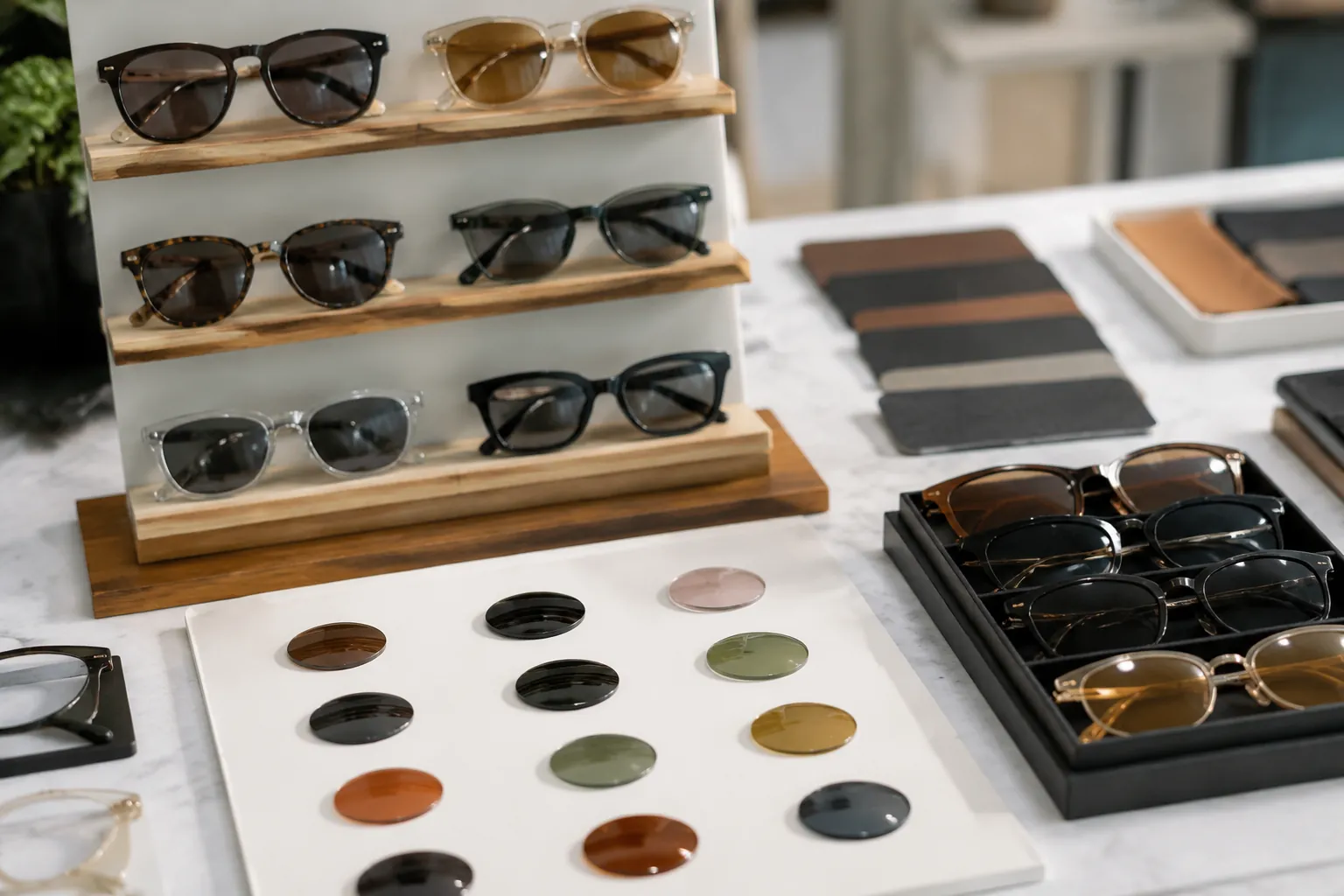
This guide is for brand owners, importers, distributors, and retailers buying custom sunglasses in volume. The point is simple: frames and lenses may be finished, but the order can still miss ship date because packaging is late, wrong, or unapproved. Boxes, pouches, labels, inserts, and shipping marks are part of production. Not an afterthought. Treat them late, and they often become the last unfinished task holding the shipment.
Why packaging becomes the real critical path
Buyers usually focus first on frame construction, lens color, logo decoration, and product quality. Fair enough. Those are core product decisions. But packaging is part of the deliverable too. If the PO calls for a retail box, pouch, barcode label, insert, or specific carton mark, the order is not complete until those items are approved, produced, and matched correctly to the sunglasses.
In practice, packaging often runs on a separate track from frame production. Paper boxes depend on artwork, dielines, print approval, and converting. Pouches depend on material availability, size confirmation, decoration method, and sewing. Labels and inserts may print quickly, but they are error-prone because they carry SKU data, barcodes, origin marking, importer details, or other required text.
That is why packaging often becomes the real critical path. A batch of finished sunglasses may already have passed product QC, yet final pack-out can stop if the retail box is missing, the barcode data is wrong, the pouch size is still unconfirmed, or the insert copy was never approved.
Then the problem spreads. Finished goods sit in the factory. Space gets tied up. The shipment waits for secondary components.
The constraint is basic: the factory cannot close final assortment, carton count, labeling, and shipment inspection until all required pack components are on hand and correct. If the buyer is working under retailer-specific packaging rules, the packaging file set is not just brand presentation. It is order control.
A buyer's timeline: what must happen, and in what order
The fastest way to lose time is to treat packaging as something to handle after sunglasses production starts. In most programs, packaging should move in parallel with product approval.
- Confirm the product specification: frame material, lens type, colorways, logo method, target market, and packing method.
- Freeze the packaging structure: polybag only, pouch plus box, EVA case plus sleeve, label set, barcode placement, insert requirement, and carton mark format.
- Issue artwork and data files: vector logos, approved text, barcode numbers, origin marking, importer details if required, and SKU matrix.
- Approve the dieline and mockup: dimensions, fold direction, logo position, print colors, board type, pouch size, or insert layout.
- Start packaging production: printing, die cutting, lamination if used, pouch sewing, label printing, case sourcing, or insert production.
- Run sunglasses production: molding, cutting, polishing, lens fitting, decoration, assembly, adjustment, and product QC.
- Pack out and inspect: verify SKU-to-package matching, barcode readability, carton quantity, shipping marks, and overall pack accuracy.
This order matters because packaging content usually depends on final product decisions. Change a colorway name, model code, lens category statement, or retailer item number after labels or inserts are printed, and those materials may have to be scrapped and redone.
A good rule: start packaging artwork review as soon as the production sample is being finalized. Do not wait until late bulk. That is where avoidable risk creeps in, especially on orders with multiple SKUs or retailer-specific requirements.
Which packaging items carry the most lead-time risk
Not all packaging items create the same scheduling risk. Paper goods are sensitive to artwork and converting details. Textile items are sensitive to material and decoration. Cases are sensitive to fit. Labels are fast, but they are often the easiest place to make a costly data mistake.
| Packaging item | Typical added lead time risk | Common failure mode | Buyer control point |
|---|---|---|---|
| Printed paper box | Moderate to high | Late artwork, wrong dieline, print approval delay, board specification mismatch | Approve final dimensions and vector artwork before bulk frame production is too far advanced |
| Microfiber pouch with logo | Moderate | Decoration durability issue, material color mismatch, delayed fabric sourcing, incorrect pouch size | Approve material, pouch size, and logo method on a physical sample when possible |
| EVA case or hard case | High for custom-fit programs | Frame-to-case fit mismatch, unavailable shell or zipper option, insert sizing error | Confirm folded frame size with a real sample before case production |
| Barcode and SKU labels | Low to moderate | Incorrect barcode data, duplicate SKUs, unreadable print, wrong label size or placement | Send a locked SKU list and barcode format early |
| Hangtag or insert card | Moderate | Missing required text, wrong language version, layout problems on small type | Consolidate all approved copy in one final file before printing |
Printed boxes are often the highest-risk component because they combine structure, graphics, and fit. A box can look fine on screen and still fail at assembly if the dimensions, fold allowances, or insert design are off.
Pouches are simpler, but logo method still matters. Screen print, heat transfer, and embroidery each affect appearance, durability, and setup time differently.
And labels deserve special care. They link the physical product to the buyer's inventory system. One wrong barcode or mismatched SKU label can create receiving problems, relabeling work, or shipment disputes after arrival.
How packaging choices affect MOQ, price breaks, and scheduling
Sunglass MOQ and packaging MOQ do not always match. A factory may accept a relatively low MOQ for frames, while custom packaging still requires a higher practical minimum because of print setup, material purchasing, or finishing constraints. This is common with custom paper boxes, branded pouches, and retailer-specific inserts.
The cost logic is straightforward. Product cost is driven by materials, labor, decoration, and production efficiency. Packaging cost is often driven by version count, setup effort, and waste. Split one sunglass style into too many packaging versions, and efficiency drops even if the product itself stays the same.
MOQ logic also changes by decoration method:
- Screen printing on pouches: often suitable for simple logos, but requires setup and approval of the print result on the actual fabric.
- Hot stamping on boxes: can create a premium look, but foil choice, edge sharpness, and pressure need approval.
- UV printing: useful for multicolor graphics, but fine text and thin lines should be checked carefully for readability.
- Embroidery: durable on some textile cases and pouches, but logo detail and size can shift depending on stitch density and fabric behavior.
As SKU counts rise, scheduling risk rises too. Fast. One standard box plus a label system is often safer than printing separate retail boxes for every colorway or customer. It cuts approval steps, reduces artwork errors, and makes late SKU changes easier to manage.
There is also a timing issue. Eyewear production moves stage by stage, but pack-out usually happens near the end. If packaging is late, the whole shipment waits. Partial shipment may be possible, but only if the supplier agrees, and it usually adds extra handling, coordination, and freight complexity.
Compliance marks, legal text, and label details cannot wait
Packaging is not just branding. It may also carry product identity, traceability, and market-specific information required by the buyer or the destination market. If the box, insert, label, or outer carton must show warnings, model identification, barcode data, origin marking, importer details, or lens-related information, treat those files as controlled documents.
For sunglasses, buyers commonly work against market standards or compliance frameworks such as CE EN ISO 12312-1 for Europe, ANSI Z80.3 for the United States, and AS/NZS 1067 for Australia and New Zealand. Some projects also require attention to REACH-related material expectations, buyer compliance files, or importer documentation. Depending on the sales channel, a buyer may also ask about factory systems such as ISO 9001 or social compliance audits such as BSCI. If eyewear is sold through channels tied to regulated medical or protective categories, buyers may ask separate questions about FDA registration, but that should not be assumed for ordinary fashion sunglasses.
The key point is accuracy. Packaging text must match the actual product and the buyer's approved documentation. A model number, origin statement, importer name, barcode string, or lens-related statement cannot be guessed and added at the end of the line.
Common late-stage errors include a carton label that does not match the SKU list, missing importer information required by the buyer, a barcode that does not match the ERP file, or insert text copied from an older project. Any one of these can stop receiving even if the sunglasses themselves are physically correct.
Practical rule: lock legal copy, SKU data, barcode structure, and required packaging marks when you approve the production sample, not after bulk goods are finished.
At inspection stage, pack-out checks should cover more than lens tint and frame finish. They should also verify barcode readability, correct assortment, insert placement, and product-to-package matching.
Failure modes that delay ship date after sunglasses pass QC
Most packaging delays are not dramatic factory failures. They are small process mistakes that surface late and eat just enough time to miss a booking window. That is what makes them expensive.
- Artwork supplied in the wrong format: the factory receives a low-resolution image instead of a vector logo, delaying print preparation.
- Dieline approved without fit testing: the box layout looks correct but does not fit the actual folded frame comfortably.
- Decoration mismatch across components: the box finish, pouch print, and frame logo do not match the approved branding standard, forcing reapproval.
- Late barcode revision: a SKU name or item code changes after labels are printed.
- Outer carton marks not confirmed: the warehouse requires PO number, item code, destination, carton sequence, or origin marking in a specific format that was never finalized.
- Mixed SKU assembly: finished sunglasses, pouches, labels, and boxes are not kitted clearly by SKU, slowing or stopping final pack-out.
Each issue may add only a few days. That is enough. A few days can mean a missed vessel cutoff or a forced freight change. Then the schedule impact becomes much bigger than the original packaging mistake.
Fit-sensitive packaging needs extra caution. For acetate or mixed-material frames, the final folded shape can shift slightly after polishing, hinge adjustment, and alignment. A hard case chosen from a drawing alone may not fit the finished product well. The safest approach is to test the actual production sample in the actual case before bulk case production starts.
A working lead-time plan for boxes, pouches, and labels
If you want a bulk sunglass order to stay on schedule, packaging needs its own approval calendar. A practical target is to complete the main packaging approvals within the first third of the bulk cycle so boxes, pouches, labels, and inserts can move in parallel with product production.
| Day range | What buyer should complete | Why it matters |
|---|---|---|
| Day 0-3 | Send final packaging structure, artwork files, barcode list, and carton mark format | Lets the factory and packaging vendors check files and identify gaps immediately |
| Day 4-7 | Approve dielines, material specifications, print colors, and required copy | Prevents packaging work from waiting while sunglass production is already moving |
| Day 8-15 | Approve packaging sample or photo confirmation for simple items | Keeps packaging production running in parallel with eyewear production |
| Day 16-25 | Confirm no SKU, assortment, or copy changes | Reduces the risk of label reprint, insert revision, or repacking |
| Final pack-out window | Complete pack-out inspection and shipping release | All packaging components should already be available and approved before this stage |
A few controls help a lot. Ask for a physical box sample when the structure is custom, the fit is tight, or the finish is premium. Ask for a physical pouch sample when size, fabric, or decoration method could affect appearance or function. For barcode labels, request at least a clear final proof with the numeric string visible, and preferably a scan test against your own receiving requirements.
If you are working with a new supplier, ask which packaging items are handled in-house and which are outsourced. That matters. External paper converters, pouch suppliers, and case suppliers each add a separate lead-time dependency.
What to send your factory at PO stage so packaging does not hold shipment
Buyers who protect ship dates usually do one thing well: they send complete packaging information at PO stage. The goal is not complexity. It is completeness and clarity.
- SKU matrix with frame color, lens color, barcode, and packaging variant.
- Vector logo files for box, pouch, label, insert, and product decoration where relevant.
- Packaging dimensions or retail format requirement, including shelf display, hanging format, or e-commerce packing requirement if applicable.
- Approved legal or required copy for the destination market and sales channel.
- Carton packing plan with units per inner pack and master carton count.
- Shipping mark template with PO number, item number, destination, carton sequence, and origin marking.
- Approval method: identify which items can be approved by photo and which require a physical sample.
It also helps to define acceptance points early: acceptable box dimension tolerance, acceptable print color variance, barcode symbology or formatting requirement, and any retailer-specific label placement rule. These details give the supplier a clear target and cut unnecessary back-and-forth during the bulk schedule.
Send this information early, and packaging can run in parallel with frame and lens production. Send it late, and packaging becomes the last unresolved task. That is why secondary packaging is often not secondary at all from a scheduling standpoint.
Have a custom sunglasses project in mind?
Send us your styles, target market and quantities and we will return a detailed quote with MOQ, lead time and a sample plan.
Get a QuoteWhy source this from Wenzhou with LumiShades
Wenzhou in Zhejiang Province is widely regarded as China’s eyewear manufacturing capital, producing a large share of the world’s sunglasses. That concentration matters to buyers: a deep local supply chain for acetate sheet, hinges, lens blanks, plating and packaging means shorter component lead times, easier color and material matching, and a workforce with decades of eyewear-specific skill. LumiShades has manufactured in this ecosystem since 2009, and our vertical integration — in-house injection molding, acetate cutting, CNC milling, lens tinting, decoration and quality control — means no part of your order is quietly subcontracted to a workshop you cannot audit.
For international buyers, that vertical control translates into accountability. When a single factory owns every step, defects are traced and fixed at source rather than bounced between vendors, and your specifications survive intact from first sample to bulk. We back this with 15+ years of experience, shipments to 60+ countries, more than 5 million pairs produced per year and a 98.5% on-time delivery rate. Our certifications — CE EN ISO 12312-1, FDA registration, ANSI Z80.3, AS/NZS 1067, REACH, ISO 9001 and BSCI audit — mean the compliance documentation your market requires already exists. Explore our manufacturing capabilities and quality control process to see how this works in practice.
Frequently asked questions
Can my sunglasses ship on time if the retail box is late but the product is finished? Only if you and the supplier formally agree to an alternative before shipment release. In practice, you usually have three options: 1) approve temporary bulk packing or polybag packing, 2) split the shipment so finished units ship first and retail packaging follows, or 3) hold the shipment until the approved packaging arrives. Before deciding, confirm whether your customer, marketplace, or warehouse will accept non-retail packing. Also confirm who pays the extra labor, relabeling, and freight if a split shipment is needed.
What packaging item is most likely to delay a custom sunglasses order? Printed paper boxes are usually the highest-risk item because they combine artwork approval, structural sizing, print production, and fit verification. If your style uses a custom insert, drawer box, magnetic closure, or retailer-specific graphics, ask for a physical sample early. On simpler programs, labels can still become the biggest risk if your SKU list or barcode data is unstable.
Is it safer to use stickers for SKU changes instead of printing separate boxes? In many cases, yes. One standard box plus a controlled label system is often the safer option for multi-SKU orders because it reduces artwork versions, lowers print setup risk, and makes late SKU changes easier to manage. To use this approach safely, lock the label format early, confirm barcode readability, define exactly where the label will be placed, and make sure the unlabeled box still meets your branding and market requirements.
When should I approve packaging on a bulk order? Approve the main packaging structure and artwork as early as possible, ideally near the start of the bulk cycle and no later than production sample approval. If the order includes multiple SKUs, retailer-specific packaging, hard cases, or multilingual inserts, move even earlier. A practical checklist is: lock structure first, approve dieline second, approve final copy and barcode data third, and approve physical fit-critical samples before bulk packaging starts.
Do compliance requirements affect packaging lead time? Yes. Compliance-related text and identification details increase the number of files that must be checked and approved. If your packaging needs origin marking, importer details, model identification, barcode control, or text tied to standards such as CE EN ISO 12312-1, ANSI Z80.3, or AS/NZS 1067, finalize that content early. The practical move is to provide one approved master file for all required copy, confirm that it matches the actual product specification, and make barcode data part of the same approval step rather than a separate late task.
Ready to start?
Explore our sport wrap sunglasses or request a quote — our sales team replies within 12 hours.
Request a Quote