
Fit Details That Make Custom Sunglasses Better
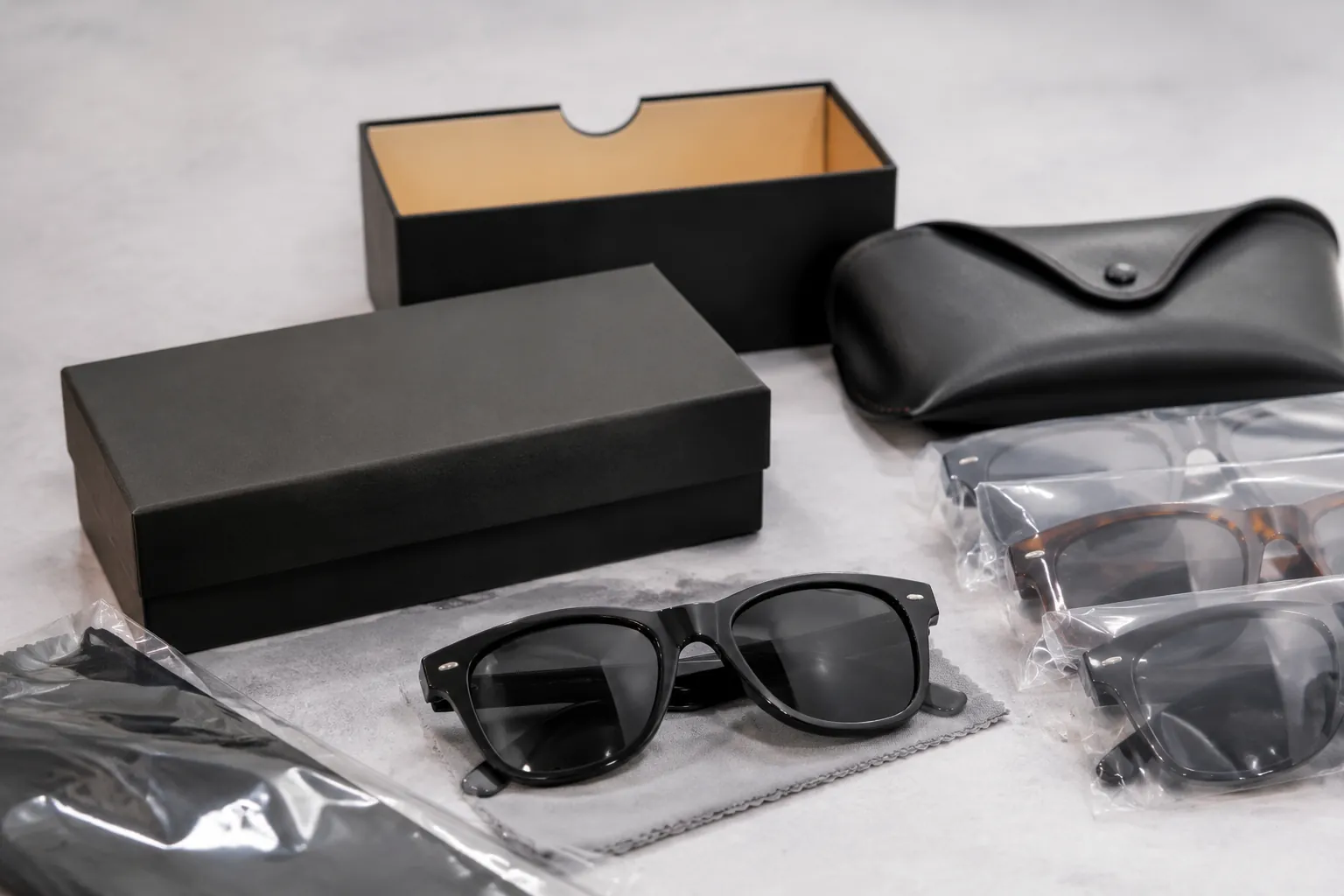
This article is for brand owners, importers, distributors, and retail buyers sourcing custom sunglasses in volume. It focuses on the fit parts buyers often miss: nose pads, temple tips, temple bend, bridge shape, and other skin-contact zones. These changes usually take less development than a new front mold, yet they can change comfort, product consistency, and post-sale feedback in a real way. If you want a sunglass line to feel more considered without moving too fast into full tooling changes, define these specs early and review them closely in sampling and QC.
Start with contact points, not the logo
Many private-label sunglass programs start with visible changes: frame color, lens tint, temple branding, or packaging. Those choices matter. They do not decide how the frame feels after two hours on the face.
The first fit priorities are usually the bridge area, nose pads, temple tips, and the curved end of the temple. These are the pressure points. They affect stability, balance, and comfort more than a logo ever will.
For buyers, that matters because contact-point customization is often less complex than full mold redevelopment. A new injection front mold or a major mold revision can add time, cost, and approval risk. By contrast, changes such as nose pad style, temple-end material, bend geometry, or small branding details at the temple end can often be tested during normal sample development on existing platforms, depending on frame construction.
That does not make these details minor. A temple tip with an inserted logo plate, for example, still involves molding tolerance, pocket cutting, finishing, adhesive or insertion control, and final inspection. If those steps drift, the approved sample and the bulk order can feel different or fail differently even when the frame shape stays the same.
The sourcing rule is simple: if the wearer feels it, specify it. In many cases, a familiar frame shape with better contact-point design performs better than a more dramatic shape with generic fit parts.
Which fit details change comfort fastest
Not every small part changes wear in the same way. If time or budget is tight, fix pressure and retention first. Cosmetic upgrades can wait.
- Bridge fit and nose contact area. This affects how high or low the frame sits and whether pressure is spread evenly or concentrated in one spot.
- Temple tip material and bend geometry. This controls hold behind the ear and whether the frame feels secure without too much pressure.
- Nose pad material and shape. On metal and mixed-material styles, this is often one of the fastest comfort variables to test.
- Temple width and inward pressure. Too much side pressure causes discomfort. Too little allows slipping or bounce.
- Surface finish on contact zones. Matte, polished, rubberized, and textured finishes behave differently against skin, sweat, and hair products.
For injection sunglasses, bridge shape is usually built into the front mold, so major bridge changes may require tool work. Even then, buyers can still improve fit early by choosing a better base frame and adjusting the components that remain flexible within that platform. For acetate styles, CNC shaping and polishing can allow more refinement in the bridge and temple-end area during development, though the exact range depends on the original design and construction.
A useful way to assess these requests is to group them by development impact. Simple changes such as pad swaps, engraving, or print usually carry lower implementation risk. Changes such as overmolded tips, inserted trims, or revised bend geometry need closer sample review and clearer QC checkpoints. Changes that alter molded bridge geometry are tooling decisions. Treat them that way.
Nose pad options: small parts, big fit effect
Nose pads are one of the highest-leverage small parts in eyewear. Buyers often approve the first sample setup, then learn later that the frame slips in humidity, leaves pressure marks, or sits differently across user groups. Pad choice affects grip, compression, stability, maintenance, and perceived quality.
| Option | Best use | Main advantage | Trade-off |
|---|---|---|---|
| Integrated plastic saddle bridge | Injection sport and fashion sunglasses | Lower part count, consistent appearance, simpler assembly | Little post-production adjustability |
| PVC or silicone screw-in pads | Metal frames and mixed-material styles | More grip and easier comparison between pad options in sampling | More parts and more assembly checks |
| Air-cushion silicone pads | Lightweight optical-sun hybrids and longer wear situations | Softer initial feel and potentially less visible marking | Material quality must be controlled to avoid early hardening, collapse, or discoloration |
| Textured anti-slip pads | Hot climates and active wear | Better hold under sweat | Texture can collect dirt and may feel too aggressive for some users |
Material hardness matters, but buyers should judge it by comparison, not guesswork. A very soft pad may feel comfortable in hand yet compress too easily in wear, which can reduce stability. Ask the factory to identify the actual pad material and provide comparison samples where possible so the review is based on use, not just appearance.
Request comparison samples early. If a style uses adjustable pads, ask for at least two pad shapes or material options in the same sample round when practical. That is usually faster than approving one version and reopening development later. During assembly and final QC, pad symmetry is critical. Uneven pad angle, inconsistent mounting, or loose screw control can make a frame sit crooked even when the lenses and hinges are correct.
- Check pad angle left to right for visual symmetry.
- Check pad height so the front sits level on a flat inspection plate.
- Check screw tightness and thread engagement on metal styles.
- Check adhesive cleanliness if any pad mount uses glue-assisted fixation.
Temple tips do more than finish the frame
Temple tips are often treated as cosmetic. That is a mistake. They affect retention, comfort behind the ear, and the first-touch feel of the product.
The main decisions are material, geometry, and decoration method. Standard molded plastic tips are usually the most direct option for bulk production. TPE or other soft-touch overmolded tips can improve grip, especially on sport-influenced designs, but they require stable process control and material compatibility. Acetate temple tips can create a more premium look and stronger color contrast, but they also demand tighter control of color consistency and finishing.
Geometry often matters more than material. A gradual drop curve usually fits more wearers than a sharply hooked shape. A bend that starts too early can create a pressure point above the ear. A bend that starts too late can reduce hold and allow movement. On heavier frames, extending the contact area at the temple end can help spread pressure more evenly.
Temple-end decoration is also one of the more practical ways to make an existing platform feel more proprietary. Common options include laser engraving, pad printing, and metal logo plates, each with different durability and process implications.
- Laser engraving: low-profile branding with good durability on suitable surfaces.
- Pad printing: flexible for color and artwork, but it should be reviewed carefully on high-contact or highly textured zones.
- Metal logo plates: stronger visual distinction, but they require accurate pocket cutting, secure attachment, and pull-check inspection.
Placement matters. If a raised insert or decorative part sits in the ear-contact zone, the wearer may feel it. Ask the factory to mark the intended contact area on the sample and keep branding outside that zone or fully flush with the surface.
A practical cost and lead-time breakdown
Component-level fit changes sit in a useful middle ground. They are often more effective than stock sourcing and less risky than full custom tooling.
Actual cost and lead time vary by frame construction, order volume, component availability, and sample history. The better sourcing question is not a headline unit price. It is this: which changes are simple component substitutions, and which ones trigger tooling work, extra sample rounds, or added inspection steps?
| Customization detail | Typical cost impact | Sample impact | Bulk lead-time impact |
|---|---|---|---|
| Swap nose pad material or shape on existing metal style | Low | Usually requires a comparison sample | Often limited if approved before bulk parts ordering |
| Adjust temple tip color, print, or engraving | Low | Usually manageable within standard sample development | Often limited if artwork and color are confirmed early |
| Add metal logo plate to temple | Low to medium | Often needs an extra confirmation sample | May add assembly and inspection time |
| Revise tip geometry or add soft overmold | Medium | May require tooling insert review or process confirmation | Can add setup and validation time |
| Change bridge geometry on existing injection mold | Medium to high | May require mold revision | Often has the greatest lead-time risk among these options |
For many buyers, the most efficient approach is to keep the base mold unchanged, refine the contact-point components, and lock those decisions before bulk materials are ordered. Delays usually start when pad style, temple-end decoration, finish, or overmold color is still changing after pre-production approval.
A sound commercial sequence is to validate lower-risk fit changes first, then consider mold changes after market response and reorder data support the investment. That protects margin. It also protects schedule.
Fit details still have to pass compliance and QC
Comfort improvements cannot create compliance problems. Buyers sometimes separate fit choices from testing choices, but the shipped product must meet the target market requirements in its final form, not in an earlier sample version.
Relevant standards and systems may include CE EN ISO 12312-1, ANSI Z80.3, AS/NZS 1067, REACH, FDA registration, ISO 9001, and BSCI, depending on the product, market, and supply-chain requirements. Buyers should confirm which of these apply to the destination market and to the exact bill of materials approved for production.
Changes in lens tint, transmittance category, or frame-lens combination can affect whether the product still meets the sunglass standard for the target market. Changes to skin-contact materials such as nose pads, soft-touch coatings, adhesives, sleeves, or plated trims can also require renewed review under REACH or the buyer's own restricted-substance requirements. This matters most for parts that stay in direct skin contact during wear.
On the factory floor, fit-detail QC should be a defined inspection block, not an informal visual glance.
- Inspect left-right pad symmetry and secure attachment.
- Check temple opening and closing consistency from pair to pair.
- Measure bend consistency on temple ends after forming.
- Check logo plate adhesion or insertion security.
- Inspect contact-zone finish for burrs, rough edges, or coating defects.
- Run a final sit test to catch front twist or uneven pressure.
These are basic controls. They still prevent a lot of complaints. A frame can pass cosmetic inspection and still fit badly if one pad sits higher, one temple presses harder, or a soft tip edge lifts during transit or storage.
How to brief the factory so samples come back right
Many sample rounds are wasted for one reason: the buyer gives a vague request such as "make it more comfortable" or "improve the fit." That is not a technical brief. It does not define the problem, the baseline, or the exact change to test.
Use measurable instructions. A useful fit brief should identify the base frame, target user, wear complaint, and specific revision requested. At minimum, include bridge type, pad type, pad material, temple tip material, tip length, bend start point, branding position, and the compliance framework for the destination market. Photos help, but dimensions and comparison notes are usually more useful than mood images alone.
- Choose the base frame. Start with a platform already close to the target user in front width, bridge stance, and temple shape.
- Mark the contact points. Identify where the frame touches the nose, ear, and side head.
- State the problem clearly. Examples: slips in humidity, sits too high, pinches after 30 minutes, leaves visible nose marks.
- Assign a specific change. Examples: switch to firmer silicone pads, move bend start 5 mm back, extend soft tip section, relocate logo plate forward.
- Request A/B comparison samples. Ask for two pad options, two bend options, or two tip materials where practical.
- Approve against actual use. Test on-face and in movement, not only in the sample tray.
The goal is simple: make each sample round answer a defined fit question. When the brief is specific, the supplier can respond with clearer options, and the buyer can approve against criteria that are easier to repeat in bulk production.
Where buyers overspend and where they should not
A common sourcing mistake is spending heavily on visible customization before fixing basic wear comfort. Buyers may prioritize mirrored lenses, premium packaging, or decorative trims while leaving a generic hard temple tip or a slippery bridge area unchanged. That order is often backwards.
If budget is limited, spend first on the details that reduce avoidable wearer friction. A frame that stays stable, sits level, and feels balanced will usually create fewer fit complaints than a more decorative frame with unresolved contact-point issues. In practice, that means reviewing bridge contact, pad selection, temple-end geometry, and side pressure before adding more expensive cosmetic features.
Buyers can also overspend by moving into full custom tooling too early. For many commercial sunglass lines, a better pad package, improved temple-end feel, refined branding treatment, and tighter QC are enough to test the market responsibly. If reorder volume and user feedback support the case later, a custom mold decision is easier to justify.
At the same time, do not under-specify QC for small parts. Loose pads, detached logo plates, rough temple edges, and asymmetrical bends are cheap to catch before shipment and expensive to deal with after goods reach the market.
A practical sourcing rule is this: if the customer feels it on the face, specify it. If it is specified, inspect it. If it is inspected, keep it consistent from approval sample to bulk production.
Have a custom sunglasses project in mind?
Send us your styles, target market and quantities and we will return a detailed quote with MOQ, lead time and a sample plan.
Get a QuoteWhy source this from Wenzhou with LumiShades
Wenzhou in Zhejiang Province is widely regarded as China’s eyewear manufacturing capital, producing a large share of the world’s sunglasses. That concentration matters to buyers: a deep local supply chain for acetate sheet, hinges, lens blanks, plating and packaging means shorter component lead times, easier color and material matching, and a workforce with decades of eyewear-specific skill. LumiShades has manufactured in this ecosystem since 2009, and our vertical integration — in-house injection molding, acetate cutting, CNC milling, lens tinting, decoration and quality control — means no part of your order is quietly subcontracted to a workshop you cannot audit.
For international buyers, that vertical control translates into accountability. When a single factory owns every step, defects are traced and fixed at source rather than bounced between vendors, and your specifications survive intact from first sample to bulk. We back this with 15+ years of experience, shipments to 60+ countries, more than 5 million pairs produced per year and a 98.5% on-time delivery rate. Our certifications — CE EN ISO 12312-1, FDA registration, ANSI Z80.3, AS/NZS 1067, REACH, ISO 9001 and BSCI audit — mean the compliance documentation your market requires already exists. Explore our manufacturing capabilities and quality control process to see how this works in practice.
Frequently asked questions
Can I customize nose pads and temple tips without paying for a new mold? Often yes, but it depends on the frame construction. On many metal and mixed-material styles, nose pads, pad arms, temple-end materials, engraving, print, and some bend adjustments can usually be changed without a new front mold. On injection styles, major bridge changes are more likely to require mold revision. Ask the supplier for a written breakdown that separates component substitutions, tooling inserts, and full mold changes before approving development.
What is the best MOQ for testing fit changes before a full launch? Use the smallest production quantity the supplier will accept for a controlled comparison, then evaluate returns risk, consistency, and reorder potential before scaling. The right MOQ is not universal; it depends on your budget, market, and how many variants you want to compare. Ask the factory to quote both sample quantities and the first production break so you can decide whether to test one configuration or run a structured A/B trial.
How many sample rounds should I expect for fit-detail customization? For straightforward component swaps, one or two rounds is often enough if the brief is specific. More rounds may be needed when you are comparing multiple pad materials, temple bend positions, overmold constructions, or decorative insert placements. To keep development efficient, ask for comparison samples in the same round and define the approval criteria in advance: fit issue, requested change, target user, and pass-fail observations.
Do small component changes affect compliance testing? They can. Lens changes are the clearest trigger, but new contact materials, coatings, adhesives, plated trims, or soft temple-end parts may also require renewed review against destination-market requirements and your restricted-substance protocol. Confirm with the supplier which standards apply to the final product specification, then check that the test reports or declarations match the exact bill of materials approved for production.
What should my QC team inspect on these parts before shipment? At minimum, inspect pad symmetry, pad security, screw engagement where applicable, temple opening resistance, temple bend consistency, logo plate attachment, finish quality on skin-contact areas, and whether the frame sits level without front twist. Put these points into a written inspection checklist with sample photos and acceptance criteria, then require the factory to check the same items at pre-production and final inspection so the approved sample and the bulk lot are judged the same way.
Ready to start?
Explore our square sunglasses or request a quote — our sales team replies within 12 hours.
Request a Quote