
Choosing Hinge Tension for All-Day Sunglasses Comfort
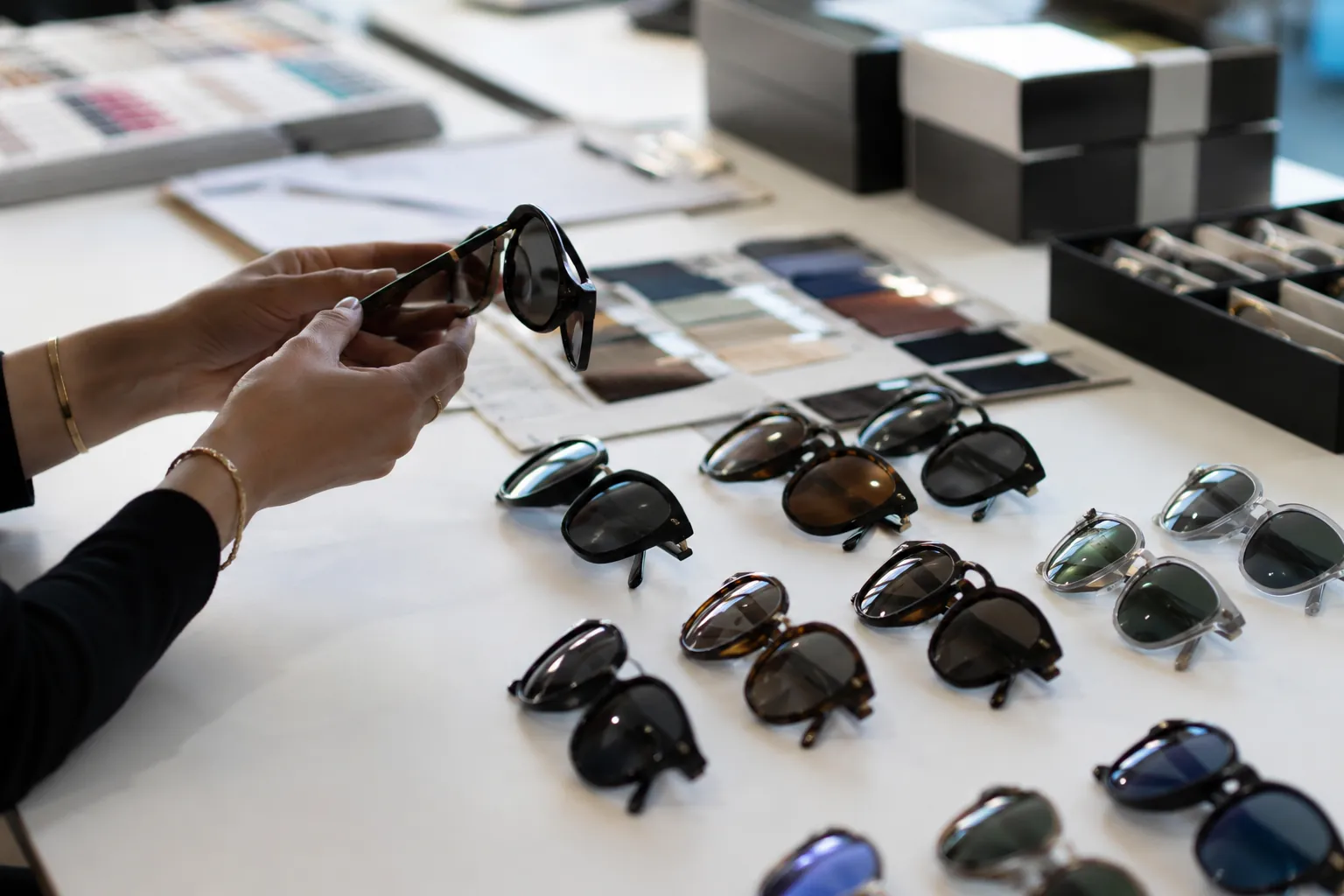
For volume sunglasses programs, hinge feel is not a minor detail. It affects comfort, retention, assembly consistency, and return risk. A frame can look straight on the inspection table and still fail in wear if temple resistance is uneven, side pressure is too high, or recovery is poor. This guide gives brand owners, importers, distributors, and retailers a practical way to specify hinge behavior by material, price tier, and production method.
Start with hinge behavior, not hinge type
Many buyers start by asking for a 3-barrel hinge, a 5-barrel hinge, or a spring hinge. That is the wrong first question. Start with behavior. How much resistance should the temple have during opening? How much lateral flex should it allow in wear? How well should it recover after repeated use?
For all-day wear, a hinge system has three jobs. It should open smoothly, without a harsh snap or a sloppy feel. It should hold the frame on the face with enough side pressure to stabilize fit, but not enough to create pain behind the ear or at the temple. It should also keep left-right balance over repeated open-close cycles. If that balance drifts, the frame starts to feel wrong fast.
These results depend on more than the hinge part. Barrel alignment, screw retention, temple geometry, front curvature, material movement after machining or molding, and the assembly jig all affect final feel. This is where many B2B programs go off track. A single prototype feels fine. Bulk does not.
So define temple feel in plain language and tie it to a test method. For example: light opening feel for fashion frames, medium for everyday unisex styles, and firm for active styles. Then verify left-right consistency on a meaningful pre-bulk sample of finished frames before release.
What wearers actually feel
Wearers do not care about hinge architecture. They feel three things: opening torque, clamp force, and flex recovery.
Opening torque is the resistance felt when spreading the temples. Too high, and the frame feels stiff. Too low, and it feels weak or loose. Clamp force is the side pressure during wear. Too much causes fatigue behind the ear and at the sides of the head. Too little causes slipping, especially on low-bridge fits or during movement. Flex recovery is how evenly the temples return after being pushed outward. Poor recovery often shows up as twist, uneven temple angle, or a crooked fit.
For private label programs, the goal is not one perfect number for every face shape. The goal is repeatability within a sensible range. Reject runs where one temple opens much easier than the other, where free play appears after limited handling, or where the frame returns differently from left to right.
Head-size spread matters. A regular-fit frame may feel fine on one wearer and too aggressive on another. Test with at least three people: narrow, regular, and wide. If all three report instability or excessive clamp, the issue is usually hinge tension plus temple geometry. Not just size labeling.
Bad hinge feel gets noticed quickly. Often before decoration, lens color, or packaging.
Compare hinge behavior by frame construction
| Frame construction | Typical opening feel | Process variables that change tension | Common failure mode | Best use case |
|---|---|---|---|---|
| Acetate front + metal hinge | Usually firmer, heavier, and more premium in hand | CNC pocket accuracy, hinge insert depth, polishing loss, screw locking | Temple looseness, shifted insert, visible barrel gap | Fashion sunglasses, premium private label, higher perceived value |
| Injection molded front + assembled hinge | Lighter feel, highly dependent on mold repeatability | Mold shrinkage, cooling balance, pin location, assembly jig angle | Temple misalignment, uneven opening angle, warp after heat exposure | High-volume retail, promotional programs, sport-casual styles |
| Full metal frame | More precise, often springier if geometry is controlled well | Barrel alignment, solder or weld quality, plating buildup, endpiece thickness | Metal fatigue, uneven barrel friction, hinge bite after plating | Thin profiles, lightweight fashion metal sunglasses |
| Spring hinge construction | More forgiving outward flex, smoother on wider heads when tuned correctly | Spring cartridge quality, travel length, housing fit, assembly consistency | Rattle, over-expansion, weak return, front distortion | Broader fit ranges, active daily wear, frequent on-off usage |
Material behavior changes hinge feel more than many buyers expect. Acetate can give a strong hand feel, but machining and polishing must stay under control or the hinge pocket opens up too much. Injection frames can be consistent at scale, but only if shrinkage and cooling are balanced. If one side moves more than the other, temple angle drifts. Metal frames rely heavily on barrel and endpiece alignment. Small errors create obvious left-right differences in opening resistance.
Finish matters too. Coating, rubber paint, hydro-dip transfer, and heavy plating can increase friction at the hinge area or change fit at temple contact points. Check final feel after decoration. Not before.
When spring hinges help, and when they add risk
Spring hinges are useful. They are not an automatic upgrade.
They make sense when the frame must cover a wider wearer range, when the style will be put on and taken off many times a day, or when a slim temple needs extra fit forgiveness without excessive clamp. Their main benefit is controlled outward travel. On wider heads, that can reduce concentrated side pressure and improve comfort. In daily wear, it can also help the frame survive routine over-opening.
But the trade-offs are real: more parts, more assembly steps, more failure points, and tighter QC. Treat spring hinges as an engineering choice, not a simple option tick.
Buyers should ask for these details in the tech pack:
- Spring hinge construction type and metal grade
- Designed outward travel range before hard stop
- Whether the spring cartridge is glued, pressed, or mechanically fixed
- Target opening feel: light, medium, or firm after final assembly
- Cycle check standard for approval samples and bulk spot checks
This matters even more on MOQ-sensitive programs. On small runs, setup variation can hit unit consistency harder. On larger runs, process stability usually improves, but only if the hinge structure was finalized before tooling, polishing, and decoration were locked. Switching from a fixed hinge to a spring hinge late in development may require temple redesign, different routing dimensions, and new assembly fixtures. That adds time. Often cost too.
Failure modes to catch before packaging
Most hinge complaints in bulk orders fall into three groups. Each one points to a process problem.
- Loose hinge after short use: Usually linked to poor screw retention, weak barrel fit, low-grade hinge parts, or weak thread locking. This is common on acetate styles where the insert looks secure but the screw backs out over time.
- Temple misalignment: One temple opens higher, closes at a different angle, or sits unevenly on the table. On injection frames, the cause is often shrinkage or assembly jig variation. On metal frames, it may come from poor barrel alignment or distortion after plating.
- Excessive outward pressure: The frame feels secure in the box but becomes uncomfortable in wear. Typical causes are over-sprung construction, too much preset temple angle, or a mismatch between intended wearer width and actual hinge tension.
Good factories check these issues in order. First confirm front symmetry and basic alignment. Then check hinge operation and left-right balance. Then install lenses and test again, because lens insertion can slightly change front shape. Comfort problems should not first appear after final polishing. If they do, the process is too late.
A simple buyer-side screen works well: open and close each sample 20-30 times by hand, apply gentle outward side pressure, then do a short wear test. If the hinge rattles, one temple returns slower than the other, or wearers report immediate hotspot pressure, do not approve bulk.
How to write hinge specs into the tech pack
"Make it comfortable" is not a production instruction. It is vague and useless.
Buyers get better results when hinge behavior is written into the tech pack in terms the factory can review and the buyer can check.
At minimum, the specification should cover:
- Hinge type: fixed, spring, or model-specific mixed construction
- Target opening feel: light, medium, or firm, confirmed against an approved physical sample
- Wear profile: narrow fit, regular fit, or wider fit
- Frame material pairing: acetate + metal hinge, injection + assembled hinge, metal + welded hinge
- Cosmetic acceptance: no sharp edge, no visible barrel bite, no abnormal hinge gap under normal inspection
- Approval quantity: at least 5-10 pcs per colorway for pre-bulk evaluation when the order size supports it
For custom sunglasses, the safest method is to approve one physical golden sample with the exact hinge feel required and keep it on file. Memory is unreliable. Retained samples are not. If a later lot feels different, compare it directly to the approved sample under the same open-close and wear-test conditions.
Lead time matters here. If samples take about 7-10 days and bulk production takes about 25-35 days, lock hinge behavior before logos, lens color, and packaging are finalized. If hinge structure changes after tooling or decoration are set, rework can disrupt assembly flow and delay shipment. Cost matters too. Small orders are most sensitive to setup changes. Larger orders benefit from lower unit cost, but they still need lot-to-lot control.
A practical comfort and compliance test plan
| Test | How to run it | What to look for | Fail sign |
|---|---|---|---|
| Open-close cycle | Open and close the temples repeatedly by hand on both sides | Even resistance, no sudden looseness, no screw movement | Rattle, one-sided creep, visible play |
| Side-pressure flex test | Apply gentle outward pressure at both temples | Smooth flex and even recovery | Frame twist, one temple returns slower, front distortion |
| Wear simulation | Have narrow, regular, and wide testers wear the frame for a short period | Stable fit without pain or slipping | Pressure behind ear, headache points, sliding |
| Post-decoration check | Recheck after painting, plating, or logo application | Same feel as pre-decoration approval | Added friction, finish interference, altered clamp |
This process does not need a lab. It does need discipline. Use the same testers where possible. Record comments by size profile. Separate hinge issues from size issues: a frame can be too small overall, but it can also be the right nominal size with poorly tuned hinge tension.
For export orders, comfort is only part of the job. The frame also has to fit the compliance path for the target market. Depending on destination and seller setup, that may include CE and EN ISO 12312-1 for EU sunglasses, ANSI Z80.3 for the U.S., AS/NZS 1067 for Australia and New Zealand, REACH restricted-substance requirements, and FDA registration where applicable. A comfortable hinge does not fix a noncompliant product.
Buying logic by order size, cost tier, and lead time
Hinge complexity changes cost more than many new buyers expect. A standard fixed hinge on an acetate or injection style is usually cheaper and easier to stabilize than a spring hinge system with tighter fit requirements. Full metal styles can run efficiently on a strong line, but they get expensive fast if hinge alignment needs repeated manual correction.
The cheapest hinge is often not the cheapest program. The better question is this: which hinge gives acceptable comfort and consistent output across the shipment with the least rework?
On a small trial order, expect the highest unit cost and the greatest sensitivity to setup variation. On mid-size orders, process flow usually stabilizes and economics improve. On larger orders, unit cost drops further, but the main risk shifts to consistency across lots rather than one-time setup error.
So the buyer action should change by scale. Small orders need a tightly controlled golden sample. Mid-size orders need first-output wear checks. Large orders need in-process QC, retained packed samples, and a documented method for checking hinge feel lot to lot.
For B2B buyers, comfort is not a brand claim. It is a production result. It comes from hinge design, material behavior, assembly control, and disciplined sampling. If a supplier cannot explain where hinge variation comes from—molding, CNC cutting, metal forming, polishing, screw retention, or final assembly—they probably do not control it well enough for a serious custom sunglasses program.
Have a custom sunglasses project in mind?
Send us your styles, target market and quantities and we will return a detailed quote with MOQ, lead time and a sample plan.
Get a QuoteWhy source this from Wenzhou with LumiShades
Wenzhou in Zhejiang Province is widely regarded as China’s eyewear manufacturing capital, producing a large share of the world’s sunglasses. That concentration matters to buyers: a deep local supply chain for acetate sheet, hinges, lens blanks, plating and packaging means shorter component lead times, easier color and material matching, and a workforce with decades of eyewear-specific skill. LumiShades has manufactured in this ecosystem since 2009, and our vertical integration — in-house injection molding, acetate cutting, CNC milling, lens tinting, decoration and quality control — means no part of your order is quietly subcontracted to a workshop you cannot audit.
For international buyers, that vertical control translates into accountability. When a single factory owns every step, defects are traced and fixed at source rather than bounced between vendors, and your specifications survive intact from first sample to bulk. We back this with 15+ years of experience, shipments to 60+ countries, more than 5 million pairs produced per year and a 98.5% on-time delivery rate. Our certifications — CE EN ISO 12312-1, FDA registration, ANSI Z80.3, AS/NZS 1067, REACH, ISO 9001 and BSCI audit — mean the compliance documentation your market requires already exists. Explore our manufacturing capabilities and quality control process to see how this works in practice.
Frequently asked questions
Should I always choose spring hinges for better comfort? No. Spring hinges help when you need more outward flex, broader fit tolerance, or frequent on-off use. But they add parts, assembly steps, cost, and QC risk. For many acetate and injection styles, a well-made fixed hinge is more stable and easier to control in bulk. The right choice matches the target wearer range and the factory's process capability.
What is the most common hinge-related complaint in bulk sunglasses orders? Uneven temple feel. One side opens looser or stiffer than the other because barrel alignment, screw retention, material shrinkage, or assembly angle was not controlled consistently across the run. The fastest way to catch it is to compare left and right temple feel on the finished frame, not just inspect the front visually.
How can I tell if temple tension is too high before shipment? Run a real wear check on the finished product. If testers need two hands to put the frame on, feel strong side pressure behind the ears after a short wear, or report immediate clamp fatigue, tension is too high for the target fit. Also compare production pieces side by side with the approved sample so you are judging feel, not memory.
Can hinge feel be changed after sampling? Sometimes, but not always cheaply. Changes may involve the hinge part, temple routing or geometry, front angle, spring-hinge housing, or assembly setup. If tooling and decoration are already locked, lead time and rework cost usually increase. If the feel is wrong in pre-production, fix it before bulk approval.
What should I request from the factory on an export order? Request the exact hinge type, a retained approval sample, the buyer-side comfort test method, and the compliance path for your market. For sunglasses, that may include CE and EN ISO 12312-1 for the EU, ANSI Z80.3 for the U.S., AS/NZS 1067 for Australia and New Zealand, and REACH restricted-substance requirements. If the seller is responsible for U.S. FDA registration, confirm that responsibility in writing.
Ready to start?
Explore our round sunglasses or request a quote — our sales team replies within 12 hours.
Request a Quote