
Best Wholesale Sunglass Lens Combinations
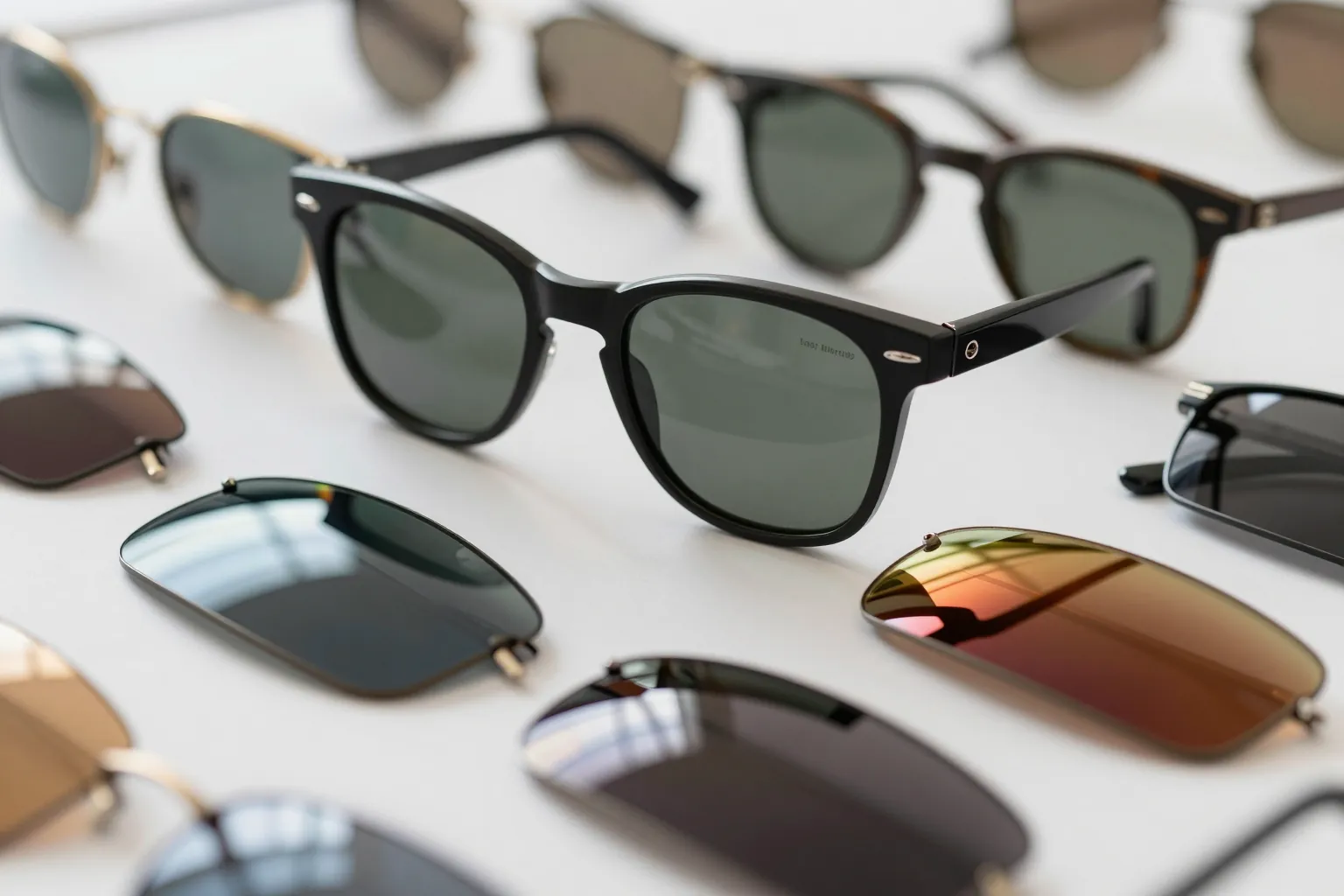
This article is for brands, importers, distributors, and retailers buying sunglasses in volume. The wrong lens setup can hurt sell-through fast: too dark for the channel, too fragile for the route, too expensive for the price point, or too inconsistent to repeat. The best choice is rarely the most feature-heavy one. It is the one that fits the use case, compliance target, decoration method, and target landed cost, and can be repeated without drama.
1) Start With the Channel, Not the Lens Catalog
Most weak sunglasses programs start with a lens spec chosen in isolation. That is backwards. A beach promo pack, an outdoor retail wall, a fashion private label line, and a safety-adjacent driving assortment do not need the same optic stack, the same defect tolerance, or the same margin structure.
Ask a simpler question: what is this pair supposed to do on shelf, in hand, and after three months in market?
- Retail fashion: visual appeal first, but still needs acceptable optics, scratch resistance, and low breakage in transit.
- Sports and activewear: impact resistance, stable tint, and glare control matter more than color nuance.
- Promotional: low unit cost, easy decoration, and predictable lead time matter most.
- Private label: repeatability, packaging consistency, and margin room at the target tier matter most.
The lens choice also affects frame tooling, curvature, pad-print clearance, and rejection rate. It is easier to hold a color standard when one factory owns the whole stack, from molding and cutting through tinting, decoration, and final inspection.
Do not chase a feature that only looks strong in a sample. Mirror coating can add shelf value. If the base tint, deposition, or handling is off, you get uneven reflectivity, haze, or a higher reject rate at packing. Polarization improves glare control, but it also adds cost. It can also create complaints if the lens is too dark for the channel or if the use case is mostly indoor-adjacent.
Before approval, get four numbers in writing: target retail price, target landed cost, minimum order quantity, and acceptable defect rate. If those do not line up, the spec is too loose.
2) The Five Lens Combinations That Actually Sell
These are the five setups that make sense in wholesale programs. Not every factory can execute them cleanly at scale, and not every channel should carry all five. The right choice depends on tint tolerance, coating repeatability, and the decoration the frame will carry.
| Lens combination | Best channel | Commercial strengths | Watch-outs |
|---|---|---|---|
| Solid tinted polycarbonate | Promo, entry retail | Low cost, light weight, impact resistant, easy to run at volume | Can look cheap if tint uniformity drifts by lot or if the surface picks up tool marks |
| Polarized TAC with tinted base | Outdoor retail, travel, fishing | Strong glare control, better perceived value, good visual comfort | TAC is less impact-tough than polycarbonate and needs careful handling, lamination, and final inspection |
| Mirror-coated polycarbonate | Fashion, lifestyle retail | Strong shelf appeal, good margin tier, flexible color stories | Coating consistency, adhesion, and scratch control matter; mirror hides lens color until worn |
| Gradient tinted lens | Fashion, urban retail | Looks premium, sells on style, works well in darker frame silhouettes | Not ideal for all-day outdoor glare; buyers often overestimate function |
| Polarized mirror lens | Premium outdoor, private label | Highest perceived value of the group, good for premium price ladders | More cost, more process steps, more chance of visual defects, and tighter packaging control is needed |
For most buyers, the decision is commercial first, technical second. If your retail price is under $15, a fully loaded polarized mirror build is usually hard to justify unless the frame is simple, the order quantity is real, and the channel story is clear. If your target is a $25 to $40 street price, the same stack can make sense if decoration, packaging, and compliance support the tier.
Order size changes what is realistic. Small runs are useful for validation, but buyers should treat them as development batches, not as a complete production model. Price usually improves as volume rises. The real issue is whether the lens stack can be repeated without color drift, fit problems, or surface defects. The lens stack can move your landed cost more than the frame silhouette does.
Every added process step changes your risk profile. Tint only is one control point. Tint plus mirror is two. Tint plus polarization plus mirror is more. Each step should earn its keep in shelf value or repeat purchase potential.
3) Retail Fashion: Keep It Controlled
Fashion retail is where people overspec the lens. The customer is buying silhouette, color, and shelf presence first. That does not mean optics do not matter. It means the lens has to support the story without pushing the pair into a cost bracket the channel will not carry.
The most reliable fashion setup is a solid tint or a light gradient on a polycarbonate lens, sometimes with mirror on selected SKUs. Polycarbonate is practical because it holds up in retail handling, tolerates impact better than TAC, and lowers breakage risk in transit and on display. It also helps maintain geometry during frame assembly when lens curvature and temple alignment need to match across a whole line.
Quality checks should be plain and measurable. Ask for tint consistency against the approved master sample, with a written visual acceptance standard. On production runs, center thickness and curve should stay consistent enough that the lens sits evenly in the frame. If the factory cannot explain how it checks tint density, edge polish, and fit, the line will drift.
Good fashion programs live or die on consistency. A noticeable tint shift across lots is enough to make a wall look mismatched. The same goes for mirror tone. Gold on one lot and rose-gold on the next is not a minor issue. Buyers notice it right away, especially when the assortment is merchandised in color blocks.
Use a controlled SKU ladder:
- Core color: one neutral tint for repeat ordering and easy replenishment.
- Seasonal color: one or two accent tints tied to frame color or trend direction.
- Hero SKU: one mirror or gradient option for shelf impact and a higher margin tier.
That keeps sampling manageable and reduces inventory fragmentation. Three lens stories done cleanly will usually beat seven done unevenly. If the frame decoration is busy, keep the lens simpler; if the lens is the hero, simplify the frame.
Decoration matters here too. Pad printing on the temple, small laser marks, or subtle foil logos work better than heavy front-loaded branding when the lens already carries a premium visual cue. The goal is not to stack features. It is to keep the product readable from three feet away and coherent in hand.
4) Sports and Outdoor: Polarization Needs a Solid Build
For sports, boating, fishing, driving, and outdoor work, the lens has to cut glare and stay readable under sun. Polarized TAC is a common choice because it gives strong glare reduction and a clear perceived upgrade from plain tinted lenses. It also fits many mid-priced wholesale programs where the buyer needs a better story without moving into a higher-cost build.
Still, polarization is not a free win. If the frame is cheap, the hinge weak, or the lens fit sloppy, the customer notices that before they notice optical performance. The whole build has to hold together.
The checks should be written down. Confirm that the lens darkness matches the use case. Too dark can be a complaint in overcast conditions or mixed-use retail, especially for commuting and fishing. Check polarization alignment and consistency across pairs; visible misalignment or inconsistent extinction is a red flag. Test distortion on curved wraps; strong wrap angles can create visual complaints if the lens blank, base curve, and frame geometry are not matched. Confirm packaging protection, because polarized and mirrored lenses scratch more easily in rough handling than buyers expect.
For QC, request at least three controls: an approved master sample, a lot-based visual inspection standard, and a final packed-unit check before carton sealing. A practical lens tolerance stack usually includes color matching against the master, surface defect thresholds for dust and pinholes, and fit checks for edge clearance. If the lens is intended for high-wrap sport frames, the supplier should also specify how it checks lens seating so the curve does not distort the field of view.
For compliance, sports-oriented wholesale programs often need stronger attention to the destination market. CE EN ISO 12312-1 is relevant for EU sunglasses. ANSI Z80.3 matters for the U.S. market. AS/NZS 1067 is the standard buyers ask for in Australia and New Zealand. REACH covers chemical compliance in the EU context, and FDA registration is part of the U.S. regulatory picture where applicable. ISO 9001 and BSCI are supplier management credentials, not product safety certifications, but buyers often ask for them when auditing factory controls and labor practices. Only reference documents the supplier can actually produce.
If your channel includes driving or hiking, the commercial sweet spot is usually polarized TAC with a tint level that does not feel too dark in normal daylight. That keeps returns down and makes the use case obvious. For premium outdoor lines, a polarized mirror lens can justify the higher cost if the frame finish, hinge quality, and packaging are moved up with it.
5) Promotional Programs: Keep It Plain
Promotional sunglasses are brutal on margin. The buyer wants a low landed cost, a clean imprint area, and enough visual quality that the giveaway does not look like junk. That usually means solid tinted polycarbonate, sometimes with a light mirror if the budget allows and the campaign needs more shelf pop.
This is where process discipline matters more than feature stacking. A promo program can lose money on defects faster than on material cost. Common failures are obvious: lens tint drift, print smudge, coating dust, frame deformation during packing, and lens scratches from loose carton handling.
Build the program around the simplest viable spec. A practical setup is a single-color solid tint, no mirror, one lens color across the whole order, and one decoration method. If the order is imprint-heavy, pad printing is usually the fastest route because it can handle logo placement on temples, arms, or lens corners without adding too much cost. Laser engraving works better where the substrate and design allow it, but it is less forgiving when the visual target is soft-touch or glossy branding. Metal logo plates can lift the perceived value, but they also add assembly complexity and tolerance stack-up.
For small development orders, buyers should expect a validation run, not a polished commercial launch. By the time a design moves into repeat production, the factory should be able to lock color, print placement, and packing method. A reasonable wholesale control target is not zero defects; it is a low and visible defect rate with clear sorting rules before shipment.
Ask for a simple control plan: incoming lens checks, in-line color sampling, print registration checks, and final visual inspection before carton sealing. That is not bureaucracy. It is how you avoid paying for thousands of pairs that are technically finished but not sellable.
One process owner for tinting, decoration, and QC helps here because the team can work against one approved sample instead of managing separate standards after shipment.
6) Private Label: Build a Lens Ladder You Can Repeat
Private label programs need repeatability. The lens choice should support a clear price ladder, not just a nice sample. A good ladder usually has one entry SKU, one mid-tier SKU, and one premium SKU that all share the same frame family and the same brand language.
The easiest way to structure it is by lens upgrade:
| Tier | Typical lens setup | Buyer logic | Commercial target |
|---|---|---|---|
| Entry | Solid tinted polycarbonate | Lowest cost with stable appearance | Fast turn, broad distribution |
| Mid | Gradient or mirror-coated polycarbonate | Better shelf appeal and higher margin | Mainline retail |
| Premium | Polarized TAC or polarized mirror lens | Clear upgrade story and stronger perceived value | Higher ASP, tighter channel control |
What matters is not only the lens. It is whether the frame tooling, print system, logo plate, and packaging are aligned with the price tier. A premium lens in a basic blister pack still reads cheap. A basic lens in premium packaging still gets returned if the tint or fit feels off. The whole program has to read as one offer.
Private label buyers should also think about repeatability at the supplier level. If the same lens tint can be matched across reorders within a tight visual tolerance, replenishment is easier and the assortment stays coherent. If not, every reorder becomes a new development cycle. That is expensive and it slows the line.
At volume, the cost curve matters. Small development quantities let you test a style with limited exposure. Once you move into repeat production, the question is whether the same lens specification can be held across runs without rework, sorting, or color deviation. That is where factory process control earns its keep.
For private label, decoration should match the tier. A modest laser mark or temple print is enough for entry. Mid-tier can carry stronger branding or a subtle foil effect. Premium can support a cleaner metal plate or a more refined print layout, but only if the lens finish and frame quality justify it.
7) Buying Checklist Before You Place the Order
Do not approve a lens setup on photos alone. Ask for production-relevant checks. A buyer who skips this usually finds the problem after goods land.
- Confirm the exact lens material: polycarbonate, TAC, or another specified material.
- Confirm tint level and whether the lens is solid, gradient, mirror-coated, or polarized.
- Ask for destination-market compliance targets: CE EN ISO 12312-1, ANSI Z80.3, AS/NZS 1067, REACH, FDA registration as applicable.
- Ask which factory certifications or audits are current, such as ISO 9001 or BSCI, if they are relevant to your sourcing policy.
- Check sample lead time and bulk lead time in writing before approving the order.
- Get a visual acceptance standard for color, mirror uniformity, surface defects, and logo placement.
- Confirm packaging method to reduce lens scratching in transit.
Do not ignore decoration compatibility. Laser engraving, pad printing, foil logos, and metal logo plates can interfere with the visual balance of a design if the lens is already busy. Keep the logo and lens story aligned. Do not stack every feature just because the factory can do it.
Before approving bulk, ask for three references from the sample set: one approved master, one retained production standard, and one packed-unit standard. That gives the buyer something concrete to compare against when the line starts moving. It also reduces the chance of subjective arguments about whether a batch is acceptable.
If you need fast market testing, start with a simple lens spec and one decoration method. If sell-through is solid, upgrade the lens on the next order. That is cleaner than launching too much product at once and trying to debug which feature customers actually bought.
8) Practical Picks by Channel
If you want the short version, use this:
- Retail fashion: solid tint or gradient polycarbonate, with mirror on a few hero SKUs.
- Sports and outdoor: polarized TAC, or polarized mirror if the price tier supports it.
- Promotional: solid tinted polycarbonate, plain and controlled.
- Private label: a three-tier ladder using entry, mid, and premium lens stacks.
- General wholesale test order: start with a small development run per design, prove the color and fit, then scale.
The useful rule is simple: choose the lens to protect your margin, not just to impress in a sample box. The cheapest lens is not always the best buy, and the most feature-rich lens is not always the best seller. The best wholesale lens combination is the one that sells at the target shelf price, survives transport, meets the right standard for the destination market, and can be repeated without a late-stage rescue.
The right sourcing setup is built for that kind of program work: in-house molding, cutting, milling, tinting, decoration, and QC; real certifications and registrations only; and a development process that lets buyers validate before scaling.
Have a custom sunglasses project in mind?
Send us your styles, target market and quantities and we will return a detailed quote with MOQ, lead time and a sample plan.
Get a QuoteWhy source this from Wenzhou with LumiShades
Wenzhou in Zhejiang Province is widely regarded as China’s eyewear manufacturing capital, producing a large share of the world’s sunglasses. That concentration matters to buyers: a deep local supply chain for acetate sheet, hinges, lens blanks, plating and packaging means shorter component lead times, easier color and material matching, and a workforce with decades of eyewear-specific skill. LumiShades has manufactured in this ecosystem since 2009, and our vertical integration — in-house injection molding, acetate cutting, CNC milling, lens tinting, decoration and quality control — means no part of your order is quietly subcontracted to a workshop you cannot audit.
For international buyers, that vertical control translates into accountability. When a single factory owns every step, defects are traced and fixed at source rather than bounced between vendors, and your specifications survive intact from first sample to bulk. We back this with 15+ years of experience, shipments to 60+ countries, more than 5 million pairs produced per year and a 98.5% on-time delivery rate. Our certifications — CE EN ISO 12312-1, FDA registration, ANSI Z80.3, AS/NZS 1067, REACH, ISO 9001 and BSCI audit — mean the compliance documentation your market requires already exists. Explore our manufacturing capabilities and quality control process to see how this works in practice.
Frequently asked questions
Which lens setup is safest for a first-time wholesale order? Solid tinted polycarbonate is the safest starting point. It is the lowest-risk option for fit, cost, handling, and repeatability, and it keeps the program simple while you test demand. Ask for an approved master sample, a written visual standard, and a packaging method that protects the lenses in transit.
Should I use polarized lenses in fashion retail? Only if the price point supports it and the channel wants the functional story. Polarization adds perceived value, but in fashion retail it can become wasted cost if the buyer is mainly shopping on silhouette and shelf appearance. If you use it, make sure the frame quality and packaging match the higher tier.
What is the best lens for sports and outdoor use? Polarized TAC is usually the strongest commercial choice when glare control matters and the price tier is mid-market. For a higher-end program, polarized mirror can work, but only if the frame, packaging, and quality checks are also upgraded. Specify the intended use case so the tint is not too dark for the channel.
How do I keep color consistent across repeat orders? Lock the tint specification, approve one master sample, and require lot-based visual checks against that master. Keep a retained production standard and a packed-unit standard on file. Color drift is usually a process control problem, so ask the factory how it controls tinting, coating, and final inspection before you reorder.
What compliance documents should I ask for? Match the destination market and ask for documents that are specific to the product and the country. Common references include CE EN ISO 12312-1 for the EU, ANSI Z80.3 for the U.S., AS/NZS 1067 for Australia and New Zealand, REACH for chemical compliance in the EU context, and FDA registration where applicable in the U.S. Also ask whether the supplier holds ISO 9001 or BSCI if those matter to your sourcing requirements.
How should I test a new lens combination before a large order? Start with a development batch, review the sample in hand, and confirm three things: tint consistency, lens fit in the frame, and packaging protection. Then check logo placement, mirror uniformity if used, and surface defects under normal inspection light. Move to a larger order only after the approved master, retained standard, and packed-unit sample all match the same spec.
Ready to start?
Explore our aviator sunglasses or request a quote — our sales team replies within 12 hours.
Request a Quote