
Sports vs Fashion Sunglass Frame Materials
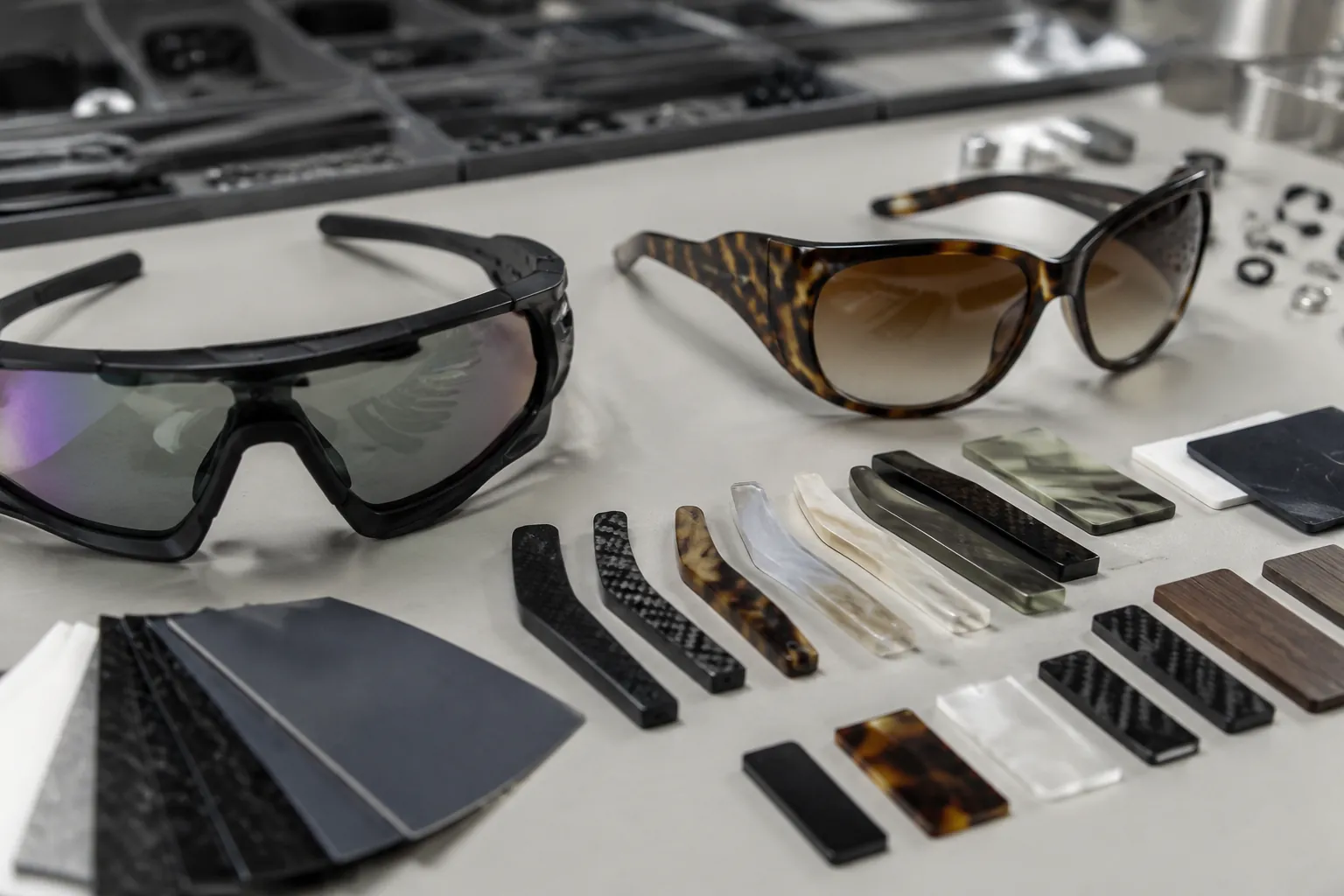
This guide is for brands, importers, distributors, and retailers buying custom sunglasses in volume. It compares TR90, polycarbonate, acetate, aluminum, and titanium by use case, target price point, compliance needs, and manufacturing tradeoffs. The point is simple: the wrong frame material can raise returns, increase warranty claims, or make a product feel underbuilt at retail. The right choice depends on impact resistance, weight, finish quality, tooling limits, and how much variation you can accept in mass production.
Start With The Use Case
Do not start with the material. Start with the job the frame has to do. In OEM eyewear, material choice affects mold design, wall thickness, hinge selection, decoration method, finishing time, and the final price position. A frame built for trail running should not be judged by the same standard as a temple-heavy acetate fashion style. The failure modes are different. For sports sunglasses, the priorities are low weight, impact resistance, flex recovery, sweat resistance, and stable fit during motion. For fashion sunglasses, the priorities shift toward surface quality, color depth, perceived value, polish, and brand-specific detail. Some products try to cover both. Most end up compromised. A sporty acetate frame may look premium but feel heavy. An ultra-light TR90 frame may perform well but lack the visual depth many fashion buyers expect. Define the retail promise first. If the product is going into a low-price mass channel, the material has to support simple tooling, efficient assembly, and controlled quality variation. If it is a premium fashion line, the frame can justify slower polishing, plated metal parts, or hand-finished acetate. But the decoration and inspection standards need to rise with the price. The question is not which material is best. It is which material supports the product claim at the target cost and risk level.What Each Material Does Well
Each material has a narrow zone where it performs best. The value comes from matching the material to that zone instead of forcing one resin or metal into every job.- TR90: flexible, lightweight, and well suited to sports and value-driven active eyewear.
- Polycarbonate: impact resistant and useful for lightweight frames, but usually less refined in surface feel than acetate or metal.
- Acetate: strong on color, polish, and premium fashion presentation; more labor-intensive and usually heavier.
- Aluminum: slim, modern, and lightweight for metal-frame fashion; requires careful finishing and corrosion control.
- Titanium: premium, corrosion resistant, very light, and durable; best when the market can absorb a higher unit cost.
Material Comparison At A Glance
| Material | Best Use Case | Typical Factory Cost Range | Lead Time Logic | Main Risk |
|---|---|---|---|---|
| TR90 | Sports, active lifestyle, youth, value optical-sport hybrid | Varies by design, order size, and finish requirements | Often shorter than acetate or metal programs for standard colors; longer for matched colors and custom tooling | Soft feel can read as low-premium if finishing is weak |
| Polycarbonate | Entry-level lightweight frames, impact-focused programs | Varies by design, order size, and finish requirements | Often efficient for simple tooling and stock molds | Surface scratching and less refined appearance |
| Acetate | Fashion sunglasses, premium colorways, laminated designs | Varies by sheet selection, labor content, and decoration complexity | Typically longer because of sheet sourcing, cutting, polishing, and assembly | Weight, warpage if poorly cured, longer polishing cycle |
| Aluminum | Modern fashion metal frames, slim silhouettes | Varies by machining, anodizing, and surface finishing | Depends on machining load, finish planning, and inspection steps | Denting, finish inconsistency, and coating adhesion issues |
| Titanium | Premium fashion, ultra-light luxury, corrosion-heavy environments | Varies by alloy, machining complexity, and QC level | Usually longer because machining and inspection are tighter | Higher scrap cost and tighter process control demands |
TR90 And Polycarbonate For Sports
TR90 is the most common answer for active sunglasses because it balances flex and weight better than many rigid plastics. It can survive repeated bending at the temple without immediately feeling brittle. That matters in sport use, where the frame gets pulled on, dropped, or stored badly. In practice, many buyers specify TR90 for wrap frames, semi-rimless sport styles, and kid-friendly active lines because it tolerates motion and keeps total frame weight low. Polycarbonate is different. It is often discussed as a frame material, but in eyewear production it is especially common as a lens material because of its impact resistance. As a frame material, it can be cost-effective, but the surface usually needs more attention if the target is not purely price-led. On lower-priced sunglasses, polycarbonate can work well when the frame shape is simple and the finish is matte or coated. It becomes less convincing when the brand wants a richer hand feel or deeper gloss. For sports programs, pay attention to these details:- Wall thickness: sections that are too thin lose strength; sections that are too thick add unnecessary weight and stiffness.
- Temple flex zone: over-thinning the hinge area can lead to fatigue cracking after repeated use.
- Grip surfaces: rubber injection, TPE inserts, or co-molded nose pads can improve retention, but each adds process risk and assembly time.
- Heat control: aggressive polishing or poor oven control can deform low-cost plastic frames.
Acetate For Fashion Frames
Acetate remains the benchmark for premium fashion frames because it gives designers real depth in color and pattern. It can carry translucent layers, marble effects, solids, and laminated combinations that cheaper injection materials cannot imitate well. The material also photographs well. That matters when the sale depends on visual presentation as much as fit. The tradeoff is manufacturing complexity. Acetate frames are cut from sheet, tumbled, polished, and assembled with more labor than injection-molded plastic frames. That creates a slower lead time and more variation if the process is not controlled. A good acetate program usually needs more sample review than a basic injected frame, especially if the order includes custom lamination, special rivets, or custom temple cores. Acetate works best when the design can absorb a little extra weight and thickness. If the frame is too thin, it can feel flimsy. If it is too thick, it can become heavy quickly. A properly made acetate frame usually feels more substantial than TR90, and that is part of its appeal. In fashion channels, that perceived value often justifies a higher retail price. Decoration options are strong in acetate. It can support laser engraving, foil branding, metal logos, temple inlays, and custom core wire printing. Hot stamping can work, but it needs clean, flat real estate and consistent pressure. The key constraint is heat and solvent behavior, so any decoration process must be tested against finish durability before production lock. If the buyer wants a glossy black frame with gold logo detail, the factory should confirm whether the logo is pad printed, laser marked, or embedded, because each option ages differently under cleaning and abrasion.Aluminum And Titanium For Premium Metal Looks
Aluminum and titanium sit in the premium metal category, but they do not behave the same way. Aluminum is attractive when the design calls for a slim, modern profile at a lower premium cost than titanium. It machines well, looks clean when anodized properly, and supports minimal styling. But aluminum is easier to dent and can show finish issues if surface prep is inconsistent. If the anodizing layer is uneven or the coating stack is weak, the frame may show wear on contact points quickly. Titanium is the stronger premium signal. It is light, corrosion resistant, and well suited to higher-end sunglasses or optical frames where comfort and durability matter. Many buyers choose titanium for all-day wear, high perspiration, or a refined matte metal look with very low weight. Pure titanium and beta titanium also allow different stiffness profiles, which affects how the temple opens and how the frame holds alignment over time. Metal frames need tighter production control than plastic frames. Tolerances on hinge alignment, temple symmetry, and pad-arm positioning need to stay within a narrow band, because even a small offset is visible on the face. Buyers should ask for measurements on key points such as lens opening width, bridge symmetry, and temple angle. If the supplier cannot describe the inspection sequence, the risk usually shows up later as inconsistent fit or a crooked front. Decoration is also different here. Aluminum usually takes anodizing, sandblasting, or coating systems better than heavy print. Titanium is often best left clean and precise, with small laser markings or subtle branding rather than large printed graphics. If the brand wants a louder fashion statement, metal can still do it. But the more decorative the finish, the more it depends on process discipline and wear testing.How To Compare Cost, MOQ, And Lead Time
A useful sourcing decision starts with a simple matrix: target retail price, expected gross margin, annual volume, acceptable defect rate, and whether the product needs a regulated-market compliance file. A frame that retails for $18 cannot carry the same manufacturing burden as one retailing for $120, even if the styling is similar. The rough logic is straightforward. Lower-complexity TR90 and polycarbonate programs usually support simpler tooling and lower cash exposure. Custom acetate usually requires more sample work and longer finishing time. Titanium and complex metal programs usually need the tightest technical approval before mass production because scrap is expensive and rework is limited. A good sourcing conversation should include these points: 1. Ask for FOB unit price at 500, 1,000, and 3,000 pcs so you can see the scale break. 2. Confirm whether the price includes logo application, lens fitting, case, and cleaning cloth. 3. Ask for the target inspection level and what visual defects are rejected at final inspection. 4. Request sample lead time, production lead time, and tooling lead time if a custom mold is needed. 5. Clarify whether color matching uses Pantone, a physical swatch, or a factory control chip. The cheapest quote is often missing something important: packing, rework allowance, plating thickness, or extra QC time. If a supplier can only offer a low price by loosening inspection or using thinner material than the sample, the savings usually disappear in warranty and replacement claims. In eyewear, a few cents saved at the factory can become expensive once a retail chain starts returning bent temples or peeling finishes.Compliance, Testing, And Decoration
Material choice has to support compliance, not just appearance. For sunglasses sold internationally, buyers should confirm the frame material and finish against the relevant market requirements and the documentation that supports those requirements. Depending on the destination and product position, that may include CE EN ISO 12312-1, ANSI Z80.3, AS/NZS 1067, REACH, FDA registration where applicable, ISO 9001, and BSCI. These are not interchangeable. Some are product standards. Some are chemical or quality systems. Some are factory-level audit or registration items. Testing should be specific to the use case. For sports frames, check hinge durability, stress whitening, sweat resistance, and deformation after heat exposure. For fashion frames, focus more on polish consistency, coating adhesion, UV stability, and how the finish holds after repeated cleaning. If the product is intended for a premium retail environment, packaging presentation matters too, because scratched lenses or imperfect temples are obvious immediately. Decoration methods need to be matched to the base material:- Pad print: flexible and low cost, but can wear quickly on high-touch areas if not overcoated.
- Laser engraving: crisp and durable on metal and some plastics, with a more premium look.
- Hot stamping: useful on acetate and flat zones, but sensitive to surface condition.
- Anodizing: best for aluminum, with color and corrosion protection as long as surface prep is controlled.
- Co-molded inserts: useful for grip and comfort, but they add assembly complexity and rejection risk.
Best Material By Retail Position
If the brand is building an entry-level sports line, TR90 is usually the most practical option. It supports broad fit, good wearer comfort, and manageable cost. If the product is a value-driven active frame and lens impact resistance is part of the selling point, polycarbonate can work in simpler frames, but the visual finish needs extra scrutiny. If the goal is a fashion-first line with strong color storytelling and shelf appeal, acetate is usually the safest choice. It gives the designer more freedom, supports richer looks, and generally reads more expensive than injection-molded plastic. For a sharper, lighter premium metal look, aluminum is a useful middle step. For the highest-end tier, especially where the product needs all-day comfort and corrosion resistance, titanium is the strongest choice. The practical decision is not about ranking materials in the abstract. It is about the product brief, the target market, and the level of quality control the factory can support consistently. The right choice is the one that meets the market promise at the lowest failure risk. For most buyers, that means using TR90 where performance matters, acetate where style and color matter, aluminum where slim metal presentation matters, and titanium where the customer is paying for comfort, longevity, and a premium feel.Have a custom sunglasses project in mind?
Send us your styles, target market and quantities and we will return a detailed quote with MOQ, lead time and a sample plan.
Get a QuoteWhy source this from Wenzhou with LumiShades
Wenzhou in Zhejiang Province is widely regarded as China’s eyewear manufacturing capital, producing a large share of the world’s sunglasses. That concentration matters to buyers: a deep local supply chain for acetate sheet, hinges, lens blanks, plating and packaging means shorter component lead times, easier color and material matching, and a workforce with decades of eyewear-specific skill. LumiShades has manufactured in this ecosystem since 2009, and our vertical integration — in-house injection molding, acetate cutting, CNC milling, lens tinting, decoration and quality control — means no part of your order is quietly subcontracted to a workshop you cannot audit.
For international buyers, that vertical control translates into accountability. When a single factory owns every step, defects are traced and fixed at source rather than bounced between vendors, and your specifications survive intact from first sample to bulk. We back this with 15+ years of experience, shipments to 60+ countries, more than 5 million pairs produced per year and a 98.5% on-time delivery rate. Our certifications — CE EN ISO 12312-1, FDA registration, ANSI Z80.3, AS/NZS 1067, REACH, ISO 9001 and BSCI audit — mean the compliance documentation your market requires already exists. Explore our manufacturing capabilities and quality control process to see how this works in practice.
Frequently asked questions
Which frame material is best for sports sunglasses? TR90 is usually the best all-around choice for sports sunglasses because it is light, flexible, and comfortable during movement. For simple, price-led programs, polycarbonate can be an option, but it usually needs stronger finish control and a simpler design to avoid feeling low grade. Ask the supplier for hinge durability data, fit stability, and a pre-production sample that reflects the final finish.
Which material is best for fashion sunglasses? Acetate is usually the strongest choice for fashion sunglasses because it delivers richer color, deeper gloss, and a more premium visual impression. If the design needs a metal look, aluminum and titanium are the main alternatives. Aluminum suits slimmer, more accessible fashion metal frames; titanium suits higher-end, lighter-weight products with stronger corrosion resistance.
What MOQ should I expect for custom frame materials? MOQ depends on tooling, finish complexity, and color setup, not just the base material. Standard TR90 or polycarbonate programs can often start lower than custom acetate or titanium programs. As a sourcing rule, ask the factory for MOQ by color, by model, and by decoration method, because those three inputs usually change the answer more than the material name alone.
How do lead times compare across materials? TR90 and polycarbonate are usually the fastest for standard programs because the tooling and finishing steps are simpler. Acetate usually takes longer because of sheet sourcing, cutting, polishing, and assembly. Aluminum and titanium can also take longer because machining, surface finishing, and inspection are more demanding. Always ask the supplier to separate sample lead time, tooling lead time, and mass production lead time.
What certifications or compliance documents should I ask for? Ask only for documents that match your destination market and product type. The commonly relevant items are CE EN ISO 12312-1, ANSI Z80.3, AS/NZS 1067, REACH, FDA registration where applicable, ISO 9001, and BSCI. CE EN ISO 12312-1, ANSI Z80.3, and AS/NZS 1067 are product standards; REACH is a chemical compliance requirement; FDA registration, ISO 9001, and BSCI relate to regulatory status, quality systems, or factory audit position. Request the actual test reports or certificates, not just a statement that the product is compliant.
What decoration methods work best by material? Pad printing works across many materials but can wear on high-touch areas if it is not protected. Laser engraving is strong on metal and some plastics. Hot stamping is useful on acetate when the surface is flat and well prepared. Aluminum usually pairs well with anodizing and laser branding. Titanium is often best with subtle laser marking rather than heavy surface decoration. For any custom program, approve decoration on the final sample, not just on a plain frame.
Ready to start?
Explore our wayfarer sunglasses or request a quote — our sales team replies within 12 hours.
Request a Quote