
How to Compare Wholesale Sunglasses Line Sheets
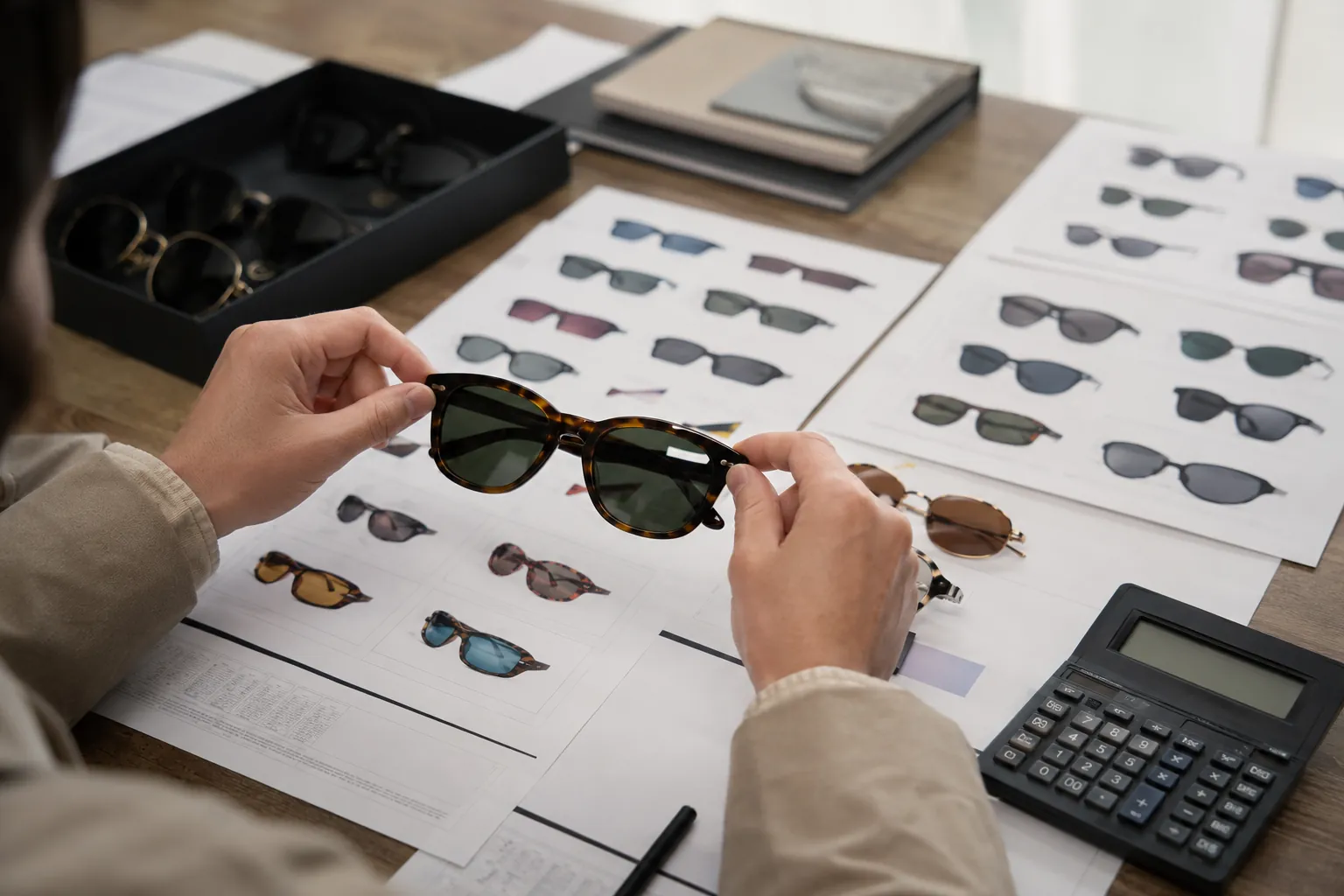
This guide is for importers, distributors, retailers, and brand owners comparing several factory line sheets before placing a sunglasses order. It shows what to check beyond product photos and unit price: style coverage, frame and lens materials, MOQ basis, decoration limits, certification scope, lead time assumptions, QC standards, and reorder controls. Use it to separate a workable factory offer from a catalog that looks good but may create delays, claims, or excess inventory.
Start With What A Line Sheet Must Prove
A wholesale sunglasses line sheet is not a brochure. It should prove that the supplier can make the styles you need, at the quantity you plan, with repeatable quality, valid compliance documents, and a production path that fits your launch date.
A useful line sheet should show model code, frame material, lens material, lens category, available colors, MOQ basis, sample timing, bulk lead time, packaging options, logo methods, test-report scope, and delivery term. If any of these fields are missing, ask for the full specification before comparing prices. A low quote on an incomplete spec is not a real quote. It is a placeholder.
Good factory line sheets also separate stock-ready ODM models from true OEM work. ODM usually means an existing mold or frame shape with changes to color, lens, logo, and packaging. OEM may involve new tooling, adjusted dimensions, a changed bridge or temple, or a new design file. MOQ, lead time, tooling cost, and development risk are different for each route. Do not mix them.
Buyer rule: compare line sheets only after every supplier has quoted the same frame material, lens type, lens category, coating, logo process, packaging, inspection level, order quantity, and trade term.
Compare Style Coverage By Sales Channel
Many buyers start with style, but style only matters inside a sales channel. A distributor selling to beach shops does not need the same mix as a fashion retailer, gas-station program, kids brand, corporate promotion buyer, or outdoor-sports retailer. Group the line sheet before you compare price.
- Fashion basics: wayfarer, round, oval, square, cat eye, aviator, and shield styles that support seasonal color refreshes.
- Promo and event models: PC injection frames with simple lenses, fast logo application, and practical MOQ per design.
- Sports and outdoor: wrap frames, TR90 or PC options, rubber nose pads, polarized or mirrored lenses, and tighter lens-fit checks.
- Premium acetate: cut acetate sheets, CNC milling, tumbling, hand polishing, metal hinges, and slower production flow.
- Kids or small-fit styles: shorter temples, smaller lens width, safer edge finishing, and careful labeling discipline.
Ask each factory to mark which models are active, which are older molds, and which are shown only as design references. Older molds can still work. But you need to know whether lens jigs, hinge parts, screws, and spare temples are still available. If the line sheet does not separate active production from reference images, request written confirmation before building a range around those styles.
Read MOQ And Price Breaks Correctly
MOQ is not just a sales rule. It reflects machine setup, resin purchase, acetate sheet yield, lens cutting, tinting, decoration setup, packing labor, and carton handling. A factory may accept a small quantity per design, but that does not mean every frame color, lens color, logo version, and packaging version stays cost-efficient at that quantity.
For LumiShades projects, custom sunglasses can start from 50 pairs per design when the style, material, decoration, and packaging route fit the order. That works for retail tests, influencer drops, and small brand launches. Price usually improves at larger levels such as 300, 1000, and 5000+ pairs because materials, lenses, packaging, and decoration are purchased and processed with less waste. Check every low unit price against the exact spec, order quantity, packaging, testing needs, and trade term.
| Order Level | Best Use | Buyer Watch Point | Typical Effect |
|---|---|---|---|
| 50 pairs/design | Market test, sample run, influencer drop | Higher unit cost; limited color and packaging efficiency | Lower cash tied up before launch |
| 300 pairs/design | Small wholesale launch or store test | Confirm color split, lens split, and logo setup charge | Cleaner production scheduling and packing flow |
| 1000 pairs/design | Core SKU for importer or distributor | Lock lens category, barcode, carton mark, and AQL level | More stable unit cost and easier reorder planning |
| 5000+ pairs/design | Volume program or seasonal retail order | Check material batch control and shipment split plan | Lowest practical unit cost on efficient models |
Always ask whether MOQ is per design, per frame color, per lens color, per logo version, or per packaging version. Those five answers change landed cost fast. A 1000-pair order can turn into four frame colors, three lens colors, two logo placements, and two barcode labels. That is a different job.
Check Materials Against Price, Weight, And Returns
Frame and lens materials decide how the product feels, how it survives shipping, and how often you hear complaints. A line sheet should not just say plastic. That is too vague for buying, testing, and claims control.
PC frames are light, cost-efficient, and common for promotional or entry-level retail sunglasses. They mold quickly, take color well, and help control cost. The trade-off is a harder hand feel and a less premium perception than acetate or some flexible materials. TR90 is tougher and more flexible, so it suits sports, kids, and active outdoor styles. It costs more and needs controlled molding conditions to reduce warpage risk. Acetate feels richer, polishes well, and supports layered patterns. Production is slower because sheets must be cut, CNC milled, tumbled, assembled, adjusted, and hand polished.
Lens choice matters just as much. PC lenses are impact resistant and widely used. TAC polarized lenses reduce glare and are common for fishing, driving, beach, and outdoor collections. Nylon lenses may suit performance styles where clarity, flexibility, and weight matter, but they need tight cost and spec control. Ask for lens thickness, base curve, UV400 claim support, lens category, polarization method, and whether tinting or mirror coating is handled in-house or by a subcontractor.
For export sunglasses, inconsistent lens tinting can create returns and compliance issues. Buyers should request a tolerance range for visible color and light transmittance, not just a photo. For fit, check gaps, rattling, stress marks, and whether the lens moves under light twisting. Practical QC limits can include no visible frame-lens gap above the approved tolerance, no temple wobble beyond the approved sample, no sharp edge on nose pads or temple tips, and hinge screws tightened without stripping.
Map Decoration Options To Real Production Risk
Logos help sell the product, but decoration is also where many line sheets hide delays. The supplier should state which logo methods are available for each model, where the logo can sit, what artwork format is required, whether a fixture or jig is needed, and whether a setup charge applies.
- Laser engraving: clean for temples, metal parts, and some lens marks; durable but sometimes subtle on dark or transparent surfaces.
- Pad printing: practical for one-color or two-color logos on temples or lens corners; requires ink adhesion checks before bulk production.
- Metal logo plates: higher perceived value, but add component sourcing, fitting work, glue or rivet control, and extra QC checks.
- Hot stamping or foil: useful for packaging and some temple effects; sensitive to pressure, heat, surface texture, and artwork detail.
- Packaging print: often easier than frame decoration, but barcodes, warnings, country labels, and carton marks must match the destination market.
Where LumiShades provides laser engraving, pad printing, or metal logo plate work, buyers should still approve a physical pre-production sample before bulk production. Digital mockups do not show scale, shine, ink thickness, curved-surface distortion, or placement well enough. On sunglasses, a small logo shift can change the perceived quality of the product.
For bulk orders, set the decoration inspection rule. Examples include no visible logo offset above the approved tolerance, no broken ink edge under normal viewing distance, no logo plate lifting after light flexing, and no adhesive overflow around metal trim. Factories can inspect against a written rule and an approved sample. They cannot inspect consistently against make it nice.
Confirm Certification Readiness Before Deposit
Compliance should be checked before deposit, not after goods are finished. The line sheet should show which models, materials, and lens categories fit your target market. Do not accept vague claims like UV certified without the actual standard, report holder, test date, tested model or model family, lens category, and laboratory name.
For Europe, buyers commonly check CE readiness against EN ISO 12312-1 for sunglasses. For the United States, FDA registration and ANSI Z80.3 alignment may be relevant depending on product type, importer requirements, and retailer policy. For Australia and New Zealand, AS/NZS 1067 is the key sunglasses standard. REACH matters for chemical restrictions, especially frame materials, coatings, paints, logo inks, nose pads, and some packaging components.
LumiShades' stated certification and audit base includes CE EN ISO 12312-1, FDA registration, ANSI Z80.3, AS/NZS 1067, REACH, ISO 9001, and BSCI. Review scope before use. A certification, test report, registration, or audit does not automatically cover every new custom combination forever. If you change lens color, coating, material, polarization film, supplier component, labeling, or intended market, confirm whether a fresh test, document update, or buyer approval is needed.
- Ask for report holder name, model scope, test date, tested lens category, and laboratory name.
- Check whether the report covers adult, kids, sports, or fashion use as needed.
- Confirm labeling language, warning text, UV category, barcode format, and country-of-origin mark before packaging print.
- Keep golden samples, test reports, purchase orders, and carton labels tied to the same model codes.
Compare Lead Time By Process, Not Promise
Lead time on a line sheet should be split into sample time, approval time, material preparation, production, inspection, packing, and shipment handover. A single sentence saying 30 days is not enough. The real question is which process controls the schedule and which approvals must come from the buyer.
For LumiShades projects using existing tooling and available materials, normal custom samples are typically quoted after the specification is confirmed, and bulk lead time is quoted after sample approval and deposit. The final schedule depends on quantity, decoration method, lens work, inspection level, packaging, and whether any components need special sourcing. New mold work, unusual colors, metal trim, difficult acetate programs, or extra testing can add time. A reliable supplier should identify those risks before deposit.
| Process Area | What To Ask | Delay Risk |
|---|---|---|
| Injection molding | Existing mold or new mold; color-change schedule | Color contamination, mold adjustment, resin shortage |
| Acetate cutting | Sheet availability, CNC time, polishing cycle | Slow finishing, pattern variation, hinge fitting rework |
| Lens tinting | Lens category, polarized option, mirror coating | Color mismatch, coating defects, retesting need |
| Decoration | Logo method, artwork approval, jig readiness | Ink adhesion failure, offset print, plate fitting issue |
| Final QC | AQL level, carton drop need, barcode scan check | Rework, repacking, mixed SKU cartons |
Ask for a production calendar before deposit on larger or time-sensitive orders. It should show material arrival, frame production, lens assembly, logo work, QC, packing, and shipment handover. Even a capable factory needs clean buyer approvals. Late artwork, late barcode files, or changed packaging instructions can move the delivery date.
Judge Reorder Potential Before You Launch
A good first order is only half the job. The line sheet should help you judge whether a style can be reordered without major changes. Many buyers approve a sample, place a small run, sell out, and then learn the acetate sheet was discontinued, the lens tint was not recorded, the logo fixture is unavailable, or the mold needs repair.
Before choosing final SKUs, ask the factory which models are stable for the next 12 months, which colors are standard, and which components are seasonal. For acetate, ask whether the sheet pattern can be repeated or only approximated. For lenses, ask whether the tint recipe, base curve, polarization film, and coating supplier are recorded. For packaging, keep dielines, barcode files, warning text, and print files under version control.
Reorder planning also affects landed cost. If you expect repeat demand, do not over-customize every part. Use a common frame across several lens colors, or use the same pouch, barcode label system, inner box, and master carton across the range. That keeps spare components useful and reduces mixed-carton errors.
Factories with controlled steps such as injection molding, CNC milling, lens tinting, decoration, assembly, and QC usually manage reorders more consistently than suppliers that rely on many untracked handoffs. Still, buyers should protect themselves with clear model codes, approved golden samples, written reorder specs, agreed tolerance limits, and a record of any approved changes.
The best line sheet is not the prettiest one. It is the one that lets you buy, receive, inspect, sell, and reorder with fewer surprises.
Have a custom sunglasses project in mind?
Send us your styles, target market and quantities and we will return a detailed quote with MOQ, lead time and a sample plan.
Get a QuoteWhy source this from Wenzhou with LumiShades
Wenzhou in Zhejiang Province is widely regarded as China’s eyewear manufacturing capital, producing a large share of the world’s sunglasses. That concentration matters to buyers: a deep local supply chain for acetate sheet, hinges, lens blanks, plating and packaging means shorter component lead times, easier color and material matching, and a workforce with decades of eyewear-specific skill. LumiShades has manufactured in this ecosystem since 2009, and our vertical integration — in-house injection molding, acetate cutting, CNC milling, lens tinting, decoration and quality control — means no part of your order is quietly subcontracted to a workshop you cannot audit.
For international buyers, that vertical control translates into accountability. When a single factory owns every step, defects are traced and fixed at source rather than bounced between vendors, and your specifications survive intact from first sample to bulk. For procurement review, buyers can request process records, approved samples, quality checkpoints and project-specific compliance files before placing a bulk order. Required testing and documentation are confirmed against the destination market and product specification rather than assumed from a generic certificate list. Explore our manufacturing capabilities and quality control process to see how this works in practice.
Frequently asked questions
How many suppliers should I compare before choosing a sunglasses factory? Compare three to five serious suppliers using the same RFQ sheet. Ask each one to quote the same frame material, lens material, lens category, coating, logo method, packaging, MOQ split, inspection standard, lead time, and trade term. If one supplier cannot complete the RFQ clearly, do not compare its unit price against complete offers.
What is the most common mistake when comparing line sheet prices? The most common mistake is comparing unit prices before normalizing the specification. A lower price may exclude polarized lenses, mirror coating, logo setup, retail packaging, barcode labeling, compliance testing, stricter AQL inspection, or the same delivery term. Build a side-by-side comparison sheet and mark every missing assumption before negotiating.
Can I start with 50 pairs per design and reorder later at a lower price? Yes, if the model, frame material, lens, decoration, packaging, and color standards are repeatable. Before ordering, ask the factory to confirm whether the mold, lens recipe, logo fixture, packaging files, and key components will remain available. Also ask for the next price breaks, such as 300, 1000, and 5000+ pairs, so you know the reorder economics before launch.
Do I need new testing if I change lens color or coating? Often yes, or at least you need a compliance review. Changes to lens color, light transmittance, polarization, mirror coating, UV claim, material, or intended market can affect the applicable report or labeling. Ask the factory for the current report scope and confirm the decision with your compliance adviser or importing-market requirements before bulk production.
What should I approve before paying the bulk deposit? Approve the physical pre-production sample, full specification sheet, lens category, logo placement, packaging artwork, barcode and label files, compliance route, MOQ split, price terms, production calendar, and inspection standard. Keep these approvals in writing and link them to the same model code used on the purchase order.
How do I know if a factory line sheet is suitable for retail reorders? A reorder-ready line sheet should identify active models, stable molds, standard materials, repeatable lens recipes, available hinges and screws, controlled packaging files, and retained golden samples. Ask the factory which items are standard and which are seasonal or one-time purchases. Avoid building core retail SKUs around components the supplier cannot commit to maintaining.
Ready to start?
Explore our sport wrap sunglasses or request a quote — our sales team replies within 12 hours.
Request a Quote