
Wholesale Sunglasses for Resort Retail Chains
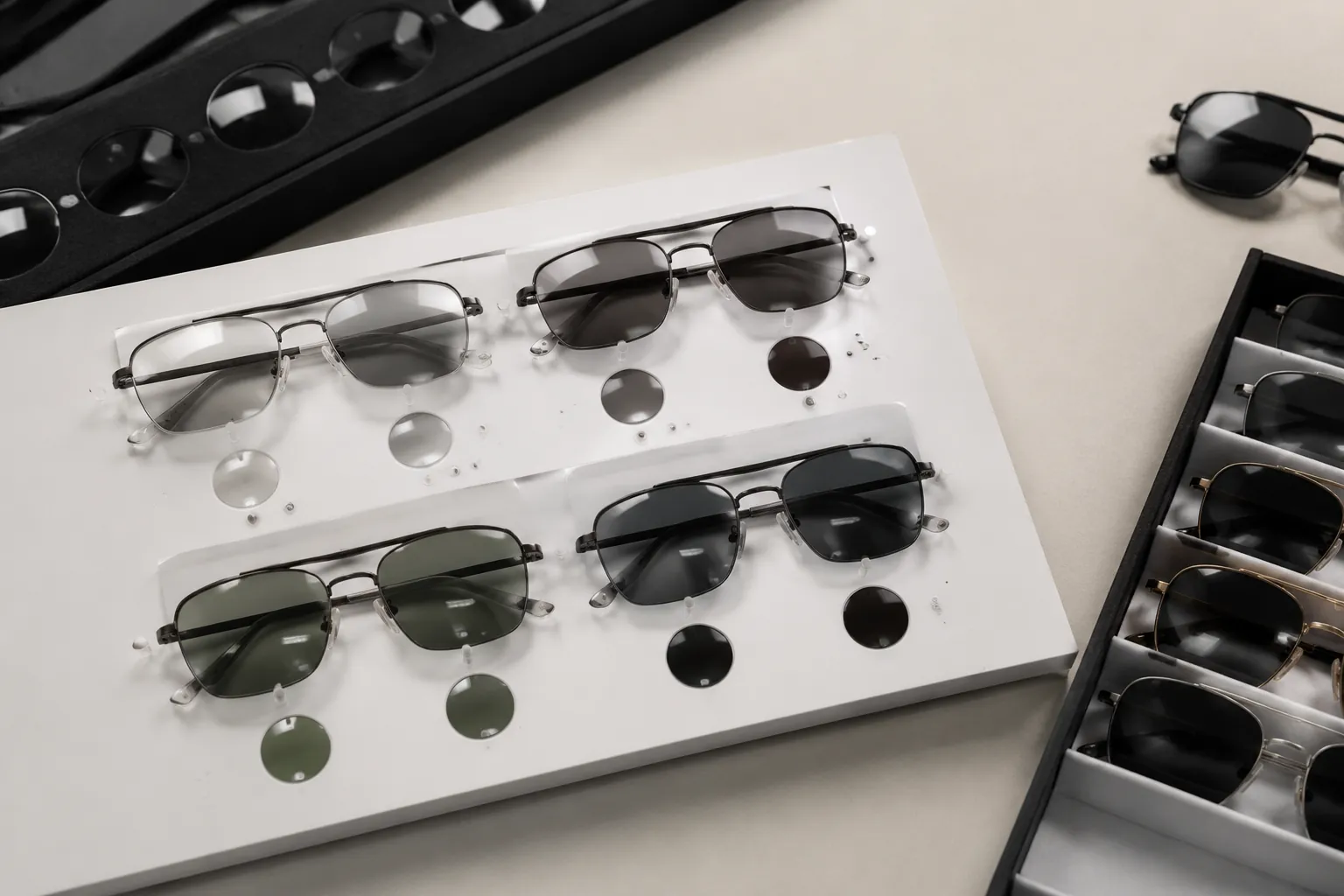
This guide is for resort retail chains, beach shops, cruise-port distributors, hotel gift stores, and buyers planning seasonal sunglass programs. It explains how to build a tighter assortment, specify lenses, choose materials, plan packaging, manage MOQs, prepare compliance files, and set reorder timing before tourist traffic peaks. The aim is practical: fewer slow movers, cleaner documentation, better sell-through visibility, and repeat orders that are easier to place.
Start With How Tourists Buy
Resort sunglasses are not bought like optical frames. The shopper may have forgotten a pair, need a backup for the beach bag, replace a broken pair, or pick up a useful souvenir. The decision is fast. It is visual, price-sensitive, and strongly affected by how full and simple the display looks.
For tourist-heavy stores, the assortment must be broad enough to catch impulse buyers but controlled enough to replenish without confusion. Too many SKUs split volume, leave slow pegs, and make store-level reorders harder. Too few SKUs make the rack look picked over during peak traffic.
Most resort chains should plan three buying lanes: entry impulse, mid-range daily wear, and premium-looking resort styles. Entry frames need verified UV protection, clean finishing, and simple barcode control. Mid-range styles usually carry the most flexible selling role. Premium-looking styles support higher ticket values and make the display feel stronger, even when unit volume is lower.
- Entry impulse: PC frames, UV400 lenses, commonly Category 3 for bright sun, simple colors, minimal decoration, and easy barcode control.
- Mid-range daily wear: TR90 or upgraded PC, optional polarized lenses, stronger hinges, acetate-look colors, branded hang tags or pouches, and clear style grouping.
- Premium resort: acetate, metal-acetate, metal details, gradient or polarized lenses, upgraded packaging, and tighter cosmetic inspection standards.
Do not let personal taste drive the first order. Use store format, climate, customer age, display size, target retail price, and destination-market compliance needs. A surf-town shop, family resort store, cruise-port kiosk, and hotel boutique may all sell vacation sunglasses. They should not all buy the same mix.
Build the Assortment by Use Case
Aviator, square, cat-eye, wayfarer, round, shield, and kids' styles can all work in a resort program. But buying by shape alone is weak. Start with use case, then choose shapes inside each lane. This prevents a common mistake: buying attractive fashion frames while missing practical needs such as boating glare, driving comfort, or children's fit.
For a multi-store resort program, a controlled first assortment is usually easier to manage than a wide test range. A practical starting matrix may include universal adult shapes, polarized beach or boating styles, fashion resort styles, kids' styles, and one simple emergency replacement style. Repeat colors carefully. Black, tortoise, crystal brown, matte navy, and transparent smoke are often easier to place across formats than unusual seasonal colors. Still, final color selection should match the customer profile and display environment.
| Use Case | Best Frame Direction | Lens Direction | Buying Note |
|---|---|---|---|
| Beach and boating | Wrap, sport square, larger fit | Polarized smoke, brown, or green; usually Category 3 for bright sun | Check polarization alignment, lens seating, and heat exposure performance before mass production. |
| Pool and resort wear | Cat-eye, square, round, acetate-look | Gradient or solid UV400 | Decoration can help sell the style, but hinge function still matters because try-on volume is high. |
| Driving and excursions | Aviator, rectangular, classic square | Smoke, brown, or green; avoid tints that strongly distort signal colors | For the U.S. market, align product claims and test support with ANSI Z80.3 where applicable. |
| Kids and families | Flexible PC or TR90, rounded edges | UV400, often Category 3 for bright outdoor use | Bridge fit, smooth edges, secure lenses, and stable hinges matter more than decoration. |
| Emergency replacement | Universal square or wayfarer | Non-polarized smoke or brown | Keep the SKU simple, affordable, easy to identify, and easy to reorder during peak weeks. |
LumiShades can support small design runs from 50 pairs per design. That can help buyers test resort-specific colors, local branding, or new shapes. Keep the test disciplined. Start with a clear matrix, review sell-through by store or store cluster, then move proven styles into larger production runs where unit cost and reorder planning improve.
Lens Specs That Matter on the Beach
Lens mistakes are expensive because customers notice them outside, not at checkout. A lens can look fine under store lighting and still perform poorly in bright sun. Glare control, tint density, coating adhesion, and optical quality must be specified before production.
The common baseline for general beach retail is UV400 protection with a sunglass filter category suited to the intended use. Category 3 lenses are widely used for bright sunlight. Category 4 lenses are darker and are not suitable for driving. If used, they need clear labeling and should be reserved for suitable specialized conditions, not general resort racks.
Polarized lenses are a separate buying decision, not just a better word on a hang tag. They reduce reflected glare from water, sand, boat decks, and wet roads. They also need tighter QC. Poor polarization alignment, inconsistent lens pairing, or vague labeling can create complaints. During production, the supplier should check UV protection, lens category, tint consistency, polarization where specified, visible defects, and frame-lens fit after assembly.
- Smoke lenses: neutral color perception and broad appeal for general sun use.
- Brown lenses: warmer contrast and strong fit for casual beach, resort, and boating assortments.
- Green lenses: classic premium look with balanced color perception on suitable frame styles.
- Gradient lenses: strong fashion value, but the lower lens area may offer less glare comfort if too light.
- Mirror lenses: strong beach styling, but coating adhesion, scratch visibility, and color consistency need inspection.
For import programs, keep compliance and QC records tied to the actual lens version, not only the frame shape. If the same frame ships with non-polarized smoke, polarized brown, and blue mirror lenses, manage them as separate SKUs for test records, barcode control, labeling, and inspection.
MOQ, Price, and Lead-Time Logic
The right retail price starts with the buyer's margin plan. The factory price is shaped by material, lens type, decoration, packaging, inspection requirements, and order quantity. MOQ is not just a purchasing threshold. It affects setup time, color batching, lens preparation, logo application, packing labor, carton planning, and inspection workflow.
LumiShades supports MOQs from 50 pairs per design for pilot programs, boutique resort chains, and seasonal color tests. Unit cost generally improves at higher order levels because setup time is spread across more units and material purchasing becomes more efficient. Exact pricing should be confirmed against a locked specification, including frame material, lens type, decoration method, packaging, compliance requirements, and delivery terms.
| Order Level | Best Use | Cost Behavior | Operational Risk |
|---|---|---|---|
| 50 pairs/design | Testing shapes, colors, resort logos | Highest unit cost because setup and handling are spread across fewer units | Too many test SKUs can fragment inventory and confuse store staff. |
| 300 pairs/design | Small chain launch or proven seasonal color | Better efficiency for material, printing, packing, and inspection planning | Forecast must be tied to store count, display capacity, and expected sell-through. |
| 1000 pairs/design | Core styles across multiple resort locations | More stable production planning and stronger price efficiency | The wrong lens or color mix can create slow stock across the whole chain. |
| 5000+ pairs/design | Main replenishment or high-volume core program | Best efficiency when the specification is stable and repeatable | Approved sample, barcode, packaging, and QC standard must be locked before production. |
Sample timing and bulk lead time should be confirmed before each order. They depend on design complexity, material availability, decoration, packaging, compliance review, and factory capacity. Buyers also need time for document review, packing approval, export booking, freight, customs clearance, and internal distribution. Do not chase the lowest unit price on unproven styles. Test first. Scale only the winners.
Materials, Hinges, and Decoration
Beach retail is hard on sunglasses. Frames may sit near warm windows, be handled with sunscreen-covered hands, and be tried on all day by customers who are not careful with display samples. Material choice affects perceived value, comfort, durability, production time, and complaint risk.
PC frames are common for entry programs because they mold efficiently and help control cost. TR90 is lightweight and flexible, which makes it useful for sport, kids, and family assortments. Acetate offers deeper color, better polish, and a more premium feel, but it takes more processing time. Metal components can raise perceived value, but plating, screws, nose pads, salt-air exposure, and component fit need close control.
For hinge checks, require smooth opening and closing, no sharp screw ends, stable temple alignment, and no looseness after normal handling. Put tolerances in the specification. Do not leave them to informal discussion. Buyer and supplier should agree on acceptable frame color variation, temple alignment, lens rattle, screw security, and cosmetic defect limits before production begins.
LumiShades' in-house processes include injection molding, acetate cutting, CNC milling, lens tinting, laser engraving, pad printing, and metal logo plate application. This helps resort buyers run several decoration levels under one buying plan. A low-price beach rack may use one-color pad printing. A hotel boutique line may use laser temple branding, metal details, and a printed microfiber pouch.
- Choose frame material by retail tier, climate, use case, and expected handling level.
- Confirm lens category, UV requirement, and polarization before final decoration approval.
- Approve color chips and production samples under daylight as well as indoor light.
- Review logo placement on actual curved temples, not only on flat artwork.
- Check hinge function, lens seating, screw security, and logo adhesion after assembly.
Pad printing is cost-effective, but it can wear if placed where fingers rub often. Laser engraving is cleaner on suitable materials. Metal logo plates can look stronger, but the attachment method must tolerate heat, handling, and the retail environment. Test each decoration method on the actual production material. Artwork alone is not enough.
Packaging for Racks, Counters, and Hotels
Packaging should match the selling environment. A beach kiosk needs speed, visibility, and scan accuracy. A hotel gift shop may need a pouch, cleaning cloth, barcode label, and a more polished hang tag. A distributor supplying several resort chains needs carton labeling that reduces receiving errors.
Start with the display method. Peg-wall sunglasses need hang tags that do not tear after repeated handling. Counter spinners need barcode labels in a consistent location so staff can scan quickly. Premium resort shops often prefer microfiber pouches because they add perceived value without the freight volume and shelf bulk of hard cases.
- Basic pack: polybag, barcode sticker, warning label where required, and bulk inner carton for entry-price programs.
- Retail peg pack: hang tag, bridge card or temple tag, barcode, compliance text, and consistent peg-hole position.
- Pouch pack: microfiber pouch, printed logo, optional cleaning cloth, and higher perceived value for mid-range lines.
- Premium pack: pouch or case, branded tag, care card, stronger inner box, and better master carton protection.
Packaging is also a replenishment control tool. Cartons should show style code, frame color, lens color, quantity, destination, PO number, and carton number. If one carton contains mixed SKUs, the inner packs must be clearly separated and counted. Otherwise, store staff may mix units during receiving and create inaccurate stock counts before the product reaches the floor.
Ask for a pre-production packing photo set before mass packing starts. It should show one packed unit, barcode position, hang tag or pouch details, inner carton, master carton label, and carton mark layout. These checks are simple. They prevent relabeling, receiving delays, and store-level confusion.
Replenishment Timing for Tourist Seasons
Resort retail has concentrated demand windows. A late shipment in a fashion channel may be inconvenient. A late shipment for a beach chain can miss the season. Build the calendar backward from the required in-store date, not forward from the factory quote.
For a summer launch, core styles should be approved early enough to allow sample review, corrections, production, inspection, export booking, freight, customs clearance, receiving, and store allocation. If goods must be on display by a fixed date, confirm each milestone in writing. Add buffer for sample changes and packing corrections.
Factory-floor rule: if you need a June rack, do not approve samples in late May and expect production, inspection, shipping, customs, and store delivery to happen without risk.
Before launch, split SKUs into A, B, and C groups. A styles are core units with the highest reorder priority, usually simple colors and proven shapes. B styles are seasonal fashion shapes or resort colors. C styles are tests, local designs, or logo-specific items. Keep A styles simple enough to reproduce quickly. Save complex decoration and packaging for planned buys, not emergency reorders.
Reorder decisions should use weekly sell-through by store cluster, not only total chain averages. Beachfront stores, cruise-port shops, airport kiosks, and inland resort stores can sell the same SKU at different speeds. Set reorder triggers before launch. During the season, review actual sales, on-hand stock, inbound stock, and remaining peak-season weeks before placing the next order.
Compliance and QC Before the PO
Compliance is not paperwork for later. It determines whether goods can enter the target market and remain on sale. For sunglasses, buyers should request documentation relevant to the destination and product type. Common examples include CE EN ISO 12312-1 for many European programs, ANSI Z80.3 support for the U.S. market, AS/NZS 1067 for Australia and New Zealand, REACH for chemical restrictions where applicable, FDA registration where relevant to U.S. import requirements, plus ISO 9001 and BSCI for management-system and social-compliance context.
Do not ask a supplier to claim certifications it does not hold. Do not assume one document covers every product version. LumiShades' stated certification and compliance support includes CE EN ISO 12312-1, ANSI Z80.3, AS/NZS 1067, REACH, FDA registration, ISO 9001, and BSCI. Buyers should match the right documents to the destination market, lens type, labeling, product category, and current regulatory requirements.
QC should happen in stages, not only after final packing. Key checkpoints include incoming material inspection, lens tint and UV verification, frame dimension checks, hinge function, decoration adhesion, assembly inspection, barcode scanning, packing audit, and final inspection. AQL levels and defect definitions should be agreed before production, with clear treatment for critical, major, and minor defects.
- Critical checks: UV failure, wrong lens category, sharp edges, broken hinges, missing required warnings, or unsafe parts.
- Major checks: lens scratches, poor printing, loose screws, wrong barcode, color mismatch, unstable logo plates, or incorrect packaging.
- Minor checks: small surface marks, light packing scuffs, or non-critical label alignment issues within the approved limit.
Before issuing the PO, lock the approved sample, specification sheet, lens type, filter category, decoration method, packaging, carton marks, barcode data, inspection standard, compliance document list, and ship date. If those points are still changing, the order is not ready for controlled production.
Have a custom sunglasses project in mind?
Send us your styles, target market and quantities and we will return a detailed quote with MOQ, lead time and a sample plan.
Get a QuoteWhy source this from Wenzhou with LumiShades
Wenzhou in Zhejiang Province is widely regarded as China’s eyewear manufacturing capital, producing a large share of the world’s sunglasses. That concentration matters to buyers: a deep local supply chain for acetate sheet, hinges, lens blanks, plating and packaging means shorter component lead times, easier color and material matching, and a workforce with decades of eyewear-specific skill. LumiShades has manufactured in this ecosystem since 2009, and our vertical integration — in-house injection molding, acetate cutting, CNC milling, lens tinting, decoration and quality control — means no part of your order is quietly subcontracted to a workshop you cannot audit.
For international buyers, that vertical control translates into accountability. When a single factory owns every step, defects are traced and fixed at source rather than bounced between vendors, and your specifications survive intact from first sample to bulk. For procurement review, buyers can request process records, approved samples, quality checkpoints and project-specific compliance files before placing a bulk order. Required testing and documentation are confirmed against the destination market and product specification rather than assumed from a generic certificate list. Explore our manufacturing capabilities and quality control process to see how this works in practice.
Frequently asked questions
What is a sensible first order for a resort chain with 10 to 20 stores? Start with a controlled SKU matrix instead of a wide style spread. A practical first buy often includes core adult shapes, polarized beach styles, fashion resort styles, kids' styles, and one emergency replacement style. Use 50 pairs per design for focused testing where appropriate, or 300 pairs per design when store count and display capacity justify it. Move only proven styles into larger replenishment quantities after reviewing sell-through by store or store cluster.
Should beach retailers buy only polarized sunglasses? No. Polarized lenses are valuable for water, sand, boat decks, and wet-road glare, but they usually cost more and require tighter QC. Many resort programs combine polarized styles for beach and boating use with non-polarized UV400 Category 3 styles for entry-price and fashion lanes. Label polarized and non-polarized SKUs clearly so store staff and customers understand the difference.
How fast can custom resort sunglasses be produced? Production timing depends on frame material, lens type, decoration, packaging, testing needs, and factory capacity. Buyers should confirm sample timing and bulk lead time after the specification is clear, not from a rough concept image. Build the calendar backward from the required in-store date and include time for sample correction, compliance review, packing approval, inspection, freight, customs clearance, and internal distribution.
Which compliance documents should importers request? Request documents based on the destination market and exact product version. Common requirements and support documents include CE EN ISO 12312-1 for many European programs, ANSI Z80.3 support for the U.S. market, AS/NZS 1067 for Australia and New Zealand, REACH where chemical restrictions apply, and FDA registration where relevant to U.S. import requirements. Keep records tied to the lens version and SKU, especially when one frame ships with multiple lens types.
What packaging works best for tourist-heavy stores? For fast peg walls and kiosks, use durable hang tags, consistent barcode placement, required warning text, and clear carton marks. For hotel boutiques or higher-ticket resort shops, add microfiber pouches, care cards, or cases only when the retail price can absorb the added cost and freight volume. Approve packed-unit photos and carton labels before mass packing starts.
How should we handle reorders during peak season? Classify SKUs before launch: A styles are core reorder items, B styles are seasonal or fashion items, and C styles are tests or local designs. Keep A styles simple, documented, and barcode-stable so they can be reordered quickly. Review weekly sell-through by store cluster, current on-hand stock, inbound stock, and remaining peak-season weeks before placing a reorder.
Ready to start?
Explore our wayfarer sunglasses or request a quote — our sales team replies within 12 hours.
Request a Quote