
Wholesale Sunglasses for Resort and Beach Retail
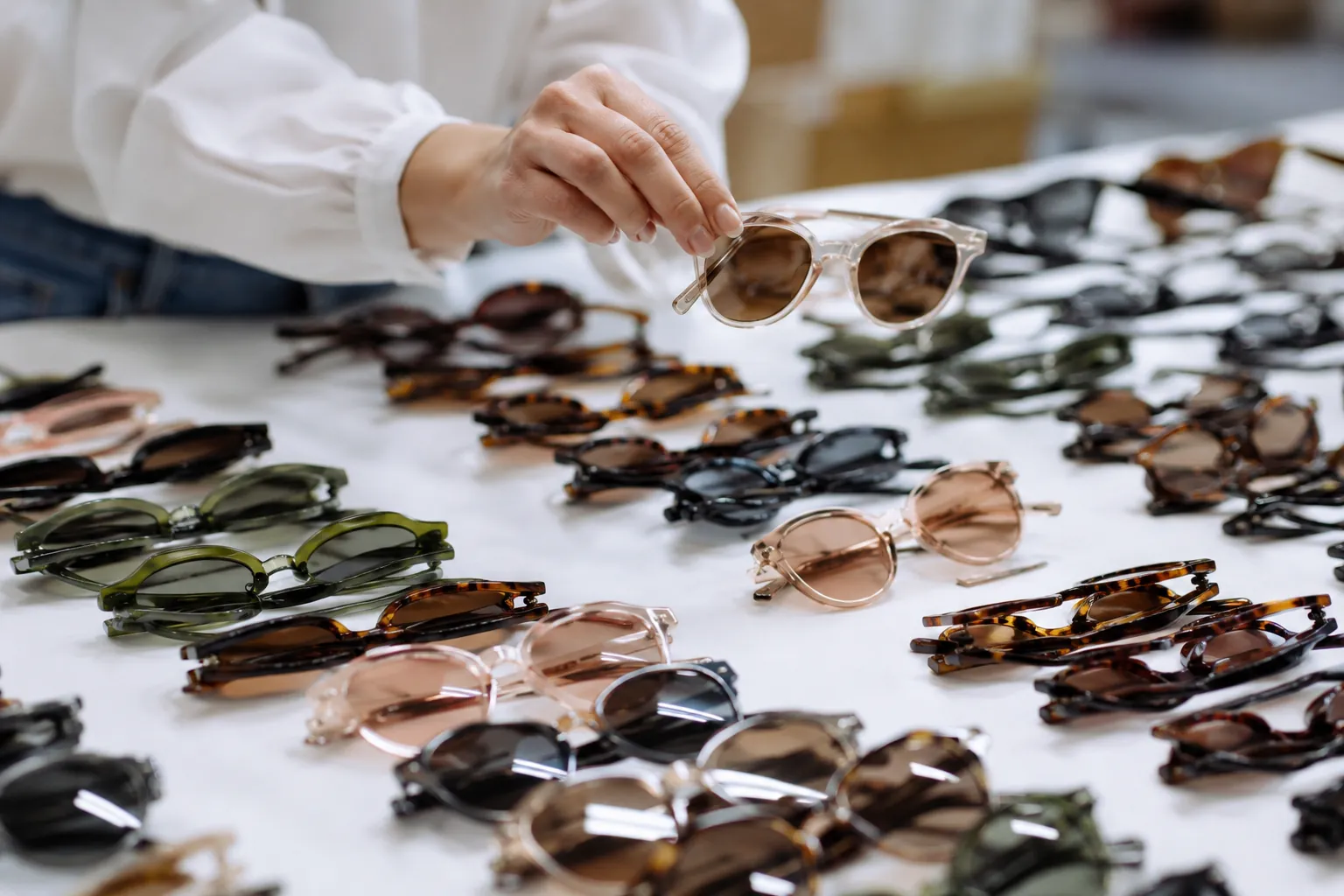
This guide is for resort chains, beach retailers, tourist shops, cruise-port distributors, and seasonal buyers that need sunglasses that sell fast without creating stock, compliance, or quality problems. It explains how to plan a tight assortment, choose materials and branding, control packaging, document compliance, and schedule replenishment before peak season. The goal is simple: fewer dead SKUs, fewer damaged pairs, cleaner import files, and fewer late shipments when demand jumps.
Start With the Store Environment
Resort and tourist sunglasses are not bought like year-round optical eyewear. The selling window is short. Handling is rough. Shoppers decide quickly.
A guest may have forgotten sunglasses, lost a pair at the pool, or need a cheap second pair for boating, driving, or the beach. That changes the spec. Before choosing frames, map the selling point: hotel lobby spinner, beach kiosk, airport gift shop, boardwalk rack, water-park counter, cruise-port store, or resort boutique.
A beach kiosk may need polarized sport wraps, grippy temples, and lenses suited to glare. A hotel boutique can support more fashion-led frames and better pouches. A water-park rack needs flexible materials, secure hinges, and packaging that can handle wet hands, sunscreen, and constant touching.
Do not start with 40 colors. Start with shopper types: classic wayfarer-inspired shape, round fashion, aviator, sport wrap, kids, oversized women's, and one compact unisex style. Then cut the color range. Black, tortoise, crystal, navy, matte brown, smoke lens, brown gradient, and one or two seasonal colors are easier to manage than a wide color wall that cannot be replenished.
Buyer rule: if the rack looks exciting but the supplier cannot repeat the same SKU in season, the assortment is too complicated.
Build a Replenishment-Ready Assortment
Seasonal buyers often over-order styles they like and under-order plain repeat sellers. In resort retail, familiar shapes often win. Shoppers need a fast, low-risk purchase.
A good core program is easy to scan, easy to explain, and easy to reorder. Test new shapes with the supplier's stated MOQ before committing to a large production run.
For LumiShades, the stated MOQ is 50 pairs per design. Larger order levels are available at 300, 1000, and 5000+ pairs per design, depending on frame material, lens type, logo method, and packaging. Confirm the current price tier in writing before issuing the purchase order. Cost changes with the bill of materials, decoration, testing, packaging, and freight terms.
| Order Level | Typical Use | Commercial Logic | Main Risk Control |
|---|---|---|---|
| 50 pairs/design | New frame, color, or destination graphic | Low cash exposure for testing | Limit to a focused test range |
| 300 pairs/design | Opening stock for several stores | More efficient production and carton planning | Use only approved packaging, barcodes, and artwork |
| 1000 pairs/design | Peak-season replenishment | Best for proven core styles | Reserve production capacity before stockout |
| 5000+ pairs/design | Chain-wide repeat program | Best for stable, repeatable SKUs | Require sell-through data and a locked bill of materials |
Keep most of the buy in repeatable core styles. Use a smaller share for polarized sport, kids, and destination designs. Keep seasonal colors and mirror-lens tests controlled. Freshness is useful. Guesswork is not.
Specify Materials by Use Case
Resort sunglasses get punished before they sell. Shoppers stretch temples, drop frames, press sunscreen onto lenses, and put pairs back on racks unevenly. Build the spec for that reality.
Injection-molded polycarbonate, commonly called PC, is economical, light, and common in volume programs. It can work well for budget tourist racks and kids' styles when frame design and hinge assembly are controlled. TR90 is usually chosen for flexibility, memory, and comfort, making it useful for sport wraps and active beach programs. Acetate can create higher perceived value and richer color effects, but it needs controlled cutting, polishing, fitting, and storage.
- Frame fit: approve samples on a flat surface and reject visible twist, uneven temple opening, or unstable rack presentation.
- Hinges and screws: specify secure assembly and thread-lock where needed for sport, kids, and high-touch tourist models.
- Lenses: specify UV400 performance, lens category, lens color, and whether the lens is polarized.
- Polarization: use it for boating, fishing, driving, and bright beach glare where the retail price supports the added cost.
- Storage: avoid prolonged heat exposure, especially for dark frames, acetate-look materials, or boxed stock behind glass.
Ask the supplier to identify the exact frame material, lens material, hinge type, coating, logo method, and packaging for each SKU. The approved sample and written bill of materials must match before bulk production starts.
Choose Branding That Can Survive Handling
Custom branding should match the retail price and expected wear. A resort logo that looks good on day one but rubs off on the rack creates returns and weakens the program. Decoration is not an afterthought.
Choose the decoration method before sampling. It affects tooling, placement, inspection, cost, and lead time. Laser engraving is clean, subtle, and durable on many suitable temple materials. It works well when the buyer wants a quiet mark instead of a bright logo.
Pad printing is cost-effective for destination names, colored logos, and promotional designs. Check adhesion and abrasion, especially on curved temples, glossy coatings, and soft-touch finishes. Metal logo plates can look more premium, but they add assembly steps. Inspect alignment, attachment strength, and surface defects.
For a pilot order, keep branding simple: one logo position, one print color, and one approved artwork size across several models if the frame geometry allows it. For larger programs, create a decoration sheet with logo dimensions, distance from hinge, left or right temple placement, color reference, and acceptable print shift. The approved sample should set the final inspection standard.
Treat Packaging as Part of the Product
For resort retail, packaging has two jobs: protect the pair and keep the rack easy to manage. A scratched lens, missing barcode, or crushed hang tag can turn a sellable pair into a markdown. Specify packaging with the same care as the frame.
Common options include hang tags, polybags, microfiber pouches, paper boxes, clamshells, and counter display trays. A low-cost volume frame does not need luxury packaging. It does need the required product information for the destination market.
Confirm barcode format, country of origin marking, importer or distributor details where required, lens category information, warning language, and retail price ticketing before production. Do this before printing. Rework is slow and expensive.
| Packaging Option | Best For | Watch Point | Buyer Instruction |
|---|---|---|---|
| Hang tag plus polybag | Spinner racks and budget tourist shops | Limited crush protection | Use lens film and inner cartons |
| Microfiber pouch | Gift stores and resort boutiques | Fabric color and lint may affect presentation | Request rub and lint checks on pouch fabric |
| Paper retail box | Higher perceived value programs | Increases carton volume | Confirm carton dimensions before PO |
| Counter tray | Checkout impulse displays | Display damage reduces sell-through | Test compression and handling strength |
Ask the supplier to pack by SKU unless stores specifically need pre-assorted cartons. SKU-level packing reduces warehouse labor for chains and supports cleaner replenishment. For small tourist shops, pre-assorted 24-pair or 36-pair cartons may be easier to receive. Decide before production starts. Mixed carton rules affect labeling, inspection, and reorder speed.
Put Compliance in the Purchase Order
Sunglasses are regulated consumer products. Do not rely on a sales email that says "UV protected." Put the destination market, applicable standard, labeling requirement, and test document requirement into the purchase order.
For European sales, request documentation aligned with CE requirements and EN ISO 12312-1 for sunglasses. For the United States, ANSI Z80.3 is the relevant nonprescription sunglasses standard, and FDA registration may be required depending on the role of the manufacturer, importer, or distributor. For Australia and New Zealand, specify AS/NZS 1067. For EU chemical compliance, REACH is relevant to materials, coatings, and metal components that may contact skin. ISO 9001 and BSCI can support supplier review and social compliance checks, but they do not replace product performance testing.
A clean compliance pack should include product photos, model numbers, lens category, UV transmission results, applicable test reports or declarations, factory details, and final packaging artwork. The model number on the report should match the model number on the carton, invoice, barcode file, and purchase order. Mismatched model codes cause import delays and receiving problems.
Confirm warning language before printing packaging. Category 3 sun lenses are commonly used for bright sunlight and are not suitable for night driving. Kids' sunglasses need extra review for small parts, hinge safety, and packaging claims. If a lens is polarized, label it accurately and verify it during inspection.
Plan Sampling and Production Early
Work backward from the date stores need stock on the shelf. Do not plan from the date head office wants to approve the order. That is how seasonal programs run late.
LumiShades states that samples normally take 7 to 10 days, depending on frame availability, lens color, logo method, and packaging artwork. Bulk production is typically 25 to 35 days after sample approval and order confirmation. Freight, customs clearance, destination delivery, and warehouse intake time must be added separately.
- Freeze the assortment by style, lens, color, logo, packaging, barcode, and destination market.
- Request pre-production samples with the correct lens tint, decoration method, and packaging.
- Check fit, hinge tension, lens tint, logo position, packaging copy, barcode scan, and carton marks.
- Approve the sample in writing and lock the bill of materials.
- Start bulk production only after deposit, artwork, compliance requirements, and packing method are clear.
- Inspect during production for large orders, tight deadlines, new materials, or new decoration methods.
- Run final random inspection before shipment, not after cartons reach the warehouse.
If peak season starts in May, do not begin sourcing in late April. A safer calendar is sampling in January or February, first bulk shipment in March, and a planned replenishment slot in April or May based on early sell-through. Air freight can rescue a late order, but calculate the landed cost before using it for low-price tourist sunglasses.
Use QC Data to Shape the Next Order
Good QC for resort sunglasses is not complicated. It must be consistent. Inspect function, appearance, packaging, and labeling. A shiny frame can still fail if the temples sit unevenly, the lens pops out under light pressure, or the barcode will not scan at checkout.
Useful production checkpoints include incoming lens inspection, frame color comparison, hinge assembly checks, lens fitting, logo placement, final cleaning, and packed-carton audit. For bulk inspection, use an agreed AQL plan and add product-specific checks: open and close sampled temples repeatedly, scan the actual retail tag, rub printed logos with dry and damp cloths, check lens retention, and review packed cartons against the approved packing method.
For a new resort or tourist retail supplier, start with a controlled pilot instead of a large mixed order. Pick a focused range and order at the lowest practical quantity for each design based on store count, expected sell-through, and replenishment time. A balanced pilot can include two black or tortoise classics, two polarized sport wraps, one kids' style, one oversized fashion frame, one aviator, one transparent frame, and a small number of destination-branded color tests.
After four to six weeks of sales, split results into three groups: reorder now, revise, and drop. Reorder winners at the next appropriate quantity level based on sell-through and remaining season length. Revise colors or packaging only if the frame shape sells. Drop styles that need early discounting. The best wholesale sunglasses program is not the biggest first order. It is the one that repeats cleanly before the season ends.
Have a custom sunglasses project in mind?
Send us your styles, target market and quantities and we will return a detailed quote with MOQ, lead time and a sample plan.
Get a QuoteWhy source this from Wenzhou with LumiShades
Wenzhou in Zhejiang Province is widely regarded as China’s eyewear manufacturing capital, producing a large share of the world’s sunglasses. That concentration matters to buyers: a deep local supply chain for acetate sheet, hinges, lens blanks, plating and packaging means shorter component lead times, easier color and material matching, and a workforce with decades of eyewear-specific skill. LumiShades has manufactured in this ecosystem since 2009, and our vertical integration — in-house injection molding, acetate cutting, CNC milling, lens tinting, decoration and quality control — means no part of your order is quietly subcontracted to a workshop you cannot audit.
For international buyers, that vertical control translates into accountability. When a single factory owns every step, defects are traced and fixed at source rather than bounced between vendors, and your specifications survive intact from first sample to bulk. For procurement review, buyers can request process records, approved samples, quality checkpoints and project-specific compliance files before placing a bulk order. Required testing and documentation are confirmed against the destination market and product specification rather than assumed from a generic certificate list. Explore our manufacturing capabilities and quality control process to see how this works in practice.
Frequently asked questions
What MOQ should a resort chain use for a first sunglasses order? Use the supplier's lowest practical MOQ to test new shapes, colors, or destination graphics. For LumiShades, the stated MOQ is 50 pairs per design. Move only proven sellers to 300, 1000, or 5000+ pairs after reviewing sell-through, store feedback, packaging performance, and replenishment timing.
How fast can custom resort sunglasses be produced? LumiShades states that samples usually take 7 to 10 days, depending on frame availability, lens color, logo method, and packaging artwork. Bulk production is typically 25 to 35 days after sample approval and order confirmation. Add time for payment processing, testing or document review, freight, customs clearance, and warehouse receiving before setting the in-store date.
Which certifications and standards should I request for sunglasses imports? Match the destination market in the purchase order. For Europe, request CE documentation aligned with EN ISO 12312-1. For the United States, specify ANSI Z80.3 and confirm whether FDA registration applies to the manufacturer, importer, or distributor role. For Australia and New Zealand, specify AS/NZS 1067. For EU chemical compliance, include REACH. ISO 9001 and BSCI can support supplier review but do not replace product testing.
Are polarized lenses worth it for beach and tourist retail? Use polarized lenses where the shopper benefit is clear: boating, fishing, driving, marina retail, and high-glare beach locations. Do not add polarization to every SKU by default. Compare the added cost against the target retail price, then verify polarization during sample approval and final inspection.
What packaging works best for high-turn tourist shops? Hang tag plus polybag is usually the most practical option for spinner racks and budget tourist shops. Add lens film, inner cartons, barcode labels, correct lens category information, country of origin marking, and SKU-level packing. If stores receive mixed cartons, define the assortment and carton label format before production.
How should I reduce the risk of late-season stockouts? Approve samples early, keep core SKUs repeatable, lock the bill of materials, and reserve a replenishment window before peak season. Track weekly sell-through by SKU and reorder winners before stores reach zero. Avoid changing colors, packaging, or lens specifications on a replenishment order unless the supplier confirms the change will not delay production or require new approvals.
Ready to start?
Explore our aviator sunglasses or request a quote — our sales team replies within 12 hours.
Request a Quote