
Sunglasses Tags, Stickers, and Inserts: What to Include
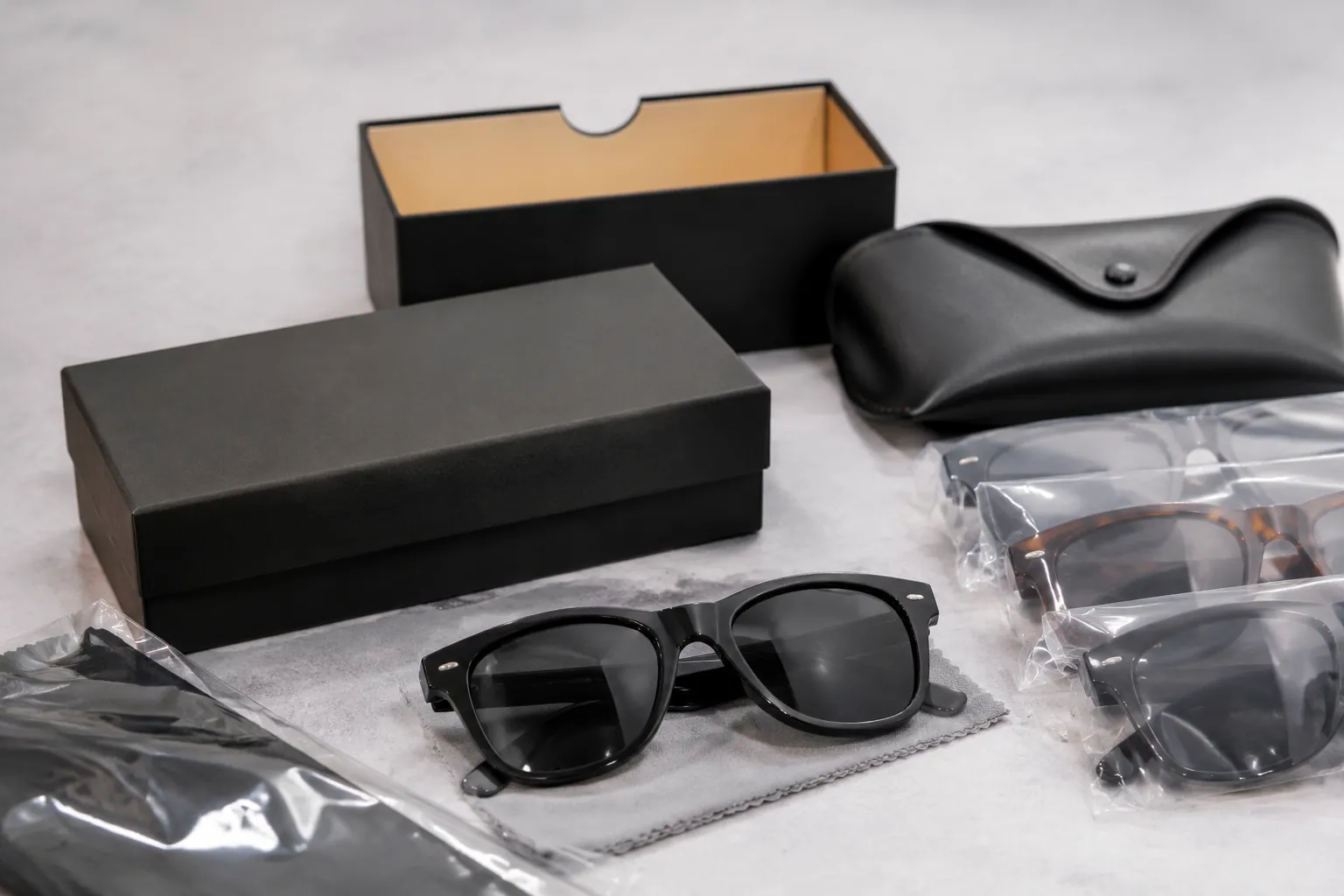
This guide is for importers, brand owners, distributors, and retailers buying custom sunglasses in volume. It covers what belongs on hang tags, frame or lens stickers, and user inserts—and what does not. The aim is simple: fewer artwork revisions, fewer claim mismatches, and fewer delays at customs, receiving, retail checks, and end-user handling. In private-label eyewear, these small printed pieces often decide whether an order feels controlled or messy.
Give each printed piece one clear job
A common packaging mistake is trying to make every printed piece do everything. That leads to cluttered hang tags, removable stickers carrying important claims, and inserts that are cramped or incomplete. Keep it simple. Assign one job to each component and hold the line on copy.
| Item | Main job | Best for | What not to load onto it |
|---|---|---|---|
| Hang tag | Sell-through and first-scan product info | Brand name, style code, key feature, lens type, barcode, origin if required | Long warning paragraphs, full care instructions, multilingual legal copy |
| Sticker | Fast operational ID at shelf and warehouse level | SKU, color code, size, PO reference, barcode, temporary feature callout | Permanent compliance wording if the sticker may be removed before sale |
| User insert | Legal, care, and usage explanation | Warnings, lens category guidance, cleaning advice, storage notes, importer details | Heavy marketing copy that belongs on the hang tag |
| Inner or outer box label | Packing and replenishment control | Carton quantity, style, batch, PO, scan code for receiving | Consumer-facing branding language |
This split speeds approval because each file has a narrower purpose. It also reduces translation cost. A one-line feature statement on a tag is manageable. A dense legal block in five languages is not.
It matters even more in production. Factories may run several colorways, lens options, and private-label versions from one base frame. Version control usually breaks first on printed items, not molded parts.
Use a plain rule: the hang tag sells, the sticker tracks, the insert explains, and the box label controls logistics. That structure works for a small sample run and for a larger wholesale program with multiple SKUs.
What the hang tag should include
A hang tag has a few seconds to do its job. It should answer three questions fast: what is the style, why does it matter, and can the claim be trusted. If it cannot, the tag is overloaded.
- Brand and model identification. Put the brand first, then the style name or model code. Reorders often happen by code, so do not bury it in small type.
- Short material and lens callouts. Keep wording factual: acetate frame, injected PC frame, TR90 frame, TAC polarized lens, nylon lens, spring hinge, stainless steel hinge.
- One core benefit line. Use one verifiable claim such as polarized lens, UV protection, category 3 sun lens, lightweight frame, oversized fit, or rubberized temple tips. Only print claims supported by the final product specification and test file.
- Barcode and SKU. EAN-13, UPC-A, or an internal retail code should be high contrast and tested before bulk printing.
- Origin and importer details if required. Decide placement early. Market rules vary, and late copy changes often delay packing.
Tag size affects both appearance and damage risk. Common sizes for sunglasses are around 45 x 90 mm, 50 x 90 mm, or 55 x 100 mm. Go too large and the tag can rub lenses or crowd the hinge area inside the polybag. If a metal eyelet is used, ask the supplier to confirm eyelet quality and hole distance from the edge. A badly set eyelet can scratch coated lenses in transit.
Paper choice matters too:
- 300-350 gsm coated card is common for standard retail tags
- 400 gsm kraft or textured stock can look premium but may scan less reliably if barcode contrast is weak
- soft-touch lamination improves feel but can crack on tight folds or punched holes
- foil stamping usually raises minimums and adds print complexity
For barcodes, black on matte white remains the safest choice. If you want a dark tag, keep a white barcode patch. If variable data will be used across many SKUs, check that the printer outputs vector bars rather than raster art. At small sizes, rasterized barcodes cause avoidable scan problems.
Where stickers help—and where they fail
Stickers work best as temporary identifiers. Nothing more. On sunglasses, the usual placements are lens, polybag, case, and retail box. Each one carries a different risk.
Lens stickers are fine for brief feature callouts such as polarized or UV-protection support, but they are the highest-risk option. Polycarbonate lenses and coated lenses can mark if the adhesive is too strong or if labels sit under heat too long. Sea freight, container dwell time, and warehouse heat can turn a cheap sticker into a returns problem.
Polybag stickers are usually the safest operational choice. They work well for SKU, color, size, PO number, and barcode. They also avoid direct contact with lenses and frame surfaces.
Case or box stickers help when a gift box or hard case is part of the retail presentation and needs a scannable code without reprinting the main artwork.
| Sticker position | Best use | Main technical risk | Recommended spec |
|---|---|---|---|
| Lens | Short feature callout only | Residue, ghost marks, coating damage under heat | Removable adhesive, small format, retained-sample testing before approval |
| Polybag | SKU, color, barcode, PO | Low; mostly scan or sorting errors | Thermal or offset label with clear SKU logic |
| Case or retail box | Retail scan code without reprinting box | Misplacement or crooked application | Consistent label position guide and barcode quiet zone |
| Outer carton | Receiving and warehouse control | Batch mismatch or wrong carton count | Large readable text plus scan code tied to packing list |
Specify removable adhesive. Do not just write "sticker." Ask for retained samples stored at room temperature and under warm conditions before approval. If the lens has mirror, hard-coat, anti-scratch, or hydrophobic treatments, the test matters even more.
One more rule: do not place legally important wording only on a removable sticker. If the user needs the information, put it on the insert or another non-removable packaging element.
What the user insert should cover
The user insert does the real explanatory work. This is where warnings, care instructions, intended-use language, and standards-aligned wording belong. Not on the hang tag.
A good insert reduces returns caused by misuse and gives importers room to carry required details clearly. It also protects the tag from becoming unreadable.
If the product is sold into regulated markets and tested to standards such as CE EN ISO 12312-1, ANSI Z80.3, or AS/NZS 1067, the insert wording must stay aligned with the tested claim and the market's labeling approach. Do not improvise technical language after the lab report is issued. If a product is placed on the EU market, make sure the packaging and documentation also reflect any applicable requirements for the product and substances, including REACH where relevant. If the importer is responsible for FDA registration or other market-entry steps, keep those records consistent with the product file and labeling set.
Useful insert content includes:
- product purpose: sunglasses for protection against solar radiation and glare, in line with the tested claim
- lens category or darkness guidance where applicable
- warning not for direct observation of the sun
- warning not for protection against artificial UV sources such as solaria where applicable
- warning against use at dusk, at night, or for night driving if the lens category requires it
- cleaning steps: blow or rinse off grit first, use a microfiber cloth, avoid paper towels and unapproved solvents
- storage guidance: keep in case, avoid dashboards and prolonged heat exposure, avoid abrasive contact
- importer or responsible party name and address if required
- batch or traceability code if your compliance system uses one
For format, a folded insert around 70 x 100 mm to 90 x 120 mm when closed is enough for most programs. A single 128 gsm or 157 gsm art paper insert works for basic branding; 80-100 gsm uncoated stock folds more easily for multilingual legal text.
The main problem is usually not paper cost. It is font size. Buyers approve an English draft, then compress several languages into a layout that no one can read. Check final type size before print approval, not after dielines are locked.
Match every printed claim to the approved spec
Packaging claims must match the actual bill of materials and test evidence. No exceptions.
If the frame is injected polycarbonate, do not label it acetate because the finish looks glossy. If the lens is TAC polarized, say TAC polarized. If one colorway is non-polarized, remove the polarized sticker from that SKU. Mixed artwork is common when brands reuse one layout across several lens options.
A reliable approval flow looks like this:
- Confirm frame material, lens material, hinge type, and decoration method from the approved specification sheet.
- Match every printed product claim against that specification.
- Match standards references and compliance wording against the final lab report or declaration set.
- Check importer name, address, and barcode data against the purchase order and retail master file.
- Approve a physical print sample for color, scan performance, fold, stringing, and adhesive behavior.
This gets more important when decoration is involved. Laser engraving, pad printing, metal logo plates, hot foil on tags, spot UV on cards, and embossed packaging all add version points. Product branding may be controlled in-house at the factory, but paper conversion errors still happen separately: wrong color code, old revision barcode, missing warning line, or the wrong language stack.
Color naming is another weak spot, especially for acetate. Sheet patterns vary by batch, so descriptive names alone can create disputes. Use a named color plus an internal color code tied to the approved sample and packing list.
MOQ, unit cost, and lead-time logic
Printed extras are cheap by unit. They are expensive when they trigger rework. Cost them that way.
| Printed item | Typical MOQ logic | Lead-time effect | Main cost driver | Main risk |
|---|---|---|---|---|
| Hang tag | Usually aligned to order quantity; special finishes may need a print minimum from the supplier | Low if artwork is frozen before bulk; longer if foil, emboss, or special stringing is added | Paper stock, lamination, foil, eyelet, double-sided color | Wrong barcode, claim mismatch, poor scan on dark stock |
| Lens or box sticker | Low print minimums, but SKU variety increases setup and sorting time | Low unless variable data arrives late | Number of SKU versions, adhesive grade, label size | Residue, mislabeling, scan failure |
| User insert | Most sensitive to language count; a generic insert can reduce MOQ pressure | Moderate if legal wording is not frozen early | Page count, fold type, language versions, paper gsm | Unreadable font size or noncompliant wording |
| Outer box label | Usually easy to add per PO | Very low | Variable data printing and operator sorting | Carton count, batch, or style mismatch |
For many factories, sample development takes about 7-10 days. Bulk production often takes 25-35 days after deposit and final approval, depending on capacity and order scope. Packaging artwork should be frozen before bulk starts. If the sunglasses are ready but the insert is still in legal review, a small paper item can hold the shipment.
At around 50 pairs per design, it often makes sense to simplify: one shared insert across several colorways, one generic care card, and only SKU-specific stickers. Around 300 pairs per SKU, dedicated tags become easier to justify. At 1,000 pairs and above, cleaner operations usually matter more than minor print savings. Saving a few cents on paper is not a win if warehouse teams must relabel stock by hand or a retail account rejects weak barcode printing.
A practical packaging hierarchy and approval checklist
If you need a starting template, this structure works.
Hang tag front: brand, model name or style family, one strong feature, one material or lens callout.
Hang tag back: SKU, barcode, color code, size if relevant, origin or importer data if required in that market.
Sticker: only the fast ID needed for retail or warehouse handling.
User insert front: product purpose, lens category or usage note, basic care.
User insert back: warnings, standards-aligned wording, importer details, and traceability reference if used.
This setup makes versioning easier to control. In a factory where frames, lenses, branding, and final QC move quickly, delays usually come from the wrong insert in the right box, the right tag on the wrong color, or an old sticker file applied to a new lens spec.
Best practice: assign one owner for packaging copy, one owner for barcode data, and one final approver who checks product specification against every printed claim before bulk packing starts.
Before approving bulk, run this checklist:
- Does the hang tag match approved frame and lens materials exactly?
- Are claims such as polarized, UV protection, lens category, or standards references supported by the final test file?
- Is barcode data final and tested against retailer or ERP requirements?
- Are removable stickers using an adhesive suitable for the lens surface and storage conditions?
- Are importer details and country-of-origin markings placed correctly for the destination market?
- Is multilingual copy complete and readable at final print size?
- Has a physical print sample been checked for color, scan contrast, fold quality, string placement, and fit?
- Do the insert, tag, carton label, and packing list all use the same SKU logic and revision code?
This work is not glamorous. It is still where eyewear programs stay clean or become expensive. Good sunglasses can look disorganized—and create compliance risk—if the small printed pieces are wrong.
Control points to lock before printing starts
Before the supplier prints anything, lock the control points that most often create rework:
- Approved product spec: frame material, lens material, lens treatment, hinge type, and color code
- Market-specific wording: the exact claim set allowed for the destination market
- Barcode master data: SKU, color, size, and retail code if used
- Compliance data: the final lab report or declaration set tied to the correct SKU
- Packaging hierarchy: which claim appears on the tag, which on the insert, and which stays off removable items
- Physical sample sign-off: print quality, adhesive behavior, and scan performance
Factories with ISO 9001 systems usually work better when the buyer provides one revision-controlled file set rather than multiple email threads with partial changes. If the supplier also has BSCI or similar social compliance coverage, that may help overall process control, but it does not replace packaging review. The buyer still needs one source of truth for artwork and labeling.
The cleanest programs treat packaging as product control, not decoration. That approach reduces surprises at receiving, retail intake, and after-sale support.
Have a custom sunglasses project in mind?
Send us your styles, target market and quantities and we will return a detailed quote with MOQ, lead time and a sample plan.
Get a QuoteWhy source this from Wenzhou with LumiShades
Wenzhou in Zhejiang Province is widely regarded as China’s eyewear manufacturing capital, producing a large share of the world’s sunglasses. That concentration matters to buyers: a deep local supply chain for acetate sheet, hinges, lens blanks, plating and packaging means shorter component lead times, easier color and material matching, and a workforce with decades of eyewear-specific skill. LumiShades has manufactured in this ecosystem since 2009, and our vertical integration — in-house injection molding, acetate cutting, CNC milling, lens tinting, decoration and quality control — means no part of your order is quietly subcontracted to a workshop you cannot audit.
For international buyers, that vertical control translates into accountability. When a single factory owns every step, defects are traced and fixed at source rather than bounced between vendors, and your specifications survive intact from first sample to bulk. We back this with 15+ years of experience, shipments to 60+ countries, more than 5 million pairs produced per year and a 98.5% on-time delivery rate. Our certifications — CE EN ISO 12312-1, FDA registration, ANSI Z80.3, AS/NZS 1067, REACH, ISO 9001 and BSCI audit — mean the compliance documentation your market requires already exists. Explore our manufacturing capabilities and quality control process to see how this works in practice.
Frequently asked questions
Should UV protection claims go on the hang tag or the insert? Use the hang tag for a short sales-oriented claim only if the final product specification supports it. Put the fuller explanation, warnings, and care instructions on the insert. Keep the wording aligned with the tested standard and the destination market's labeling approach.
What if the product is sold under CE EN ISO 12312-1, ANSI Z80.3, or AS/NZS 1067? Use the exact claim set that matches the final test file for that market. Do not copy technical wording from another SKU or another lab report. If the product is also subject to other market requirements, such as REACH-related substance controls or importer documentation, keep those references consistent across the product file and insert wording where required.
Can we use one insert for multiple sunglass styles? Yes, if the care instructions, warnings, and compliance wording are accurate for every style included. Do not combine styles with different lens categories or different claim sets unless the insert remains correct for all of them. If any SKU needs different warnings, make a separate insert or a separate SKU version.
What is the safest place for the barcode? Usually the hang tag or retail box label. Those positions are more stable for scanning and less likely to be removed before use. Lens stickers can work for temporary retail handling, but they are more exposed to heat, residue risk, and pre-sale removal. Always test the barcode on the exact print stock and at the final size.
At what order size does custom printed packaging make sense? It can make sense even for small test runs if the destination market requires specific importer or compliance information. From a cost and version-control standpoint, dedicated tags and inserts become easier to justify as SKU volume grows and as the number of language or market variants increases.
Do stickers damage polarized or coated lenses? They can. The risk rises with aggressive adhesive, long storage, sea freight, and high heat. Ask for removable adhesive, keep labels small, and test retained samples before approval. If the sticker must touch the lens, confirm that it peels cleanly after storage under both room-temperature and warm conditions.
Ready to start?
Explore our round sunglasses or request a quote — our sales team replies within 12 hours.
Request a Quote