
UV400 vs UV380 vs Polarized: Sourcing Guide
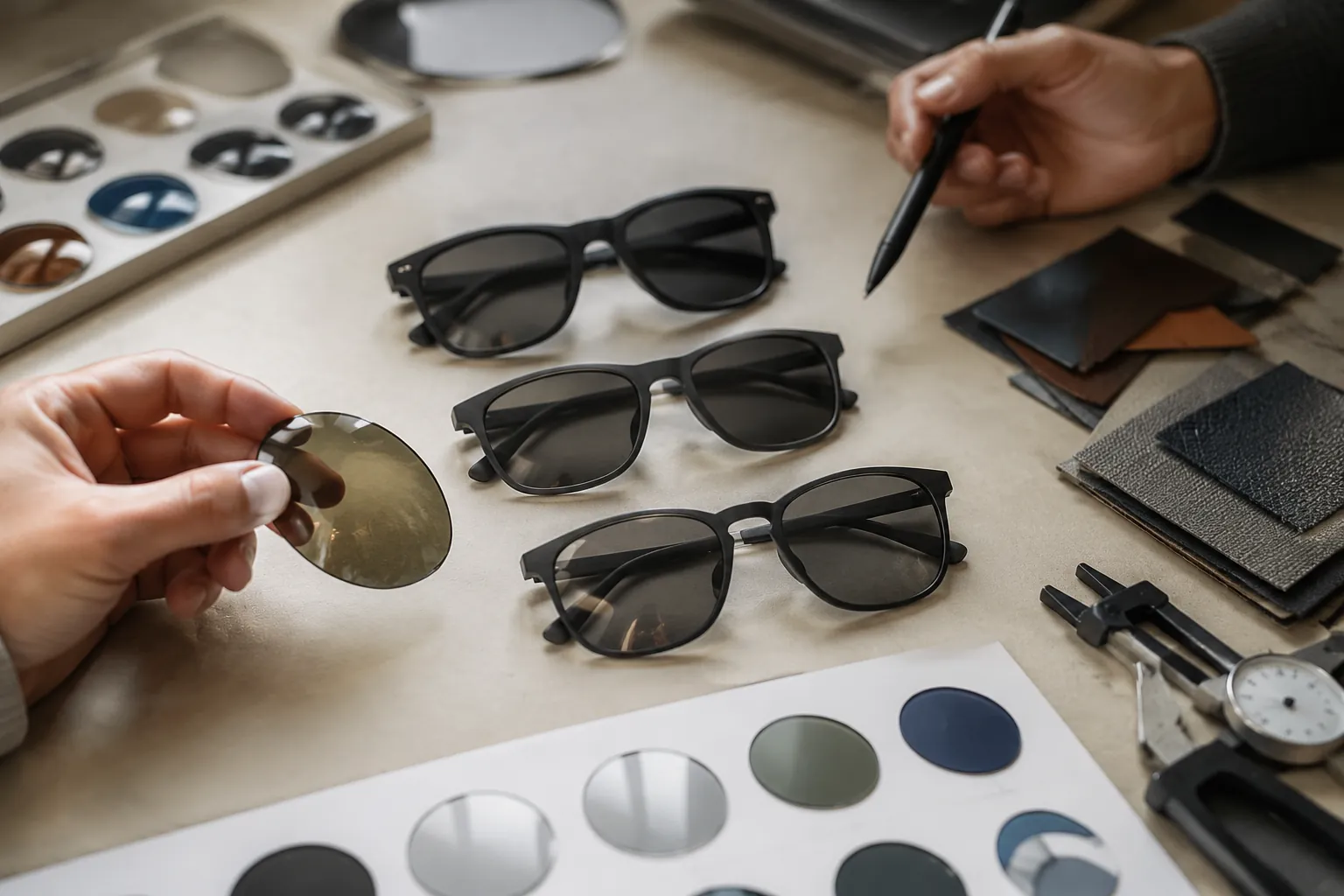
If you buy sunglasses for a brand, chain, distributor, or private-label program, the lens claim on the PO matters. UV400, UV380, and polarized are not interchangeable. Buyers often pay for the wrong one. This guide explains what each claim means, where it fits by channel, and how to write a spec a factory can build, test, and quote.
What each lens claim actually means
UV protection, visible light transmission, tint, and polarization are separate variables. A dark lens is not automatically UV-protective. A polarized lens is not automatically a better UV lens. For sourcing, the claim on the PO, the lens material, and the test standard must match.
UV400 means the lens is designed to block ultraviolet radiation up to 400 nm, covering UVA and UVB. It is the clearest mainstream sunglasses claim because it is easy to explain and widely used in retail programs. UV380 means the lens is designed to block UV up to 380 nm. It is still a UV protection claim, but narrower than UV400 and usually used in value or entry-level programs. Polarized means the lens includes a polarizing layer that reduces glare from reflected light, especially from water, roads, snow, and glossy surfaces. Polarization does not replace UV protection. It is a separate feature.
At factory level, the main variables are the lens substrate, the tint or coating system, and any polarizing film or laminated layer. If those are not written into the spec, the supplier fills in the blanks with its own standard build. That is where quote drift starts.
For tinted lenses, specify a visible light transmission target or approved range if color matters. A gray lens at one transmission level can perform and look very different from the same color at another. Clear requirements reduce disputes at sample and bulk stages.
Which claim sells best by channel
The best lens claim depends on channel, consumer expectation, and how much product education your team can support. A fashion chain, an outdoor retailer, and a corporate gift program do not buy the same way. Use the wrong claim and margin gets squeezed. Or the product sits.
| Channel | Best-fit claim | Typical spec | Buyer trade-off |
|---|---|---|---|
| Fashion retail | UV400, non-polarized | PC lens, 10% to 20% VLT, standard tint, basic case | Lower cost and broad style range, but no glare reduction |
| Outdoor / sport | UV400 + polarized | TAC or polarized PC lens, 8% to 18% VLT, tighter color matching | Higher unit cost and stricter QC, but a stronger performance story |
| Promo / corporate gift | UV380 or UV400 | Value frame, standard tint, simple print or no print | Price-sensitive, so packaging and claims should stay conservative |
| Driving-focused retail | UV400 + polarized | Neutral gray or brown tint, low distortion, anti-scratch topcoat | Polarized lenses can affect LCD visibility, so the claim should be explained carefully |
If your assortment spans several channels, spec each SKU separately. Do not force one claim across the whole line. One frame can be UV400 only. Another can be UV400 polarized. A third can stay UV380 for a lower-price tier. That protects margin and keeps the assortment flexible.
For seasonal programs, tier the line by price objective. Reserve the lowest-cost build for entry programs, use UV400 for the core assortment, and add polarized only where the channel and selling price justify the extra cost. One claim across every SKU usually creates one pricing problem across the range.
How compliance should shape the spec
Compliance is not a marketing detail. It determines what can be labeled, what can be shipped, and how the purchase order should be written. For eyewear sourcing, use only the standards and references that apply to the target market: CE EN ISO 12312-1, FDA registration, ANSI Z80.3, AS/NZS 1067, REACH, ISO 9001, and BSCI.
Match the market to the standard. In the EU, sunglasses should align with CE EN ISO 12312-1. In the U.S., buyers often use ANSI Z80.3 as the performance reference and may require FDA registration for the manufacturer and product pathway. In Australia and New Zealand, AS/NZS 1067 is the relevant eyewear reference. REACH matters in the EU supply chain because coatings, inks, adhesives, plastics, and decorative parts can create chemical compliance issues even when the lens itself is fine.
Write the requirement so it can be tested and audited. A useful spec line sounds like this: "UV400 TAC polarized lens, tested to EN ISO 12312-1 for EU retail." That is actionable. "Premium sunglasses" is not.
Process control matters when the buyer needs consistent output across production lots. If the target is UV protection consistency, the supplier should control tinting, coating thickness, curing, and assembly fit. Ask what the factory checks in-house, what it sends to a third-party lab, and what documents it supplies with the bulk order. If the supplier cannot connect the claim to the standard and the test path, the risk stays with the buyer.
Ask for paperwork before the PO, not after shipment. That includes relevant test reports, registration details where applicable, and a clear statement of which market each document supports. Confirm whether the supplier's quality system is certified to ISO 9001 and whether social compliance claims such as BSCI are current, if those matter to the program.
Polarized vs non-polarized: where the cost goes
Polarization adds material and process cost. A polarized lens is not just a tinted lens with a different label. In many production lines, it uses a polarizing film or laminated structure. That adds alignment steps, more inspection points, and more scrap risk. If the film shifts, bubbles appear, the optical axis drifts, or the lens color changes between batches, the run gets more expensive.
- Plain tinted lens: simplest build, lowest cost, best for high-volume fashion SKUs and promotional programs.
- UV400 non-polarized: a common retail and promo choice; it combines clear UV protection with straightforward quoting.
- UV400 polarized: higher perceived value, best for driving and outdoor use, but it needs tighter QC and more stable lamination.
In production, the biggest cost drivers are film cost, yield loss, and inspection time. Non-polarized lenses are generally easier to scale because there are fewer assembly variables. Polarized lenses require checks for haze, axis alignment, edge stress, and cosmetic defects. Smaller batches can tolerate more manual work. Larger orders need stronger process stability to avoid rework.
At volume, pricing usually improves as order size increases because setup and inspection costs are spread across more units. A 50-pair MOQ is often suitable for testing, but it is not the most efficient cost point. As order quantity rises, the factory can amortize lens cutting, line setup, and packaging over a more workable batch. Ask for separate pricing on the frame, lens, decoration, and packaging so the polarized premium stays visible.
If the lens cost is buried inside a single lump sum, you cannot tell whether the difference comes from the lens build or from unrelated factory overhead. Keep the quote broken out.
How to write the spec so factories quote cleanly
The weakest spec is a short email that says, "Need sunglasses, UV400, polarized if possible." That leaves too many decisions to the supplier. A proper spec should let the factory quote the exact product you want, not a nearby version of it.
Start with the market, then define the technical requirements. State the target market, the lens claim, the lens material, the color or transmission target, the compliance requirement, and the decoration method. Add MOQ, sample timing, bulk timing, and packaging details. The tighter the input, the cleaner the quote.
- State the market: EU, U.S., Australia/New Zealand, or mixed.
- State the claim: UV400, UV380, or UV400 polarized.
- State the lens material: PC, TAC, or glass if the program requires it.
- State the tint target or visible light transmission target if color matters.
- State the standard and evidence required for approval.
- State the decoration method: pad print, laser engraving, metal logo plate, or hot stamping.
When you need timing guidance, ask the supplier for a sample schedule and bulk lead time based on the actual build. Simple lens and decoration combinations usually sample faster than custom tint matching, polarized TAC construction, or multi-step logo decoration. Ask which step is the bottleneck before approving the PO.
Good buyer language sounds like a build sheet: "UV400 polarized TAC lens, gray tint at 12% VLT target, black frame, one-color pad print on temple, EU documentation to EN ISO 12312-1, packed in microfiber pouch with lens sticker." That gives a factory enough detail to quote, sample, and produce with fewer clarifications.
Material choice changes the protection story
Lens claim is only part of the product. The base material affects impact resistance, optical clarity, weight, and how well the tint or polarizing layer survives production. A good UV claim can still be undermined by a weak material choice or poor assembly fit.
PC lenses are common in value and active lines because they are lightweight and impact-resistant. They can support strong UV protection, but scratch resistance depends on coating quality. TAC lenses are commonly used for polarized sunglasses because the layered structure works well with polarizing film and is often favored for driving and outdoor programs. Glass can offer strong optical clarity, but it is heavier and more breakage-prone, which limits it in many wholesale programs. Acetate frames do not change the lens claim, but they affect fit, finishing, heat behavior, and decoration choices.
The factory issue is fit after assembly. A lens can pass inspection on its own and still fail in the frame if groove depth or bevel angle is off. Ask for fit checks after assembly, not only pre-assembly lens checks. Confirm lens retention, temple alignment, and frame stress at the final stage.
Decoration also interacts with material choice. Pad printing is economical and fast, but thick ink builds can crack or wear if the frame flexes. Laser engraving is cleaner and more durable on compatible acetate and metal surfaces, but it depends on substrate and artwork stability. Metal logo plates can create extra material review questions and may require additional bonding checks. If the buyer specs only the lens and ignores decoration, the result can be technically correct but commercially inconsistent.
For retail programs exposed to heat, humidity, salt air, or frequent cleaning, ask the supplier to confirm whether the decoration method has been validated for that environment. That matters especially for beach, travel, and outdoor channels.
A simple buying matrix for UV400, UV380, and polarized
If you need a quick rule set, use this.
| Claim | Best use | Buyer priority | Typical risk |
|---|---|---|---|
| UV380 | Entry-level promo, cost-sensitive packs | Low price and basic UV protection | May be less compelling in marketing unless the market accepts the term |
| UV400 | Mainstream retail, private label, fashion | Simple consumer message and broad compliance fit | Only works if the supplier keeps the build and test results consistent |
| UV400 polarized | Driving, fishing, sport, premium retail | Glare reduction plus full UV protection | Higher cost, possible screen visibility issues, and tighter QC requirements |
For many buyers, the right answer is not one claim across the full line. It is a ladder. Use UV400 as the base spec, then add polarized only where the channel and price point justify it. That keeps the assortment simpler, reduces sales confusion, and reserves the higher-cost build for styles that can support it.
Watch the color story too. A polarized gray lens and a polarized brown lens can both meet the same UV requirement, but they may look and perform differently under retail lighting and in consumer use. Approve color under daylight-like conditions, not just under showroom lights.
Ask for the lens claim you can sell, not the claim that sounds strongest on paper.
Check expected retail margin against the added production complexity. If polarization adds cost but the shelf price cannot move, the claim may be wrong for that SKU. If the market expects performance and the product is non-polarized, the claim is also wrong. The best buy matches both customer expectations and the factory line.
What to request from your supplier before the PO
Before you place the order, get the following in writing. Not after sample approval. Before the PO. That is the difference between controlled sourcing and expensive correction.
- Lens claim and market standard: UV400, UV380, or UV400 polarized, tied to CE EN ISO 12312-1, ANSI Z80.3, AS/NZS 1067, FDA registration, or REACH as needed.
- Lens material and color target: PC, TAC, or glass, plus visible light transmission target or Pantone reference if color matching matters.
- Sample schedule: first samples in 7-10 days, with revision time if the lens color, print, or logo changes.
- Bulk timing: 25-35 days after approval, subject to frame tooling, decoration method, and lens build.
- MOQ and price breaks: 50 pairs per design, with better economics at 300, 1,000, and 5,000+ units.
- Packaging and markings: carton marks, hangtags, lens stickers, warning text, and any market-specific labeling.
Also ask the supplier to confirm what changes would trigger a re-sample. A different temple print, a new lens tint, or a different case can affect approval timing. If the factory cannot tell you which change is cosmetic and which change affects the technical spec, they are not quoting from a controlled process.
This is not bureaucracy. It is the cheapest way to avoid dead stock, chargebacks, and late-stage rework. Small differences in transmission, coating color, or logo method can turn a style from retail-ready to unusable. Buyer discipline is cheaper than post-approval firefighting.
The short answer buyers should remember
Use UV400 as the default wholesale spec for most retail sunglasses. Use UV400 polarized where glare reduction supports the channel and price point. Use UV380 only when the market, margin, and labeling expectations make it the right fit. Then match the claim to the correct compliance standard, the right material, and the right decoration process.
If your supplier cannot explain the lens claim in relation to the market standard, the test method, and the production controls, keep looking. If they can, you will have fewer returns, fewer chargebacks, and fewer arguments when the shipment arrives.
Have a custom sunglasses project in mind?
Send us your styles, target market and quantities and we will return a detailed quote with MOQ, lead time and a sample plan.
Get a QuoteWhy source this from Wenzhou with LumiShades
Wenzhou in Zhejiang Province is widely regarded as China’s eyewear manufacturing capital, producing a large share of the world’s sunglasses. That concentration matters to buyers: a deep local supply chain for acetate sheet, hinges, lens blanks, plating and packaging means shorter component lead times, easier color and material matching, and a workforce with decades of eyewear-specific skill. LumiShades has manufactured in this ecosystem since 2009, and our vertical integration — in-house injection molding, acetate cutting, CNC milling, lens tinting, decoration and quality control — means no part of your order is quietly subcontracted to a workshop you cannot audit.
For international buyers, that vertical control translates into accountability. When a single factory owns every step, defects are traced and fixed at source rather than bounced between vendors, and your specifications survive intact from first sample to bulk. We back this with 15+ years of experience, shipments to 60+ countries, more than 5 million pairs produced per year and a 98.5% on-time delivery rate. Our certifications — CE EN ISO 12312-1, FDA registration, ANSI Z80.3, AS/NZS 1067, REACH, ISO 9001 and BSCI audit — mean the compliance documentation your market requires already exists. Explore our manufacturing capabilities and quality control process to see how this works in practice.
Frequently asked questions
Is UV400 better than UV380 for wholesale buyers? Usually yes if you want one claim that is easy to sell and widely understood. UV400 is the cleaner default for most retail programs because it is a straightforward UV protection claim up to 400 nm. UV380 can still work for some value or promotional programs, but use it only when the market accepts the term and the price point supports it. For either claim, ask the supplier for the test standard and the report that supports the label.
Does polarized mean full UV protection? No. Polarization reduces glare; it does not automatically provide UV protection. The PO should state the UV claim separately, such as UV400 or UV380, and the supplier should confirm the test basis for that claim. If you are buying for retail, do not treat polarization as a substitute for UV protection.
What should I ask for on a PO for EU sunglasses? State the lens claim, lens material, tint or transmission target if relevant, and the requirement to align with CE EN ISO 12312-1. If your supply chain uses coatings, inks, adhesives, or decorative parts that may be affected by chemical restrictions, ask the supplier to confirm REACH compliance for those components. Also request the supporting test report before shipment, not after.
Can a factory quote polarized sunglasses at a low MOQ? Yes. A factory can usually quote polarized sunglasses at a low MOQ, but the unit cost is typically higher than a non-polarized build because of the extra film, lamination, and inspection steps. If you are testing the market, a 50-pair MOQ per design is workable. For better unit economics, ask for pricing at 300, 1,000, and 5,000-plus pairs so you can compare scale effects before you commit.
How long should samples and bulk take? A practical starting point is 7-10 days for samples and 25-35 days for bulk after approval, assuming the tooling is ready and the decoration is standard. Treat those numbers as targets, not promises. Custom lens tint, polarized construction, special packaging, or complex decoration can extend the schedule, so ask the supplier to identify the longest-lead step before you approve the PO.
Ready to start?
Explore our round sunglasses or request a quote — our sales team replies within 12 hours.
Request a Quote