
TR90 vs PC Frames: Quote Smarter for Sunglasses
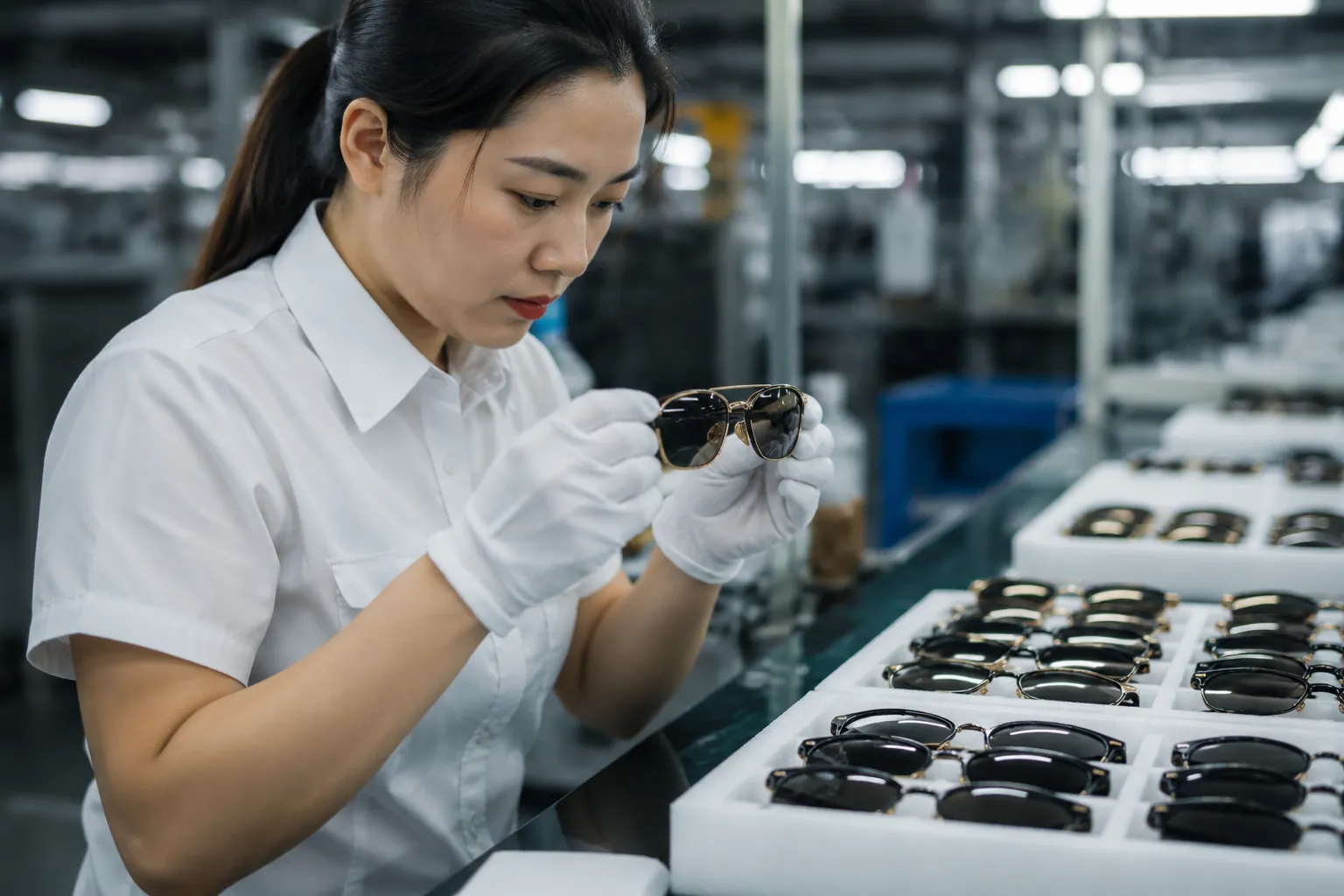
This guide is for brand owners, importers, distributors, and retailers buying lightweight plastic sunglasses in volume. TR90 and PC injection frames can look almost identical in a catalog. They do not quote the same. They do not always perform the same either. Once you factor in flex, wall thickness, decoration, reject rate, tooling risk, and cosmetic standards, the gap gets real. That gap affects ex-factory price, complaint rate, and lead time. The goal here is simple: help you decide which material to quote first, what to lock before sampling, and where cost surprises usually hide.
Start with the buying decision, not the resin name
Many buyers ask for TR90 because they have heard it is flexible and comfortable. Others ask for PC because it is common, cost-efficient, and widely used in value programs. Both can be right. The mistake is treating the resin name as the strategy.
The real question is this: what must the frame do in your channel, at your target retail, with your acceptable return rate?
A buyer quoting a $9.99 promo sunglass for mass retail is solving a different problem from a buyer building a $39.99 sport style for specialty chains. The first may care most about sharp cost, glossy color, and repeatability. The second may care more about flexible temples, lower hinge-area failures, and all-day comfort.
Use a simple first-pass rule. Quote TR90 when the brief involves active use, wrap shapes, long temples, wider fits, or lower side-head pressure. Quote PC when the brief is fashion-led, cosmetic-heavy, price-sensitive, or likely to use glossy or painted finishes.
Before you ask for pricing, lock these four points:
- Target ex-factory price and expected retail band.
- Use case: active sport, casual fashion, promo, kids, or outdoor.
- Finish route: molded color, spray paint, rubber coat, laser mark, pad print, or logo plate.
- Complaint sensitivity: are returns over hinge cracks, temple whitening, crooked fit, or finish scratches commercially serious for this account?
If these points are vague, suppliers will often quote the cheapest route that fits the sketch. Fast numbers. Bad comparison. A TR90 quote with strict cosmetic control and polarized lenses is not competing with a basic PC quote using molded color, non-polarized lenses, and loose visual standards.
Material behavior: comfort, flex, wall thickness, and failure mode
TR90 and PC are both common injection-frame plastics. In finished eyewear, they behave differently.
TR90 is usually chosen for flexibility and comfort. Temples can take more bending before they stay deformed, and the frame often feels less harsh at the side of the head. That matters on sport wraps, larger fronts, and styles likely to be put on one-handed or tossed into bags.
PC is usually stiffer in the finished frame. That can help hold fashion geometry, especially in flatter or more angular fronts. But there is less forgiveness. If temple angle, end-piece thickness, or hinge-pocket design is off, a PC frame can feel tighter and show stress sooner.
Do not over-credit the resin. Geometry matters just as much. Wall thickness, gate position, radii at transitions, and hinge-pocket design all affect stress. Thin bridge areas, sharp corners around hinge pockets, and poor screw-hole placement create stress concentration. A bad TR90 frame can still fail. A well-designed PC frame can still perform well in value programs.
Failure mode is where the difference starts to matter commercially. TR90 usually tolerates repeated flex better. PC more often shows stress whitening first, then crack initiation around:
- hinge screw holes
- thin temple roots
- bridge corners
- lens groove edges on aggressive shapes
During development, ask the supplier what wall thickness they recommend in the bridge, end piece, and temple root, and whether the design needs larger radii to lower stress. On a sport or wrap style, have that discussion before tooling. Not after a failed pilot run.
Practical rule: if the design needs material flex to survive handling, TR90 usually gives more process margin. If the design depends more on fashion look, gloss, and opening price, PC is often the better first quote.
Finish and decoration: where quotes usually go wrong
On a screen, both materials can look equally good. On the factory floor, finish requirements separate them fast.
PC is often easier for high-gloss fashion cosmetics, bright opaque colors, and painted finishes with strong visual impact. TR90 can also look clean, but surface expectations and decoration compatibility need to be specified earlier and more tightly.
This matters because cosmetic standards drive reject rate and cycle time. A molded black PC frame with no decoration is one route. A TR90 frame with a soft-touch topcoat, laser branding, and an inserted metal logo plate is another route entirely, even if the silhouette looks similar.
Decoration should be specified by method, location, and test expectation:
- Pad printing: good for temple logos and simple graphics. Ask for adhesion and rub testing, especially on curved or textured surfaces.
- Laser engraving: useful for cleaner premium branding. Confirm depth, contrast, and consistency after final coating, not before.
- Metal logo plates: strong premium signal, but they add manual insertion, fit-tolerance risk, and extra reject points if recess dimensions drift.
- Spray paint or rubber finish: improves visual impact, but adds handling steps and can expose edge-quality issues near hinges and lens seats.
For approvals, a rendering is not enough. Send Pantone references where needed, gloss or matte expectations under direct light, logo size in millimeters, and photos of the target finish. If the logo plate recess is specified at, for example, 18.0 x 3.2 mm, ask for the supplier's practical tolerance and assembly method. Small decoration details can move a quote more than the resin choice.
Also ask what defects are screened after decoration. Common post-decoration failures include print drift, inconsistent laser depth, exposed paint edges near hinge movement, and left-right mismatch in logo placement. These are late-stage problems. They cost time.
Head-to-head comparison for quoting and development
| Factor | TR90 | PC Injection | Buyer impact |
|---|---|---|---|
| Wear feel | Usually feels lighter and allows more flex in temples | Usually feels stiffer and more fixed | TR90 suits active, long-wear, and wider-fit programs |
| Break behavior | Better tolerance to repeated bending and handling stress | Higher risk of stress whitening or cracking at thin stress points | PC needs tighter geometry review around hinges and bridge |
| Surface finish | Good appearance, but high-gloss standards need more control | Often easier for glossy fashion cosmetics and bright colors | PC is often simpler for fashion-led programs |
| Decoration route | Works with laser, print, and logo plates, but process confirmation matters | Commonly used for paint, print, and straightforward branding | Ask for adhesion and rub-test confirmation on final finish |
| Typical cost position | Usually above PC on like-for-like geometry | Lower entry cost | PC helps hit opening price points faster |
| Best-fit channel | Sport, outdoor, active, comfort-led retail | Value fashion, promo, mass retail, seasonal programs | Choose by end use, not by buzzword |
This table is directional, not absolute. Tool quality, molding discipline, hinge insertion, and final QC can shift the result. Still, for first-pass sourcing, it is a solid decision frame.
Cost logic: why similar frames can quote far apart
Buyers often underestimate what sits behind a frame quote. Raw material is only one line item. Bigger cost drivers are cycle time, scrap, cosmetic standard, secondary processing, lens specification, and packaging labor.
A basic PC frame in molded black with smoke lenses and no logo plate is a low-complexity job. A TR90 frame with custom mirror lenses, inserted metal branding, and strict A-grade cosmetic control is a higher-risk, higher-touch job. They are not meaningfully comparable, even if the shape is similar.
Use quantity to test process stability, not just to chase price. Small runs are useful for seeding, pilot launches, or influencer drops. Larger runs usually improve unit efficiency.
- 50 pairs: suitable for sampling, seeding, or a very small test run; highest unit cost.
- 300 pairs: more realistic for a first commercial order with better process stability.
- 1000 pairs: where unit pricing and packaging setup become more efficient.
- 5000 pairs: where stronger economies of scale appear on repeat designs.
Volume can push pricing down on simplified builds and stronger quantities, but only if the specification stays simple. Add polarization, mirror coating, custom finish, logo hardware, upgraded packaging, or tighter QC, and cost moves fast.
Typical quote drivers include:
- material choice: TR90 generally prices above PC on comparable structures
- tool complexity: undercuts, texture transitions, and logo recesses increase risk
- lens spec: tint, flash mirror, polarized film, hard coating, and category requirements
- manual work: logo plates, hinge fitting, paint masking, and final adjustment
- packaging: pouch, case, barcode label, insert card, and export carton count
The best buying move is to request three versions of the same style: plain spec, target spec, and premium spec. That quickly shows whether cost pressure is coming from the frame material, the lenses, the finish route, or the packaging bundle.
Lead time, tooling, and tolerances: what changes in production
Read timelines by process step, not by optimistic calendar promise.
Sample and production timing will vary by design complexity, tooling readiness, decoration, and approval speed. A standard sample may be ready in days. Bulk production usually takes several weeks after approvals are fully locked.
A typical route for TR90 or PC injection frames looks like this:
- Confirm CAD, reference sample, measurements, hinge type, lens shape, and finish standard.
- Make or adapt mold tooling, or use an existing platform if geometry allows.
- Run molded parts and inspect for warpage, sink, gate vestige, and left-right symmetry.
- Fit hinges and check opening and closing feel, temple angle, and stress around screw locations.
- Tint or fit lenses, then apply print, laser mark, paint, or metal logo hardware.
- Final assembly, adjustment, cleaning, and QC against approved sample.
Most delays are predictable: color revisions, re-cut logo plates, lens curve mismatch, decoration rejection, and buyer changes after sample approval. TR90 programs can need extra tuning if the target feel depends on a specific level of temple flex. PC programs often lose time when premium cosmetic expectations are paired with an entry-level budget.
Ask suppliers for tolerances on dimensions that affect fit and visual acceptance. Useful control points include front width, temple length, bridge opening, lens seating, and left-right alignment. Each factory may use its own internal standard, but the buyer should still request the target tolerance band up front.
For quality-sensitive channels, ask for pre-production photos or a sealed PP sample before bulk starts. Also ask how many cavity checks and in-process inspections are done per run. A fast quote with no process detail usually hides risk. A slower, more technical quote is often easier to execute.
Compliance and QC: confirm these before you place the order
Frame resin is only one part of compliance. For sunglasses, the finished product matters most, especially lens performance and product safety. Confirm which tests apply to the exact SKU, destination market, and lens configuration. Do not rely on a generic certificate pack.
The commonly referenced items here are CE EN ISO 12312-1, ANSI Z80.3, AS/NZS 1067, REACH, FDA registration, ISO 9001, and BSCI. They do not mean the same thing. Some are product standards. Some concern materials. Some are factory-system or social-compliance references.
- CE EN ISO 12312-1: key sunglasses performance reference for applicable markets.
- ANSI Z80.3: important US-facing sunglasses reference.
- AS/NZS 1067: relevant for Australia and New Zealand programs.
- REACH: important for chemical compliance of materials and components.
- FDA registration: ask exactly what it covers in the context of your shipment.
- ISO 9001 and BSCI: useful factory credentials, but not substitutes for model-specific testing.
On QC, ask what happens before assembly, not only at final packing. In-house molding, decoration, lens tinting, and QC help because defects can be caught earlier. For injection frames, ask the supplier how they check:
- warpage and front distortion
- sink marks and gate finish
- hinge pull-out risk
- lens fit and seating pressure
- print adhesion and logo location
- left-right temple alignment and opening angle
If you are buying at distributor or chain-store level, ask for the AQL standard used for visual and functional inspection. That one question often tells you how disciplined the supplier really is.
Which material should you quote first?
If you need a starting point, keep it simple.
Quote TR90 first if: the style is sport or outdoor-oriented, temples are long and under flex stress, the fit needs to feel easy over longer wear, or the account is sensitive to break complaints from rough handling.
Quote PC first if: the style is fashion-led, gloss and color are the main selling points, the buyer is chasing a sharper opening price, or the order is aimed at promo, value retail, or seasonal volume.
Ask for both materials if: the design can work either way and you are still testing price elasticity or channel response. For new brands, this is often the smartest route: keep the geometry constant, sample both, then compare hand feel, finish, and supplier confidence side by side.
Blunt advice: never approve by render alone. Hold the sample. Flex the temple several times. Inspect hinge pockets under light. Check logo adhesion. Review cosmetic defects at normal viewing distance and at close range. That is when the material choice becomes clear.
There is no universally better plastic. There is only the better match for the job. Get the material behavior, finish expectation, compliance needs, and cost target aligned before bulk starts. That is how you protect margin and reduce returns.
Have a custom sunglasses project in mind?
Send us your styles, target market and quantities and we will return a detailed quote with MOQ, lead time and a sample plan.
Get a QuoteWhy source this from Wenzhou with LumiShades
Wenzhou in Zhejiang Province is widely regarded as China’s eyewear manufacturing capital, producing a large share of the world’s sunglasses. That concentration matters to buyers: a deep local supply chain for acetate sheet, hinges, lens blanks, plating and packaging means shorter component lead times, easier color and material matching, and a workforce with decades of eyewear-specific skill. LumiShades has manufactured in this ecosystem since 2009, and our vertical integration — in-house injection molding, acetate cutting, CNC milling, lens tinting, decoration and quality control — means no part of your order is quietly subcontracted to a workshop you cannot audit.
For international buyers, that vertical control translates into accountability. When a single factory owns every step, defects are traced and fixed at source rather than bounced between vendors, and your specifications survive intact from first sample to bulk. We back this with 15+ years of experience, shipments to 60+ countries, more than 5 million pairs produced per year and a 98.5% on-time delivery rate. Our certifications — CE EN ISO 12312-1, FDA registration, ANSI Z80.3, AS/NZS 1067, REACH, ISO 9001 and BSCI audit — mean the compliance documentation your market requires already exists. Explore our manufacturing capabilities and quality control process to see how this works in practice.
Frequently asked questions
Is TR90 always more expensive than PC for sunglasses frames? Usually, yes on like-for-like geometry, but not by a fixed amount. Decoration, lens upgrades, tooling complexity, cosmetic reject rate, and packaging can outweigh the resin difference. Ask suppliers to quote the same frame in plain, target, and premium versions so you can see what is actually driving the cost.
Which material gives fewer breakage complaints in active-use styles? TR90 is usually the safer first quote for active or sport-oriented sunglasses because it handles flex better, especially at temples and other high-stress fitting points. But thin styling or aggressive geometry can still create failures, so review a physical sample and check hinge areas and bridge transitions under load.
Can both materials meet CE EN ISO 12312-1 or ANSI Z80.3 requirements? Yes. Those standards apply to the finished sunglass and its performance, especially the lens system and overall product requirements, not to the frame resin name by itself. For compliance, confirm the exact model, lens type, tint, and destination market before testing or production.
What MOQ should I use for a realistic first production order? Use MOQ as a buying tool, not as a quality rule. A very small order can work for market testing, but a larger first order usually gives better process stability and more reliable pricing. If the supplier offers 50 pairs per design, that may work for sampling or a test. For a first commercial launch, ask for quotes at 300, 1000, and 5000 pairs so you can compare price against execution risk.
How long should I allow from approved sample to shipment? Allow several weeks after all approvals are locked. The exact lead time depends on tooling status, final colors and logos, and whether lens and packaging specs are fixed. Ask the supplier to separate sample time, mass-production time, and any added time for decoration or rework so the schedule is clear.
Ready to start?
Explore our sport wrap sunglasses or request a quote — our sales team replies within 12 hours.
Request a Quote