
TAC vs PC Polarized Lenses for Bulk Sunglasses Buyers
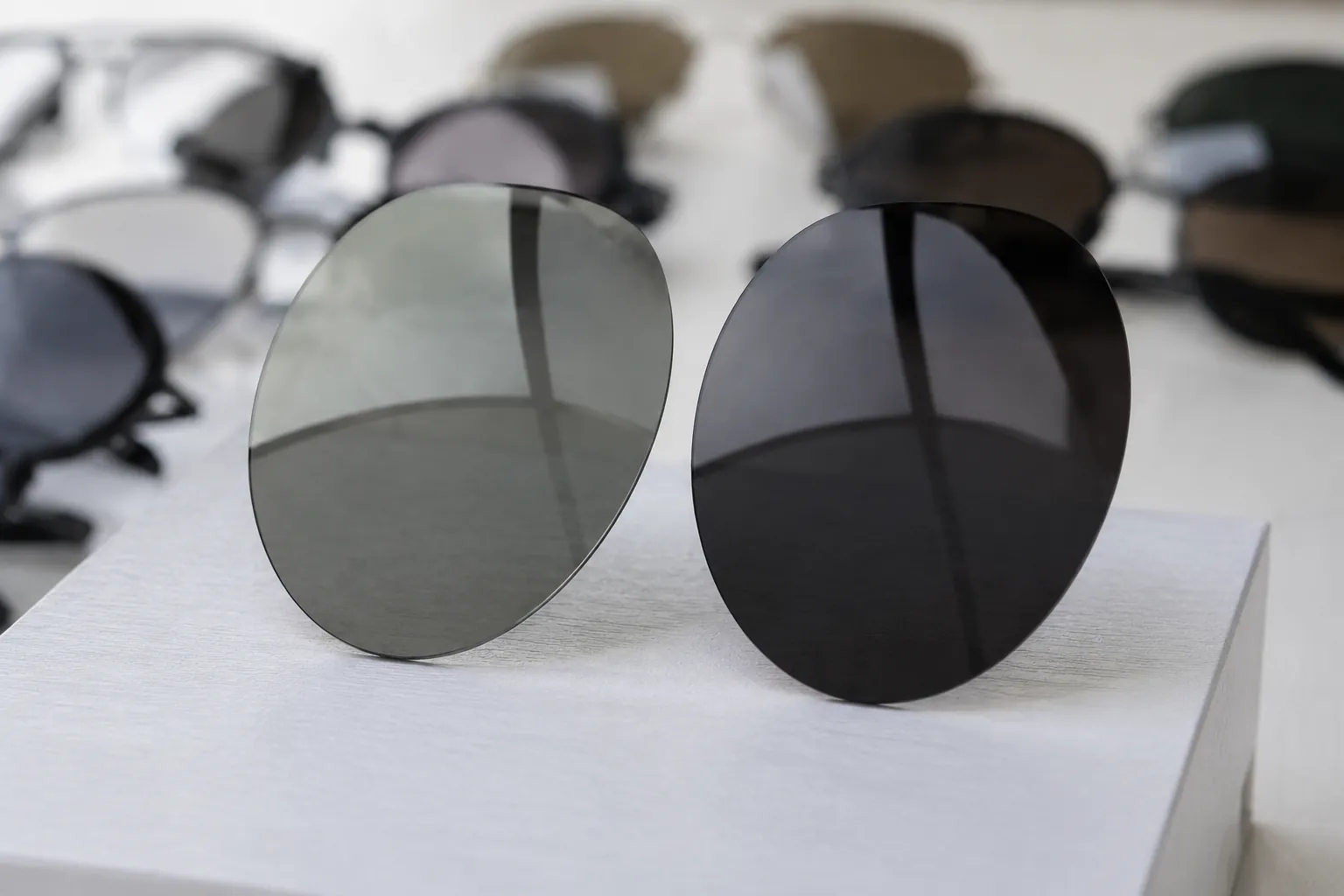
This guide is for brands, importers, distributors, and retailers comparing TAC polarized lenses with polarized polycarbonate (PC) lenses for bulk sunglass orders. The choice affects product position, durability, QC risk, and the compliance work required before mass production. This is not just a material choice. It is a business decision tied to target price, sales channel, expected use, and tolerance for returns or claims. The framework below stays practical: how TAC and PC polarized lenses are commonly built, where each fits, how they usually fail, what to verify for compliance, and how to compare both options during sampling before you approve production.
Start with the buying decision, not the material label
Many buyers start with the wrong question: Is TAC or PC polarized better? Better for what? That is the real issue.
The useful question is: Which lens construction fits the intended use, price point, and claim tolerance of this program?
For bulk sunglasses, the decision usually runs through four filters:
- Target price position. TAC is common in value-driven fashion and casual sunglasses. Polarized PC is more often chosen when the product needs a tougher lens construction.
- Expected abuse level. Resort retail, seasonal fashion, and promotional programs may accept TAC. Sports, driving, kids, fishing, cycling, and outdoor channels often justify polarized PC because impact durability matters more.
- Return and warranty tolerance. If the sales channel is sensitive to breakage, edge issues, or cosmetic complaints after use, a more robust lens construction can reduce risk.
- Compliance path. Both TAC and PC polarized lenses can be developed to meet standards such as CE EN ISO 12312-1, ANSI Z80.3, or AS/NZS 1067. But compliance depends on the finished lens and sunglass assembly, not the material name alone.
In practice, the split is often simple:
- TAC polarized: usually the cost-driven option for fashion, casual, and short-life programs.
- Polarized PC: usually the safer fit for harder-use channels that need stronger impact performance and lower field risk.
That choice affects more than optics. It also affects edging, assembly stress, frame geometry limits, inspection standards, and the validation work you should require before mass production.
How TAC and polarized PC lenses are built
TAC sunglass lenses are usually laminated, multi-layer constructions. Exact structures vary by supplier, but they commonly include protective outer layers, a polarized film, and adhesive-bonded layers built around a cellulose-based core. So performance depends on the whole laminate, not just the word TAC. Lamination control matters. Adhesive stability matters. Edge finishing matters.
Polarized PC lenses use a polycarbonate substrate as the main lens body. Polarization is added through a process that may involve lamination or another integrated route, depending on the supplier. The buyer takeaway is straightforward: the base lens body is polycarbonate, a material widely used where impact resistance matters.
In production, the control points differ:
- TAC critical points: lamination quality, adhesive stability, polarization film alignment, edge finishing, and resistance to separation or haze after heat and humidity exposure.
- PC critical points: substrate quality, coating performance, molded-lens cosmetics, stress control, and optical consistency across the viewing area.
- Both: visible light transmission control, tint consistency, polarization axis verification, assembly stress checks, and final inspection in the finished frame.
Frame design also matters. A lens that performs acceptably in one frame can fail in another if wrap, groove geometry, bevel design, or insertion force changes. Check the finished sunglass. Not just loose lenses or lab chips.
Head-to-head: optics, toughness, cost, and channel fit
| Factor | TAC Polarized Lens | Polarized PC Lens | What it means for a buyer |
|---|---|---|---|
| Optical appearance at first look | Often clean and commercially attractive in fashion/casual programs | Can also present well, but optical quality depends strongly on substrate and coating control | Do not approve based on one sample only; review repeatability across colors and production lots |
| Impact resistance | Typically lower than PC in common sunglass constructions | Generally higher because the lens body is polycarbonate | PC is usually the safer choice for active, kids, driving, and outdoor channels |
| Delamination risk | Higher because the lens is a bonded layered structure | Often lower in use, depending on the manufacturing route | TAC needs closer validation for heat, humidity, and edge stability |
| Scratch resistance | Depends on outer-layer and coating quality | Depends heavily on hard-coat quality | Neither should be marketed as scratch-proof without qualified support |
| Typical cost position | Usually lower | Usually higher | TAC is commonly used when cost pressure is stronger |
| Weight | Light | Light | Weight is usually not the deciding factor in this comparison |
| Best-fit channels | Fashion chains, kiosks, promo, seasonal retail, resort | Outdoor, driving, cycling, fishing, active lifestyle, lower-tolerance retail | Choose based on actual use conditions, not marketing language |
Lens cost is only part of the buying picture. A lower lens cost is not automatically the better commercial choice if the product is likely to generate avoidable complaints in its target channel. On the other hand, paying for a tougher lens may not make sense for a fashion line with limited wear intensity and a short selling window.
Failure modes that trigger claims after shipment
If you want fewer warranty claims, study likely failure modes by lens construction, not by first appearance.
Common TAC claim patterns:
- Edge delamination. Separation can start near edged areas or stressed zones, especially if lamination quality or edge finishing is weak.
- Bubbling or localized haze. This can result from lamination defects, adhesive instability, or environmental exposure.
- Distortion under frame stress. If lens and frame geometry are poorly matched, insertion stress may create cosmetic or optical issues.
Common polarized PC claim patterns:
- Surface scratching complaints. PC performance depends heavily on hard-coat quality and realistic user expectations.
- Cosmetic defects. Visible marks, contamination, or optical inconsistency can appear if substrate or process control is weak.
- Stress-related assembly issues. Tight grooves, aggressive wrap, or unsuitable frame design can create lens stress that later becomes a field complaint.
Build this into sampling. Ask for:
- Polarization verification for each approved lens color.
- Heat and humidity review for TAC constructions, especially if mirrored or dark tints are involved.
- Assembly stress checks in the final frame, not only on loose lenses.
- Written cosmetic criteria covering the central viewing area, edge area, scratches, chips, and coating marks.
A sample that looks good only when first unpacked proves very little. Review it after assembly, handling, cleaning, and basic stress exposure. Then decide if the lens construction fits the channel.
Cost logic: where the real buying risk sits
Buyers often overfocus on lens material and underfocus on total product architecture. That is a mistake.
Total sunglass cost is shaped by lens construction, frame material, decoration, packaging, testing, and order volume.
Typical buying logic looks like this:
- Low-volume market test: keep the specification tight and compare TAC and PC only where the channel difference is commercially meaningful.
- Branded retail program: as branding, packaging, and presentation quality rise, customer expectations rise too. Lens quality has to match.
- Hard-use or low-tolerance channels: a more durable lens may cost more up front but support the product position better after launch.
- Larger recurring programs: consistency, claim rate, and specification control usually matter more than the lowest nominal lens cost.
A common mistake is building a premium-looking sunglass around a lens construction that does not match the expected user experience. Add upgraded packaging, strong branding, mirrored treatments, or premium frame details, and customers will judge the lens more critically as well.
So the cost question is not just Which lens is cheaper? It is Which lens construction best supports the product's channel, compliance route, and likely field performance?
Compliance checks before mass production
Buyers should tie lens performance to the destination market's rules, not to generic assurances from a supplier.
Relevant standards and controls may include CE EN ISO 12312-1, ANSI Z80.3, AS/NZS 1067, REACH, and FDA registration where relevant for U.S. market handling. Factory credentials such as ISO 9001 and BSCI can be useful, but they do not replace product-specific testing.
Before approving bulk production, ask for the following:
- Lens category and visible light transmission target. Tint must be defined by specification, not by visual impression.
- Polarization confirmation. Verify approved colors, especially if mirrored, gradient, or dark tints are involved.
- Reports tied as closely as possible to the final product. The closer the report matches the actual lens, tint, and frame configuration, the more useful it is.
- REACH confirmation for relevant materials and components, including frame materials and decoration inputs where applicable.
- Written QC defect standards. Define what is acceptable in the primary viewing area and what is not.
Also confirm that the approved bill of materials, color references, and lens process route are locked before production starts. This matters even more for mirrored finishes, gradients, and custom tints, where small shifts can trigger retail rejection.
If lens processing, tinting, and assembly are spread across multiple uncontrolled subcontractors, traceability gets weaker. Ask for a clearer approval path and stronger pre-shipment verification.
A practical sourcing workflow for TAC vs PC
Do not choose from a catalog photo or a single approval sample. Run a controlled side-by-side review.
- Define the target channel. Fashion retail, ecommerce, resort, promo, driving, outdoor, kids, or sports.
- Set the target price position. Be clear about the retail tier and the performance level the channel expects.
- Develop one frame in two lens options. Keep frame, geometry, branding, and color family as consistent as possible.
- Compare three things side by side: optical appearance, assembly fit, and condition after handling and basic stress review.
- Check compliance early. Confirm which standard applies before the program is locked.
- Review claim risk honestly. If the product will be used hard, treat durability as a commercial requirement, not an optional upgrade.
- Approve only with written criteria. Record the approved tint, polarization status, cosmetics, and any compliance-related requirements before mass production starts.
A capable supplier should flag risky combinations early: aggressive wrap, tight insertion geometry, mirrored finishes with unstable appearance control, or lens constructions that do not fit the intended use.
Simple rule: If the customer will use the sunglasses hard, prioritize durability. If the product is mainly fashion and highly price-sensitive, TAC may be appropriate if it passes validation.
The short answer for most bulk buyers
Choose TAC polarized if the program is price-sensitive, aimed at fashion or casual use, and supported by disciplined sample validation and clear QC standards. It is often the practical route when appearance and cost control matter more than hard-use durability.
Choose polarized PC if the sunglasses are likely to see harder use, if the channel has low tolerance for breakage or performance complaints, or if the brand position calls for a more durable lens construction. Unit cost is often higher. Risk may be lower.
For mixed portfolios, do not force one answer across every line. A more practical split is often:
- TAC for entry lines, promo, resort, and fast-turn fashion.
- Polarized PC for outdoor, driving, kids, and active-use lines where durability matters more.
The best sourcing decision comes from comparing both constructions in the same frame, under the same color target, with the same inspection criteria and compliance plan. That is more reliable than judging a material label by itself.
Have a custom sunglasses project in mind?
Send us your styles, target market and quantities and we will return a detailed quote with MOQ, lead time and a sample plan.
Get a QuoteWhy source this from Wenzhou with LumiShades
Wenzhou in Zhejiang Province is widely regarded as China’s eyewear manufacturing capital, producing a large share of the world’s sunglasses. That concentration matters to buyers: a deep local supply chain for acetate sheet, hinges, lens blanks, plating and packaging means shorter component lead times, easier color and material matching, and a workforce with decades of eyewear-specific skill. LumiShades has manufactured in this ecosystem since 2009, and our vertical integration — in-house injection molding, acetate cutting, CNC milling, lens tinting, decoration and quality control — means no part of your order is quietly subcontracted to a workshop you cannot audit.
For international buyers, that vertical control translates into accountability. When a single factory owns every step, defects are traced and fixed at source rather than bounced between vendors, and your specifications survive intact from first sample to bulk. We back this with 15+ years of experience, shipments to 60+ countries, more than 5 million pairs produced per year and a 98.5% on-time delivery rate. Our certifications — CE EN ISO 12312-1, FDA registration, ANSI Z80.3, AS/NZS 1067, REACH, ISO 9001 and BSCI audit — mean the compliance documentation your market requires already exists. Explore our manufacturing capabilities and quality control process to see how this works in practice.
Frequently asked questions
Is TAC always lower quality than polarized PC? No. TAC is not automatically low quality. It is a different lens construction with different strengths and risks. In bulk sunglasses, TAC can be a suitable choice for fashion and casual-use programs if lamination quality, edge finishing, and cosmetic control are well managed. But buyers should treat TAC as more sensitive to layered-structure issues such as edge separation or haze than a typical polycarbonate lens body. The practical step is to review the finished sample for heat and humidity stability, edge condition after assembly, and polarization consistency before approval.
Which lens is better for sports or driving sunglasses? Polarized PC is usually the safer choice for sports and driving programs because polycarbonate is widely preferred where better impact resistance is needed. But do not stop at material selection. Confirm the visible light transmission category, check that polarization is appropriate for the intended use, and request evidence that the final sunglass configuration aligns with the destination market standard, such as CE EN ISO 12312-1, ANSI Z80.3, or AS/NZS 1067 where applicable.
Can both TAC and PC lenses meet CE EN ISO 12312-1 and ANSI Z80.3? Yes. Both can be developed to meet those standards, but compliance depends on the actual finished product, including lens construction, tint, coatings, frame design, and overall assembly. Buyers should ask for reports that match the approved product as closely as possible, confirm the lens category and visible light transmission target, and avoid relying on a generic test report from a different color or construction.
When should a buyer consider upgrading from TAC to PC? Consider polarized PC when the product is moving into a harder-use channel, a lower-tolerance retail environment, or a brand position where returns and visible lens complaints will be more damaging. Common triggers include outdoor use, kids' products, active wear, driving-focused programs, or any project where frame design creates higher assembly stress. Decide during side-by-side sampling, after comparing appearance, fit, handling condition, and compliance requirements in the same frame.
What is the fastest reliable way to compare TAC and PC before placing a bulk order? Build the same sunglass frame with both lens options and keep the lens color family, frame geometry, and approval criteria as consistent as possible. Then compare: 1) optical appearance in the viewing area, 2) assembly fit and stress in the final frame, 3) condition after cleaning and normal handling, 4) polarization confirmation for each color, and 5) required compliance checkpoints for the target market. This side-by-side method gives a buyer a much stronger basis for approval than reviewing separate samples built under different conditions.
Ready to start?
Explore our square sunglasses or request a quote — our sales team replies within 12 hours.
Request a Quote