
Bulk Festival Sunglasses Buying Guide
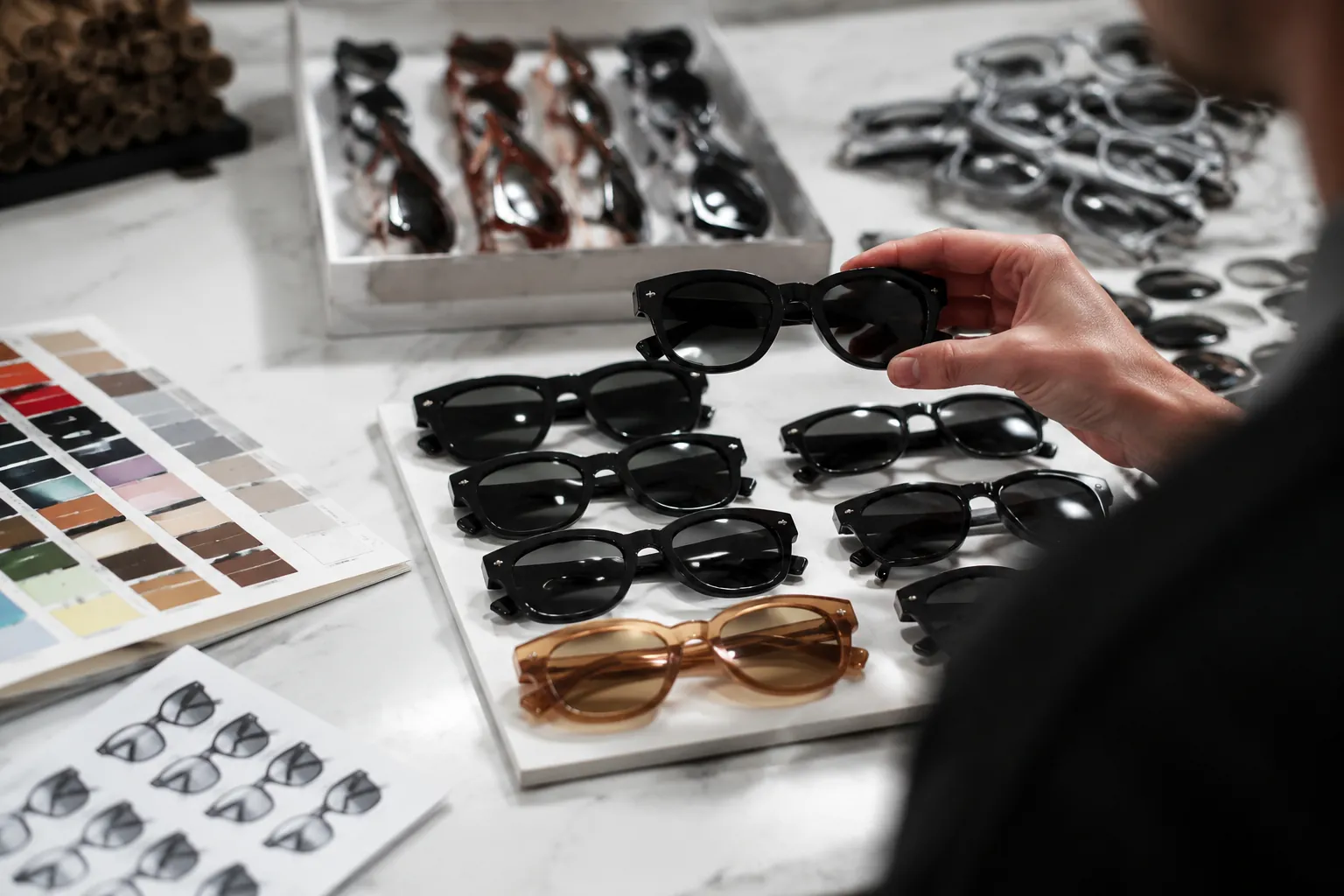
This guide is for promotional buyers, event merchandise teams, importers, agencies, and retailers ordering custom sunglasses for music festivals, outdoor brand activations, beach events, sports weekends, and sponsor giveaways. It shows how to brief a factory clearly, control price, avoid rework, and protect a fixed event date. Use it to specify frame materials, lens performance, logo methods, packaging, compliance documents, inspection points, samples, and shipping timing before thousands of pairs are printed, packed, and hard to fix.
Start With The Event Date And Work Backward
Festival sunglasses are deadline products. If they arrive after the gates open, the low unit price is irrelevant. Start with the required in-hands date. Then work backward and add buffer for sample changes, document review, customs clearance, inland trucking, and inspection holds.
A practical schedule separates sample time, approval time, production time, inspection time, and transit time. Standard custom samples often need about 7-10 days after the buyer confirms artwork, frame reference, lens color, logo method, and packaging. Bulk production commonly takes about 25-35 days after deposit and written golden-sample approval. The exact timing depends on material, lens process, decoration, packaging labor, order quantity, and component availability. Air freight can save time, but it may not suit low-cost giveaway sunglasses. Sea freight needs more calendar room, especially before peak summer events and Chinese New Year.
- Confirm the event date, warehouse arrival date, and latest acceptable delivery date.
- Decide whether the order ships by air, sea, rail, courier, or split shipment before final quoting.
- Reserve time for sample making, buyer review, comments, and revised sample approval if needed.
- Do not release bulk production until the golden sample, artwork, lens, packaging, and carton marks are approved in writing.
- Add time for export booking, commercial documents, local trucking, customs clearance, and final-mile delivery.
If the event is less than six weeks away, simplify the order. Use an existing mold, one frame color, one lens option, one logo position, and standard packing. Avoid custom cartons, mixed assortments, metal plates, special lens coatings, and multiple sponsor logos unless the schedule can absorb extra sampling and correction time.
Choose A Frame That Matches The Use Case
Festival sunglasses get rough treatment. They are dropped on pavement, pushed into backpacks, worn with sunscreen, and left in hot cars or tents. For most bulk promotional orders, an existing injection-molded PC frame is the safest choice for cost and lead time. The tooling already exists. Color setup is simple. Output is efficient.
PC is light, economical, and suitable for high-volume gate handouts. It has a harder feel and less flexibility than TR, so hinge fit and temple alignment need close checks. TR costs more but bends better and can feel more comfortable for repeat wear. Acetate gives a more retail-grade look, with deeper color and better surface finish, but cutting, tumbling, hinge fitting, and polishing add time. Metal frames can look premium, but plating, nose pads, screws, and solder points create more inspection points, especially on rush orders.
| Frame Option | Best Use | Process Detail | Main Risk |
|---|---|---|---|
| PC injection frame | Large giveaways, sponsor handouts | Fast mold cycle, easy color setup, low unit cost | Can feel less premium; check hinge looseness and temple alignment |
| TR flexible frame | Merch tables, repeat-wear items | Better bend recovery and wearer comfort | Higher material cost and slightly longer setup |
| Acetate frame | VIP kits, retail festival drops | Sheet cutting, CNC, tumbling, polishing, hinge setting | Longer lead time and higher labor cost |
| Metal frame | Fashion-led merch, higher price point | Plating, soldering, screw assembly, pad-arm checks | More QC points and higher scratch or plating-defect risk |
For basic festival runs, ask the factory to check temple opening angle, frame symmetry, hinge torque, screw tightness, lens retention, and bridge distortion. Confirm tolerances against the actual frame and decoration process. Promotional eyewear often has wider logo and frame tolerances than premium optical retail products. Write those limits into the approved specification. Do not assume them.
Specify Lenses Beyond Color
Do not order festival sunglasses by lens color alone. A usable lens specification includes UV performance, lens category, visible light transmission, material, coating, and an approved physical color sample. Common outdoor choices include smoke, brown, grey-green, gradient, and mirror lenses. Darker is not always better. If the lens is too dark for evening sets or shaded sponsor areas, attendees may remove the glasses before photos. That cuts brand exposure.
Most promotional sunglasses use PC or AC lenses because they are light and economical. PC generally has better impact resistance. AC is common for budget lenses. For bright outdoor conditions, Category 3 lenses are common. Category 4 lenses are very dark and should not be used for driving-related promotions. Request UV400 protection to 400 nm. Also confirm whether the test report applies to the submitted sample, the approved lens batch, or the final production lot.
- UV400: Specify protection to 400 nm and keep related test reports with shipment records.
- Lens category: Category 3 is common for strong sun; avoid Category 4 for general giveaways that may be used while driving.
- VLT range: Define the visible light transmission target, such as a Category 3 range agreed with the test standard and buyer use case.
- Color approval: Approve a physical lens swatch under daylight instead of relying only on a screen rendering.
- Mirror coating: Require protective packing because mirror surfaces show rub marks, fingerprints, and pressure marks quickly.
Set the required market standard before sampling. For Europe, request testing to CE EN ISO 12312-1. For the United States, request ANSI Z80.3 where applicable. For Australia and New Zealand, request AS/NZS 1067. REACH applies to restricted chemicals in materials, coatings, and decorated parts for the EU market. FDA registration documentation may support U.S. import handling, but it does not replace optical, UV, or labeling requirements. Ask which exact product, lens color, and production batch each report covers.
Select Branding By Cost, Durability, And Surface
Logo decoration is where many fast orders fail. A temple may be curved, glossy, textured, narrow, or slightly flexible. Each surface behaves differently. Put the exact logo method, location, size, color, and tolerance in the specification sheet. A mockup is not enough.
Pad printing is the normal low-cost choice for one- or two-color sponsor logos on plastic temples. It is fast, but very fine text can fill in or lose edge clarity. Screen printing works better for larger flat areas. Laser engraving gives a clean, durable mark on suitable coated metal, metal plates, or selected plastic surfaces, but contrast depends on the material and coating. Heat transfer and full-temple patterns can create stronger visual impact, but they need more sample time and rub testing. Metal logo plates look premium, but they add component sourcing, adhesive or rivet control, and extra inspection.
| Branding Method | Best For | Practical Detail | Risk To Control |
|---|---|---|---|
| Pad printing | Budget sponsor logos | Good for 1-2 colors on PC or TR temples | Small text, ink adhesion, curved placement |
| Laser engraving | Durable premium marks | Works best on suitable coated or metal surfaces | Low contrast on some plastics or coatings |
| Heat transfer | Colorful graphics | Useful for patterns and multi-color effects | Edge lifting, wrinkle marks, and rub resistance |
| Metal logo plate | Retail or VIP merch | Adds a separate component and assembly step | Adhesion, alignment, plating finish, and part tolerance |
Send vector artwork, Pantone or other color references, logo size in millimeters, position measured from a fixed point such as the hinge, and acceptable tolerance. Ask for a physical decorated sample and run a simple rub check before mass production. If the order uses multiple sponsor logos, approve each logo separately. Different artwork sizes and ink colors can behave differently on the same temple.
Understand MOQ, Price Tiers, And Cost Drivers
MOQ and price depend on the frame, lens, logo method, packaging, compliance requirements, and factory setup. A low MOQ can work for buyer samples, influencer kits, boutique festival drops, or small sponsor tests. It will not price like a large run. Setup, ink mixing, fixture alignment, QC, packing, documentation, and administration are spread over fewer units. Price usually improves as quantity rises because setup costs are distributed across more pairs.
Compare total landed cost per usable pair, not only the ex-factory unit price. A cheaper lens with weak packing may arrive scratched. A cheaper logo process may need rework or fail inspection. A mixed-color order may increase sorting labor and carton-label mistakes. Compliance testing, barcodes, hang tags, individual pouches, and carton customization all affect the final price.
- Small test orders: Useful for samples, VIP seeding, small retail tests, and proof of concept, but unit costs are usually higher.
- Local event quantities: Suitable for sponsor packs and limited merch runs when setup cost is still manageable.
- Mid-volume orders: A practical starting point for better production efficiency and more competitive unit economics.
- High-volume orders: Can improve pricing, but require stricter pre-production approval, allocation control, and carton accuracy.
- Complex specifications: Special lenses, multi-color logos, custom packaging, testing, and split shipments can increase cost even at higher volume.
For an accurate quote, provide the frame reference, material, quantity per design and color, lens color, lens category, logo artwork, logo size, decoration method, packaging, required standard, destination country, Incoterms, carton mark requirements, barcode requirements, inspection requirements, and deadline. Without these details, the first price is only an estimate. It is not a production-ready offer.
Match Packaging To Distribution
Festival sunglasses may be handed out at gates, placed in hotel welcome bags, sold at merch tables, packed into sponsor kits, or shipped to multiple event cities. Packaging should match the distribution method. Too much packaging slows handout speed and increases freight volume. Too little packaging causes scratched lenses, bent temples, and complaints.
For budget giveaways, an OPP bag or polybag with required warning text may be enough, depending on destination rules and buyer policy. For merch sales, a microfiber pouch improves perceived value and protects lenses. For retail counters, a paper box, hang tag, barcode label, country-of-origin mark, and required warnings may be needed. For mirror lenses, do not let hard printed cards rub directly against the lens. Add a thin paper separator, sleeve, or pouch.
- OPP or polybag: Lowest cost and fastest packing, but limited retail presentation and limited lens protection.
- Microfiber pouch: Protects lenses and doubles as a cleaning cloth for merch or sponsor kits.
- Paper box: Better for retail-style presentation, but increases carton volume, packing time, and freight cost.
- Hang tag: Useful for UV claims, lens category, barcode, origin, warnings, and brand message.
- Master carton marks: Include style, color, quantity, gross weight, net weight, carton size, carton number, and destination allocation if needed.
Ask for packed-carton photos before shipment and confirm carton strength for the transport route. If sunglasses are split by city, sponsor, or event date, carton labels must match the allocation file exactly. Sorting errors are much easier to prevent before export than after the goods reach an event warehouse.
Build QC Around A Golden Sample
Fast production does not mean loose inspection. It means the checkpoints must be agreed before mass production starts. Define what is acceptable, what must be reworked, and what must be rejected. A signed golden sample is the reference for production, inspection, and dispute resolution.
A workable QC plan starts with incoming material checks, then first-article approval after molding or frame forming, lens color approval, decoration approval, assembly inspection, final random inspection, and packed-carton audit. Keep one signed golden sample at the factory and one with the buyer, agent, or inspection company. Production should match that sample for frame color, lens color, logo size, placement, hinge feel, packing, label content, and carton marks.
- Check frame color, surface scratches, sink marks, bridge shape, temple alignment, hinge movement, and screw tightness.
- Check lens UV performance, tint consistency, coating marks, bubbles, scratches, edge finish, and retention in the rim.
- Check logo adhesion, rub resistance, color accuracy, missing prints, ghosting, and placement tolerance.
- Check packaging count, pouch or bag orientation, warning labels, barcodes, country-of-origin marks, and carton marks.
- Check final cartons for quantity, mixed-color allocation, gross weight, carton condition, and export document consistency.
Discuss tolerances early, including logo position, temple opening angle, frame symmetry, lens gap, screw tightness, lens color variation, and acceptable minor cosmetic defects. List the required compliance standard directly on the purchase order: CE EN ISO 12312-1, ANSI Z80.3, AS/NZS 1067, REACH, or FDA registration documentation as applicable. ISO 9001 and BSCI can support factory management and social compliance review, but they do not replace product-level testing for sunglasses.
Use A Practical 35-Day Production Schedule
The cleanest festival order has a frozen specification and one decision maker. Multiple sponsors changing artwork after sampling can burn critical time. So can unclear packing instructions, late barcode files, incomplete carton marks, or a switch from air to sea freight after production planning has started. Small delays stack up fast.
| Day | Buyer Action | Factory Action | Risk If Late |
|---|---|---|---|
| Day 1-2 | Send specification, artwork, quantity, deadline, destination, and required standards | Confirm quote, mold availability, material, decoration route, and production plan | Wrong price, wrong material, or missed shipping plan |
| Day 3-10 | Review sample and approve changes quickly | Make frame, lens, logo, and packaging sample | Bulk start slips and freight cost rises |
| Day 11-13 | Approve golden sample, confirm documents, and pay deposit | Prepare materials, fixtures, packing items, and line schedule | Material shortage, artwork error, or line delay |
| Day 14-30 | Stay available for production decisions and inspection booking | Run molding or frame forming, lens processing, decoration, assembly, and QC | Rework appears only at final inspection |
| Day 31-35 | Approve final inspection result, documents, and shipment plan | Pack cartons, issue documents, and hand off export shipment | Missed flight, vessel, courier pickup, or event warehouse window |
For urgent jobs, reduce complexity instead of forcing a risky schedule. Use existing molds, standard lens colors, one logo method, standard pouches or bags, and clear carton marks. Freeze the specification early. Approve samples quickly. Confirm compliance requirements before production. That is what protects delivery.
Have a custom sunglasses project in mind?
Send us your styles, target market and quantities and we will return a detailed quote with MOQ, lead time and a sample plan.
Get a QuoteWhy source this from Wenzhou with LumiShades
Wenzhou in Zhejiang Province is widely regarded as China’s eyewear manufacturing capital, producing a large share of the world’s sunglasses. That concentration matters to buyers: a deep local supply chain for acetate sheet, hinges, lens blanks, plating and packaging means shorter component lead times, easier color and material matching, and a workforce with decades of eyewear-specific skill. LumiShades has manufactured in this ecosystem since 2009, and our vertical integration — in-house injection molding, acetate cutting, CNC milling, lens tinting, decoration and quality control — means no part of your order is quietly subcontracted to a workshop you cannot audit.
For international buyers, that vertical control translates into accountability. When a single factory owns every step, defects are traced and fixed at source rather than bounced between vendors, and your specifications survive intact from first sample to bulk. For procurement review, buyers can request process records, approved samples, quality checkpoints and project-specific compliance files before placing a bulk order. Required testing and documentation are confirmed against the destination market and product specification rather than assumed from a generic certificate list. Explore our manufacturing capabilities and quality control process to see how this works in practice.
Frequently asked questions
What is the safest sunglasses spec for a tight festival deadline? Use an existing PC injection frame, one frame color, UV400 lenses, a lens category suitable for the destination use, one temple pad print, and standard OPP bag or microfiber pouch packing. Approve a physical golden sample before bulk production. Keep packaging simple, and avoid special coatings, mixed assortments, and late artwork changes.
Can I order only 50 pairs with a custom logo? Possibly, depending on the factory, frame, and logo method. A small order will usually have a higher unit cost because setup, printing, QC, packing, and administration are spread over fewer pairs. Ask the supplier to confirm MOQ by design, frame color, lens color, and logo version before sampling.
Which compliance standard should I request? Choose the standard by destination market and sales channel. For Europe, request CE EN ISO 12312-1 and consider REACH for restricted chemicals. For the United States, request ANSI Z80.3 where applicable and FDA registration documentation for import handling where relevant. For Australia and New Zealand, request AS/NZS 1067. Ask the supplier to identify the exact product, lens color, and batch covered by each report.
Is pad printing or laser engraving better for festival sunglasses? Pad printing is usually faster and more economical for simple sponsor logos on plastic temples. Laser engraving is more durable on suitable metal, coated, or selected plastic surfaces, but contrast can vary. Send vector artwork, specify logo size and position in millimeters, and approve a decorated physical sample with a basic rub check before mass production.
How do I prevent scratched lenses in bulk delivery? Specify lens inspection, protective bagging or pouches, separators for mirror lenses, and carton packing that prevents pressure on the frames. Do not allow hard hang tags, printed cards, or accessories to rub directly against the lens surface. Ask for packed-carton photos and inspect random packed goods before shipment.
What information should I send for an accurate quote? Send the frame reference, material, quantity per design and color, lens color, lens category, UV requirement, logo artwork, logo size, branding method, packaging type, destination market, required compliance standard, inspection requirements, delivery deadline, Incoterms, shipping method, carton marks, barcode files, and any allocation plan by city or sponsor.
Ready to start?
Explore our aviator sunglasses or request a quote — our sales team replies within 12 hours.
Request a Quote