
Planning Capacity for Sunglass Promotions
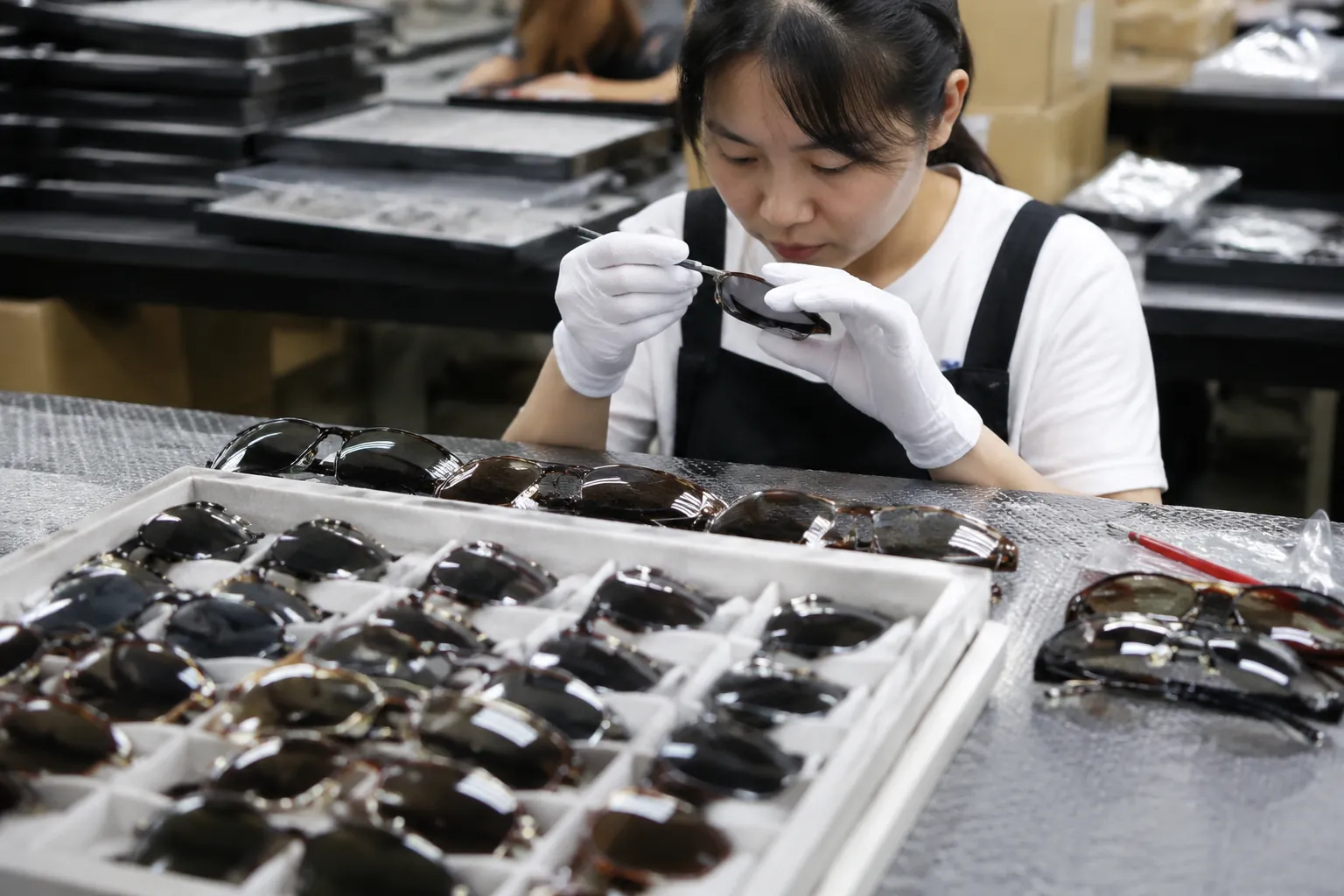
This article is for brand owners, importers, distributors, and retail buyers working to fixed launch dates. The aim is simple: avoid missed promotions, split shipments, and late cost increases by planning factory capacity early. In custom eyewear, design approval is only half the job. The other half is securing time for frame production, lens processing, decoration, assembly, QC, and packing in the weeks that matter. A supplier may be able to make the product. That does not mean the schedule will support on-time shipment, complete delivery, and correct documentation for the target market.
Start with the retail date, not the PO date
Many delayed eyewear programs go off track before bulk production even starts. The usual mistake is to begin with the intended PO date and work forward. For sunglasses tied to a promotion, that logic fails. Start with the first in-store date, ecommerce go-live date, or warehouse delivery date, then count backward through freight, customs clearance, inspection, bulk production, and sample approval.
The exact timing depends on product construction, order size, packaging complexity, inspection requirements, and shipping method. A simple repeat style may need only days for samples. A new custom build with tooling, decoration, and packaging coordination may need weeks. Bulk timing also changes with material, color count, lens treatment, and factory loading. So ask for a project-specific timeline. Do not rely on a generic lead-time promise.
A realistic backward schedule for an ocean shipment usually includes final QC, packing confirmation, bulk production, sample revision, internal sign-off, freight, and customs time for the route. Air freight can shorten transit. It does not remove the need to reserve factory capacity early. If the promotion date is fixed, treat the ex-factory date as fixed too.
- Set the required in-market date by channel, country, or store group.
- Subtract freight time, customs clearance, and domestic delivery time.
- Subtract the factory's confirmed bulk production window after approval.
- Subtract sample development time and buyer review time.
- Reserve the production slot before peak periods fill up.
That last step is where many plans break. Even a capable eyewear factory has finite capacity in molding, frame finishing, lens processing, decoration, assembly, and packing. Wait until every internal stakeholder agrees, and the order may still be accepted. Just not for the ship week you wanted.
Know which parts of the order use the capacity
Not every sunglass order competes for the same bottleneck. A basic injection-molded frame with a standard tinted lens and one-color logo is much easier to run than a style with acetate construction, detailed milling, gradient lenses, multiple decorations, and retail gift packaging. Buyers should ask which workshop or process is most likely to control the ship date for their specific program.
Lead time is set by the slowest loaded process, not by the average promise across the factory. That constraint may be frame production, lens tinting, logo application, assembly, or final packing. It depends on the order mix.
- Injection molding: Common for repeat volume, stable colors, and lower unit cost. Main constraints include mold availability, machine loading, and color-change downtime.
- Acetate cutting and polishing: Often used for more premium positioning, but it usually involves more manual steps. Sheet selection, cutting, polishing, and consistency control can stretch the schedule.
- CNC milling: Useful for detailed bevels, recessed logos, or thicker temples. Precision is higher. Output is slower.
- Lens tinting or coating: Often becomes a bottleneck in large rollouts, especially when an order includes multiple lens colors, gradients, or mirror finishes.
- Decoration: Pad printing, laser marking, hot stamping, and metal logo fitting all need setup time. Mixed-SKU orders with frequent artwork changes often slow down here even when frames are ready.
Ask one blunt question: which process decides my ship week? If the answer is lens processing or decoration, reduce avoidable variation before bulk starts. That protects both schedule and yield.
Use MOQ and price breaks to shape the rollout
MOQ is not just a sales term. It affects how efficiently the factory can buy raw materials, schedule machines, recover setup time, and assign labor. Small quantities can make sense for test programs, influencer capsules, approval sets, or sales samples. But for a regional or chain rollout, think in volume blocks. Unit economics usually improve when setup and handling are spread across more pairs.
In practice, major cost drivers include tooling or setup, material yield, lens processing, logo application, inspection, and packaging complexity. The same frame in one color with one lens tint is usually more efficient than the same total volume split across many low-quantity variants. Buyers often improve margin more by cutting unnecessary SKU complexity than by chasing a tiny unit-price reduction.
| Order structure | Typical use | Factory impact | Approx. price logic |
|---|---|---|---|
| Low MOQ per design | Market test, approval line, niche capsule | Highest setup burden per unit, limited efficiency, weaker material leverage | Highest unit price because fixed setup costs are spread across few units |
| Mid-volume pilot | Regional test, small distributor order | More stable planning for materials, printing, and packing | Better than low MOQ, but still above efficient volume pricing |
| Launch volume | Chain launch, distributor opening order | Improved machine utilization and steadier labor loading | More competitive custom-program pricing with standard packaging |
| High-volume repeat | National promotion, replenishment style, repeat core SKU | Best use of production lines, lens processing, assembly, and carton planning | Strongest unit economics, subject to material, lens, decoration, and packaging specification |
A practical rollout strategy is to simplify what the factory sees while preserving what the shopper sees. Keep one frame platform and vary only where the commercial upside is clear. Use common packaging specs across regions where possible. Standardize the logo method on smaller runs. Every extra variation adds setup time, planning risk, and defect exposure.
Sample approval needs technical checkpoints
Too many buyers treat samples as a visual exercise. That is risky. A production sample should confirm not only appearance, but also material behavior, assembly feel, repeatability, packaging, and the compliance path. What looks fine on one hand-finished prototype may not hold up in volume.
For injection-molded frames, check left-right symmetry, hinge alignment, temple closing position, logo placement, and color consistency under the lighting that matters for retail review. Temple opening resistance should feel consistent across several pieces, not just one. For acetate, check polish quality, lamination lines, bevel definition, wire-core visibility where relevant, and stress around the lens groove. Acetate can look richer. It is also harder to control visually if the standard is vague.
Lenses need the same discipline. Confirm lens category, tint depth, clarity, mirror tone if used, and whether the requested effect can be repeated at scale. A subtle fashion gradient approved on one sample may shift in bulk if the tolerance is not agreed early. Buyers should also match scratch-resistance expectations to the actual lens specification purchased.
- Approve frame material, finish level, and color reference.
- Approve lens tint, category, and any mirror or gradient effect.
- Approve decoration method: pad print, laser marking, hot stamp, or metal plate.
- Approve packaging components, barcode position, inserts, and carton marks.
- Approve cosmetic standard, hinge feel, and assembly consistency.
Written approval records matter. A change to temple artwork may be manageable. A change to lens color or packaging format after process settings are fixed may affect lead time, cost, and inspection criteria. Document which changes are cosmetic and which ones trigger replanning.
Compliance can delay launch if left to the end
For export buyers, compliance is not paperwork for the file. It can decide whether goods ship, clear customs, or can legally be sold in the destination market. Common references in sunglasses include CE EN ISO 12312-1, ANSI Z80.3, AS/NZS 1067, REACH, FDA registration where relevant to the business entity or import process, ISO 9001, and BSCI. The key issue is applicability. Ask for documents that match the exact product, market, and supply-chain requirement. Not every certificate the supplier happens to have.
CE EN ISO 12312-1 is commonly referenced for sunglasses sold in markets that apply that standard. ANSI Z80.3 is commonly relevant for US-market sunglasses. AS/NZS 1067 is commonly relevant for Australia and New Zealand. REACH may apply to material and chemical substance compliance depending on the market and product construction. FDA registration may appear in US import discussions, but buyers should confirm exactly what is required for the product and importer of record with their own compliance team or advisor. ISO 9001 and BSCI relate to management systems and social compliance, not product performance. They are not substitutes for product testing.
The biggest timing mistake is assuming old paperwork automatically covers a new build. A different lens, coating, frame material, or decoration may change what evidence is needed or whether an existing report still applies. Compliance review should happen during sample development, not after export cartons are already being packed.
Ask for compliance review during sample development, especially when you introduce a new lens category, coating, material, or surface finish. It is far less disruptive to correct a sample than to rework completed goods.
Before bulk release, confirm three points: which documents apply to the exact SKU, whether the approved sample matches the tested construction, and whether labeling or warning language changes by market. Those checks are usually faster than fixing a blocked shipment or relabeling stock after arrival.
Stagger chain rollouts instead of forcing one ship date
Large retailers often create avoidable congestion by forcing every SKU, region, and store cluster under one delivery date. It sounds tidy. On the factory side, it can overload decoration, final packing, and inspection in the same week. The risk rises when one program includes multiple frame colors, different logo methods, gift-box packaging, and region-specific barcode labels.
A staggered rollout is usually more durable. Ship core sellers first, fashion variants second, and replenishment-ready styles third. This gives the factory room to run longer, more efficient batches on high-volume items while lower-volume variants move through decoration and packing in a controlled sequence.
For example, a chain launch does not always require every store to receive every SKU on day one. Priority stores can launch first with core styles, while secondary stores receive extended colorways later. That structure often improves service level and cost because the highest-volume styles move through more efficient production blocks.
| Rollout model | Buyer logic | Factory effect | Risk level |
|---|---|---|---|
| All stores, all SKUs, one date | Maximum launch uniformity | High congestion in decoration, QC, and packing | Highest risk of partial shipment or labeling errors |
| Core styles first, variants second | Protects launch timing on priority volume | Longer production runs on key SKUs and smoother secondary setups | Lower risk with better cost control |
| Regional wave launch | Aligns with freight schedules and local sales calendars | More manageable packing, documentation, and shipping splits | Good balance of speed and operational clarity |
Even when a factory controls multiple processes internally, the buyer still needs to define shipping logic early: by SKU priority, by country, by store tier, or by launch wave. Leave that decision until final packing, and warehouse staff end up making choices that should have been made commercially weeks earlier.
Build a slot-booking timeline buyers can use
Capacity planning becomes useful only when the timeline is translated into actions. Buyers do not need theory. They need a calendar that reflects how sunglasses are actually sampled, approved, produced, inspected, and shipped.
| Stage | Recommended timing | Buyer action | Main risk if delayed |
|---|---|---|---|
| Initial forecast and design brief | Several months before target ship date for custom programs | Define style count, estimated volume, target market, compliance requirements, and packaging level | Wrong capacity reserved or no capacity reserved |
| Sample development | After brief confirmation and artwork submission | Submit artwork, color direction, lens requirements, logo method, and packaging details | Repeated revisions consume time needed for bulk |
| Sample approval and slot booking | As soon as commercial and technical approval is complete | Approve sample, freeze key specs, and reserve the production window | Preferred ship week already committed to other orders |
| Bulk production | Based on the confirmed factory schedule | Release deposit if required, confirm SKU quantities, and lock shipping split | Material replanning, workshop rescheduling, or split shipment risk |
| Final QC and shipment prep | Before ex-factory date and booking cutoff | Confirm inspection plan, carton labels, and booking details | Relabeling, packing errors, or shipping delay |
This schedule works because it follows the real factory sequence: frame production, lens processing, decoration, assembly, QC, and packing. Delays introduced during sampling, artwork approval, or packaging confirmation do not disappear later. They compress the bulk schedule and raise the chance of mistakes.
Before committing the launch, buyers should ask a short set of direct questions:
- Which process is most likely to bottleneck this style: frame production, lens processing, decoration, assembly, or packing?
- Can capacity be reserved against forecast volume before the final SKU split is fixed?
- Which sample changes would most affect lead time: lens tint, frame color, logo method, or packaging?
- Which compliance documents apply to this exact construction and target market?
- Can shipments be split by region, store group, or SKU priority without disrupting the full order?
- At what quantity break does the program become materially more efficient?
Good suppliers answer these questions with process detail, not vague assurances. Good buyers use those answers to build a launch plan that is commercially realistic and operationally workable. That is what keeps a sunglass promotion on time.
Have a custom sunglasses project in mind?
Send us your styles, target market and quantities and we will return a detailed quote with MOQ, lead time and a sample plan.
Get a QuoteWhy source this from Wenzhou with LumiShades
Wenzhou in Zhejiang Province is widely regarded as China’s eyewear manufacturing capital, producing a large share of the world’s sunglasses. That concentration matters to buyers: a deep local supply chain for acetate sheet, hinges, lens blanks, plating and packaging means shorter component lead times, easier color and material matching, and a workforce with decades of eyewear-specific skill. LumiShades has manufactured in this ecosystem since 2009, and our vertical integration — in-house injection molding, acetate cutting, CNC milling, lens tinting, decoration and quality control — means no part of your order is quietly subcontracted to a workshop you cannot audit.
For international buyers, that vertical control translates into accountability. When a single factory owns every step, defects are traced and fixed at source rather than bounced between vendors, and your specifications survive intact from first sample to bulk. For procurement review, buyers can request process records, approved samples, quality checkpoints and project-specific compliance files before placing a bulk order. Required testing and documentation are confirmed against the destination market and product specification rather than assumed from a generic certificate list. Explore our manufacturing capabilities and quality control process to see how this works in practice.
Frequently asked questions
How early should I book production for a seasonal sunglasses promotion? Start with the in-market date and count backward through transit, customs, final inspection, production, and sample approval. For a fully custom program, buyers often begin planning several months ahead because sample development, revisions, packaging approval, and compliance review can each add time. The practical move is to ask the supplier for a dated timeline covering sample submission, sample approval, slot booking, bulk start, inspection, and ex-factory date, then align your internal approvals to those milestones.
Can I launch with 50 pairs per design and reorder later? You can, but treat that quantity as a market test or approval run, not an efficient commercial launch. Small quantities usually carry the highest unit cost because setup, decoration, handling, and packaging work are spread across very few units. If you expect to reorder, ask in advance whether the sample or pilot run can be matched exactly in materials, lens treatment, packaging, and logo method, and ask what volume level produces a meaningful improvement in price and production efficiency.
What usually causes bulk delays after the sample is approved? The most common causes are late changes to lens tint, frame color, decoration method, packaging, labeling, or shipment split. These changes usually hit the final production stages, where schedules are already tight. To reduce risk, freeze the bill of materials, artwork, barcode files, carton marks, and packing logic before bulk starts, and document which changes would require rescheduling or re-approval.
Which standards should I ask about for export markets? Ask only for documents that apply to the exact product and destination market. Common references in this category include CE EN ISO 12312-1, ANSI Z80.3, AS/NZS 1067, REACH, FDA registration where relevant, ISO 9001, and BSCI. The practical step is to send the supplier your target market, sales channel, product specification, and importer requirements, then confirm with your own compliance team which product tests, declarations, and labeling rules are actually required before you release bulk production.
Is it better to ship all stores at once or stagger the rollout? For many chain programs, staggering is safer and often more efficient. Shipping core styles first and lower-volume variants second reduces bottlenecks in decoration, packing, and inspection, and it helps concentrate volume on the SKUs that matter most for launch. A useful way to decide is to rank stores and SKUs by revenue importance, then ask the supplier whether a phased shipment by priority, region, or wave will improve schedule security without adding avoidable freight complexity.
Ready to start?
Explore our round sunglasses or request a quote — our sales team replies within 12 hours.
Request a Quote