
Sunglasses Factory Tour Checklist for Serious Buyers
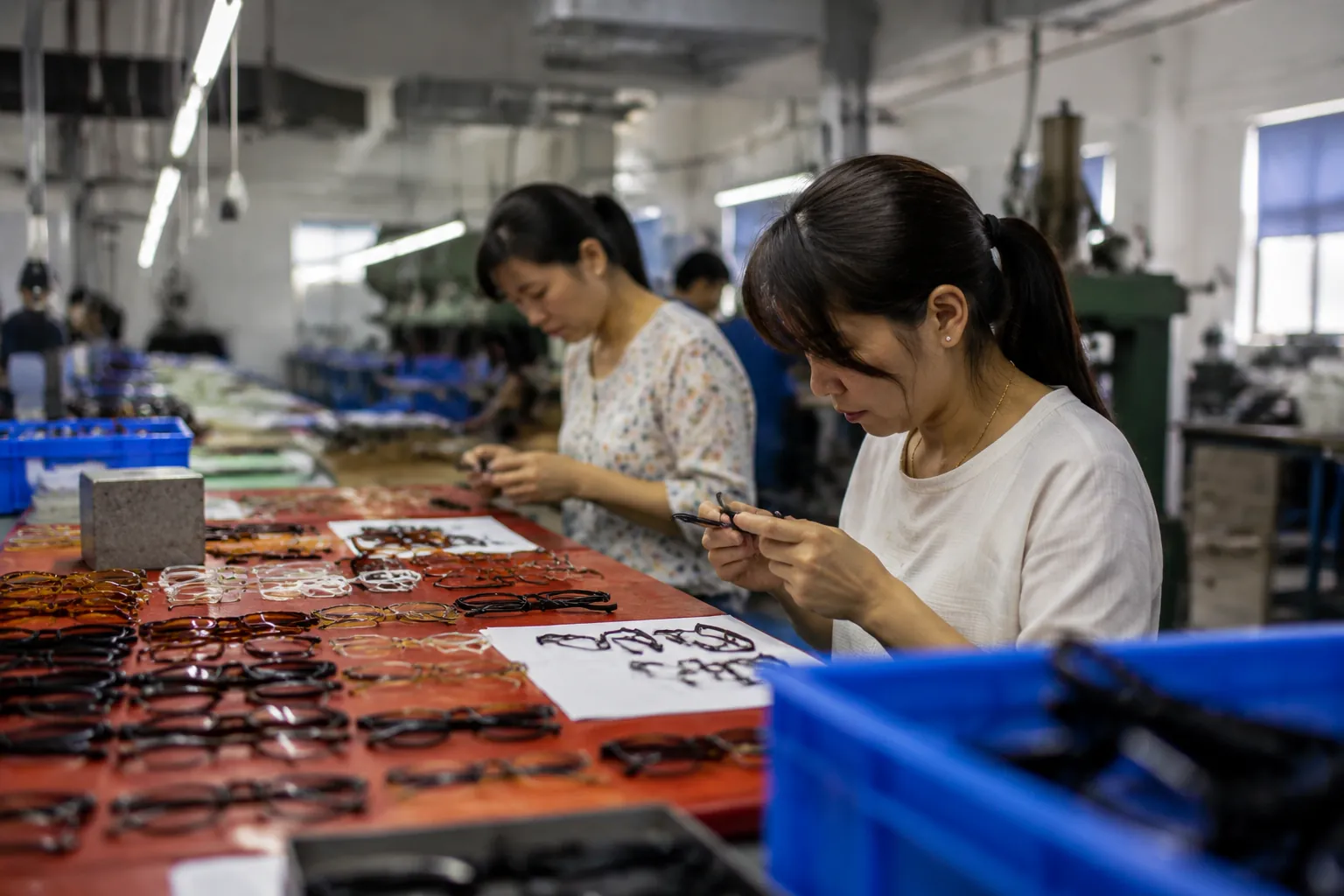
This guide is for brand owners, importers, distributors, and retail buyers who need to qualify a custom sunglasses supplier before placing a volume order. A factory tour is not a showroom visit. It is a control check. You are there to verify whether the supplier can repeat approved quality across 300, 1,000, or 5,000 pairs without losing control of fit, finish, lead time, or compliance. The most useful visit follows one live order across the floor and checks where defects actually begin: frame forming or machining, lens processing, decoration, assembly, and inspection. The examples below reflect common control points in custom sunglasses production, whether the supplier runs them in-house, outsources them, or uses a mix of both.
Start with the production map, not the sample room
A polished showroom proves only that the supplier can make attractive samples. Bulk production is a different test. Buyers need to see whether the factory controls the steps that create delays, remake cost, or quality drift. For sunglasses, that usually means frame production, lens processing, decoration, assembly, and final inspection.
Start the tour with the process flow for one live order and its production sheet. You should be able to review the approved sample, bill of materials, color reference, logo position, packing standard, and planned shipment date. If a supplier says it runs injection molding, acetate cutting, CNC milling, lens tinting, decoration, or QC in-house, verify each station on the floor. Do not rely on claims alone. In-house capacity reduces handoff risk only if records are current and operators actually follow them.
- Ask which parts are made in-house and which are purchased, such as hinges, screws, nose pads, pouches, cartons, polarizing film, or specialty lenses.
- Check whether the pre-production sample and the production sheet match on eye size, bridge, temple length, lens category, logo placement, and packaging details.
- Ask for lead-time assumptions for the exact program. Timing depends on mold status, material availability, decoration method, packaging complexity, and approval speed.
- Confirm MOQ and price breaks early. A low MOQ may work for existing molds and simple branding, but the unit cost still has to cover setup, inspection, and packing work.
- Check whether the factory tracks rework, rejects, and remake causes by order or by process. Records matter more than promises.
If the visit jumps from the sample room to finished cartons, take that as a warning. You need to see where the product can fail before assembly hides the evidence.
Injection molding: watch process control, not machine count
Injection molding is where many plastic-frame problems start: sink marks near thick sections, warpage at the front curve, visible parting lines, brittle temples, unstable hinge fit, and lot-to-lot color variation. More machines do not mean better control. Resin handling, mold condition, first-piece approval, and dimensional discipline do.
Ask to inspect molded fronts and temples before polishing or assembly. Look closely at the bridge, end pieces, hinge seat, and temple tips. These areas usually show stress and dimensional drift first. On a controlled line, the factory should be able to explain target dimensions and inspection frequency, including first-off approval at setup, scheduled in-process checks, and extra checks after color changes or mold maintenance.
- Check resin identification, drying, and storage. Poor drying can cause splay marks, brittleness, or haze. Mixed resin lots can create color drift.
- Ask how first-shot and first-off samples are approved after mold setup. The operator should compare them with a signed reference or approved standard, not memory.
- Inspect gate trimming and parting lines. Excess flash or rough trimming usually means more handwork and less consistent finish later.
- Ask how mold maintenance is scheduled and recorded. Wear around hinge and bridge areas often creates fit problems before mold damage is obvious.
The real question is simple: can the factory hold stable lens-fitting dimensions across the whole run, not just the first tray? If groove areas or hinge seats drift, assembly time goes up, rejection goes up, and final alignment gets less stable. This is also where pricing starts to make sense. Small custom runs carry setup cost, color-change loss, and slower approval time, so they usually cost more per pair than repeat orders on the same mold and color.
Acetate cutting and CNC milling: inspect symmetry, groove quality, and rework discipline
Acetate looks premium because of its color depth and polish, but it is less forgiving than many buyers assume. Sheet selection, cutting orientation, CNC accuracy, tumbling, polishing, and heat forming all affect appearance and fit. Poor acetate work often shows up as asymmetrical rims, uneven bevels, visible cutter marks, chipped hinge pockets, or temples that open unevenly.
During the tour, ask to see the acetate sheets before cutting and compare them with milled fronts and temples. Pattern-heavy tortoise or laminated sheets need careful orientation. If left and right temples are cut from unrelated areas without visual control, the finished pair can look mismatched even when the dimensions are technically correct.
- Check whether sheet thickness matches the design intent. Thin fashion profiles need different milling depth and polishing time than thick retro frames.
- Inspect lens grooves and bevel areas closely. Rough or inconsistent grooves create lens-fit stress, gaps, or cracking during insertion.
- Look at hinge pockets after CNC milling. Chipping or rough edges weaken assembly and are costly to hide later.
- Observe polishing stations. Skilled hand-finishing is normal, but heavy manual correction often points to poor upstream accuracy.
- Ask how many fronts in a typical batch need re-polish, re-bending, or rejection before assembly, and how those causes are recorded.
A good acetate supplier does not pretend rework never happens. It tracks why it happens. Ask whether problems usually come from sheet variation, tool wear, heat-forming distortion, or polishing over-cut. That answer tells you more than any sales pitch.
Lens tinting and lens fit: verify optical consistency, not only color
Many buyers focus on lens color because it is easy to judge in a showroom. The bigger commercial risk is inconsistency in transmittance, tint tone, coating adhesion, and lens-to-frame fit. A lens that looks acceptable on the table can still trigger claims if the next shipment is darker, greener, or more reflective than the approved reference.
If the supplier offers in-house tinting, ask how tint recipes are recorded and how master samples are stored. Approved color should be checked under controlled lighting, not against memory or a phone photo. Then inspect lenses both before insertion and after insertion. Cosmetic quality often changes during handling, edging, or fitting.
| What to check | Why it matters | What to ask on the tour |
|---|---|---|
| Lens color consistency | Reorders must match display stock and prior shipments | Compare current production with an approved master under the same light source |
| Lens fitting into frame | Poor fit causes stress cracks, gaps, and pop-out risk | Ask how groove size and lens edge are checked before assembly |
| Surface quality | Scratches, haze, and flow lines drive returns fast | Inspect loose lenses and assembled pairs, not only packed goods |
| Compliance records | Retailers and importers often need model-linked evidence | Ask which reports or declarations apply to the exact style, lens, and material combination |
Keep cosmetic approval separate from compliance approval. They are not the same decision. A lens may look right and still need documentation tied to the exact lens category, material, and coating. Useful checkpoints include CE EN ISO 12312-1, ANSI Z80.3, AS/NZS 1067, REACH declarations for relevant materials, FDA registration where relevant to the supplier record, and whether ISO 9001 or BSCI certificates are current and issued to the entity you are actually buying from.
Decoration and branding: small details drive rejects
Logo application is one of the most common failure points on first custom orders. A 1-2 mm placement drift can make a private-label frame look careless. Ink can pass a quick visual check and still rub off in transit. Metal logo plates can add perceived value, but poor recess depth, weak adhesive choice, or bad insertion angle quickly turn them into a defect source.
Suppliers may offer pad printing, laser engraving, hot stamping, or metal logo plates. Each method has a different cost, speed, and durability profile, so inspect the actual line used for your order rather than approving artwork in isolation.
| Decoration method | Best use | Main risk to inspect |
|---|---|---|
| Pad printing | Cost-effective logos on temples or selected lens areas | Ink rub-off, fuzzy edges, weak opacity, position drift |
| Laser engraving | Permanent mark on suitable plastic or metal surfaces | Burn marks, low contrast, inconsistent depth |
| Hot stamping | Metallic or premium visual effect on selected surfaces | Foil lift, incomplete transfer, edge breakage |
| Metal logo plate | Higher perceived value on branded fashion frames | Crooked insertion, poor bond, uneven recess depth |
Ask to see the first approved decorated sample beside bulk units from the line. Then go deeper. Pull units from several cartons or trays, especially after setup changes. Decoration defects often cluster when pads wear, jigs shift, curing time changes, or operators speed up to recover schedule.
Also check packaging interaction. A logo can pass line inspection and still fail after rubbing against pouch fabric, tissue, or neighboring frames in transit.
Assembly and fit: this is where build quality shows
Assembly is where upstream accuracy gets tested in the finished product. Handle assembled samples on the line, not just a sales sample in the meeting room. Open and close the temples repeatedly. Check hinge smoothness, front alignment, lens seating, and overall hand feel. Build quality is obvious once you touch the product.
- Check temple symmetry on a flat surface and again by hand. Some frames sit flat yet still feel twisted during wear.
- Inspect screw torque and hinge action. Over-tight hinges feel stiff and can stress acetate or injected fronts; under-tight hinges wobble quickly in retail handling.
- Look closely at lens seating around the rim. Small gaps or stress points turn into warranty claims later.
- Inspect nose area finishing, especially flash, sharp edges, polishing residue, or rough contact points.
- Ask how heating and shape correction are controlled before final packing, especially for acetate styles.
For injected frames, ask how alignment is checked after lens insertion, since lens pressure can slightly distort a front if dimensions are marginal. For acetate, ask how long frames rest after heating and bending before final inspection. Assembly is not just joining parts. It is where weak control from earlier stages becomes visible.
Final QC, compliance, and shipment readiness
Final QC matters only if it sits on top of real in-process control. If inspection happens only at the packing table, the factory is catching defects too late. Strong suppliers build checks into molding or milling, lens preparation, decoration, assembly, and packing, then use final QC to catch escapes and verify shipment accuracy.
Buyers should also verify how shipment decisions are made. Ask what happens if a logo issue is found shortly before shipment, or if one lens lot fails appearance inspection. A reliable factory has a documented release process, remake logic, and escalation path. It does not ship under deadline pressure and hope for the best.
- Ask for the final inspection checklist used before carton sealing.
- Confirm the sampling method and how defects are classified: critical, major, and minor.
- Verify carton marks, assortment counts, barcode or label placement, pouch and leaflet count, and master-carton packing method.
- Match compliance documents to the actual shipped style, lens, and material combination.
Keep compliance discussions factual. For different markets, buyers may need evidence tied to CE EN ISO 12312-1, ANSI Z80.3, or AS/NZS 1067. Material declarations such as REACH can also matter. FDA registration may appear in a supplier document pack, but it is not a substitute for product-specific performance testing. ISO 9001 and BSCI speak to management systems and social compliance, not whether a particular sunglass model meets optical requirements.
Before deposit or balance payment, check the timeline against the actual process. Sample and bulk timing depends on existing tooling, raw-material availability, artwork approval, packaging complexity, and whether any step is outsourced.
A buyer checklist for the factory walk-through
If you only have one hour on site, focus on the checkpoints that expose control problems fast. The list below helps buyers avoid getting distracted by polished displays and confident sales talk.
- Production flow: Can the factory show one live order moving through real stations, with matching records?
- Material control: Are resin, acetate sheets, lenses, hinges, logos, and packaging traceable by batch or lot?
- Machine discipline: Are molding, CNC, tinting, and printing stations organized and running with approved references?
- In-process inspection: Does the team check dimensions, appearance, and fit before final assembly?
- Decoration accuracy: Are logos consistent in position, finish, color, and adhesion?
- Compliance clarity: Can the supplier state exactly which reports apply to the styles you plan to buy?
- Order logic: Do MOQ, sample cost, unit price, and lead time make sense together?
That last point matters. A factory offering low MOQs, quick samples, and strong volume pricing may sound attractive, but only if the production floor supports the promise. Trust the line, the records, and the operators' answers more than the conference-room pitch.
Have a custom sunglasses project in mind?
Send us your styles, target market and quantities and we will return a detailed quote with MOQ, lead time and a sample plan.
Get a QuoteWhy source this from Wenzhou with LumiShades
Wenzhou in Zhejiang Province is widely regarded as China’s eyewear manufacturing capital, producing a large share of the world’s sunglasses. That concentration matters to buyers: a deep local supply chain for acetate sheet, hinges, lens blanks, plating and packaging means shorter component lead times, easier color and material matching, and a workforce with decades of eyewear-specific skill. LumiShades has manufactured in this ecosystem since 2009, and our vertical integration — in-house injection molding, acetate cutting, CNC milling, lens tinting, decoration and quality control — means no part of your order is quietly subcontracted to a workshop you cannot audit.
For international buyers, that vertical control translates into accountability. When a single factory owns every step, defects are traced and fixed at source rather than bounced between vendors, and your specifications survive intact from first sample to bulk. For procurement review, buyers can request process records, approved samples, quality checkpoints and project-specific compliance files before placing a bulk order. Required testing and documentation are confirmed against the destination market and product specification rather than assumed from a generic certificate list. Explore our manufacturing capabilities and quality control process to see how this works in practice.
Frequently asked questions
What is the most important area to inspect if I have limited time? Start with one live order and follow it through unfinished parts, not the showroom. Prioritize four checkpoints: frame parts before polishing or assembly, loose lenses before insertion, decoration in process, and final QC records for the same order. At each point, compare what you see against the approved sample and production sheet. If the factory cannot show matching documents, process controls, and real in-process inspection, treat that as a sourcing risk.
Is a 50-pair MOQ realistic for custom sunglasses? It can be realistic for private-label programs based on existing molds, standard lens options, and simple branding. It is less realistic for projects that need new molds, special acetate patterns, custom hardware, or complex packaging. Ask the supplier to separate cost drivers clearly: tooling if any, sample charges, decoration setup, packaging cost, and unit price by quantity break. Then confirm whether the same process controls used for larger orders will still apply at the smaller MOQ.
How should I verify compliance claims from a supplier? Ask for documents linked to the exact product configuration you plan to buy: frame style, lens type, lens category, coating, and material where relevant. For sunglasses, common references include CE EN ISO 12312-1, ANSI Z80.3, and AS/NZS 1067, plus REACH declarations for relevant materials. If the supplier shows FDA registration, treat it as a company record only, not proof that the product meets sunglass performance requirements. Also check whether ISO 9001 and BSCI certificates are current and issued to the same legal entity shown on your quotation, invoice, and factory documents.
What usually causes delays on custom sunglass orders? The most common causes are tooling work, sample revisions, unapproved logo artwork, packaging changes, late material arrivals, and outsourced components that arrive late or miss spec. During the tour, ask which steps depend on outside suppliers and which approvals must be completed before bulk starts. Then ask to see the production schedule for a live order so you can judge whether the supplier plans around real bottlenecks or only gives sales-side lead times.
What defects should I pull from cartons during final inspection? Pull units from different cartons, different layers, and if possible different production times. Check frame alignment, hinge tension, lens scratches, lens-fit gaps, logo position, color mismatch, polishing marks, sharp edges, and packing accuracy. Compare a few units directly to the approved sample and packing standard, not only to each other. If defects cluster in one carton or one layer, ask the factory to trace that batch back to the production date, shift, or workstation before shipment is released.
Ready to start?
Explore our cat-eye sunglasses or request a quote — our sales team replies within 12 hours.
Request a Quote