
Core Lens Colors That Reorder Without Surprises
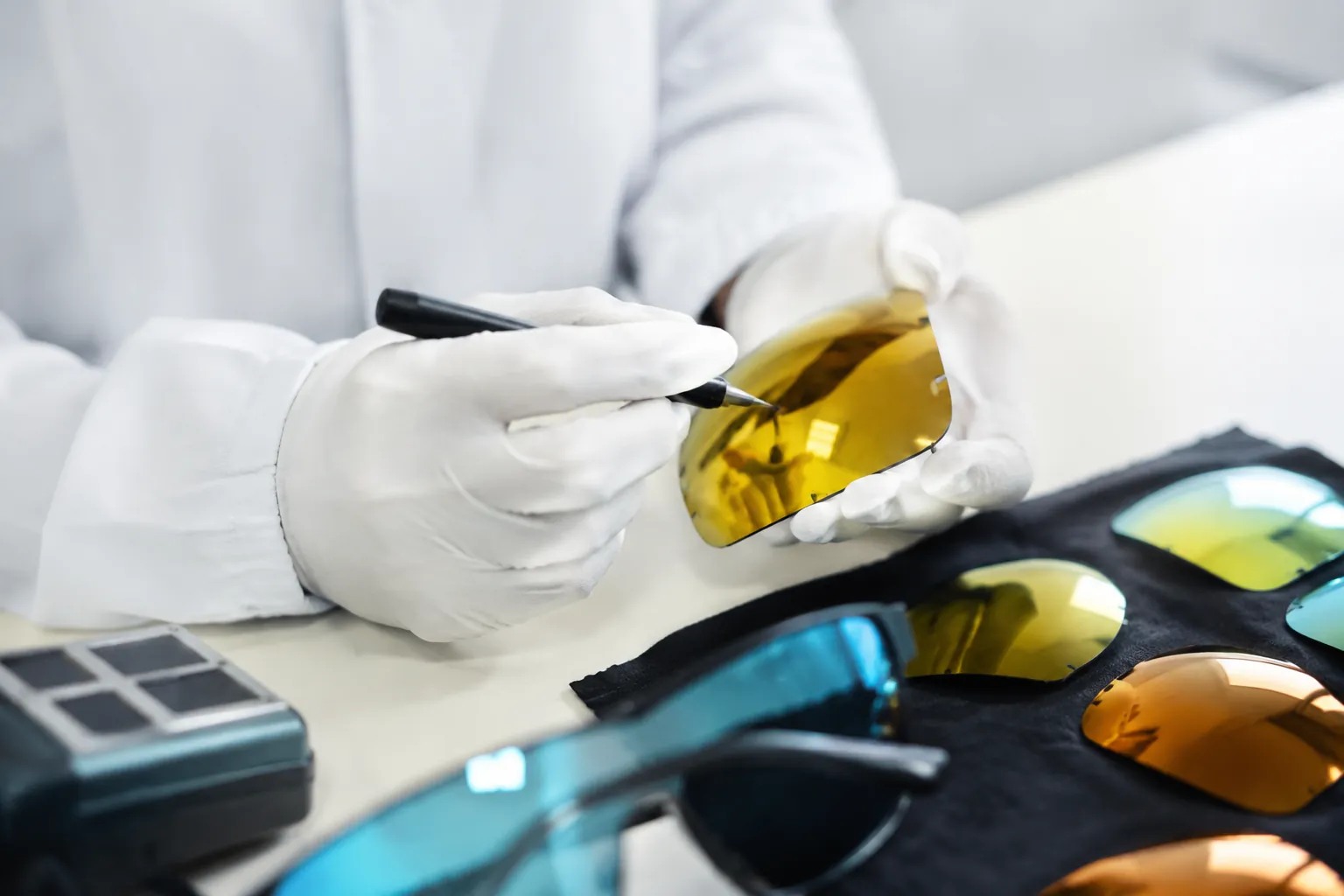
This guide is for brand owners, importers, distributors, and retail buyers who need lens colors they can repeat without drama. The key sourcing question is not which tint looks best on launch day. It is whether the same color can be reproduced across frame types, lens materials, and future lots without drifting too dark, too warm, or too green. Lock a disciplined core lens palette early and you cut approval rounds, simplify QC, and make replenishment easier to manage.
Start with repeatability, not trend
Many buyers start with looks. Smoke feels modern, brown feels warm, green feels classic, and G15 signals heritage. That helps merchandising. It does not solve sourcing.
A core lens color should first be judged on repeatability. Can the supplier reproduce the same visual effect, at the same visible light transmission target, on the same material, with the same coating stack, on a later production run? That is the real test.
For a private-label line, core colors need to do three jobs at once: work across multiple frame families, sell to a broad customer base, and stay within an agreed visual tolerance from lot to lot. Most buyers are better off building around a small set of dependable carryover colors first. Add fashion tints later, after the core shades are stable.
One rule helps: if a color is described only as "nice smoke" or "classic green," it is not a production color. It is a sample impression. A production color needs an approved reference sample, a lens material callout, a VLT target or range, and a defined inspection method.
That discipline matters because lens color shifts for reasons that have nothing to do with design intent. Material differences, coating changes, base-curve changes, and loose approval standards between the sample room and bulk production can all move the result.
What smoke, brown, green, and G15 do commercially
Each core lens color solves a different commercial problem. Decide the role first. Then assign the color to the collection.
| Lens color | Best commercial use | Typical VLT target | Main visual effect | Repeatability risk |
|---|---|---|---|---|
| Smoke | General-purpose carryover SKU | 12% to 18% | Neutral view, easiest cross-style use | Low to moderate |
| Brown | Lifestyle, driving, warm-tone assortments | 12% to 20% | Warmer contrast, softer cosmetic look | Moderate |
| Green | Classic metal programs, heritage shapes | 10% to 18% | Balanced contrast, traditional sunglass tone | Moderate |
| G15 | Aviators, navigators, military-inspired styles | 12% to 15% | Grey-green view with familiar outdoor feel | Moderate to high if spec is vague |
Smoke is usually the safest first color. It works across black, crystal, tortoise, bright injected colors, and most metal finishes. If you want one lens color that can sit in square acetate, wrap sport, and pilot frames, smoke is usually the lowest-risk option.
Brown performs well in lifestyle channels because it complements many skin tones and pairs naturally with tortoise, honey, champagne, and gold frames. The risk is drift. Brown can slide toward red, amber, tea, or plum if the process window is not controlled.
Green and G15 should not be treated as interchangeable PO language. Generic green can run from olive to yellow-green to darker forest tones. G15 usually points to a more specific grey-green appearance linked to classic sunglass programs. If a PO says only "green lens," the supplier still has room to interpret the target differently from the buyer.
A buyer framework for the core set
Use a simple three-factor screen: reorder risk, sell-through breadth, and cross-style fit. This keeps lens-color decisions commercial, not purely design-led.
- Choose one anchor color. For most brands, that is smoke in the 12% to 18% VLT range. It usually offers the widest frame compatibility and the easiest replenishment path.
- Add one warm option. Brown is often the second color because it broadens appeal without creating a separate merchandising story.
- Add one heritage option only where it earns its place. Use green or G15 on aviators, navigators, and classic metal styles rather than forcing it across the full range.
- Match color count to order depth. Every extra lens color creates another SKU, another approval reference, and another QC standard to manage.
- Add colors only when the line can support them. A broader palette makes more sense once order volume, sell-through data, and reorder discipline are established.
A practical launch example makes the tradeoff clear: six styles in two lens colors produce 12 SKUs and concentrate order volume. The same six styles in four lens colors produce 24 SKUs, more retained samples, more QC references, and more chances for mismatch on repeat orders.
For many buyers, a stable starting lineup is simple: smoke across most acetate and injected shapes, brown on selected lifestyle styles, and G15 only on classic metal frames. Enough range. Less tint-control noise.
Where color drift starts in production
Lens inconsistency rarely comes from one dramatic failure. It usually comes from several small process shifts stacking up. Buyers who understand that can write better specs and ask better questions during sampling.
- Base material behavior: Polycarbonate, nylon, TAC, and CR-39 do not absorb, transmit, or display tint the same way. A color approved on one material should not be assumed to look identical on another.
- Lens thickness and curvature: A flatter fashion lens and a higher-wrap sport lens can read differently even when the nominal tint target is the same. Edge thickness can make the lens appear darker, especially on wraps.
- Tint process control: Small changes in dye time, bath temperature, or process consistency can alter the final appearance, particularly on brown and green families.
- Coating stack: Hard coating, mirror treatments, anti-reflective coatings, and hydrophobic topcoats all affect perceived color. Approve the full lens build, not only the base tint.
- Frame interaction: Frame finish changes how the lens is perceived. Black, crystal, tortoise, shiny gold, matte gun, and translucent colors can all shift the apparent warmth or coolness of the same lens.
That is why the approval sample should match the intended production build as closely as possible: same lens material, same base curve, same thickness range, same coating stack, and ideally the same frame family. A loose lens chip is useful early on. It is not a final production standard.
If color consistency matters, confirm how the factory will retain the approved reference and how bulk production will be checked against it before shipment.
How to write lens specs factories can follow
Vague instructions create avoidable variation. A usable lens-color spec should define the color target, product build, and inspection method in language that production and QC teams can both use.
| Spec item | Weak instruction | Better instruction |
|---|---|---|
| Color name | Smoke lens | Neutral smoke matched to approved reference sample |
| Transmission | Dark lens | VLT target 15% with agreed tolerance, aligned to market requirement |
| Material | Standard lens | 1.1 mm TAC polarized or PC non-polarized, same as approved sample |
| Coating | With mirror | Silver flash mirror over smoke base with backside AR if approved |
| Inspection | Match sample | Visual check under controlled white light against retained master sample |
Good buying discipline also needs process detail. Ask the supplier to retain one sealed factory reference sample per core color, record the exact lens material, state whether the lens is polarized or non-polarized, and note the final coating stack on the PO and approval sheet. If frame finish is important to the visual result, include that in the approval record too.
Compliance needs to be mapped early. Depending on the market and product category, buyers may need to align the final build with CE EN ISO 12312-1, ANSI Z80.3, AS/NZS 1067, REACH, and applicable FDA registration requirements. Keep the practical rule in view: the approved lens build should match the tested and shipped lens build. Change tint depth, material, or coating after testing, and you create avoidable compliance and claim risk.
Color strategy by frame family
Not every lens color travels well across every frame type. This is not just a design issue. It is a commercial one.
Injected sport frames usually carry smoke best. The neutral view supports active use, and smoke reads cleanly against black, white, neon, or two-tone molded frames. On higher-wrap shapes, brown can look heavier at the edge, so it is often better reserved for sport-lifestyle hybrids rather than highly technical wraps.
Acetate fashion frames usually support smoke and brown equally well, but the pairing should follow the acetate tone. Brown often works well with tortoise, olive, honey, champagne, and translucent tea acetates. Smoke tends to look cleaner in black, crystal, grey fade, and icy transparent colors. Because rim depth and bevel can affect how dark the mounted lens appears, approve color in the actual frame whenever possible.
Metal aviators and navigators are where green and G15 usually make the most sense. Customers often expect a classic grey-green appearance in those silhouettes. If that familiar aviator effect is the goal, the development brief should say G15-style grey-green and tie it to an approved reference, not leave it as generic green. Gold, silver, and gunmetal finishes can each influence the perceived tone, so frame finish should be locked before final lens approval.
A useful rule: do not force one lens color across every frame family just to simplify the line sheet. It may tidy the catalog. It can also weaken sell-through and create avoidable product compromises.
QC and compliance checks for cleaner reorders
Lens color decisions affect more than appearance. They affect how easily a program can be checked, documented, and repeated.
At low volumes, each extra tint increases sampling load, retained-sample management, and the number of visual standards the QC team must control. For many new private-label programs, concentrating volume into two core colors is more manageable than offering several shades with limited order depth.
A practical operating method is straightforward: keep a sealed approval sample for each core color, record the lens material and coating stack on the PO, require the supplier to keep a factory counter-sample, and review pre-production or in-line photos under controlled lighting before bulk shipment. Simple process. Fewer reorder disputes.
Supplier credentials should also be checked carefully and described accurately. If a factory claims ISO 9001, BSCI, FDA registration, or product testing to CE EN ISO 12312-1, ANSI Z80.3, or AS/NZS 1067, ask for current documentation and confirm exactly what it covers. Do not assume a general factory certificate proves that every lens build, frame style, or finished sunglass model meets the required market standard.
The goal is not paperwork for its own sake. The goal is alignment: approved sample, tested build, inspection method, and shipped product all matching from first order to reorder.
A practical starting assortment
If you are building or rebuilding a core sunglass line, keep the lens program controlled and easy to repeat.
- Use smoke as the main carryover lens. It is usually the most versatile option across sport, fashion, and broad commercial programs.
- Add brown for warm-tone collections. It is a strong second color for tortoise acetate, gold hardware, and driving-oriented lifestyle styles.
- Use G15 selectively. Put it on aviators, navigators, and classic metal shapes where the customer already expects that grey-green look.
- Use plain green only with intent. Do not substitute it casually for G15 without approving the visual difference in the actual frame.
- Approve complete builds. Material, thickness, tint, coating, and frame context should be locked together before bulk.
If the collection is small, two core colors are often enough. If the line is broader and reorder planning is mature, three or four colors may be manageable. The objective is not to offer every possible tint. It is to choose colors that can be repeated across seasons, materials, and frame families without reopening the same approval issues on every reorder.
A reliable lens program usually looks simple on paper: clear specs, controlled samples, disciplined color count, and consistent QC references. That simplicity is the point.
Have a custom sunglasses project in mind?
Send us your styles, target market and quantities and we will return a detailed quote with MOQ, lead time and a sample plan.
Get a QuoteWhy source this from Wenzhou with LumiShades
Wenzhou in Zhejiang Province is widely regarded as China’s eyewear manufacturing capital, producing a large share of the world’s sunglasses. That concentration matters to buyers: a deep local supply chain for acetate sheet, hinges, lens blanks, plating and packaging means shorter component lead times, easier color and material matching, and a workforce with decades of eyewear-specific skill. LumiShades has manufactured in this ecosystem since 2009, and our vertical integration — in-house injection molding, acetate cutting, CNC milling, lens tinting, decoration and quality control — means no part of your order is quietly subcontracted to a workshop you cannot audit.
For international buyers, that vertical control translates into accountability. When a single factory owns every step, defects are traced and fixed at source rather than bounced between vendors, and your specifications survive intact from first sample to bulk. We back this with 15+ years of experience, shipments to 60+ countries, more than 5 million pairs produced per year and a 98.5% on-time delivery rate. Our certifications — CE EN ISO 12312-1, FDA registration, ANSI Z80.3, AS/NZS 1067, REACH, ISO 9001 and BSCI audit — mean the compliance documentation your market requires already exists. Explore our manufacturing capabilities and quality control process to see how this works in practice.
Frequently asked questions
Should I approve lens color from a loose lens chip or from a finished sample? Use a finished sample for final approval. A loose chip is useful for early discussion, but final appearance changes with lens material, thickness, base curve, coatings, and the frame it is mounted in. Ask the supplier to submit a finished sample that matches the intended production build, then keep one sealed approval sample for your records and require the factory to keep a matching counter-sample.
Is G15 just another green lens? No. In sourcing use, G15 usually refers to a specific grey-green appearance rather than a generic green family. If you want that look, do not write only "green lens" on the PO. Specify G15-style grey-green, tie it to an approved reference sample, and confirm the VLT target, lens material, and coating stack so the supplier is working to a controlled standard.
Which core lens color is safest for a first private-label order? Usually smoke. It works across the widest range of frame colors and frame types, and it is generally the easiest option to maintain as a long-term carryover item. For a first order, many buyers start with smoke as the anchor color and add brown only if the collection clearly supports a second core tint.
How many lens colors should I launch if my opening order is small? Keep it tight. If the program is close to MOQ, two core colors are often enough. Too many tints split quantities, create more SKUs, increase retained-sample and QC complexity, and make reorder planning harder. A practical approach is to launch with one anchor color and one secondary color, then expand only after you have reliable sell-through and reorder data.
What compliance points should I confirm before bulk production? Confirm the target market first, then match the finished build to the relevant requirements. Depending on where the product will be sold, that may include CE EN ISO 12312-1, ANSI Z80.3, AS/NZS 1067, REACH, and applicable FDA registration requirements. Ask for current test reports or compliance documents that match the actual build being shipped, including lens material, tint category or VLT, coatings, and construction. Do not change the approved lens build after testing unless you are prepared to recheck compliance.
Ready to start?
Explore our square sunglasses or request a quote — our sales team replies within 12 hours.
Request a Quote