
Private Mold vs Open Mold Sunglasses: Cost, MOQ, Margin
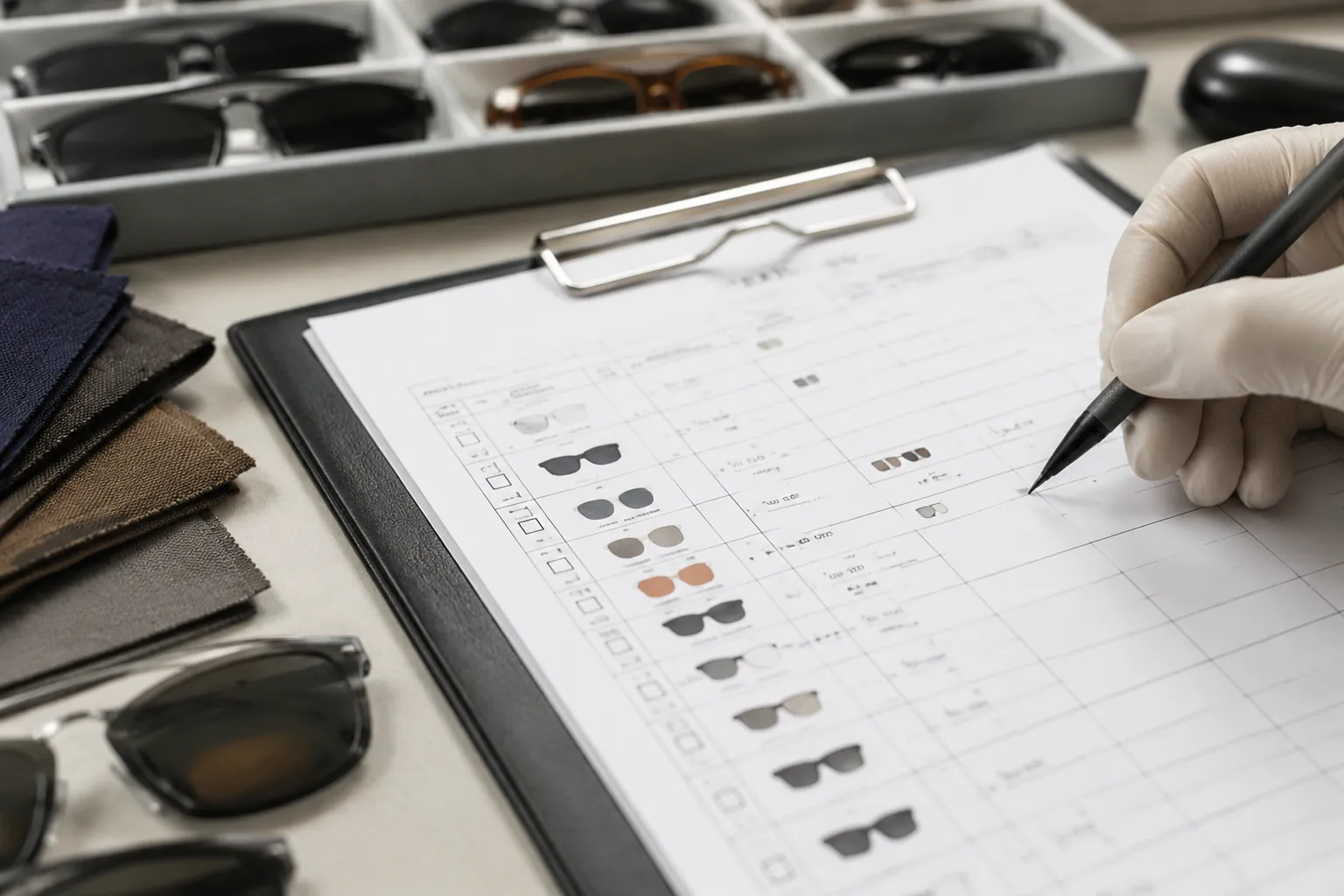
If you buy sunglasses in volume, the key question is not which option sounds more premium. It is whether private tooling will pay back through better margin, clearer differentiation, lower return risk, and stronger reorders. This guide is for brand owners, importers, distributors, and retailers comparing open mold and private tooling on commercial terms: tooling cost, MOQ, lead time, material choice, fit tolerances, decoration limits, and compliance risk. The aim is simple. Make the mold decision like a buyer, not like a design team chasing novelty.
Start with payback, not design preference
Private mold only makes sense if the extra development cost can be recovered through gross profit over the life of the SKU. Before approving a tool, buyers should model four inputs: upfront tooling cost, expected unit volume, unit margin improvement, and reorder potential. If those numbers do not support payback, the mold is just a development expense.
In sunglasses sourcing, private tooling usually costs more than open mold because the steel has to be designed, built, tested, and corrected for your frame. The more complex the frame, the higher the cost pressure. A simple injected frame with standard geometry is far easier to tool than a wrap style with custom hinge construction, multiple components, or tight cosmetic requirements.
Open mold avoids most of that initial spend because the base tooling already exists. That lets the buyer focus budget on lenses, packaging, branding, and launch timing instead of engineering a new mold from scratch.
Private mold can earn back the investment in three ways. First, it protects a shape that competitors cannot pull from the same catalog. Second, it can support a higher selling price because the product is harder to compare directly. Third, it can reduce fit-related complaints or returns if the design is built for a specific market or wear profile.
Rule of thumb: if you cannot explain how the mold will improve sell-through, pricing power, or reorder stability, do not approve it yet.
That is why the first discussion should not be about aesthetics alone. It should be about expected annual volume, channel pressure, and whether the frame is a one-time test, a seasonal program, or a core SKU meant to be replenished.
Open mold vs private mold: practical trade-offs
| Item | Open mold | Private mold |
|---|---|---|
| Upfront tooling | Usually none, or only minor modification cost | Higher because the tool must be developed for your frame; cost depends on complexity, cavities, and revisions |
| MOQ | Often easier to start around 50 to 300 pairs per color or design | Sample quantities may be low, but commercial orders usually make more sense once volume is 300+ pairs and especially for repeat orders |
| Lead time | Sample development can be relatively fast if material, lens, and artwork choices are ready | Tool development, trial shots, and corrections can add several weeks before pre-production approval |
| Fit control | Limited to the existing geometry and minor adjustments | Higher control over bridge width, temple angle, front curve, lens groove, and hinge position |
| Differentiation | Lower; similar shapes can often be quoted by multiple suppliers | Higher; shape and detail are specific to your program |
| Margin logic | Usually competes on price and decoration | Can support price premium, lower markdown pressure, and better reorder consistency |
| Risk | Lower upfront risk, but higher risk of direct comparison with similar market offerings | Higher upfront risk, but lower direct comparability if the design is commercially strong |
For many buyers, the best answer is not fully open mold or fully private mold. It is staged customization. Start with an open mold frame and customize the parts buyers notice most: temple tips, logo treatment, lens tint, mirror color, rubber coating, or packaging. That approach often captures much of the commercial benefit without committing to steel too early.
Full private mold makes more sense when the product depends on front profile, wrap angle, hinge geometry, lens shape, or branded fit. Those are structural decisions, not cosmetic edits, and open mold usually cannot reproduce them cleanly.
Where private tooling pays off
Private mold works best when the frame has a defined commercial role. A core sunglass SKU that is expected to sell across more than one season is very different from an event giveaway or a trend test. If the same model will be replenished over multiple purchase orders, the tooling cost can be spread across those orders instead of being absorbed by one launch.
It also pays off in channels where side-by-side price comparison is intense. On marketplaces, in discount retail, and in distributor catalogs, look-alike frames are easy to compare. If your frame uses the same open mold as many competitors, differentiation is limited to lens color, packaging, and logo application. A proprietary front line, temple section, or bridge profile gives sales teams a clearer story and makes exact substitution harder.
There is also a production payoff. Once a private mold is approved, repeat orders can be more stable because the same frame geometry, lens size, and decoration coordinates are locked. That improves production repeatability and makes QC more consistent from lot to lot. Buyers should still define tolerances in the technical package and verify them in production samples rather than assuming the tool will stay perfect forever.
- Good use case: a branded core model expected to reorder across multiple seasons.
- Good use case: a fit-specific frame for sport wrap, narrow bridge, or oversized fashion geometry.
- Good use case: a distributor program where the same SKU must remain visually consistent over time.
- Weak use case: one-off promotional sunglasses for a single event or campaign.
- Weak use case: buyers who change shape every order and purchase only on price.
If the product will not be repeated, or if customers are not buying because of the shape itself, open mold usually offers better capital discipline.
Where private tooling does not pay off
Private tooling is often overused on programs that do not have enough volume certainty. A test order of 50 to 300 pairs is usually too small to recover development cost unless the buyer already expects the frame to become a core SKU. At that level, open mold is usually the safer commercial choice.
It also becomes risky when the design looks strong in renderings but is weak in production. For injected frames, uneven wall thickness can create sink marks, internal stress, or warpage during cooling. Very thin temples may look elegant but fail durability expectations. Deep undercuts complicate part release and can require more complex tooling. Sharp cosmetic transitions can show flow lines or stress whitening, especially on glossy finishes.
Material choice matters here. PC is commonly used for injected eyewear and is suitable for volume production when the geometry is well controlled. TR90 is valued for flexibility and comfort, but the process still has to be controlled carefully to maintain shape consistency. Acetate is often selected for a more premium appearance, but it requires proper stabilization, cutting, polishing, and finishing discipline.
Buyers targeting the low end of the market need to be especially disciplined. A lower unit price does not make a weak tooling decision profitable. Even if pricing improves at larger volumes, the tool still has to be paid back through units sold. If the program is competing mainly on cost, open mold or modified open mold is usually the stronger sourcing decision.
What changes inside the factory
The mold choice changes the factory workflow from the start. Open mold lets the supplier move more quickly into color selection, lens matching, logo process selection, and pre-production planning. Private mold moves engineering much earlier. Before steel is approved, the team should review draft angle, gate position, shrink allowance, hinge reinforcement, lens groove geometry, and how the frame will behave after cooling, polishing, and assembly.
- Design review: confirm target fit, frame type, material, lens base curve, and decoration zones.
- DFM check: review wall thickness, release direction, undercuts, hinge block strength, and likely stress points.
- Tooling build: produce the front and temple tools, then prepare trial-shot settings for temperature, pressure, and cooling.
- First trial samples: check symmetry, front warp, temple opening angle, lens seating, and logo placement.
- Correction round: adjust steel if flash, pull marks, distortion, or poor closure appears.
- Pre-production sample: lock color, lens tint, finish, packaging, barcode, and carton details.
- Mass production: run incoming material inspection, in-process checks, and final AQL inspection.
Decoration choices also interact with the mold. Pad printing is flexible and cost-efficient, but small logos can shift if the surface curvature is not stable. Laser engraving is durable on suitable surfaces but may be less visible without fill. Metal logo plates need dedicated recesses and stable placement tolerance. Spray coating and rubber finish can improve perceived value, but they also add variables for adhesion, abrasion resistance, and color consistency.
If the design uses mirrored lenses, gradient tint, polarized lenses, or hydrophobic coating, the factory needs to verify that those features remain consistent from sample to production. The more custom the structure, the more important it is to freeze the specification before mass production starts.
Model the numbers before you approve the tool
Do not approve private tooling on instinct. Build a simple payback model and test it against realistic purchase volumes. In many programs, 50 to 300 pairs is a test band, 300 to 1000 pairs is a meaningful seasonal band, and 1000+ pairs is where a proprietary shape can begin to make commercial sense if reorders are likely.
| Scenario | Typical volume | Commercial logic |
|---|---|---|
| Low-volume test | 50 to 300 pairs | Open mold usually wins because tooling recovery is weak and launch speed matters more |
| Mid-volume seasonal | 300 to 1000 pairs | Private mold can work if the frame supports higher sell-through, price premium, or planned replenishment |
| Core annual program | 1000 to 5000 pairs | Private mold becomes more defensible if the design is stable and margin improvement is repeatable |
| Multi-season replenishment | 5000+ pairs across reorders | Private mold often pays back through repeat use, lower direct comparability, and more consistent QC |
Lead time needs the same discipline. Open mold sample cycles can move quickly when the material, lens, and artwork are ready. Private mold adds development time because trial shots and corrections are part of the process. That delay has a real cost if you are trying to hit a seasonal launch, a trade event, or a retail intake window.
Then model the hidden costs. Private tooling often requires more CAD review, more sample rounds, tighter sign-off on artwork coordinates, and sometimes packaging redesign if frame dimensions change. Open mold reduces most of that friction. On the other hand, proprietary design can reduce markdown pressure because buyers are not comparing your frame against the same shape in the market. That is where private mold often wins financially: not only in unit margin, but in protecting price integrity.
Compliance and buyer checklist before exclusive tooling
Compliance does not depend on whether the frame is open mold or private mold, but the risk profile can change. The SKU still has to meet the standards for its destination market. For export sunglasses, buyers should think in terms of lens category, UV performance, mechanical safety, chemical restrictions, labeling, and test traceability. Common references include CE EN ISO 12312-1 for Europe, ANSI Z80.3 for the U.S., AS/NZS 1067 for Australia and New Zealand, plus REACH for EU chemical restrictions. FDA registration may be part of the supplier compliance picture for U.S. market access, but it is not a substitute for product-level testing.
Private mold can help compliance if the geometry is engineered correctly from the start. It can also create avoidable risk if the lens recess is too shallow, the frame edge is too thin, or the fit creates stress during assembly. Buyers should request test reports tied to the actual SKU and construction, not generic factory documents with no clear product linkage.
Use this checklist before paying for exclusive tooling:
- Is this frame expected to reorder over multiple seasons or customer cycles?
- Can the design support a measurable price premium, better sell-through, or fewer returns?
- Is the target fit specific enough that catalog shapes are a poor substitute?
- Do you have approved artwork, CAD, or a physical reference sample with key dimensions?
- Have you budgeted for revision rounds, not only the first tool invoice?
- Do you know the required compliance standards for each target market?
- Have you confirmed decoration method, packaging fit, and lens specification before steel release?
- Can your forecast realistically cover 300, 1000, or 5000+ pairs over time?
The best sourcing teams treat tooling as a financial decision. If the mold creates repeatable commercial advantage, pay for it. If demand is uncertain, margins are thin, or the shape can be tested through open mold first, keep the capital flexible and prove the SKU before moving to exclusive steel.
Have a custom sunglasses project in mind?
Send us your styles, target market and quantities and we will return a detailed quote with MOQ, lead time and a sample plan.
Get a QuoteWhy source this from Wenzhou with LumiShades
Wenzhou in Zhejiang Province is widely regarded as China’s eyewear manufacturing capital, producing a large share of the world’s sunglasses. That concentration matters to buyers: a deep local supply chain for acetate sheet, hinges, lens blanks, plating and packaging means shorter component lead times, easier color and material matching, and a workforce with decades of eyewear-specific skill. LumiShades has manufactured in this ecosystem since 2009, and our vertical integration — in-house injection molding, acetate cutting, CNC milling, lens tinting, decoration and quality control — means no part of your order is quietly subcontracted to a workshop you cannot audit.
For international buyers, that vertical control translates into accountability. When a single factory owns every step, defects are traced and fixed at source rather than bounced between vendors, and your specifications survive intact from first sample to bulk. We back this with 15+ years of experience, shipments to 60+ countries, more than 5 million pairs produced per year and a 98.5% on-time delivery rate. Our certifications — CE EN ISO 12312-1, FDA registration, ANSI Z80.3, AS/NZS 1067, REACH, ISO 9001 and BSCI audit — mean the compliance documentation your market requires already exists. Explore our manufacturing capabilities and quality control process to see how this works in practice.
Frequently asked questions
How many pairs do I need before private mold makes sense? There is no universal threshold. A practical way to decide is to estimate total sell-through across the life of the SKU, not just the first order. Private mold is easier to justify when you expect repeat orders and total volume in the low thousands or more. For a one-time run of 50 to 300 pairs, open mold is usually the safer choice unless the frame is clearly intended to become a core program.
Can I start with an open mold and move to private mold later? Yes, and that is often the better sequence. Use open mold to test shape acceptance, fit, complaints, return rate, and reorder interest. If the model proves itself, move to private tooling once demand is clearer and the investment is easier to justify. This also reduces the risk of locking steel before the market has validated the design.
Does private mold speed up production? Not at the beginning. Development is usually slower because tool build, trial shots, fit checks, and corrections take time. After approval, repeat orders can become more stable because the geometry and decoration positions are fixed. If your priority is speed to market for a first launch, open mold is usually faster.
What parts of sunglasses are most worth making exclusive? The most valuable areas are usually the front shape, temple profile, bridge width, hinge placement, and lens geometry. Those features affect both appearance and fit, and they are the hardest parts for competitors to copy exactly from a standard open mold. If your brand story depends on a recognizable silhouette or specific fit, those are the areas to prioritize.
What certifications should I ask for on export sunglasses? Match the request to the destination market and the product configuration. Common references include CE EN ISO 12312-1 for Europe, ANSI Z80.3 for the U.S., AS/NZS 1067 for Australia and New Zealand, and REACH for EU chemical restrictions. For U.S. market access, ask whether the factory has FDA registration where applicable. Also request test reports that are linked to the exact SKU, not just general factory certificates.
Ready to start?
Explore our aviator sunglasses or request a quote — our sales team replies within 12 hours.
Request a Quote