
Standardize Sunglasses Spare Parts Across Styles
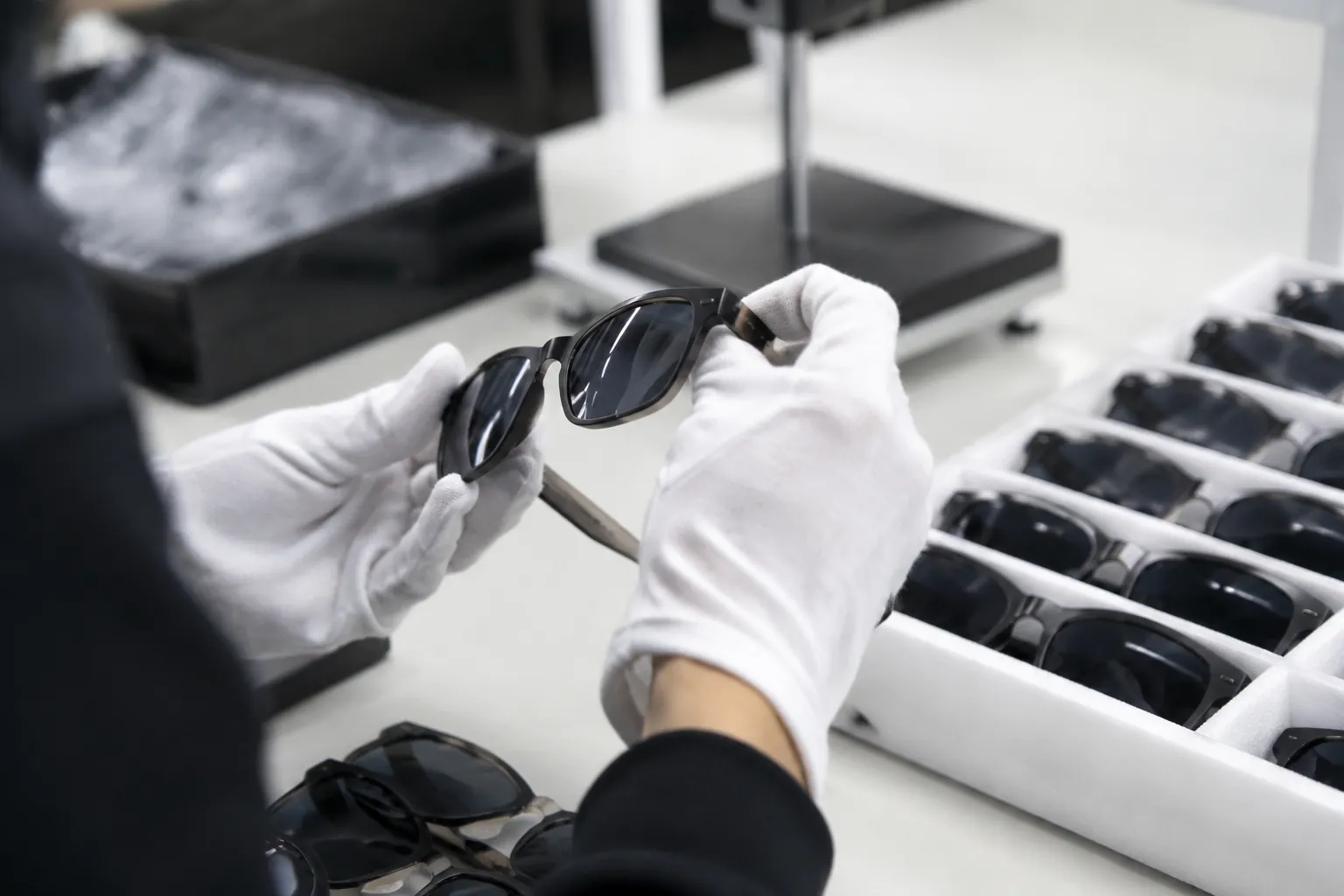
If you sell sunglasses in multiple styles, spare parts can become the most fragmented part of after-sales. One broken hinge on an acetate frame, a missing nose pad on a metal style, and your team is suddenly stocking too many small parts for too many SKUs. The answer is not to make every frame identical. Standardize the parts that do not need to vary, then lock that decision into design, sourcing, QC, and replenishment. Done well, this cuts service delays, lowers dead stock, and makes replacements easier to manage across channels.
1) Separate what must vary from what should not
Most sunglass SKUs do not need unique screws, pad arms, or temple hardware. They usually need different fronts, lens tints, logo treatments, and colorways. If every style gets its own hinge, screw length, nose pad, and temple tip, after-sales inventory becomes harder to manage than the product line itself.
Use a simple rule: if a part does not affect fit, safety, or a clearly visible design element, it is a candidate for standardization. That usually includes fasteners, hinge families, nose pad families, temple cores, and some tip inserts. Keep style-specific parts for areas customers see and feel immediately: front shape, outer temple design, lens tint, and branded metal accents.
For buyers, this is a service and inventory decision as much as an engineering one. One screw spec stocked across several styles is easier to manage than many low-rotation variants, each with its own reorder point. Standardization also makes field repairs realistic. A store associate or distributor rep can carry one compact kit instead of a drawer full of mismatched hardware.
Good candidates for standardization:
- Hinge screw diameter and length
- Nose pad arm geometry
- Silicone pad size, hardness, and surface texture
- Temple core profile on acetate frames
- Metal temple tip inserts
- Decorative end pieces when branding allows a shared look
Parts to keep style-specific: front frame shape, visible temple exterior, lens tint, logo decoration, and any component that changes frame balance or fit in a meaningful way.
Two acetate styles can sometimes share the same screw family if they have the same hinge barrel height, barrel count, and temple thickness. If one style has a thicker hinge block or a different barrel depth, it may need a different screw length or shoulder profile. That matters. A screw that is too short may loosen. One that is too long can bottom out and damage the barrel.
2) Build the shared-parts architecture before you lock the SKU list
The cleanest after-sales model is to define the parts architecture first, then build styles around it. Do not launch a large style range and ask the factory to "figure out spare parts later." That usually leads to mixed screws, inconsistent pad arms, and no stable service kit.
A better setup has three layers:
- Core platform: hinge family, screw specification, temple core size, and nose pad interface.
- Style layer: front shape, color, lens treatment, and branding details.
- Service layer: spare-parts pack, repair tools, labeling, and replacement instructions.
This works best when the supplier can hold stable tooling and repeatable processes. A vertically integrated eyewear factory with in-house injection molding, acetate cutting, CNC milling, lens tinting, decoration, and QC is usually better positioned to keep the same hardware specification across several styles than a fragmented supply chain with multiple handoffs. Fewer handoffs mean fewer chances for the wrong screw length or pad arm angle to enter production.
Buyers should ask for a platform map before mass production. That map should show which styles belong to the same mechanical family, which hinge geometry is shared, and where the line is intentionally different. If the supplier cannot define the platform clearly, the spare-parts plan is probably weak.
Keep the service-critical hardware shared wherever construction allows it. Leave uniqueness for genuine design differences. The exact share ratio will vary by project. The principle does not change: standardize the parts that create the most service friction, and keep uniqueness only where it is commercially or mechanically necessary.
3) Choose components that tolerate normal production variation
Standard parts only work if they are forgiving. A part that needs perfect alignment on every frame creates more service issues, not fewer. Tolerances, material behavior, and assembly torque matter more than many buyers expect.
For small eyewear screws, the most common failure modes are over-torque, poor thread engagement, and mixed lengths in the same carton. A standard screw family reduces all three, but it still has to fit the hinge design. The acceptable length tolerance depends on the screw diameter, thread pitch, barrel depth, and engagement length, so confirm it during sampling. Do not guess.
Nose pads need the same discipline. Silicone pads come in different hardness levels, and the right choice depends on frame weight, bridge design, and expected wear. Softer pads can improve comfort but may deform more easily. Firmer pads hold shape better but may feel less forgiving on the nose bridge. Heavy metal sunglasses often need a firmer pad than light fashion frames, but that decision should be confirmed in fitting and wear testing.
Material behavior also matters by frame type:
- Acetate: suitable for shared temple cores because the core can be repeated across several styles, but heat during adjustment must be controlled to avoid warping.
- Injection-molded frames: useful when repeatability is important; mold stability and gate consistency directly affect fit.
- Metal frames: pad arm angles and solder or weld consistency are critical; small deviations are visible and can affect symmetry.
Below is a practical buyer view of what standardization solves and where it can limit design.
| Part | Standardize to reduce | Main trade-off | Buyer note |
|---|---|---|---|
| Hinge screw | Mixed replacements, strip-out, slow repairs | Slightly less style freedom | Keep one diameter and one length family where possible; verify thread engagement in sampling |
| Nose pads | Fit complaints, service SKU count, breakage in transit | One pad shape may not suit every bridge | Use a limited number of pad sizes across the range, not many; align hardness to frame weight |
| Temple core | Loose stock, hard-to-match replacements | Limits extreme temple styling | Best standardization point for acetate frames; keep bend and springback consistent |
| Temple tips | Color mismatch and service confusion | Visible design constraint | Keep tip family tied to frame material, thickness, and weight class |
On a controlled line, CNC-milled parts, repeatable soldering, and consistent decoration help preserve shared dimensions from sample to reorder. That is what makes a standard spare part useful after launch, not just at sample stage.
4) Set a spare-parts code system before launch
If parts are not coded clearly, standardization falls apart in the warehouse. A service team should be able to read a code and know which frame family it fits. Do not rely on memory, color, or a photo in a chat thread.
A clean code structure usually includes four elements:
- Frame family code – identifies the platform
- Part type code – hinge, screw, pad, temple core, tip
- Size code – length, diameter, hardness, angle, or width
- Revision code – for any engineering change
Example: a hinge screw may be coded as HF-03-SW-1.4x4.8-R1, where HF-03 is the frame family, SW is screw, 1.4x4.8 is the size, and R1 is the revision. That is easier to control than a loose description like "small silver screw."
Finalize the coding system before mass production, not after. Ask the supplier for a spare-parts matrix that maps every SKU to its compatible hinge, screw, pad, and temple components. If one style changes barrel depth, pad arm angle, or temple thickness even slightly, the matrix should show whether the part stays shared or becomes unique.
For procurement teams, this also helps compare samples and reorder runs. If a new sample looks close but the code changes, stop and validate the fit. Standardization only works when revision control is strict enough to catch small changes before they reach the warehouse.
5) Use a parts matrix to stop SKU sprawl
Most after-sales stock problems come from SKU sprawl, not from the parts themselves. If each sunglass style carries unique hardware, the service warehouse ends up with slow-moving fragments: one box of screws that barely moves, another box of pads that runs out fast, and several versions of a hinge that look similar but are not interchangeable.
The fix is to group styles into part families. Think in compatible component groups first, not individual styles. That lets you order spares in sensible quantities and reduces the number of line items your team has to track.
Use this rule set:
- Group acetate frames that share the same hinge barrel and screw
- Group metal frames that use the same pad arm and nose pad
- Keep one standard temple-tip size for each weight class
- Limit each service kit to the smallest number of parts that still covers the range
The parts matrix also improves order planning. Finished sunglasses may be ordered one way, but spare parts should be handled separately. For service components, start with a small approval lot, then reorder based on actual consumption. Standardization concentrates demand into fewer part families, which simplifies replenishment and can improve pricing.
Lead time becomes easier to manage when the part is already standardized and tool-ready. If every replacement requires a new engineering setup, service slows down. If the part family is already approved, buyers can reorder against an existing specification instead of starting over.
For inventory control, many teams hold more stock of fast-moving shared parts, less of slower parts, and review breakage data on a regular schedule. Set days of cover from your own service volume, not from a generic rule. The key is to replenish by shared component consumption, then allocate stock to styles through the parts matrix.
6) Build service kits by channel, not just by style
Different sales channels break different parts. Retail stores usually need quick in-store fixes. Distributors need compact inventory. E-commerce sellers need mail-out repair packs that solve complaints without forcing returns.
That means one universal spare-parts box is not enough. Build kits by channel:
- Retail kit: screws, nose pads, one hinge assembly, cloth, small screwdriver or driver bit
- Distributor kit: higher count of shared parts, clearly labeled by platform family
- E-commerce support kit: low-cost replacement set for mail-out service and complaint resolution
- Field sample kit: parts for sales reps and account managers to show compatibility and answer technical questions
Channel-specific kits reduce waste. A store that sells a modest number of pairs per month does not need the same volume of temple tips as a distributor moving much larger quantities. Use real breakage data wherever possible. If you do not have it yet, start with a service log that tracks part type, model, cause of failure, and replacement action.
Decoration methods also affect service planning. If a shared metal temple is finished with laser engraving, pad printing, or a plated accent, make sure the service part can be matched cosmetically. A standard screw is easy to replace. A mismatched decorative temple tip is not. In-house decoration control helps because the same finish can be repeated across reorders without drifting in color or gloss.
Compliance still matters. Shared parts must support the relevant product standards for your target market. For sunglasses, the finished product still needs to meet the applicable standard such as CE EN ISO 12312-1, ANSI Z80.3, or AS/NZS 1067, plus material requirements such as REACH where applicable. If the product is entering the United States, confirm whether FDA-related registration or listing obligations apply to your business structure and distribution model. Spare parts do not get a pass just because they are small.
7) Lock the standard in QC, packaging, and reorder control
Standardization fails if QC and packaging do not protect it. A factory can make the correct screw specification and still ship mixed parts if packing is sloppy or if the production team swaps parts between nearby SKUs. Final checks must include spare-part matching, not just cosmetic inspection.
Ask for three controls:
- Incoming component verification for screw length, hinge fit, and pad hardness.
- In-process sampling to catch mixed molds, wrong hardware, or incorrect plating before the batch is complete.
- Final pack audit to confirm the spare-parts bag matches the style family and revision code.
Measure more than appearance. A hinge screw should be checked for length, thread condition, and fit in the hinge barrel. Nose pads should be checked for hardness, symmetry, and bonding quality. Temple cores should be checked for width, bend recovery, and insertion depth. If the factory uses decoration, the team should verify that pad printing, laser marking, or coating does not interfere with assembly tolerances.
Reorder control should follow the part family, not the individual style, unless the style truly has unique hardware. That is how you keep inventory lean without leaving customers waiting for a small screw or pad. Replenish by shared component consumption, then allocate stock to styles through the parts matrix.
If the supplier can show controlled QC, stable tooling, and repeatable production across acetate, injection-molded, and metal programs, standardized spare parts are realistic. If not, the cost shows up later in service tickets, slow repairs, excess inventory, and higher return rates.
8) A buyer's launch checklist for shared spare parts
Before approving a new sunglass program, use this checklist. It will save time, money, and service frustration later.
- Confirm which parts are shared across styles and which are unique
- Request a parts matrix before mass production
- Approve one screw family per frame platform where possible
- Limit nose pads to a small number of size and hardness combinations
- Define temple core and tip compatibility by material type
- Set spare-parts codes for warehouse and service teams
- Specify packaging for replacement parts, not only finished goods
- Check compliance requirements for the target market before release
- Test one real service repair on each platform before launch
Bottom line: shared parts are not about making every frame identical. They are about preventing avoidable service work. If your factory can hold stable tooling, repeatable QC, and controlled decoration across acetate, injection-molded, and metal programs, spare-part standardization becomes a practical sourcing strategy. If it cannot, the cost shows up later in service tickets, slow replacements, and excess inventory sitting in the warehouse.
Have a custom sunglasses project in mind?
Send us your styles, target market and quantities and we will return a detailed quote with MOQ, lead time and a sample plan.
Get a QuoteWhy source this from Wenzhou with LumiShades
Wenzhou in Zhejiang Province is widely regarded as China’s eyewear manufacturing capital, producing a large share of the world’s sunglasses. That concentration matters to buyers: a deep local supply chain for acetate sheet, hinges, lens blanks, plating and packaging means shorter component lead times, easier color and material matching, and a workforce with decades of eyewear-specific skill. LumiShades has manufactured in this ecosystem since 2009, and our vertical integration — in-house injection molding, acetate cutting, CNC milling, lens tinting, decoration and quality control — means no part of your order is quietly subcontracted to a workshop you cannot audit.
For international buyers, that vertical control translates into accountability. When a single factory owns every step, defects are traced and fixed at source rather than bounced between vendors, and your specifications survive intact from first sample to bulk. We back this with 15+ years of experience, shipments to 60+ countries, more than 5 million pairs produced per year and a 98.5% on-time delivery rate. Our certifications — CE EN ISO 12312-1, FDA registration, ANSI Z80.3, AS/NZS 1067, REACH, ISO 9001 and BSCI audit — mean the compliance documentation your market requires already exists. Explore our manufacturing capabilities and quality control process to see how this works in practice.
Frequently asked questions
How many sunglasses styles should share the same screw or hinge? Share hardware wherever the construction is truly compatible. Start by grouping styles into the same frame platform, then confirm fit in sampling and service testing. A shared screw family is usually easier to standardize than a shared hinge across unrelated constructions. If the barrel depth, hinge block thickness, or thread engagement changes, treat it as a new part until proven interchangeable.
What should I verify before standardizing an eyewear screw? Verify screw diameter, length, thread type, thread engagement, and the actual fit in the hinge barrel. Ask for a sample assembly test, a removal-and-reinstall test, and confirmation that the screw does not bottom out or leave excessive play. Do not approve standardization from a drawing alone.
Should nose pads be standardized across acetate and metal frames? Not usually. Metal frames often use adjustable pad arms, while acetate frames may use different bridge solutions or integrated saddles. Standardize within each material family first, then reduce the number of pad sizes and hardness options used across the range. The goal is fewer service SKUs, not forcing one pad onto every construction.
What spare parts should I stock first for after-sales? Start with screws, nose pads, and one hinge family per platform. Those are the parts most likely to create quick service issues and the easiest to manage in controlled inventory. Add temple tips and decorative pieces only after you have breakage data and a clear compatibility matrix.
Can I ask the factory to provide a spare-parts matrix? Yes, and you should. It should map each SKU to its compatible screws, hinges, pads, temple cores, and tips before bulk production starts. Ask for it in writing, reviewed against samples, and updated whenever a revision is made. The matrix is one of the most useful documents for reducing service mistakes and inventory sprawl.
Does standardizing spare parts affect compliance? It can help with control and repeatability, but it does not replace testing. The finished sunglasses still need to meet the relevant standard for the market, such as CE EN ISO 12312-1, ANSI Z80.3, or AS/NZS 1067, plus material requirements like REACH where applicable. If you sell into the U.S., confirm whether FDA-related registration or listing obligations apply to your business structure and product flow.
Ready to start?
Explore our cat-eye sunglasses or request a quote — our sales team replies within 12 hours.
Request a Quote