
Private Label Sunglasses for Boutiques: Small-Run Plan
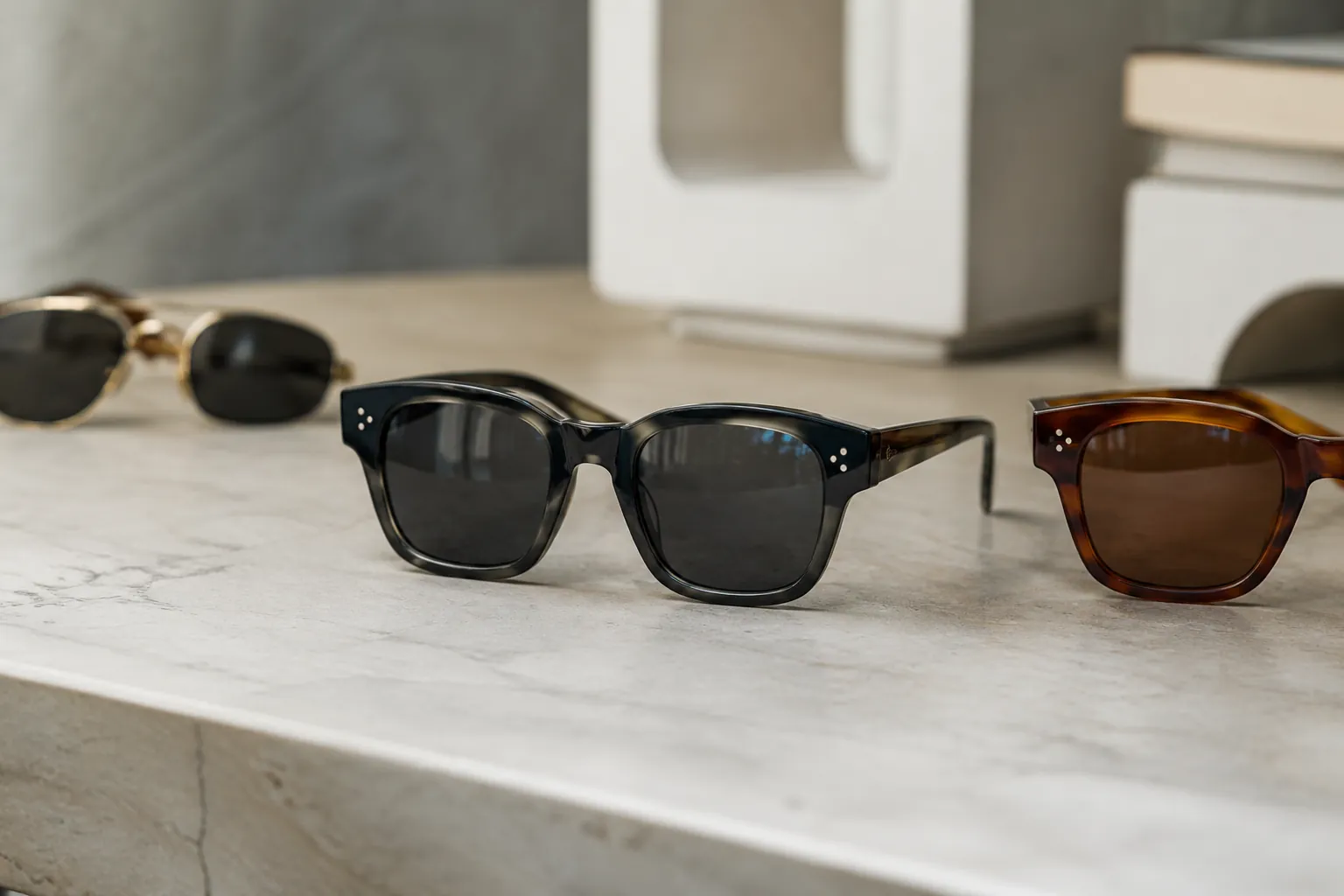
This guide is for fashion boutiques, concept stores, small retail chains, and distributors that want a private label sunglasses line without taking on large inventory risk. The practical route is rarely to design every part from zero. Start with proven open molds. Control frame colors, lens specs, logo placement, packaging, compliance, and QC before production starts. With LumiShades, boutiques can start from 50 pairs per design, test a focused capsule, and reorder the styles that sell.
Start With a Capsule, Not a Catalog
A boutique sunglasses launch should not begin with 30 or 40 styles unless the buyer already has hard sales data. Too many options create dead stock, weak merchandising, and muddy reorder decisions. Keep it tight. A stronger first launch uses 3 to 6 frame shapes matched to the store's customer: one daily square, one soft round or oval, one narrow fashion shape, one oversized frame, and possibly one sport or shield style if the retail concept can support it.
Separate design count from SKU count. A design is the frame mold. A SKU is the exact combination of frame color, lens color, logo method, packaging, barcode, and market labeling. LumiShades' MOQ starts from 50 pairs per design, but SKU splits still need approval before sampling. Why? Material color, lens tint, decoration, and packing all affect production control.
A practical first order is usually a narrow capsule: several open mold designs, 2 controlled colorways on most designs, and a third color only for the strongest commercial frame. That gives the buyer enough range to merchandise without turning the stockroom into a guessing game. Unit cost usually improves as quantity rises because setup, material purchasing, lens preparation, decoration, inspection, and packing labor are spread across more pairs. Final pricing still depends on frame material, hinge type, lens type, coating, logo method, packaging, inspection requirements, and compliance documents.
Small-run eyewear works best when the collection is narrow, the color logic is clear, and reorder rules are set before the first purchase order.
Use Open Molds to Save Budget
Open molds are existing frame tools that can be used for private label production. For boutiques, they are usually the safest starting point. New tooling adds cost, time, and technical risk before demand is proven. A new injection mold can require tooling investment, trial shots, correction rounds, and fit adjustments. Save that route for proven sales history, protected design needs, or long-term volume programs.
Open mold does not mean generic. The same square frame can look basic in gloss black with a smoke lens, more premium in matte dark tortoise with a brown gradient lens, or more fashion-led in champagne crystal with a green category 3 lens. The mold is only the base. Color, lens category, finish, temple logo, pouch, hangtag, and barcode system all shape the final retail feel.
| Route | Best Use | Typical Cost Impact | Lead-Time Impact | Main Risk |
|---|---|---|---|---|
| Open mold, stock color | Fast boutique test order | Lowest setup cost | Usually faster because frame color is already available | Less differentiation from similar market styles |
| Open mold, custom color | Capsule with stronger brand identity | Moderate; depends on material and color minimums | Adds color-chip, first-sample, or batch approval time | Color drift if the reference and tolerance are vague |
| Open mold plus logo hardware | Premium retail look without new frame tooling | Moderate to high depending on metal plate, plating, and assembly | Logo part sampling and approval can add time | Plate alignment, plating color, edge finish, and adhesive strength |
| New mold | Proven brand program or protected shape | Highest; tooling and trials required | Tooling, trial shots, correction, and approval extend the schedule | Fit or tool correction can delay launch |
LumiShades offers in-house processes including injection molding, acetate processing, CNC milling, lens tinting, laser engraving, pad printing, and metal logo plate decoration. For small runs, that matters. Sampling and corrections can be coordinated through one factory instead of split across several subcontractors.
Build SKU Variety Without Breaking MOQ
The common mistake is asking for too many frame and lens combinations too early. Every color switch creates material control work. Every lens tint needs confirmation. Every logo color and packaging version adds risk. Use a simple rule: one hero color, one commercial neutral, and one limited fashion color.
- Hero color: the collection-defining option, such as champagne crystal, dark tortoise, olive, oxblood, or translucent tea.
- Commercial neutral: black, brown, smoke, tortoise, or transparent grey; this is usually the safest reorder color.
- Limited fashion color: a smaller run for window display, campaign images, and seasonal storytelling, not the backbone of the order.
- Reorder trigger: define before launch, such as reordering when a SKU reaches an agreed sell-through level within a set number of weeks.
For injection frames, color consistency depends on resin batch, masterbatch ratio, drying time, melt temperature, injection pressure, and cycle stability. Translucent colors may show flow marks more easily than opaque black. Matte finishes can reveal handling marks during packing and transport. For acetate frames, sheet pattern variation is normal, especially with tortoise, marble, striped, and layered sheets. Approve an acceptable range. Do not rely on one perfect product photo.
Lens pairing is both a merchandising decision and a compliance decision. Gradient lenses can work well for fashion boutiques, but UV protection, visible light transmission, lens category, and warnings must match the destination market. Category 3 lenses are common for bright sunlight. Category 4 lenses are very dark and are not suitable for driving in many markets, so they should not be dropped into a fashion range without clear labeling and buyer approval.
Choose Customization That Adds Value
Small private label orders should put branding where customers notice it: temple logo, subtle lens mark if appropriate, branded microfiber pouch, cleaning cloth, swing tag, and barcode label. Do not overdecorate a basic frame. A clean temple mark and a well-made pouch often look stronger than several competing logos.
LumiShades can apply pad printing, laser engraving, and metal logo plates. Pad printing is efficient for simple one-color temple logos or small lens marks, but adhesion must be checked on the actual surface finish. Laser engraving can work well on suitable acetate, metal, and some coated parts, but contrast changes by material. Metal logo plates can give a more substantial retail feel, yet they need cavity fit, plating control, alignment checks, and adhesion testing.
| Branding Method | Good For | Typical Detail Limit | Watch Point | Buyer Instruction |
|---|---|---|---|---|
| Pad printing | Temple logos and small lens marks | Avoid very thin lines and tiny text that may fill in during printing | Ink adhesion on glossy, matte, or coated parts | Approve artwork size, color reference, and placement tolerance |
| Laser engraving | Subtle logo on temple, metal, or suitable acetate | Fine detail depends on material contrast and surface finish | Result may look different on black, tortoise, and clear parts | Request physical sample photos from several angles |
| Metal logo plate | Higher perceived value on temples | Small text can lose sharpness after plating or polishing | Alignment, plating color, edge finish, and glue strength | Define plate position tolerance and finish standard |
| Custom pouch and cloth | Retail presentation and repeat brand exposure | Fabric print detail is less sharp than paper printing | Print color, fabric handfeel, folding, and barcode placement | Confirm packing method with a complete pre-production set |
For boutique runs, keep artwork simple. Tiny metallic text may look strong on a screen but weak on a narrow temple. Approve one physical golden sample per design, including frame, lens, logo, pouch, hangtag, warning text, barcode, and carton label before bulk production starts.
Know the Cost and Lead-Time Logic
MOQ and price breaks are based on production realities: setup time, material minimums, line balancing, QC labor, decoration setup, packing work, and documentation. Even a 50-pair design needs sampling, color confirmation, lens fitting, logo setup, inspection, and export packing. Small quantities cost more per pair. That is normal.
As order quantity increases, the factory can spread fixed work across more units. Material purchasing, production scheduling, decoration setup, inspection, and packing also become more efficient. Quote against a confirmed specification, not a general product photo. Before comparing offers, confirm frame material, hinge type, lens type, lens category, UV claim, coating, logo method, pouch, carton packing, inspection level, and required compliance documents.
- Confirm target market, retail price, and required margin.
- Select open molds and narrow the first capsule to 3 to 6 designs.
- Choose frame colors, lens tints, logo method, pouch, cloth, hangtag, and barcode rules.
- Request samples and check fit, hinge feel, lens color, decoration, and packing.
- Approve one physical golden sample per design before bulk production.
- Confirm compliance labeling, inspection requirements, carton marks, and shipping terms.
- Run bulk production, in-line QC, final inspection, and export packing.
LumiShades typically provides samples in 7-10 days and runs bulk production in 25-35 days after approvals, depending on the product specification and order details. The real schedule depends on buyer response time. A slow decision on logo size, lens tint, warning text, or barcode format can push back the launch.
Treat Compliance as Part of the Spec
Eyewear compliance should be decided before production, not after cartons are packed. Tell the factory where the sunglasses will be sold. Test standards, labeling, warnings, importer information, and documents differ by market. LumiShades' relevant certifications and standards include CE EN ISO 12312-1, ANSI Z80.3, AS/NZS 1067, REACH, FDA registration, ISO 9001, and BSCI. Buyers should request documents that match the actual product, lens specification, materials, and destination market.
For Europe, CE EN ISO 12312-1 relates to sunglasses performance requirements, including optical properties, UV transmittance, lens category, and safety requirements. REACH is relevant for restricted substances in materials, coatings, and components. For the United States, FDA registration and ANSI Z80.3 are commonly requested for non-prescription sunglasses. For Australia and New Zealand, AS/NZS 1067 applies. Labels, user warnings, lens category statements, importer details, and hangtag language must match the destination rules.
Inspection points should connect directly to the compliance claim: UV protection, lens category, visible light transmission, optical distortion, frame symmetry, hinge strength, screw tightness, surface scratches, logo placement, print durability, barcode accuracy, and packaging accuracy. A frame can look good in photos and still cause returns if lens quality, labeling, or fit is weak.
Catch Boutique-Order QC Problems Early
Small orders usually fail in ordinary places: color mismatch, loose hinges, crooked logos, cloudy lenses, mixed barcodes, missing pouches, wrong warning cards, and packing errors. These issues are preventable. Write the purchase order like a production document, not a mood board.
For frame dimensions, agree the key measurement points for lens width, bridge, temple length, and overall front width. Practical tolerances depend on material, process, and frame construction, so confirm the exact tolerance for the selected design before production. Hinges should open smoothly without wobble. Screws should not back out after basic open-close handling. Molded nose pads and frame edges should be clean, with no sharp edges, obvious sink marks, or rough finishing.
Lens inspection needs equal attention. Check tint evenness, coating marks, edge chips, stress after fitting, and optical distortion. A lens can meet a UV claim and still look visually wavy to a customer if optical quality is poor. For logo decoration, define placement tolerance and approval standard. On a narrow temple, even a small logo drift is obvious. Packaging QC should include pouch count, cloth count, barcode scan, warning card, carton mark, SKU ratio, and polybag condition.
Ask for pre-production photos, in-line inspection notes, and a final inspection plan if the order size justifies it. LumiShades has in-house QC, so defects can be corrected before goods leave the factory. Once stock reaches a boutique warehouse or store back room, repairs, relabeling, and repacking cost far more.
Use a Practical First-Order Scenario
Here is a realistic boutique launch plan. The buyer wants a summer capsule for several stores and an online shop. Instead of building a full eyewear wall, they choose 4 open mold designs and keep the first order focused. Each design gets one neutral color and one fashion color. The strongest commercial design may receive a third color. The riskiest fashion shape stays in fewer options.
The order uses pad-printed temple logos, branded microfiber pouches, standard cleaning cloths, market-correct hangtags, and barcode labels by SKU. There is no new mold, no custom hinge redesign, and no complex metal part unless the target retail price supports it. Budget goes into better lens colors, clean logo placement, stable packaging, and correct labeling.
Samples are reviewed physically, not only through photos. The buyer checks fit on real people, hinge feel, lens shade, logo size, pouch quality, barcode readability, and warning text. If needed, the buyer requests a lens tint adjustment, logo size change, or packing correction before approving the golden sample. Bulk production should begin only after the approved sample and written specification match.
If the first order sells unevenly, that is still useful data. Reorder the top designs. Drop weak colors. Add one new open mold shape or one seasonal color in the next round. That is how a boutique grows volume without guessing too much at the start: protect cash, test real demand, keep the specification tight, and use existing tooling properly.
Have a custom sunglasses project in mind?
Send us your styles, target market and quantities and we will return a detailed quote with MOQ, lead time and a sample plan.
Get a QuoteWhy source this from Wenzhou with LumiShades
Wenzhou in Zhejiang Province is widely regarded as China’s eyewear manufacturing capital, producing a large share of the world’s sunglasses. That concentration matters to buyers: a deep local supply chain for acetate sheet, hinges, lens blanks, plating and packaging means shorter component lead times, easier color and material matching, and a workforce with decades of eyewear-specific skill. LumiShades has manufactured in this ecosystem since 2009, and our vertical integration — in-house injection molding, acetate cutting, CNC milling, lens tinting, decoration and quality control — means no part of your order is quietly subcontracted to a workshop you cannot audit.
For international buyers, that vertical control translates into accountability. When a single factory owns every step, defects are traced and fixed at source rather than bounced between vendors, and your specifications survive intact from first sample to bulk. For procurement review, buyers can request process records, approved samples, quality checkpoints and project-specific compliance files before placing a bulk order. Required testing and documentation are confirmed against the destination market and product specification rather than assumed from a generic certificate list. Explore our manufacturing capabilities and quality control process to see how this works in practice.
Frequently asked questions
Can a boutique really start with 50 pairs per design? Yes. LumiShades supports MOQ from 50 pairs per design. Before ordering, confirm whether that MOQ applies to the exact frame, material, color split, lens tint, logo method, and packaging you want, because each variation can affect production setup and cost.
Will open mold sunglasses look too generic? Not if the specification is controlled. Use open molds as the structural base, then differentiate through frame color, lens category and tint, finish, temple logo, pouch, hangtag, barcode system, and retail packaging. Approve a physical sample before bulk production.
How long should we allow from sample request to shipment? LumiShades typically samples in 7-10 days and produces bulk orders in 25-35 days after approvals. Build in extra time for artwork approval, color confirmation, packaging checks, compliance labeling, final inspection, and shipping, especially if the launch date is fixed.
Which compliance documents should we ask for? Ask according to the selling market and the actual product. For Europe, request CE EN ISO 12312-1 support and REACH-related material information. For the United States, ask about FDA registration and ANSI Z80.3. For Australia and New Zealand, ask about AS/NZS 1067. Also confirm lens category, UV claim, warnings, importer details, and labeling language before production.
What is the safest first customization for a small boutique order? Start with an open mold, 2 controlled colorways, a simple pad-printed or laser temple logo, branded pouch, correct hangtag, barcode labeling, and compliant warning text. Avoid new tooling, complex hardware, and too many lens-color combinations until sell-through data supports them.
What should be included in the purchase order? Include frame model, material, color reference, lens color, lens category, UV claim, logo artwork, logo placement tolerance, packaging components, barcode rules, carton marks, compliance documents, inspection standard, approved sample reference, payment terms, and shipping terms.
When does pricing improve meaningfully? Pricing usually improves as quantity increases because setup, material purchasing, decoration, QC, and packing costs are spread across more units. To compare quotes accurately, keep the same specification across quantities and ask which cost items change at higher volume.
Ready to start?
Explore our round sunglasses or request a quote — our sales team replies within 12 hours.
Request a Quote