
Private Label Sunglasses for Boutique Retailers
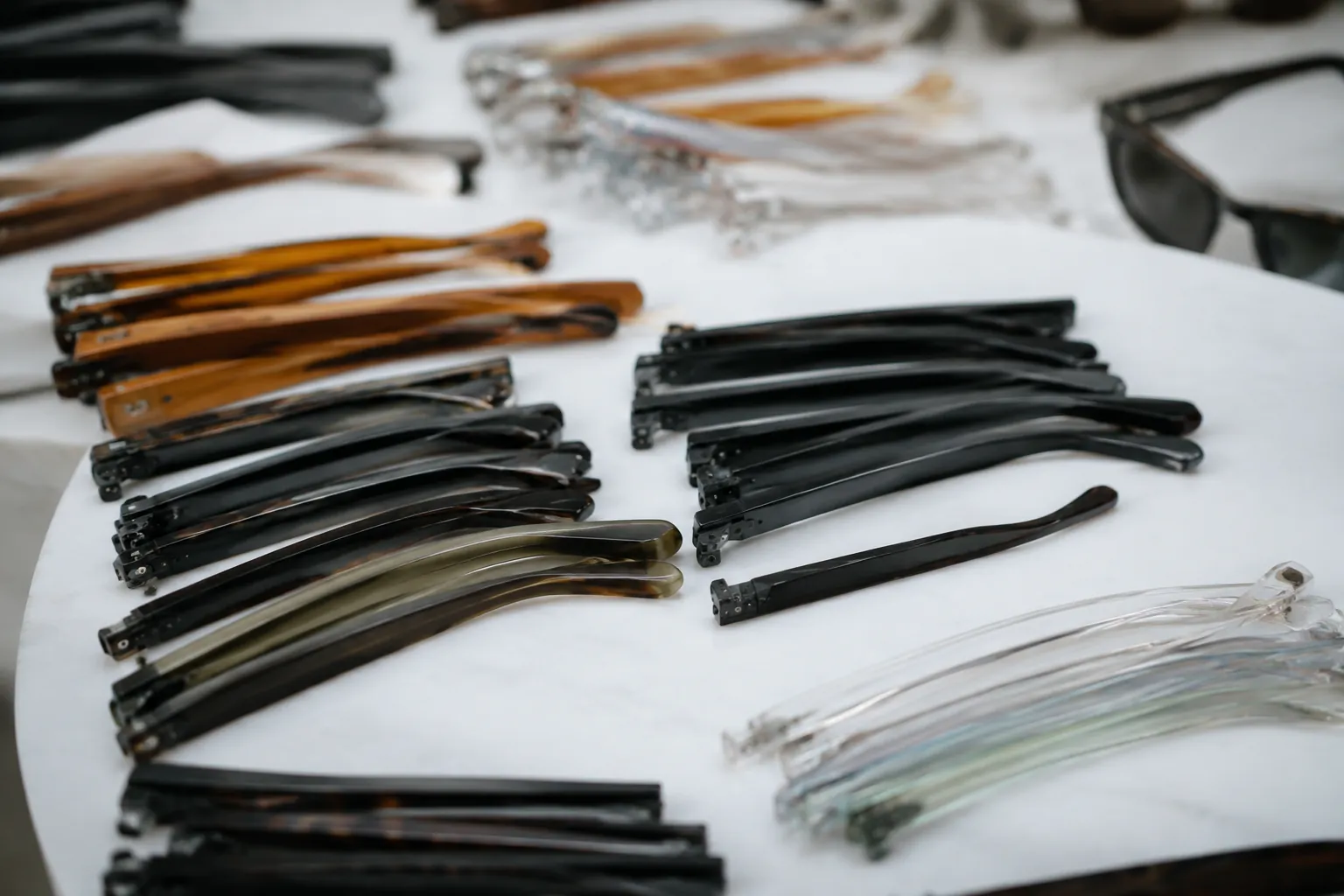
This guide is for boutique chains, independent retailers, importers, and distributors planning a private label sunglasses program without taking on heavy first-season inventory. It shows how to start with small runs, define repeatable frame and lens specifications, control decoration quality, request the right compliance documents, and prepare for reorders. A first order should test demand. It should also create a production record that can be repeated, inspected, and scaled. Do not rely on memory, showroom impressions, or loose sample notes.
Start Small, Treat It Like Production
A low MOQ helps boutique retailers test frame shape, color, price point, packaging, and shelf presentation before buying deeper stock. But a small order is still production. The supplier still needs a technical file, approved lens category, logo position, packaging instruction, barcode or carton mark if required, and an inspection standard.
LumiShades can support private label sunglasses from 50 pairs per design. Larger-order pricing can be reviewed at quantities such as 300, 1000, and 5000+ pairs. Final pricing depends on frame material, lens type, decoration method, packaging, compliance requirements, and order mix. Simple high-volume models may reach low unit costs, but every target price should be confirmed against the exact specification.
The common mistake is treating the first 50 pairs like a casual sample order. If the style sells, the buyer may later find that the lens tint, hinge, logo method, frame color, or packaging file was never locked. That creates trouble on the reorder. Work in two lanes from the start. Lane one is market testing: which shapes, colors, and retail prices sell? Lane two is manufacturing control: which specifications can be repeated at 300 or 1000 pairs without changing cost, lead time, or defect risk?
A boutique collection can look varied on the shelf and still use disciplined production logic. Share hinges where possible. Use common lens base curves. Keep pouch or case sizes standard. Approve one logo artwork file. Limit the color palette. This makes small-MOQ testing easier and gives the supplier a clearer path for repeat orders.
Build a Focused 50-Pair Launch Mix
The first private label drop should not be a random set of unrelated frames. Four to eight designs is often enough to test customer response without tying up too much cash in slow-moving colors. Start with shapes your store already sells, or use sales data from comparable products: one square frame, one slim rectangle, one rounded unisex model, and one sport or wrap style if your customers buy active or travel eyewear.
At 50 pairs per design, the aim is clean data. If every frame is split into too many colors, each SKU becomes too thin to judge. Keep the test tight. A better approach is one frame in one or two proven colors, then expand only the winners after sell-through is measured.
| Design Role | Suggested First Quantity | Recommended Spec | Why It Works |
|---|---|---|---|
| Core black frame | 50-100 pairs | PC or TR90 frame, smoke category 3 lens | Lower commercial risk; easy to display, price, and reorder |
| Fashion color | 50 pairs | Transparent brown, olive, champagne, grey, or another approved color reference | Tests seasonal demand without deep stock exposure |
| Premium shelf style | 50 pairs | Acetate frame, defined hinge spec, CR39 or TAC lens if suitable for the design | Supports higher retail positioning when finish, fit, and packaging justify it |
| Sport or outdoor style | 50 pairs | TR90 frame, polarized TAC lens if glare reduction is part of the offer, rubberized nose pad if needed | Fits active, travel, resort, and summer ranges when performance claims are accurate |
For a boutique chain with several stores, allocate the first delivery by expected eyewear sales volume, not evenly by location. Track sell-through by SKU for 30-60 days. Separate true sales from transfers, discounts, and staff holds. Reorder styles that show strong sell-through, low returns, and few fit or quality complaints. Do not reorder because a frame looked good in the showroom.
Choose Materials by Behavior and Repeatability
Material choice affects weight, feel, color depth, processing, defect risk, and reorder speed. Buyers often start with appearance. Factory teams look at more: shrinkage, polishing time, hinge strength, lens fitting, screw retention, surface stability, and batch-to-batch color control.
- PC injection frames: Common for value and mid-market sunglasses where consistent molded color and efficient production matter. Surface quality depends on mold condition, injection settings, parting-line control, and finishing.
- TR90 frames: Lightweight and flexible compared with many standard plastic frames. TR90 is often used for sport, travel, and comfort-focused designs, but frame tension and temple fit must be controlled during molding and adjustment.
- Acetate frames: Used when richer color, polish, and hand feel are important. Production may include cutting, CNC milling, tumbling, polishing, hinge insertion, and manual adjustment, so small runs usually require more labor than injection frames.
- Metal frames: Suitable for aviators, thin profiles, and adjustable nose-pad designs. Plating quality, solder points, nose pad symmetry, temple alignment, coating adhesion, and screw stability need close inspection.
LumiShades has production capabilities including injection molding, acetate cutting, CNC milling, lens tinting, and decoration. The practical value for buyers is coordination. If a temple fit needs adjustment, a decoration position needs correction, or a lens tint needs tighter matching, fewer process handoffs can reduce communication loss. Still, the production route should be confirmed for each style.
Choose PC or TR90 when the retail price is value-driven and the style must scale efficiently. Choose acetate when the store can justify a higher price through color depth, polish, and hand feel. Choose metal when the design needs thin lines, adjustable nose pads, or classic aviator styling. Whatever material you choose, approve a signed sample or production reference before bulk manufacturing.
Lock Lens and Compliance Details Early
Lenses are where small private label orders often become vague. "UV400 grey lens" is not a complete production instruction. Define the lens material, tint, visible light transmission category, polarization, coating, curvature, and sales-market compliance before production starts.
For sunglasses sold into the EU, CE marking and EN ISO 12312-1 are commonly required for general-use sunglasses. For the United States, buyers commonly request FDA registration information where applicable and alignment with ANSI Z80.3. For Australia and New Zealand, AS/NZS 1067 applies. REACH is relevant for chemical compliance in the EU, especially for materials, coatings, plating, and parts that contact skin. LumiShades works with CE EN ISO 12312-1, ANSI Z80.3, AS/NZS 1067, REACH, FDA registration, ISO 9001, and BSCI. Request documents that match the exact product type, lens category, and sales market. Do not collect unrelated certificates just to fill a folder.
Lens category is not decoration. Category 3 is widely used for bright sunlight. Category 1 or 2 can suit lighter fashion tints if labeling is accurate. Polarized TAC lenses can reduce glare and improve perceived value, but they cost more than many non-polarized options and must be described correctly. If a lens is not suitable for driving, low-light use, or certain conditions, the product information and packaging must not suggest that it is.
Before bulk production, approve a lens standard sample under consistent lighting. Record the lens color, category, material, coating, curvature, and whether the lens is plano, polarized, mirrored, gradient, or solid tint. For repeat orders, this record is better than a phone photo, verbal description, or old purchase order with missing notes.
Control Decoration Before It Creates Scrap
Branding is where private label becomes visible. It is also where small errors can create scrap or lower the perceived value. A 1 mm logo shift may be acceptable on one surface and obvious on another. Approve actual placement on a physical sample or a clear production photo with dimensions from a fixed reference point, such as the hinge, temple tip, lens edge, or centerline.
| Decoration Method | Best Use | Risk Point | Repeat Order Control |
|---|---|---|---|
| Laser engraving | Subtle temple, metal part, or lens mark where permitted | Low contrast on transparent or light colors; visibility changes by material | Keep fixture, artwork file, and position reference unchanged |
| Pad printing | Colored logo on temple, lens, pouch, or case | Ink adhesion, rubbing, curing, and color drift from the approved reference | Confirm artwork, color reference, curing process, and rub-check requirement |
| Metal logo plate | Premium appearance on acetate or plastic temples | Glue overflow, recess fit, scratching, plate tilt, and edge feel | Use a standard plate size and approved recess depth if scaling to larger runs |
| Hot stamping | Branding on pouch, case, insert card, or box | Foil flaking, weak transfer, uneven pressure, and poor adhesion on textured materials | Record foil color, pressure, temperature, and approved substrate |
For boutique retail, restrained branding often sells better than heavy logo use. Use the inside temple for required product or technical information where appropriate. Use the outside temple for a small brand mark. Use the pouch or box for stronger identity. Branding every surface can make the product look cheaper and adds more points to inspect.
Set decoration tolerances before bulk production. Check logo placement against the approved sample and measure from agreed reference points. Lens corner logos need extra care because small rotation is easy to see. For pad printing, request a basic adhesion or rub check before bulk packing. For metal plates, confirm the plate sits flush and does not scratch nearby frames during packing or transport.
Set Sample, Bulk, and Reorder Milestones
Typical sample lead time at LumiShades is 7-10 days for stock-based or lightly customized designs, subject to material availability and artwork approval. Complex acetate development, new mold work, special lenses, custom packaging, or extra compliance testing can take longer. Bulk production is commonly planned at 25-35 days after sample approval, deposit, confirmed packaging files, and confirmed compliance requirements. The clock does not start when the buyer asks for a quote. It starts when the factory has usable specifications and approvals.
- Send target retail price, sales market, quantity per design, reference photos, logo files, lens requirements, packaging needs, and required compliance documents.
- Confirm frame material, lens material, lens category, hinge type, decoration method, color references, packaging format, and inspection level.
- Approve quotation and sample plan, including which details are stock-based and which are custom.
- Review physical samples for fit, color, lens darkness, lens category, logo position, hinge tension, temple opening, and packaging.
- Approve a golden sample or signed sample photos with measurements before bulk production.
- Inspect bulk goods for appearance, lens defects, logo placement, frame alignment, screw tightness, carton count, labeling, and packaging accuracy.
Reorders move faster when the first order is documented properly. Keep the approved sample, color chip or Pantone reference where used, lens category, lens material, logo artwork, carton mark, barcode file, compliance documents, and packing method in one production file. If a boutique chain has multiple locations, record sell-through by SKU and store. Reorder by sales and complaint data, not by memory or personal preference.
Inspect the QC Points Retail Staff Notice
Good product photos can hide manufacturing problems. Serious buyers define inspection points before bulk production starts. Common sunglass defects include lens scratches, frame warpage, loose screws, uneven temples, weak or inconsistent hinge tension, color mismatch, poor print adhesion, plating marks, stress marks around lenses, and dirty or incorrect packaging.
QC should cover incoming materials, in-process assembly, lens fitting, decoration, final adjustment, and packed goods. For acetate, check polishing quality, hinge insertion, temple balance, and surface scratches. For injection frames, check parting lines, sink marks, color consistency, flash, and temple alignment. For metal frames, inspect plating, solder points, nose pad symmetry, coating adhesion, and screw stability. For polarized lenses, check polarization direction and obvious optical distortion.
A practical tolerance checklist prevents arguments later. Logo placement should be checked against the approved sample, not by "looks okay." Temple opening should feel consistent across the lot. Lenses should sit without gaps, rattle, or stress marks. Screws should be tight but not stripped. Cartons should match the packing list. Packaging should be clean enough for direct retail handling.
Buyer rule: if a defect would make your store staff apologize at checkout, put it into the inspection checklist before production.
Plan the First Order Around the Reorder
The best boutique private label programs are designed for reorders from day one. Do not choose a difficult color only because it looks good on one sample. Ask whether it can be repeated at 300 pairs under normal production conditions. Ask whether the lens tint can be held consistently. Ask whether the logo method still makes sense at 1000 pairs. Ask whether the packaging remains practical once freight, storage, and store handling are included.
Price changes with quantity because setup, labor balance, material purchasing, decoration, and packaging are spread differently. A 50-pair design carries more handling cost per unit than a larger run. At 300 pairs, material purchasing and line setup may become more efficient. At 1000 and 5000+ pairs, production can often be planned with better material allocation, assembly flow, and carton loading efficiency. Any price target, including very low unit-cost programs, should be confirmed against the exact frame, lens, decoration, packaging, and compliance requirements.
For boutique chains, the smart path is simple: test narrow, measure honestly, and reorder fast. Keep two or three carryover styles that return every season, then rotate fashion colors around them. Use the same pouch or case across the range unless the retail price requires different packaging. Keep compliance documents matched to the exact lens and frame program. If a style works, protect it with clean records. If it does not, stop it quickly and use the data to improve the next drop.
Have a custom sunglasses project in mind?
Send us your styles, target market and quantities and we will return a detailed quote with MOQ, lead time and a sample plan.
Get a QuoteWhy source this from Wenzhou with LumiShades
Wenzhou in Zhejiang Province is widely regarded as China’s eyewear manufacturing capital, producing a large share of the world’s sunglasses. That concentration matters to buyers: a deep local supply chain for acetate sheet, hinges, lens blanks, plating and packaging means shorter component lead times, easier color and material matching, and a workforce with decades of eyewear-specific skill. LumiShades has manufactured in this ecosystem since 2009, and our vertical integration — in-house injection molding, acetate cutting, CNC milling, lens tinting, decoration and quality control — means no part of your order is quietly subcontracted to a workshop you cannot audit.
For international buyers, that vertical control translates into accountability. When a single factory owns every step, defects are traced and fixed at source rather than bounced between vendors, and your specifications survive intact from first sample to bulk. We back this with 15+ years of experience, shipments to 60+ countries, more than 5 million pairs produced per year and a 98.5% on-time delivery rate. Our certifications — CE EN ISO 12312-1, FDA registration, ANSI Z80.3, AS/NZS 1067, REACH, ISO 9001 and BSCI audit — mean the compliance documentation your market requires already exists. Explore our manufacturing capabilities and quality control process to see how this works in practice.
Frequently asked questions
Can a boutique retailer start with 50 pairs per design? Yes. LumiShades supports private label sunglasses from 50 pairs per design. Treat the order as production, not a loose sample request. Confirm frame material, lens material, lens category, color reference, logo method, packaging, sales market, required compliance documents, and an approved sample before bulk production.
What should I order after a successful 50-pair test? Move only proven styles into larger quantities. A practical next step is often 300 pairs for styles with strong sell-through, low returns, and no repeated fit or quality complaints. Consider 1000+ or 5000+ pairs only when you have confirmed chain rollout, distributor demand, or repeat seasonal volume. Use SKU-level sales data, not showroom preference.
Which sunglasses material is best for a boutique private label line? Use PC when cost control and molded color consistency are the priority. Use TR90 when lightweight flexibility and comfort matter. Use acetate when richer color, polish, and a higher retail price are justified. Use metal when the design needs thin profiles, adjustable nose pads, or aviator styling. Confirm the material against your target retail price, sales market, and expected reorder volume.
What lens specifications should I give the factory? Do not write only "UV400 grey lens." Provide lens material, color or tint reference, visible light transmission category, polarization requirement, coating, curvature, whether the lens is plano, mirrored, gradient, or solid tint, and the destination market. Approve a physical lens sample or signed sample record before bulk production.
What compliance documents should I request for the EU, US, and Australia? For the EU, request support for CE marking and EN ISO 12312-1 for general-use sunglasses, plus REACH information where relevant to materials and parts. For the US, request FDA registration information where applicable and ANSI Z80.3 alignment. For Australia and New Zealand, request AS/NZS 1067 support. Match the documents to the exact product and sales market.
How long does private label sunglasses production take after approval? For stock-based or lightly customized designs, samples typically take 7-10 days after usable specifications and artwork are confirmed. Bulk production is commonly planned at 25-35 days after sample approval, deposit, confirmed packaging files, and compliance requirements. Custom molds, special lenses, acetate development, custom packaging, or extra testing can extend the timeline.
How can I reduce cost without making the sunglasses look cheap? Limit the number of colors, use shared packaging across styles, standardize the logo method, avoid unnecessary lens complexity, and build reorders around proven frames. Do not cut the details customers notice most: fit, lens clarity, hinge feel, surface finish, clean branding, and retail-ready packaging.
Ready to start?
Explore our square sunglasses or request a quote — our sales team replies within 12 hours.
Request a Quote