
Polarized Sunglasses Sourcing Guide for B2B Buyers
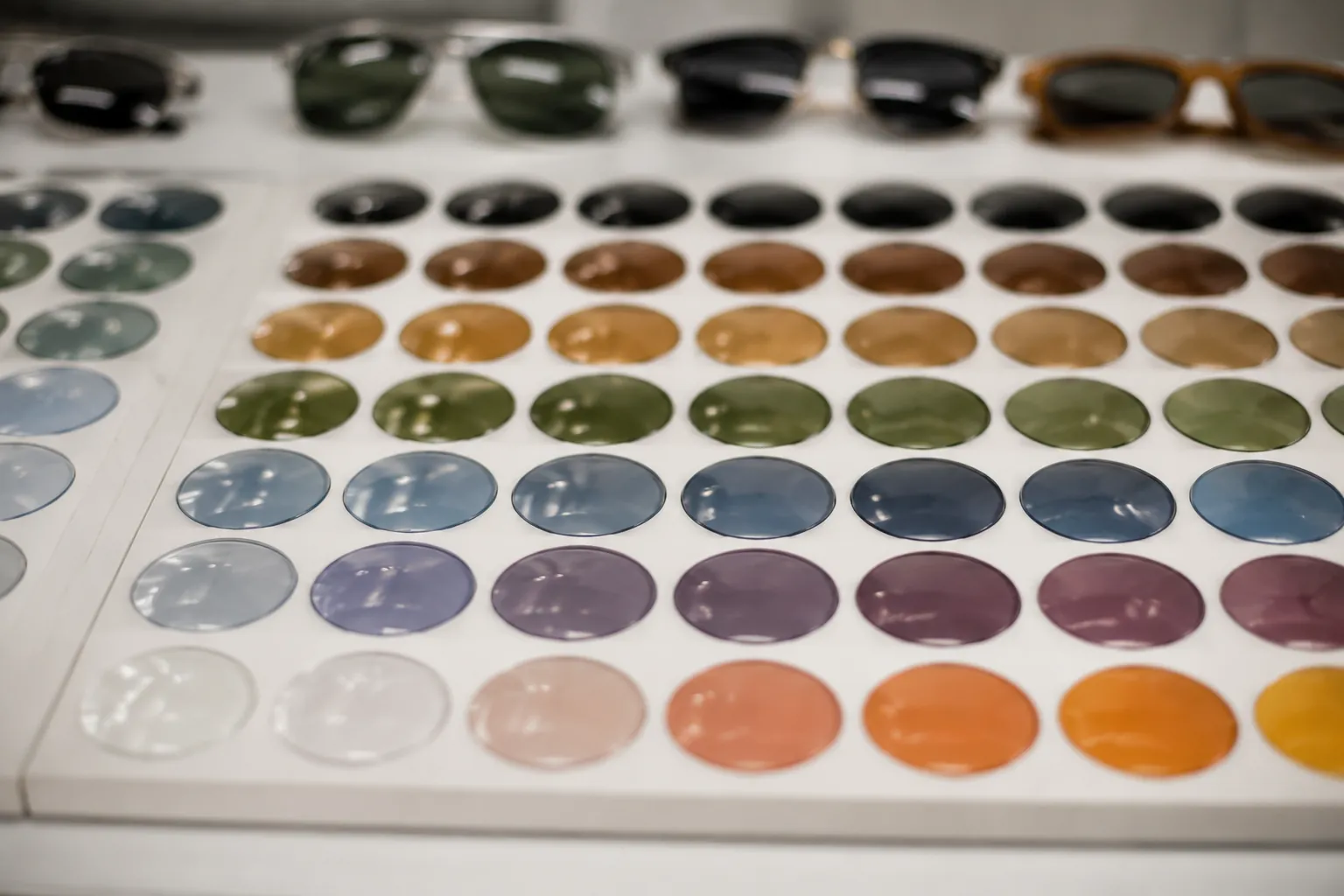
This guide is for brand owners, importers, distributors, and retail buyers sourcing polarized sunglasses in volume. It explains where polarization helps sell-through, where it just adds cost, and how to specify lenses, frames, decoration, and compliance without guesswork. It also shows how MOQ, lead time, sampling, and certification should shape the order. Not the other way around. If you buy for retail shelves or promotional programs, this will help you make cleaner, faster, and more profitable decisions.
1) Start with the channel, not the lens
Polarization is a function, not a default upgrade. It cuts glare from horizontal reflective surfaces: water, wet roads, glass, polished metal, bright dashboards. That matters in some channels. It does not matter in all of them.
Fishing, boating, driving accessories, outdoor travel, golf, and mid-tier retail can support a strong polarization story. The benefit is easy to show. A shopper looks through the lens and sees the difference. That helps sell.
For festivals, giveaways, school events, and ultra-low-price promotions, polarization often adds cost without adding enough value. In those programs, buyers usually care more about frame color, logo placement, and packaging. The lens is secondary.
Do not treat polarization like a style choice. It is not the same as a mirror coating or a darker tint. It changes performance. It also changes how the product should be specified.
Use a simple test. If the end user can name the problem polarization solves, it probably belongs in the program. If they cannot, use a plain tinted lens and spend the budget elsewhere. That usually gives better margin.
2) Where polarization actually pays
Polarized sunglasses earn their keep in channels where glare reduction is easy to show and easy to sell. Outdoor sporting goods, fishing, marine, driving, travel retail, and mid-tier private-label retail are the clearest examples. The sales story is direct.
Promotional programs work differently. A low-cost polarized lens can create perceived value, but only if the rest of the product feels credible. A flimsy frame ruins the effect. Loose hinges do too. So does poor decoration. Buyers notice the defects first.
Think in SKU terms, not just feature terms. Polarization is usually stronger as a defined family than as a scattered add-on across every frame. Cleaner assortment. Easier replenishment. Better read on what is selling.
The best fit is simple: products worn in strong sun, on water, or around reflective surfaces. The weaker the use case, the weaker the business case. For branded handouts and cheap events, non-polarized tinted lenses often make more sense.
- Good fit: fishing, boating, driving, outdoor retail, travel shops, sports chains
- Borderline fit: fashion retail with premium add-on pricing and strong merchandising support
- Poor fit: giveaways, entry-level promo, short-term event campaigns, ultra-low-price programs
3) What to spec in the lens stack
Do not write "polarized" on the PO and stop there. That leaves room for interpretation. Too much room. Specify the lens material, tint family, visible light transmission target, polarization requirement, and any surface treatment such as mirror coating or anti-scratch topcoat. Those choices affect cost, yield, appearance, and rejection risk.
For most programs, start with lens material. TAC is common in polarized sunglasses because it is light, economical, and works well for laminated polarized lenses. It is widely used in fashion and retail programs. Polycarbonate is tougher and often better for active use. CR-39 can offer strong optical quality, but it is less common in cost-sensitive mass programs.
Next, set the tint level. Use visible light transmission, not color alone. Darker outdoor styles use lower transmission. Lighter lifestyle styles use higher transmission. Match the target to the use case. A lens that is too dark feels wrong in mixed light. People stop wearing it.
Then ask about polarization quality. How does the supplier check consistency? How is the film aligned during production? Weak or inconsistent extinction performance means uneven glare reduction. A good supplier can explain the test method, show stable samples, and describe how film alignment is controlled during lamination or assembly.
Surface treatments matter too. Mirror coatings, gradient tints, and hydrophobic or oleophobic finishes all change the look and the process. Mirror coatings improve shelf appeal, but they add steps and rejection points. Gradient tints can work in fashion, but they are weaker for outdoor use. If the program is price-sensitive, keep the stack simple.
Finally, lock the compliance basis. A printed "UV400" claim is not enough. You need to know which standard was tested, which model was tested, what materials were included, and whether the construction changed after testing.
One more point: suppliers that control tinting in-house often hold color more consistently across SKUs than suppliers that outsource each stage. That matters. Batch-to-batch variation is one of the most common problems. For sign-off, compare the approved master sample and the approved frame under the same lighting you will use for final approval. One loose chip sample is not enough.
4) Polarized vs non-polarized: commercial trade-offs
The right comparison is not better versus worse. It is function, cost, and channel fit. A non-polarized sunglass can be perfectly acceptable for fashion, sun protection, and promo. A polarized lens adds value when glare reduction is part of the promise or the user experience.
| Option | Typical use case | Commercial upside | Main downside |
|---|---|---|---|
| Non-polarized tinted lens | Promo, fashion, low-price retail | Lowest cost, simpler sourcing, easier approvals | No glare reduction story and weaker premium positioning |
| Polarized TAC lens | Retail, driving, fishing, outdoor use | Strong value perception, broad utility, good balance of cost and performance | Higher unit cost than plain tint and more spec discipline required |
| Polarized lens with mirror coating | Higher-end retail, sport-inspired styles | Stronger shelf appeal, more premium look, better photo performance | More process steps, higher reject risk, and stricter coating control needed |
| Lighter polarized lifestyle tint | Fashion retail, travel, mixed indoor-outdoor wear | More wearable across conditions, broader audience | Less glare reduction than darker outdoor lenses |
Volume changes the math. On small orders, setup and handling costs weigh heavily. On larger orders, material choice, decoration efficiency, and rejection control matter more. That is why a polished polarized style with mirror coating, custom packaging, and logo decoration may work at scale, while the same build can be inefficient for a small pilot.
Talk about price in terms of both MOQ and spec complexity. Small quantities suit a simple lens stack and light decoration. Larger runs can absorb more customization, but only if each added feature serves a real sales purpose.
5) Frame, fit, and decoration have to match the lens
Buyers often spec a good lens and lose the value in the frame. Polarized sunglasses for retail need visual consistency, stable fit, and reliable assembly tolerances. If the frame looks weak, the lens claim feels expensive and out of place. If the lens sits poorly in the groove, the product looks cheap anyway.
Frame-to-lens fit depends on groove geometry, lens edge finishing, and dimensional control during production. The target is simple: secure fit without stress whitening, chipping, or assembly damage. For injection frames, ask how the supplier controls temple symmetry, front curve, lens seating depth, and hinge alignment. Small deviations matter.
Because frame tolerances, lens seating, and decoration methods interact, one supplier controlling the main steps helps. Pad printing can fail if the surface prep is weak or the part has molding residue. Laser engraving is durable, but it works best on materials and finishes that hold a crisp mark. Metal logo plates can look premium, but they add time and another failure point.
For promotional orders, keep the spec tight. One or two frame colors. One lens family. One decoration method. More variation means more shade drift, more logo inconsistency, and more approval delays. If speed matters, simplicity usually wins.
Useful decoration choices include engraved logos for durability, pad printing for flexible color branding, and metal plates for a higher-end presentation. A good supplier should explain which method fits the frame material, surface finish, and expected handling conditions. That matters when the product will be packed, unpacked, repacked, and shipped through multiple channels.
6) Compliance is part of the spec, not an afterthought
For overseas B2B buyers, compliance has to be tied to the destination before production starts. Do not assume one test report covers every market. It usually does not. A valid certificate for one model or one market does not automatically transfer to another style, another lens stack, or another country. Change the lens construction, mirror coating, frame material, or decorative coating, and review the path again.
The documents you need depend on the destination and the buyer's requirements. CE EN ISO 12312-1 is commonly relevant for Europe. ANSI Z80.3 applies in the U.S. for sunglass performance. AS/NZS 1067 matters for Australia and New Zealand. REACH covers restricted substances and material compliance, not optical performance. FDA registration, ISO 9001, and BSCI may also be part of the vendor file.
When reviewing documents, ask for the test scope, report date, model reference, and whether the exact lens material and frame construction match your order. A report on a similar silhouette is not enough if the actual product uses a different acetate formula, a different coating, or a different polarized stack. Retailers and distributors may also require packaging declarations, carton labeling, and traceability.
The safest sequence is straightforward: confirm the market, lock the standard, sample against that standard, then release the order. Skip that order and you invite delays, rework, and document corrections later.
Good compliance practice is boring. That is good. Boring keeps shipments moving.
7) MOQ, samples, pricing, and lead time
Polarized sunglasses are easy to overspec on the first order. Resist that. Size the order to the channel, define the minimum viable spec, and control risk. A low MOQ helps with pilots, market tests, and limited regional programs because it lets you check fit, decoration, packaging, and repeatability before you commit more cash.
Sampling usually takes 7 to 10 days. Bulk production usually takes 25 to 35 days, depending on complexity and order size. Those are production windows, not launch timelines. You still need sample review, revision rounds if needed, material confirmation, final sign-off, freight booking, and destination-side receiving checks. Build in a buffer.
Pricing changes with scale. At very small quantities, setup, tooling, and handling costs dominate. At moderate quantities, material choice and decoration efficiency matter more. At larger quantities, rejection rates, coating yield, and packing efficiency start to move the needle. A design that looks expensive at pilot scale can be rational at volume.
- 50 pairs: validate a new silhouette, logo, or lens tint
- 300 pairs: start a retail test or regional promotion
- 1,000 pairs: pressure unit cost and plan replenishment
- 5,000+ pairs: optimize margin through spec discipline and process control
If the forecast is still uncertain, do not force a complicated polarized build. Keep the first round simple, approve samples quickly, and save premium packaging, extra coatings, or more colorways for the repeat order. Lower risk. Better data. Better second PO.
8) Buyer checklist before you issue the PO
Before you place the order, lock the commercial and technical basics. Most problems start with vague purchase orders. "Polarized black frame" is not a specification. It gives the supplier room to guess. You will pay for that later.
A proper PO should define the target market, lens material, tint family, mirror or non-mirror finish, frame material and finish, decoration method, logo location, and compliance standard. It should also state how the sample will be approved, what tolerance you accept on color and fit, and what inspection standard applies before shipment. If the packaging must be retail-ready, include the carton and inner-pack requirements too.
Retail buyers should request a production sample and a pre-shipment QC check against the approved golden sample. Promotional buyers should focus on logo clarity, pair-to-pair consistency, count accuracy, and packaging integrity. A low unit price is not cheap if the carton needs rework or a large share of the order fails approval on arrival.
A practical pre-PO checklist looks like this:
- Confirm the destination market and required compliance standard.
- Choose lens material, tint level, and mirror or non-mirror finish.
- Approve frame material, color, and finish with a physical sample.
- Specify decoration method, logo size, and logo placement.
- Set carton, inner-pack, and retail-ready packaging requirements.
- Agree on sample timing, bulk lead time, and inspection standard before deposit.
Polarization adds real value only when the channel can sell the function. That is the filter. Use it, and you will buy fewer wrong SKUs, reduce approval friction, and improve sell-through.
Have a custom sunglasses project in mind?
Send us your styles, target market and quantities and we will return a detailed quote with MOQ, lead time and a sample plan.
Get a QuoteWhy source this from Wenzhou with LumiShades
Wenzhou in Zhejiang Province is widely regarded as China’s eyewear manufacturing capital, producing a large share of the world’s sunglasses. That concentration matters to buyers: a deep local supply chain for acetate sheet, hinges, lens blanks, plating and packaging means shorter component lead times, easier color and material matching, and a workforce with decades of eyewear-specific skill. LumiShades has manufactured in this ecosystem since 2009, and our vertical integration — in-house injection molding, acetate cutting, CNC milling, lens tinting, decoration and quality control — means no part of your order is quietly subcontracted to a workshop you cannot audit.
For international buyers, that vertical control translates into accountability. When a single factory owns every step, defects are traced and fixed at source rather than bounced between vendors, and your specifications survive intact from first sample to bulk. We back this with 15+ years of experience, shipments to 60+ countries, more than 5 million pairs produced per year and a 98.5% on-time delivery rate. Our certifications — CE EN ISO 12312-1, FDA registration, ANSI Z80.3, AS/NZS 1067, REACH, ISO 9001 and BSCI audit — mean the compliance documentation your market requires already exists. Explore our manufacturing capabilities and quality control process to see how this works in practice.
Frequently asked questions
When should I choose polarized lenses instead of plain tinted lenses? Choose polarized lenses when glare reduction is part of the product promise and the buyer can use that benefit right away. Common use cases are fishing, boating, driving, outdoor retail, travel, and higher-value private label. For giveaways, event programs, and low-price promotions, plain tinted lenses usually make more commercial sense because they keep cost, approvals, and risk lower.
What should I ask for in a polarized sunglass sample? Ask for the exact frame, lens material, tint family, coating, decoration method, and compliance route for your target market. Review the sample under the same lighting you will use for approval, and check lens fit, logo placement, color match, and whether the lens darkness feels right for real use. If the supplier claims a market standard, ask for the report that matches that exact model and construction.
What is a sensible MOQ for a first polarized order? A low MOQ is useful on a first order because it lets you validate fit, decoration, packaging, and customer response before you commit to larger inventory. If you are testing a new silhouette or a new lens family, keep the order small and treat it as a learning run. If the style is already proven, a larger follow-on order is usually better for cost and replenishment planning.
How long should I allow for production? Plan on 7 to 10 days for sampling and 25 to 35 days for bulk production, depending on the spec and order size. Add time for sample review, possible revisions, freight booking, customs clearance, and receiving. Do not commit to a launch date until the sample is approved and the shipping plan is confirmed.
Which compliance documents matter most for export orders? Match compliance to the destination market and the buyer's vendor file. Common references include CE EN ISO 12312-1 for Europe, ANSI Z80.3 for the U.S., AS/NZS 1067 for Australia and New Zealand, and REACH for restricted substances. Some buyers also ask for FDA registration, ISO 9001, and BSCI as part of supplier qualification.
Can I mix polarized and non-polarized styles in one program? Yes, but keep the SKUs clearly separated and use polarization only where the function helps the sale. That keeps pricing, approvals, inventory tracking, and sell-through reporting cleaner. Mixed programs work best when each polarized style has a clear use case and a distinct commercial reason to exist.
Ready to start?
Explore our rimless sunglasses or request a quote — our sales team replies within 12 hours.
Request a Quote