
Polarized Lens Buying Guide for Wholesale
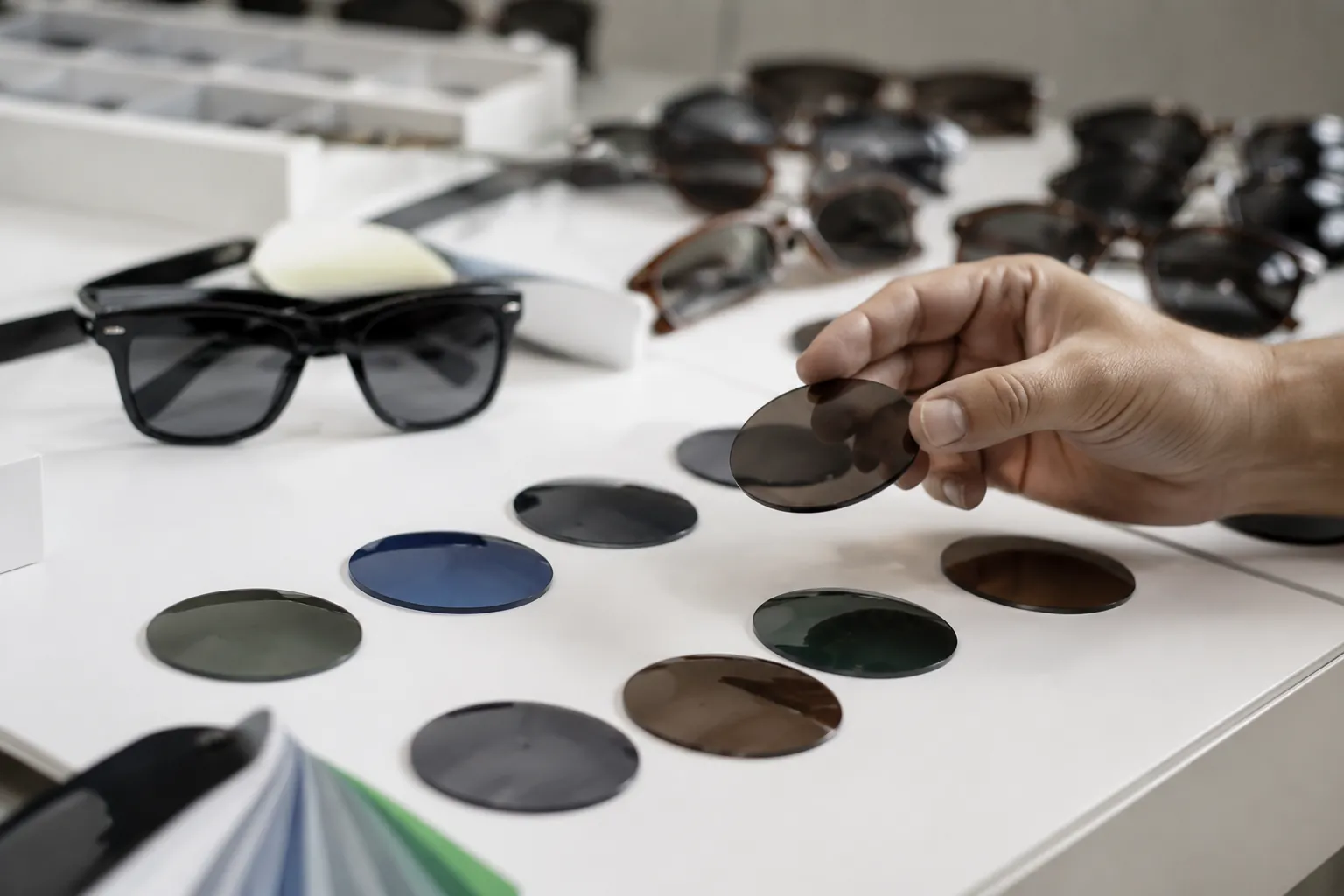
If you buy sunglasses in volume, polarized lenses are not a simple yes-or-no feature. They are a margin decision, a compliance decision, and a channel decision. This guide is for brands, importers, distributors, and retailers that need to know when polarization justifies the extra cost, how to spec it correctly, and where it can create slow-moving inventory instead of sell-through. It also explains how to evaluate lens construction, testing, decoration, and lead time without relying on vague supplier claims.
1. What polarization does
Polarization reduces reflected glare by filtering horizontally reflected light. It does not make a lens darker. It does not make a lens better by default. It does one job: it cuts glare in bright reflective conditions such as water, roads, snow, glass, and vehicle surfaces.
That makes polarized lenses useful in fishing, boating, driving, golf, snow sports, and outdoor retail. The benefit is easy to explain: less glare, less squinting, better comfort.
For wholesale buyers, the question is commercial, not technical. If the channel can explain the benefit and charge for it, polarization can support a higher retail price and better conversion. If the shopper is choosing mainly by frame shape, color, or brand, a non-polarized lens may be the better SKU.
Do not assume every dark lens is polarized. A tinted CR-39, TAC, or PC lens can reduce brightness without reducing glare. Polarization is a specific feature. Confirm it in the sample and in the production spec.
2. Which channels can absorb it
Polarization works best where the shopper can understand the benefit fast. If a short demo makes the difference obvious, the feature has real merchandising value. The strongest channels are usually these:
- Fishing and boating: glare on water is obvious, so the benefit is easy to show.
- Driving and travel: windshield and road reflections make glare reduction relevant in many markets.
- Golf and outdoor sports: reduced glare can help with contrast in bright conditions.
- Outdoor lifestyle retail: staff can explain the feature quickly and show it on the floor.
Polarization is weaker in fashion-led channels. There, customers buy first on silhouette, color, or brand identity. Adding polarization to every style can raise landed cost without improving sell-through. Better to reserve it for core outdoor SKUs, hero colors, and styles with repeat demand.
Price architecture matters too. A small factory upgrade can become material after freight, duty, packaging, and retail margin. That is easier to absorb in a higher-priced program than in an entry-level impulse line.
Simple rule: if the shopper can understand the feature immediately, polarization is easier to merchandise. If not, it may not belong in that channel.
3. Lens materials and production changes
Polarized sunglasses for wholesale are commonly built on TAC, PC, or CR-39. The right choice depends on price target, optical expectations, and frame design. The material changes the build. It changes the risk too.
TAC is common in value and mid-tier sunwear. It is light, cost-effective, and works well in laminated polarized stacks. Optical performance is solid for the price. It is not the most premium-feeling option, and poor cutting or fitting can damage the edge more easily.
PC is often used where impact resistance matters, especially in sport styles and active outdoor programs. It is tougher than TAC, but it can be more demanding on surface finish and tint consistency.
CR-39 is usually chosen for higher-end programs that want a better optical feel. The trade-off is higher cost and more demanding processing. Depending on the frame design, it may also need tighter QC on thickness, surface finish, and final fit.
Polarized lenses also require correct alignment of the polarizing film during lamination. If the axis is wrong, the lens will not perform as intended. QC should check polarization, tint uniformity, surface condition, thickness, curvature, and fit before packing.
The lens build must match the frame. Tight-fitting styles, curved sport frames, and rimless designs need more control than standard full-rim frames. Approve the exact sample that will be used as the production reference. Not a similar one. The exact one.
4. Spec choices by price tier
Most buyers do not need the same lens spec across the whole line. A tiered approach protects margin and keeps the assortment useful. Start here.
| Tier | Typical lens choice | Best use case | Trade-off |
|---|---|---|---|
| Entry | TAC polarized, standard tint | Promos, bundle sets, entry outdoor | Lowest cost, but less premium feel and fewer coating options |
| Mid | Polarized TAC or PC with tighter coating control | Fishing, driving, lifestyle retail | Better sell-through potential, but unit cost rises with decoration and coating choices |
| Premium | CR-39 or higher-grade polarized build | Brand-led collections, higher ASP channels | More expensive, longer process time, and tighter QC requirements |
Factory pricing varies with volume, lens material, coating stack, decoration method, and order complexity. A simple polarized lens in a standard frame will usually cost less than a custom build with mirrored coating, logo treatment, or a special tint. Ask suppliers to quote the exact lens stack you plan to order, not a generic placeholder.
Volume changes the math. A small test order usually carries more setup cost per pair than a repeat order because tooling, cutting, and approval time are spread across fewer units. That is normal in wholesale eyewear. Plan for it.
Match the lens stack to the channel and retail ceiling. A fishing program can usually support a more functional polarized spec than a fashion line with a fixed price point.
5. How to spec it cleanly
Loose specifications cause expensive mistakes. "Polarized lens, black" is not enough for a wholesale order. It leaves too much open to interpretation. The buyer should define the lens build clearly enough that the factory can quote, sample, and produce the SKU consistently.
A strong spec should include:
- Lens material: TAC, PC, or CR-39.
- Tint color and visible light transmission target, if the market requires it.
- Polarization requirement and whether mirror coating, flash coating, or gradient tint is also needed.
- Lens thickness range and base curve, especially for wrap frames or deeper lens curvature.
- Coating requirements such as scratch resistance, anti-reflective coating, oleophobic or hydrophobic topcoat, and salt-spray resistance if relevant.
- Fit tolerances for lens width, height, groove depth, and curvature match.
- Compliance target: CE EN ISO 12312-1, ANSI Z80.3, AS/NZS 1067, REACH, FDA registration, or other market-specific requirements.
Write tolerances into the purchase order instead of assuming standard fit will be enough. In many production lines, a lens width or height tolerance of ±0.2 mm to ±0.3 mm may work for standard frames. Tight shapes, rimless designs, or high-curve sport frames may need narrower limits. If the fit window is not controlled, the same style can fit well in one lot and poorly in another.
Decoration also needs to be defined. Laser engraving is usually cleaner for premium branding. Pad printing is common for logo placement. Hot stamping can suit certain collections. Metal logo plates can look more premium, but they add steps and alignment risk. If the lens includes an applied logo or mark, define the exact location, size, and color so it does not interfere with the field of view or required markings.
Buyer rule: if you cannot describe the lens on a sample approval sheet, you do not control the program.
6. Compliance and testing
Polarized lenses still need the same legal and safety discipline as non-polarized lenses. Reducing glare does not make a lens compliant. For wholesale buyers, testing should be tied to the exact frame, lens material, coating stack, and decoration method that will ship.
The standards buyers most often request are market specific. CE EN ISO 12312-1 is the main consumer sunglasses standard in Europe. ANSI Z80.3 is commonly used in the United States. AS/NZS 1067 is the relevant framework for Australia and New Zealand. REACH applies to chemical restrictions in materials and coatings. FDA registration is part of the U.S. regulatory picture for eyewear shipments. If any of those inputs change, confirm whether the existing test evidence still applies.
Ask for test evidence tied to the exact SKU, or at least the exact lens and frame family. Generic statements are not enough. A report for a different tint, coating, or thickness may not cover the product being imported. A practical approval file should include:
- Reference sample with signed approval date
- Lens material and coating declaration
- Applicable test standard and report number
- Carton marking and traceability method
Compliance should also match packaging and marketing claims. If the product carries UV claims, polarization claims, or special performance claims, those claims should match the lens spec, carton print, and sales sheet. Mismatches create chargeback risk and customs delays.
If the supplier maintains quality or social compliance systems such as ISO 9001 or BSCI, ask for current documents as part of supplier qualification. Those documents do not replace product testing, but they help assess process control and factory governance.
7. Lead times and MOQ
Polarized programs move faster when the specification is stable before sampling. LumiShades' MOQ starts at 50 pairs per design, which is useful for market tests, channel pilots, and small seasonal runs. Samples usually take 7 to 10 days when the frame and lens stack are straightforward. Bulk production typically runs 25 to 35 days, depending on frame type, lens complexity, decoration, and approval speed.
Production planning depends on frame construction. Injection-molded frames are commonly used for volume programs. Acetate cutting and CNC milling are used when the shape or finish needs more exact control. Lens tinting, polarization assembly, laser engraving, pad printing, and metal logo plate application can all be part of the same program if approvals are managed carefully.
MOQ and lead time rise with complexity. A standard black TAC polarized lens in a simple frame is easier to produce than a build with mirrored coating, custom tint matching, a special logo treatment, or an unusual base curve. If a buyer changes the lens spec after sample approval, the factory may need to rework part of the process and extend the shipment timeline.
Smaller orders usually carry more per-unit setup cost. Larger stable orders usually give the factory more room to optimize cutting, decoration, and packing. Clear approvals and stable specs are the fastest way to keep lead times predictable.
8. How to decide
Use a simple filter. Polarization is worth paying for when three conditions line up: the channel cares about glare, the customer can see the benefit quickly, and the retail price can absorb the upgrade. If one of those is missing, the feature may not be the right commercial choice for that SKU.
Good candidates are fishing, driving, golf, boating, and outdoor retail programs where staff can demonstrate the effect in person. Weaker candidates are fashion-only assortments, low-price giveaway programs, and styles where frame design is the main purchase driver. In those cases, a well-made non-polarized lens may be the better option.
A sensible buying strategy is to launch polarized lenses only on the top few SKUs in a collection, then compare reorder rate, return rate, customer reviews, and sell-through against non-polarized alternatives. That gives you channel-specific data instead of assumptions based on a sample-room demo.
The right factory partner should help you choose the lens stack, not just quote it. That means confirming material, compliance target, decoration method, fit tolerance, and lead time before production starts. That is how you reduce scrap, rework, and slow-moving inventory.
Have a custom sunglasses project in mind?
Send us your styles, target market and quantities and we will return a detailed quote with MOQ, lead time and a sample plan.
Get a QuoteWhy source this from Wenzhou with LumiShades
Wenzhou in Zhejiang Province is widely regarded as China’s eyewear manufacturing capital, producing a large share of the world’s sunglasses. That concentration matters to buyers: a deep local supply chain for acetate sheet, hinges, lens blanks, plating and packaging means shorter component lead times, easier color and material matching, and a workforce with decades of eyewear-specific skill. LumiShades has manufactured in this ecosystem since 2009, and our vertical integration — in-house injection molding, acetate cutting, CNC milling, lens tinting, decoration and quality control — means no part of your order is quietly subcontracted to a workshop you cannot audit.
For international buyers, that vertical control translates into accountability. When a single factory owns every step, defects are traced and fixed at source rather than bounced between vendors, and your specifications survive intact from first sample to bulk. We back this with 15+ years of experience, shipments to 60+ countries, more than 5 million pairs produced per year and a 98.5% on-time delivery rate. Our certifications — CE EN ISO 12312-1, FDA registration, ANSI Z80.3, AS/NZS 1067, REACH, ISO 9001 and BSCI audit — mean the compliance documentation your market requires already exists. Explore our manufacturing capabilities and quality control process to see how this works in practice.
Frequently asked questions
Is polarization always worth the extra cost? No. It is usually worth it in glare-heavy channels such as fishing, boating, driving, golf, and outdoor retail. In fashion-led or price-driven channels, the added cost may not improve sell-through enough to justify the upgrade. Compare the expected retail lift against your landed cost before committing the whole line.
What is the most common polarized lens material for wholesale sunglasses? TAC is one of the most common choices for value and mid-tier programs because it is light, cost-effective, and easy to laminate. PC is often chosen when impact resistance matters more. CR-39 is usually reserved for higher-end programs where optical feel and brand positioning matter more than cost.
What compliance should I ask for on polarized sunglasses? Ask for the standards that match your target market: CE EN ISO 12312-1 for Europe, ANSI Z80.3 for the United States, AS/NZS 1067 for Australia and New Zealand, and REACH for chemical restrictions. For U.S. shipments, confirm the supplier's FDA registration status where relevant. Always request the test report for the exact SKU or the exact frame and lens family.
What should I put in a polarized lens spec sheet? Specify the lens material, tint color, visible light transmission target if needed, polarization requirement, coating stack, thickness range, base curve, fit tolerances, decoration method, and compliance target. Include the exact frame reference and ask for a signed sample approval so the production team has a clear baseline.
Can I order small polarized runs for market testing? Yes. Small runs are appropriate when you want to test a channel, a seasonal color, or a new retail price point. LumiShades' MOQ starts at 50 pairs per design, which is suitable for pilot orders before scaling up. The key is to keep the specification stable so the test result is meaningful.
How long do polarized samples and bulk orders take? For straightforward programs, samples usually take 7 to 10 days and bulk production typically takes 25 to 35 days. More complex coatings, decoration, or fit requirements can extend that timeline. The fastest way to avoid delays is to approve the exact lens stack before production starts.
What usually causes problems with polarized orders? The most common problems are vague specs, loose fit tolerances, inconsistent tint, incorrect polarizing axis alignment, and changes to the lens build after sample approval. Buyers can reduce risk by approving the exact sample, documenting tolerances, and tying compliance documents to the finished SKU.
Ready to start?
Explore our sport wrap sunglasses or request a quote — our sales team replies within 12 hours.
Request a Quote