
Photochromic Polarized Sunglasses for Travel Buyers
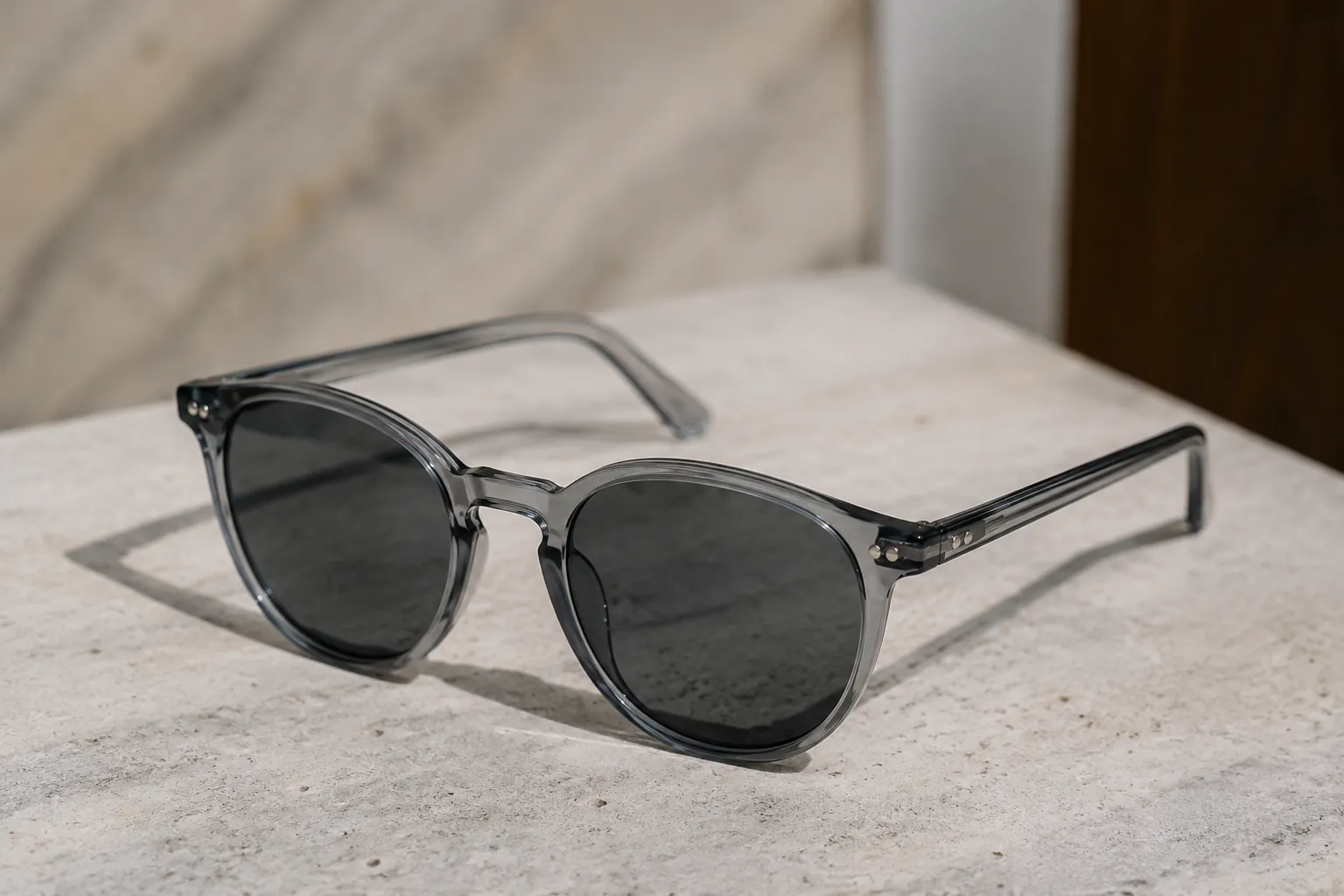
Photochromic polarized sunglasses make sense in channels that can explain the benefit fast. They fit travel retail, outdoor leisure, and convenience-led programs where one pair has to handle changing light, glare, and repeated on-off use. For brands, importers, distributors, and retailers, the value is practical: fewer SKUs, a clearer sales story, and a lens package that can support a higher ticket in the right channel.
What the combo does
Photochromic lenses darken in UV and return toward a lighter state when UV drops. Polarized lenses cut reflected glare from water, roads, glass, and snow. Put them together, and the lens adapts to sunlight while also reducing glare.
That is the basic value. One pair handles shifting light and makes bright, reflective environments easier on the eyes. It matters most when a customer moves through shade, sun, and glare in the same day. The benefit is practical. Not flashy.
Buyers should treat this as a utility lens, not a default upgrade. It works best for travelers, ferry passengers, road-trip shoppers, golf buyers, and resort customers. These shoppers can usually understand the point in one sentence. Fashion-first buyers usually will not care.
Performance depends on lens chemistry and construction. Most photochromic systems react to UV, so they darken fastest outdoors in direct sun and more slowly behind glass. Polarization works on its own, so glare reduction still happens even before the tint is fully activated. Useful. But specific.
Where it sells best
Travel retail is the strongest channel for this product. Airports, resort shops, cruise outlets, duty-free counters, and destination gift shops all serve people who move between indoor and outdoor light throughout the day. They also need a short explanation. That helps.
The best fits are:
- Travelers who want one pair for airport, street, beach, and road use
- Outdoor leisure shoppers near water, sand, or reflective pavement
- Drivers and passengers who want glare reduction without a technical pitch
- Retailers running a smaller, more useful assortment
In these channels, the lens story can support a higher price because the buyer sees the use case immediately. Destination retail is especially strong. The shopper is already in bright conditions and is more likely to buy something practical on the spot.
The fit is weaker in fashion-led stores, low-ticket discount channels, and places where the main purchase driver is frame shape or color. If indoor-to-outdoor movement is limited, polarized-only or standard tinted sunglasses usually sell better at a lower cost. Extra complexity can slow the sale.
For assortment planning, keep photochromic polarized styles as hero SKUs. One or two strong shapes, one or two base colors, and a clear retail message usually beat a broad range that is hard to explain.
Cost, MOQ, and margin
This is a premium lens build, and the cost reflects that. Compared with a basic tinted lens, the price is higher because the buyer is paying for photochromic material, polarized film or integrated polarization, tighter coating control, and more inspection. Compared with a standard polarized lens, the cost still rises because the lens has to darken, recover, and stay clear.
MOQ and pricing are factory-specific. LumiShades uses an MOQ of 50 pairs per design for custom programs, and buyers often use 300 pairs as a better first commercial test because it gives enough volume to judge sell-through, fit feedback, and defect rate without overcommitting cash. Larger orders usually improve unit pricing. Material purchasing gets easier. Production gets cleaner.
Exact pricing depends on the frame material, lens specification, decoration, and packaging. Injection plastic, acetate, advanced photochromic systems, and heavy decoration all affect cost. Treat any quote as program-specific, not market-wide.
Lead time follows complexity. Samples are typically ready in 7-10 days when the frame already exists and the lens spec is clear. Bulk production usually takes 25-35 days. The longer end applies when there are multiple colors, logo applications, or mixed compliance documents. If artwork, tint, or pack details are still open, the calendar slips fast.
| Option | Best use | Typical cost pressure | Buyer message | Common risk |
|---|---|---|---|---|
| Standard tinted | Fashion, entry price, impulse retail | Lowest | Color, look, and price | Weak utility story |
| Polarized only | Driving, water, glare-heavy use | Moderate | Reduces glare | No tint adaptation |
| Photochromic only | Mixed light and convenience | Moderate to high | Changes in sunlight | Glare remains |
| Photochromic polarized | Travel, outdoor utility, premium retail | Highest | One pair for changing conditions | Too expensive for casual buyers |
Margin only works if the channel supports the story. If the product can command a higher retail ticket and the shopper understands the value quickly, the extra lens cost is acceptable. If the channel is price-led, the same cost hurts sell-through. Keep it as a niche hero, not a mainline item.
Performance limits to note
Photochromic lenses depend on UV, temperature, chemistry, and surrounding materials. Real-world performance can differ from a lab sample. In a car, darkening is often weaker or slower because many windshields block much of the UV. Some lenses still shift a little. Do not expect full outdoor performance behind glass.
Temperature matters too. In colder weather, many photochromic materials darken more fully and stay dark longer. In warmer conditions, they may lighten faster and reach a lower maximum darkness. That is normal behavior, not a defect. Buyers should match the lens to the climate and market.
Polarization brings its own trade-off. It cuts glare well, but it can affect LCD readability at some angles. That matters for drivers, marina users, pilots, and travelers using dashboards, phones, kiosks, or navigation devices. If the channel relies on screens, test the lens in the real environment before committing volume.
Do not rely on a generic sample if the final product changes in frame thickness, base curve, lens size, or coating stack. Small geometry changes can alter the look, edge appearance, and perceived activation. For private label programs, the sample should match the retail plan closely: same frame size, same lens shape, same coating, same logo placement.
Write tolerances into the spec. Typical control targets include left-right tint match within a defined visual standard, even centering of the optical zone, clean lens edge finish, and no obvious color shift between pairs. For cosmetic acceptance, buyers often require no coating streaks, no dust under the polarized film, and no logo misalignment obvious at arm's length. That reduces returns.
How it is built
Production detail matters because it shows where failures happen. In a custom eyewear program, the key steps usually include injection molding, acetate cutting, CNC milling, lens tinting, decoration, and QC. That gives control over frame fit, lens alignment, and cosmetic finish before packing. It also keeps small issues from turning into retail defects.
A typical custom workflow looks like this:
- Confirm frame material, lens category, target market, and compliance standard
- Lock the sample spec, including lens color, polarization type, and decoration method
- Produce the sample and check fit, tint, polarization, surface finish, and logo placement
- Approve the bulk reference sample and record the signed standard for production
- Run bulk QC, including cosmetic inspection, basic lens appearance checks, and pack-out verification
Decoration affects yield and appearance. Laser engraving is durable and low-profile, but it works best on certain materials and can look too technical for fashion-led SKUs. Pad printing is flexible for color and logo shape, but it needs control to avoid smearing or poor adhesion. A metal logo plate can look premium, but it adds cost, assembly time, and alignment risk if the surface is small or curved. If the brief is simple, no decoration is often the safest choice.
The most common avoidable problems are small: lens centering off by a little, uneven tint between left and right lenses, cleaning marks on coated surfaces, logo drift after assembly, or packaging that scratches the lens in transit. These issues are easy to miss on a sample table and expensive later. Ask how the factory inspects each stage and what acceptance criteria it uses.
Packaging matters too. Define whether the set ships with a pouch, hard box, microfiber cloth, insert card, barcode label, or shipper carton marks. The wrong pouch material or loose insert can rub against the lens finish during transport. If the product is sold in travel retail, packaging should also support fast explanation and easy carry.
Compliance and what to request
Do not buy this category on a vague "compliant" claim. Ask for the exact standard, the exact report, and the exact scope. For sunglasses, the relevant references commonly include CE EN ISO 12312-1, ANSI Z80.3, AS/NZS 1067, REACH, FDA registration, ISO 9001, and BSCI. The right set depends on the market and the product configuration.
Match compliance to destination. Europe buyers usually want CE EN ISO 12312-1 plus REACH-related documentation. U.S. buyers often ask for FDA registration and ANSI Z80.3 support. Australia and New Zealand buyers typically reference AS/NZS 1067. If your customer base spans more than one region, build a mixed compliance file early so shipment does not stall later.
Ask for current certificate copies, lab reports, and product-specific scope statements. A factory-level certificate is not enough if the exact model, lens type, or decoration method was not covered in testing. The buyer should be able to trace the article number, lens specification, and report reference without guessing. That is critical for private label programs where one frame family has multiple lens and logo variations.
Practical rule: if the buyer cannot trace the exact model to the exact standard and report, the document set is not ready.
For importers, keep a compliance file with the signed sample, artwork proof, carton mark layout, and test reference together. That makes customs, marketplace onboarding, and internal QA easier when the product is reordered months later.
What to specify on the PO
Photochromic polarized programs fail when the purchase order is vague. If you want consistent output, tell the factory exactly what to make and how to pack it. Clear instructions reduce back-and-forth and avoid rework.
- Frame material: injection plastic, acetate, or mixed construction
- Lens type: photochromic polarized, target tint range, and preferred base color
- Decoration: laser engraving, pad print, metal logo plate, or no decoration
- Packaging: pouch, box, insert card, and carton marks
- Compliance target: CE EN ISO 12312-1, FDA, ANSI Z80.3, AS/NZS 1067, or a named market set
- Order size: sample quantity, first bulk run, and repeat forecast
Specify acceptance tolerances too. Define whether minor lens-to-lens variation is acceptable, how much surface marking is allowed, how close logo position must be to artwork, and whether the insert must sit in a fixed orientation. That keeps everyone working from the same reference.
For launch strategy, start with one hero color and one or two frame shapes. A narrow assortment is easier to quality check, easier to explain at retail, and easier to restock. If the first run is a test, 300 pairs is a practical starting point because it gives enough data to see whether the channel is pulling. If the style proves itself, scale the repeat order.
How to judge fit
The decision comes down to one thing: does the customer have a clear reason to pay for both functions? Travel retail, water-adjacent retail, road travel, and premium outdoor programs are the cleanest fits. The sales message should stay short: one pair, changes in sun, less glare.
Skip the combo if the channel is mostly fashion-led, highly price-sensitive, or driven by immediate frame-color preference. In those environments, the extra lens cost adds complexity without enough value. A simpler polarized or tinted program usually moves faster and carries less inventory risk.
The right test is not technical pride. It is sell-through. If the lens story helps move stock faster, lowers returns, and supports a higher retail price, it belongs in the program. If it does not, it is just a more expensive lens.
For overseas B2B programs, the safest path is to sample early, test in the actual retail channel, and lock the compliance file before launch. That is not glamorous. It saves money.
If you are unsure, treat the combo as a controlled launch: one style, one geography, one defined sales period. Measure conversion, return rate, and customer feedback before expanding. Slower than guessing. Cheaper too.
Have a custom sunglasses project in mind?
Send us your styles, target market and quantities and we will return a detailed quote with MOQ, lead time and a sample plan.
Get a QuoteWhy source this from Wenzhou with LumiShades
Wenzhou in Zhejiang Province is widely regarded as China’s eyewear manufacturing capital, producing a large share of the world’s sunglasses. That concentration matters to buyers: a deep local supply chain for acetate sheet, hinges, lens blanks, plating and packaging means shorter component lead times, easier color and material matching, and a workforce with decades of eyewear-specific skill. LumiShades has manufactured in this ecosystem since 2009, and our vertical integration — in-house injection molding, acetate cutting, CNC milling, lens tinting, decoration and quality control — means no part of your order is quietly subcontracted to a workshop you cannot audit.
For international buyers, that vertical control translates into accountability. When a single factory owns every step, defects are traced and fixed at source rather than bounced between vendors, and your specifications survive intact from first sample to bulk. We back this with 15+ years of experience, shipments to 60+ countries, more than 5 million pairs produced per year and a 98.5% on-time delivery rate. Our certifications — CE EN ISO 12312-1, FDA registration, ANSI Z80.3, AS/NZS 1067, REACH, ISO 9001 and BSCI audit — mean the compliance documentation your market requires already exists. Explore our manufacturing capabilities and quality control process to see how this works in practice.
Frequently asked questions
Which channel is the best fit for photochromic polarized sunglasses? Travel retail is the strongest fit, especially airports, resorts, cruise shops, and duty-free channels where customers move between indoor and outdoor light all day. The product also works well in resort and waterfront retail where glare and sunlight are part of the buying context.
Do photochromic polarized lenses work well in cars? They can, but performance is usually weaker or slower because many windshields block UV. Ask the supplier for car-use guidance and test the sample in the actual vehicle environment before you place a production order.
What MOQ should I expect for a custom order? MOQ is factory-specific. In this program, LumiShades starts at 50 pairs per design, while 300 pairs is often a better first commercial test because it is large enough to evaluate sell-through and quality trends.
How long do samples and bulk orders take? Sample timing depends on whether the frame already exists and the lens spec is clear. Bulk production commonly takes 25-35 days after approval, but artwork, packaging, and compliance sign-off can extend the schedule if they are not finalized early.
Which compliance documents should I request? Request the exact documents that apply to your market and product: CE EN ISO 12312-1, ANSI Z80.3, AS/NZS 1067, REACH, FDA registration, ISO 9001, and BSCI. Ask for the report scope so you can confirm the exact model and lens configuration were covered.
What is the biggest sell-through risk with this lens type? Overpricing it for the channel. If the customer does not understand the value quickly, the extra lens cost hurts conversion and slows inventory turnover. The product works best when the benefit can be explained in one sentence at the point of sale.
Ready to start?
Explore our cat-eye sunglasses or request a quote — our sales team replies within 12 hours.
Request a Quote