
Polarized Lens Color Strategy by Market and Season
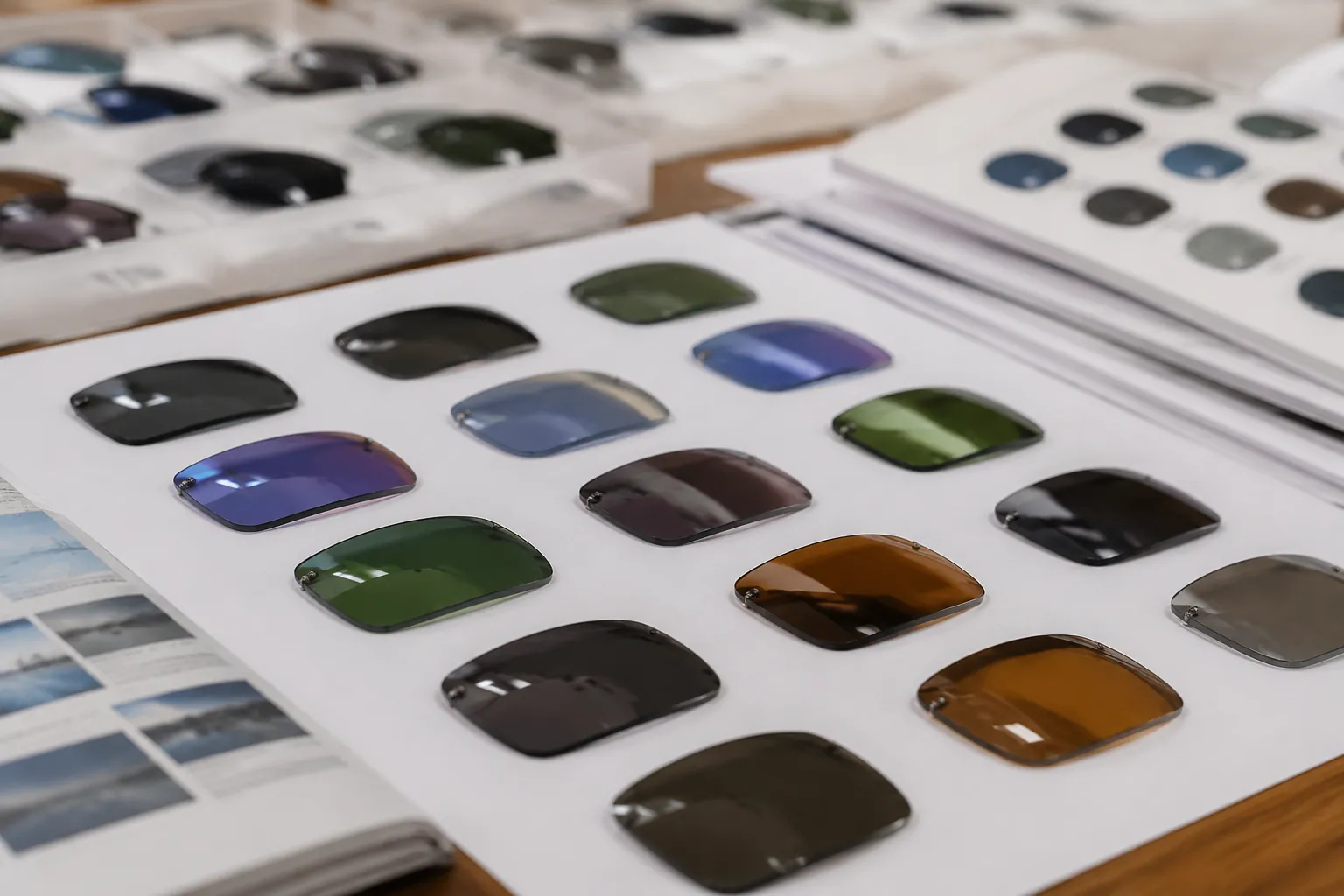
For brand owners, importers, distributors, and retailers, lens color is not an afterthought. It affects sell-through, perceived value, glare control, and which markets will take the stock. In polarized programs, tint choice also affects positioning, reorder consistency, and whether a color can be repeated across factories and seasons. This guide breaks down polarized tint choices by climate, channel, and price tier so you can build a more reliable assortment. It also covers the production, decoration, and compliance details that matter, because a tint that looks right in a catalog still has to hold up in sampling, bulk production, and buyer review.
Why lens color matters in polarized programs
In polarized sunglasses, color is not just branding. It changes contrast, visible light transmission, perceived value, and the environments where the product feels right. A dark grey polarized lens usually fits driving and marine channels because it reads as direct and functional. A brown or copper variant feels warmer and more contrast-rich, which often suits outdoor retail, golf, and lifestyle assortments. Fashion-led accounts may accept stronger color choices, but they still expect the tint to look deliberate. Not random.
For B2B buying, the rule is simple: the stronger the glare burden, the more conservative the tint should be. Coastal, driving, and water-sport accounts usually prefer darker neutrals. Urban and mixed-use retail can support a slightly lighter tint if the frame finish already carries the style message. Add color without a use case and the product gets harder to reorder. Different channels read the same tint differently.
It helps to separate base tint from surface decoration. A grey polarized lens with a blue mirror is still a grey program. A pink lens with a silver mirror is a much more specific fashion statement. Buyers who keep that distinction clear can manage assortment more precisely and avoid overcommitting to colors that do not match channel demand.
Match tints to climate and use case
Climate should shape tint choice before the design team gets attached to a color story. In high-glare markets with long sun exposure, such as coastal regions, high-altitude territories, and strong-summer Southern Hemisphere accounts, darker lenses are usually the safer choice. They reduce squinting and feel more serious at retail. In mixed-weather markets, a slightly lighter tint can work better. Users want glare control without a lens that feels too heavy on cloudy days.
Use case matters just as much as latitude. Driving programs usually perform well with grey, brown, and green-neutral families because those colors preserve road-sign readability and keep scenery from looking distorted. Water-sport buyers often want grey or blue-grey because they prioritize glare suppression over warmth. Golf, hiking, and outdoor lifestyle accounts frequently respond to brown or copper because those tints can improve contrast on terrain and foliage.
When buyers want flexibility, a gradient polarized lens can be a practical compromise. The upper portion can be darker for overhead sun, while the lower portion can feel lighter for reading a dashboard, phone, or product display. Gradients work best when the fade is controlled and repeatable. Ask the factory for daylight and indoor viewing samples before final approval. Check how the tint reads in real use.
| Market / use case | Recommended tint direction | Typical VLT target | Why it works |
|---|---|---|---|
| Driving / commuter retail | Grey or brown neutral | 8%–18% | Strong glare reduction with acceptable color fidelity |
| Coastal / water sport | Dark grey or blue-grey | 8%–15% | Minimizes reflected glare on water and bright surfaces |
| Golf / outdoor lifestyle | Brown or copper | 12%–25% | Improves contrast and terrain definition |
| Urban fashion / seasonal drop | Fashion tint or gradient | 15%–35% | Supports styling while keeping functional credibility |
Do not assume one tint can serve every market equally. The same lens can feel too dark in a cloudy climate and too light in a bright one. The better approach is to define the usage first, then map the tint, then choose mirror or decoration.
What buyers pay for
At buyer level, premium usually means repeatable quality more than unusual color. Most experienced buyers can work with a simple palette if the lenses match, the polarization is consistent, and the samples look the same as bulk. They will not accept batch-to-batch drift, uneven dye depth, or mirror finishes that haze after handling. The premium is in control. Not novelty.
Color consistency is one of the easiest places for a factory to lose trust. A lens that looks slightly different in the second lot can disrupt a chain program, especially if the customer approved photography against the first sample. For practical QC, request a standard sample set under three conditions: daylight, indoor neutral light, and backlit inspection. If the hue shift is obvious under any of those conditions, the program is not stable enough for scale.
Buyers also pay for naming discipline and packaging logic. A lens sold as "smoke grey" feels cleaner when the name is consistent across hangtags, cartons, and product pages. If the same tint is called graphite in one place and charcoal in another, it creates confusion for replenishment teams. A better system is one commercial name, one technical reference, and one approved master sample code for each color family.
For higher-value programs, ask the supplier how they control batch matching. Good factories should be able to explain whether they use a master standard, a controlled dyeing recipe, and inspection after coating or dipping. If they track color by visual comparison, spectrophotometer readings, or both, the process should be clear enough for a buyer to understand. The key is not a published numeric tolerance. It is whether the factory can repeat the approved look.
Seasonal planning by collection window
Seasonality changes how many tints you should launch, how much inventory risk you can carry, and how much time you have to fix a mistake. Short selling windows reward fewer SKUs and faster decisions. If the account is tied to a summer promotion, do not spend weeks debating a third or fourth tint when the final replenishment date is already close.
A practical seasonal model is to anchor the core assortment in one neutral, one warmer contrast tint, and one fashion or mirror option. That gives the sales team enough range to serve different doors without making the program too broad. If the collection is only for a single peak season, lead with the safest colors first and treat experimental tints as test quantities. Buy enough to validate sell-through. Not enough to satisfy every possible color request.
- Use the first order to validate reorder behavior, not just initial interest.
- Keep core tints on the same frame platform so color performance is the only variable.
- Stagger fashion colors into smaller quantities to protect cash flow.
- Reserve faster replenishment capacity for the tint with the broadest channel appeal.
Timing matters because lens color approval is not instant. A typical sample cycle is often around 7 to 10 days for a straightforward tint confirmation, but it can take longer if the buyer requests mirrored finishes, anti-reflective backs, or a color correction after the first sample. Bulk production often takes about 25 to 35 days after approval, and more complex decorative work can take longer. If the selling season is fixed, lock tint decisions early enough to leave room for one revision round and shipping buffer.
MOQ logic should follow demand confidence. If a factory minimum is 50 pairs per design, that does not mean every tint deserves the same volume. A safer launch might be 50 to 100 pairs for the core color, 50 pairs for a secondary color, and a very limited test on the fashion option. Once data comes back, adjust the next buy rather than carrying dead inventory into the off-season.
Production details that affect tint consistency
The cheapest mistake in polarized programs is approving from a screen alone. Digital images compress color, flatten mirror intensity, and hide the small differences that matter in bulk production. Always compare physical samples in sunlight, indoor retail light, and under neutral white lamps. A tint that feels balanced outside may appear too green or too yellow indoors. That can hurt buyer confidence.
Material behavior matters too. Polarized lenses are often made from TAC, PC, nylon, or other coated composites, and each substrate behaves differently during dyeing, lamination, or hard-coating. TAC is commonly used for polarized programs because it works well with polarization film and can deliver clear optical performance, but it still depends on coating quality and edge finish. PC can be impact-resistant and cost-effective, but optical clarity and tint uniformity depend heavily on process control. Nylon or other higher-performance materials may suit tougher use cases, but they usually require tighter control and closer cost management.
Decoration methods add another layer of risk. Mirror coatings, flash coatings, gradient effects, and inside AR backs can each change how the base tint reads. A silver mirror can make a mid-tone lens look darker. A blue flash can make it feel cooler and more fashion-led. If the design brief includes decoration, ask the supplier to confirm the process sequence because order matters. Hard coat, color layer, polarized film, and mirror finish are not interchangeable steps. Change the sequence and the final look can shift too.
For production control, ask for the following before bulk release:
- Master sample approval with date, code, and target tint name.
- Indoor and outdoor photo references of the approved lens.
- Confirmation of base material, coating stack, and mirror method.
- Inspection point for tint uniformity, surface haze, and edge consistency.
- Packaging reference showing how the color is identified on cartons and case labels.
On the factory side, good practice is to check lens color against a standard in a controlled viewing box or under agreed lighting conditions. If you are sourcing at scale, ask whether the plant can hold repeat orders close to the original master. Even when a lab number looks acceptable, the human eye still decides whether the product feels matched.
Compliance and market rules
Compliance usually does not dictate the exact tint shade, but it does shape the allowable performance range and the claims you can make. If a program is sold into multiple markets, the shade family must work within local standards for sunglasses performance and labeling. Conservative channels often want fewer surprises, less aggressive mirror flash, and clear documentation. That is especially true when the product is positioned as general-purpose sunglasses rather than costume or fashion eyewear.
Different markets may require different compliance pathways. Europe typically requires CE alignment with EN ISO 12312-1 for sunglasses. The United States commonly involves FDA registration for the facility and buyer expectations around ANSI Z80.3 testing. Australia and New Zealand use AS/NZS 1067. REACH may also apply for material declarations when the customer needs chemical compliance documentation. If your tint or coating uses special dyes, inks, or decorative films, confirm that the supplier can document the materials and finish process.
Do not overlook how color affects perceived category. A very dark lens may look premium in one channel and overly opaque in another. A highly mirrored fashion lens may be fine in beach retail but rejected for driving programs or conservative wholesale accounts. Align shade selection with end use, the buyer's quality expectation, and the documentation the market expects. If the target customer is a distributor with multiple retail doors, they often want the least controversial version that still looks modern.
If you are splitting a program by market, create a simple approval matrix with the tint name, transmission target, mirror spec, and destination market. That helps sales, production, and compliance stay aligned instead of making color decisions in isolation. It also makes customs, labeling, and export paperwork easier because the same product description can be used consistently across documents.
Buying strategy by MOQ, price, and channel
Assortment strategy should follow reorder probability. If you do not know which tint your channel will reorder, do not launch six. Launch two or three. That keeps your cash tied to colors that have a realistic path to replenishment. Once the sell-through pattern is visible, broaden the palette in the second run without carrying too much risk from the first.
MOQ, price, and lead time are linked. A supplier may quote the same frame at one price for a single-lens-color program and a slightly higher price for multiple tints because of extra dye control, separate coating setup, or more complex QC. Likewise, a mirror finish or gradient may add cost because it requires more process steps and more inspection time. If the base price looks attractive, ask whether decoration, special packaging, or color sorting is included. The lowest quote is not useful if it does not cover the exact tint and finish you plan to sell.
A simple buying framework helps:
| Channel | Recommended launch structure | Risk level | Buying logic |
|---|---|---|---|
| Core wholesale / replenishment | 2 neutral tints | Low | Prioritize reorderability and stable matching |
| Outdoor specialty | 2 neutrals + 1 contrast tint | Medium | Balance function and differentiation |
| Fashion / seasonal retail | 1 core tint + 1 mirrored + 1 seasonal color | Medium to high | Use color to create novelty without overbuilding inventory |
| Private label test order | 2 tints maximum | Low to medium | Learn what the buyer reorders before expanding the palette |
Price tiers should also guide color choice. Entry programs usually perform best with a small, reliable palette because the buyer wants clarity and volume. Mid-tier programs can support more nuanced tints, gradients, or mirrored finishes if the MOQ and packaging standards justify the extra cost. Premium programs can afford more decoration, but even there, the winning lens is usually the one that looks intentional from a short distance and consistent in every unit.
A practical assortment model for first orders
For the first order, build the collection around evidence, not taste. A good launch plan separates the safe seller from the test color and gives each one a different job. For example, grey can serve as the universal core, brown or copper can cover contrast-driven demand, and a mirrored or gradient fashion option can test seasonal reaction. That structure makes it easier to measure what actually earns a reorder.
Start with one master frame and compare the lens options against the same silhouette. If the frame is black or tortoise, the lens conversation becomes more visible because the frame is not masking the tint. If the frame is bright or translucent, the lens may need to be simpler so the product does not feel overloaded. In both cases, ask for physical samples with the exact temple print, lens etching, and packaging that the bulk order will use. Color approval without decoration approval is only part of the process.
A useful first-order process is:
- Approve one master tint for broad distribution.
- Add one contrast tint that solves a real use case.
- Reserve one seasonal or mirrored variant for lower-quantity testing.
- Confirm sample-to-bulk matching before releasing the full order.
- Track reorder, discount, and returns separately by tint.
That last point matters. A lens that sells quickly but returns poorly is not a win. A lens that moves slowly but holds margin may still be valuable if it strengthens the line. The goal is to understand which tint creates the best combination of sell-through, margin, and buyer confidence. Once you know that, the next buy becomes a controlled decision instead of a guess.
The strongest polarized assortment is not the most colorful one. It is the one that matches climate, channel, and production reality while still giving the collection a clear point of view. Treat tint selection as a sourcing decision, not a styling detail. That is how repeat business starts.
Have a custom sunglasses project in mind?
Send us your styles, target market and quantities and we will return a detailed quote with MOQ, lead time and a sample plan.
Get a QuoteWhy source this from Wenzhou with LumiShades
Wenzhou in Zhejiang Province is widely regarded as China’s eyewear manufacturing capital, producing a large share of the world’s sunglasses. That concentration matters to buyers: a deep local supply chain for acetate sheet, hinges, lens blanks, plating and packaging means shorter component lead times, easier color and material matching, and a workforce with decades of eyewear-specific skill. LumiShades has manufactured in this ecosystem since 2009, and our vertical integration — in-house injection molding, acetate cutting, CNC milling, lens tinting, decoration and quality control — means no part of your order is quietly subcontracted to a workshop you cannot audit.
For international buyers, that vertical control translates into accountability. When a single factory owns every step, defects are traced and fixed at source rather than bounced between vendors, and your specifications survive intact from first sample to bulk. We back this with 15+ years of experience, shipments to 60+ countries, more than 5 million pairs produced per year and a 98.5% on-time delivery rate. Our certifications — CE EN ISO 12312-1, FDA registration, ANSI Z80.3, AS/NZS 1067, REACH, ISO 9001 and BSCI audit — mean the compliance documentation your market requires already exists. Explore our manufacturing capabilities and quality control process to see how this works in practice.
Frequently asked questions
Which polarized lens color sells best across multiple markets? Grey is usually the safest cross-market choice because it keeps color perception neutral and works well for driving, general outdoor use, and replenishment programs. Brown is often the next strongest option because it adds contrast while staying commercially conservative. If you need one universal SKU, start with grey. If you can support a second, add brown or copper for contrast-led accounts.
How many lens colors should I launch in a first order? Usually two or three. More than that raises SKU risk quickly, especially when your MOQ is 50 pairs per design and you are still learning sell-through by channel. A better first buy is one core tint, one contrast tint, and one test color only if the account has a clear seasonal reason for it.
Do mirror finishes count as a separate color strategy? Yes. Mirror changes perceived value, channel fit, and often the price tier, even if the base tint stays the same. It can also change how dark the lens looks in daylight, so it should be approved as part of the full color system rather than treated as a minor add-on. Mirror works best for fashion, beach, and seasonal programs.
How long should I allow for samples and bulk production? Plan on about 7 to 10 days for samples and about 25 to 35 days for bulk after approval. Add more time if you include gradient effects, mirror coatings, custom printing, or a revision round. If the product is tied to a fixed sales window, lock tint choices early so you have room for approval and shipping.
Which certifications matter most for polarized sunglasses exports? Use the requirements that apply to the destination market and the buyer. Common references include CE EN ISO 12312-1 for Europe, ANSI Z80.3 for the US, AS/NZS 1067 for Australia and New Zealand, REACH for material compliance where requested, and FDA registration for the manufacturing facility when needed. Ask the supplier for current documents before production so you can confirm the exact scope of compliance and avoid relying on generic claims.
Ready to start?
Explore our sport wrap sunglasses or request a quote — our sales team replies within 12 hours.
Request a Quote