
PC Injection vs Acetate: Price Starts with the Front
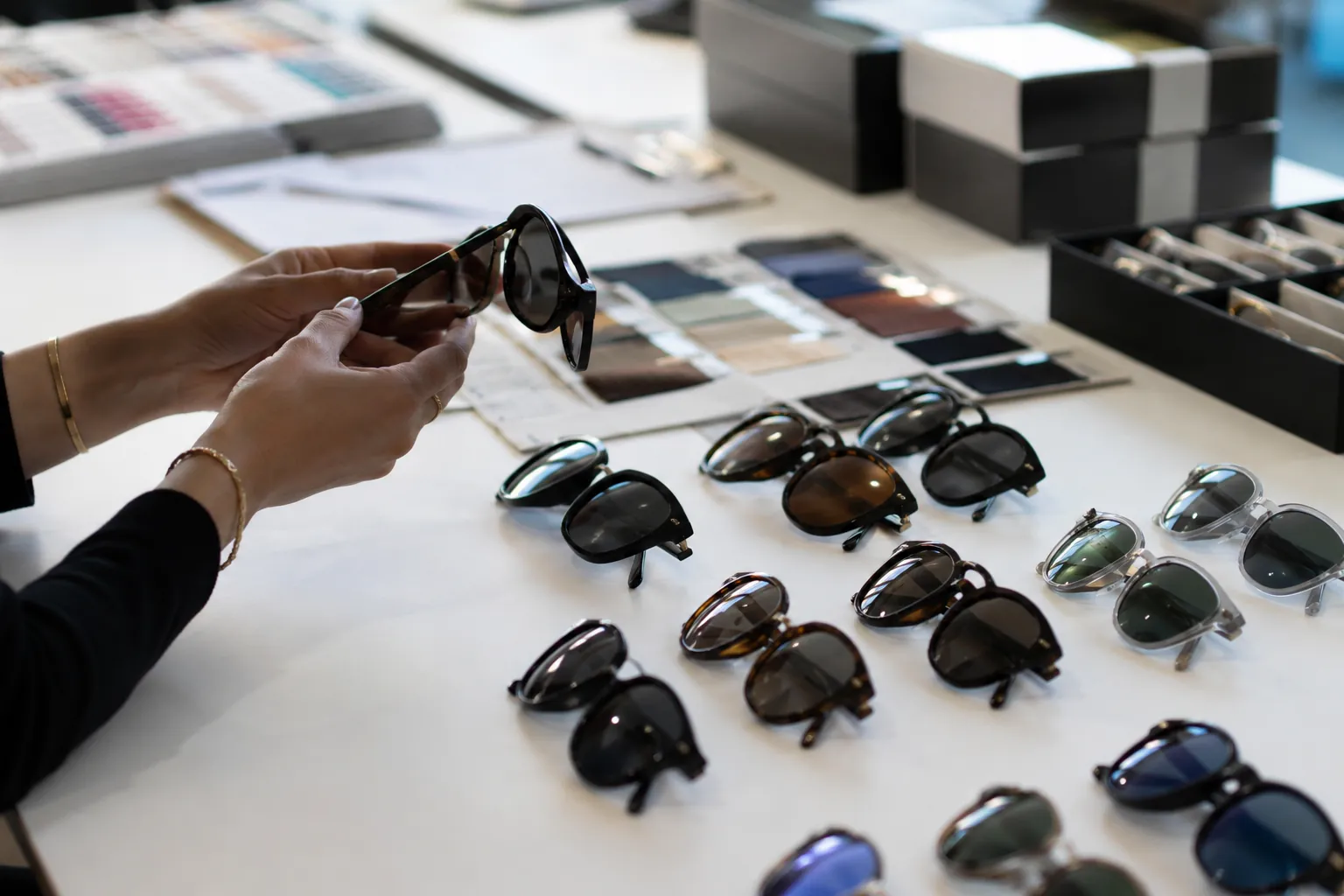
This guide is for brand owners, importers, and retail buyers comparing polycarbonate injection-molded fronts with cellulose acetate fronts for custom sunglasses. Material matters. But the bigger pricing decision usually sits in the production route behind the front. A molded polycarbonate front and a CNC-machined acetate front run on different cost structures, tolerance risks, finishing steps, and retail expectations. If you need to set a target ex-factory cost or retail price before sampling, start here. The frame front often decides whether a program fits a promotional, mid-market, or premium position.
Start with the retail slot, then work backward
Many buyers start with the wrong question: Which is better, PC or acetate? Better for what? The real commercial question is narrower. What retail band are you targeting? What gross margin do you need after freight, duty, packaging, testing, and defect allowance? And which front construction supports that math?
In most sunglasses programs, the frame front is a major cost driver. A PC injection front is built around tooling, machine setup, cycle control, and repeatability. Once the mold is approved and the process is stable, the factory can produce large volumes with relatively low labor per pair. A cellulose acetate front sits in a different system. Sheet material is usually more expensive than commodity molded resin. Machining takes longer. Polishing takes labor. Cosmetic grading is tighter.
That difference shows up at retail. Consumers may not know the production route, but they do read value cues: weight, edge polish, color depth, gloss consistency, hinge-area finish, and whether the front looks clean under store lighting. Those cues shape perceived value and acceptable retail price. Injection-molded PC fronts are common in promotional programs, opening-price retail, and high-volume commercial lines. Acetate fronts appear more often in programs that rely on thicker profiles, layered color, or a more refined finish to support a higher ticket.
The point is simple. Before you compare raw materials, compare manufacturing systems. The route behind the front will shape unit economics, revision flexibility, the QC plan, and the retail position the finished frame can credibly support.
What the factory actually does in each route
PC injection starts with mold design, resin selection, color matching, resin drying where required by the material specification, and machine setup. Polycarbonate is hygroscopic, so drying is often necessary to reduce moisture-related defects such as splay or surface haze. The resin is then injected into a mold under pressure, cooled, ejected, trimmed, and inspected. Inspectors usually check parting lines, gate vestige, flash, sink in thicker sections, warpage that can affect lens fitting, and gloss consistency.
Acetate follows a longer route. The factory starts with cellulose acetate sheet, which may be solid, crystal, laminated, or patterned. The front outline is cut from sheet, then CNC-machined to create the lens groove, bridge profile, bevels, hinge pockets, and face contour. After machining, parts usually move through tumbling or barrel finishing, buff polishing, cleaning, hinge setting, fitting, alignment, and cosmetic inspection. Depending on the finish standard, polishing may require several stages to remove tool marks and produce a uniform surface on both face and edges.
The commercial point is straightforward: material cost and route cost are not the same thing. Polycarbonate is not just a lower-cost raw material. It belongs to a manufacturing system built for repeatability and scale. Acetate is not premium only because of the material itself. It also carries more machining, finishing, and sorting work, and that work stays visible in the final unit price.
- PC injection route: mold approval, resin preparation, color trial, molding, trimming, decoration, lens fitting, assembly, QC.
- Acetate route: sheet approval, cutting, CNC machining, tumbling or polishing, hinge installation, decoration, lens fitting, assembly, QC.
- Main operational difference: PC concentrates cost in tooling and machine control; acetate keeps more cost in machining, finishing, and manual inspection.
For buyers working against a development calendar, this matters fast. A straightforward PC program with approved color and a standard lens specification usually has fewer downstream finishing steps to control. Acetate can still move efficiently, but lamination choice, bevel detail, polishing standard, and hinge fit create more variables between approved sample and bulk shipment.
Where unit cost really moves
Sell-price pressure often starts at the frame front because that is where route cost accumulates. Temples, lenses, and packaging matter. The front usually decides tooling logic, machine time or CNC time, polishing hours, and cosmetic reject sensitivity.
| Factor | PC injection front | Hand-cut acetate front |
|---|---|---|
| Setup economics | Lower unit cost at scale, but dependent on mold investment and repeatable volume | Higher unit cost, with less dependence on hard tooling for small design revisions |
| Typical MOQ logic | Usually more commercially efficient once order volume is high enough to absorb tooling and setup | Can be practical for lower-volume development or boutique runs, but unit cost remains higher |
| Unit-price direction | Usually lower than acetate when shape, color, and volume are stable | Usually higher than molded PC because of sheet cost, machining time, polishing labor, and cosmetic sorting |
| Main cost drivers | Mold amortization, resin grade, cycle efficiency, scrap rate, decoration, lens specification | Sheet grade, cutting yield, CNC time, polishing passes, hinge fitting, scrap and pair matching |
| Revision cost | Major front-shape changes may require mold rework or new tooling components | Minor outline or bevel revisions are often easier to absorb during machining |
The pricing ladder usually behaves in predictable ways even when exact numbers vary by factory. At very low volume, almost any custom frame looks expensive because setup, handling, and QC are spread across too few units. As volume rises, injection molding usually improves more sharply because tooling and setup can be amortized over a larger run. Acetate also benefits from scale, but less dramatically, because machining, polishing, and visual grading still carry meaningful labor content even at higher quantities.
One practical rule holds across suppliers. If you expect frequent front-shape revisions during development, acetate often gives you a more flexible path to iterate. If the shape is already stable and the order volume is real, PC injection usually has the stronger unit-cost logic.
Ask for a volume ladder before approving a route. Get pricing by design at the quantities you may actually order, and confirm whether tooling, logo application, lens specification, and testing are included or quoted separately.
Finish quality changes what the customer sees
Do not reduce this comparison to price alone. The route also changes the visual language of the product. Polycarbonate and cellulose acetate do not behave the same in the hand or under finishing operations.
PC injection fronts are usually chosen for consistency, repeatability, and efficient production of commercial shapes across large runs. Mold texture can define the face finish, from gloss to matte, and decoration methods such as pad printing, hot foil, or laser marking can be applied efficiently. This route is widely used in promotional programs, entry retail, and replenishment-driven styles where visual consistency matters more than material depth.
Acetate fronts often support a more premium presentation through visible color layering, sharper edge definition after polishing, and thicker or more sculpted profiles. Layered or translucent sheet can create color effects that are difficult to replicate through simple molding. That matters for fashion-oriented collections, boutique retail, or brands that need the frame itself to carry more of the value signal.
Decoration also reads differently by route:
- Pad printing: efficient and cost-controlled on PC, but usually associated with more commercial positioning.
- Laser marking: durable for technical or understated branding, especially for inside markings.
- Metal logo plate or inlay: commonly used in acetate programs where the construction and finish can support a more premium detail.
- Hot foil or screen logo: possible on both routes, but placement tolerance and durability standard should be agreed before bulk.
Be careful with mixed signals. Premium packaging cannot fully compensate for a frame front that reads as entry-level. In most cases, the customer reads the front first, then the branding, then the packaging.
Lead time follows process control
Lead time is not just a calendar issue. It is a process-control issue. A buyer with unresolved color references, uncertain logo placement, or changing lens requirements should think carefully about which route absorbs change more cleanly.
A straightforward PC front with approved color, stable geometry, standard hardware, and a common lens specification usually moves through production with fewer finishing variables. If the program requires new tooling, unusual texture, or repeated color corrections, development can stretch out fast.
Acetate can also move quickly, especially when machining, polishing, and assembly are controlled within one operation. But every added visual expectation increases checking and remake risk. Laminated fronts need appearance approval. Clear crystal fronts show polishing marks more easily. Sharp bevels and thick profiles require more disciplined finishing. In practice, acetate is often more flexible during aesthetic refinement before bulk, but harder to keep visually uniform when standards are vague.
Buyers should lock three items early:
- Approved front geometry: eye size, bridge, temple fit, and lens groove profile.
- Approved color reference: Pantone where appropriate for molded color, or a retained physical sample for patterned or laminated acetate.
- Approved lens category: tint, category, base curve, and compliance target before production scheduling.
Once those are fixed, the factory can plan with fewer variables. If they remain open, both routes slow down. Acetate usually shows the delay more clearly because more of the value is created after the front is cut from sheet.
Tolerance, compliance, and QC differ by route
Both routes still have to pass the same buyer scrutiny on the finished sunglasses. Front material does not replace lens compliance, product testing, or importer due diligence. Depending on the market, buyers may ask suppliers to support product claims or testing against standards and requirements such as CE EN ISO 12312-1, ANSI Z80.3, AS/NZS 1067, and REACH. Some U.S. programs may also ask about FDA registration status where relevant to importer documentation. Factory-management or social-audit certifications such as ISO 9001 and BSCI are separate from finished-product performance and should not be treated as substitutes for product testing.
The QC checkpoints are not identical. On PC injection fronts, inspectors usually focus on molding defects: flash on parting lines, sink in thicker bridge sections, gate vestige, short shots, stress whitening, and color variation between cavities or batches. On acetate fronts, inspectors usually focus more on polish uniformity, edge symmetry, machining precision, lamination appearance, hinge seating, and left-right pair matching.
Tolerance control matters because a front can look acceptable before lens fitting and still fail during assembly. Typical control points include:
- Lens groove consistency: stable enough that the lens seats without excessive stress or looseness.
- Bridge symmetry: visual and dimensional balance so the frame does not sit twisted after assembly.
- Hinge position: left-right consistency so temple opening angle and alignment remain within acceptance.
- Front warp: controlled tightly enough to avoid difficult glazing and post-assembly distortion.
Do not ask only for a certificate list. Ask for the QC plan. A credible supplier should be able to explain incoming material inspection, in-process checks after molding or machining, decoration approval, assembly inspection, and final random inspection before packing. Buyers should also confirm whether compliance test reports are current, who performed the testing, and whether the tested configuration matches the lens and frame specification being ordered.
A practical buying framework
The cleanest way to decide is to match the route to the program economics. Preference is secondary.
| Buyer situation | Better route | Why |
|---|---|---|
| Promotional campaign with a tight landed-cost target and repeat reorder potential | PC injection | Usually better for scalable unit economics, output efficiency, and replenishment consistency once the design is stable |
| Independent brand building a more premium opening-price collection | Acetate | Better able to support perceived value through thickness, polish, color depth, and premium detailing |
| Chain retailer testing several colors in moderate volume | PC injection or mixed program | Use PC on proven volume shapes; reserve acetate for color stories or hero styles that can support higher margin |
| Distributor running trial quantities by design | Depends on retail target | Both are possible, but acetate only makes commercial sense when the target customer will pay for the added front value |
A mixed strategy is often the practical answer. Use PC injection for volume drivers, replenishment styles, or price-sensitive SKUs. Use acetate for image-building styles, premium packaging programs, or frames that need more visible material value to justify the shelf price.
One blunt rule helps. If the planned retail price cannot comfortably absorb the frame-front route, change the route before you change the product story. The customer judges the object in hand first.
What to confirm before approving samples
Many sourcing mistakes happen because the approved sample looks right but is not specified tightly enough for bulk. Before PO stage, make the sample commercially executable.
- Confirm the route and front construction: injection-molded PC or cellulose acetate, plus target thickness, face finish, and edge-finish standard.
- Define the decoration method: pad print, laser mark, hot foil, metal plate, or inlay. Each changes appearance, durability, and reject criteria.
- Lock the lens specification: tint, filter category, base curve, and the compliance standard or market requirement the shipment must meet.
- Set bulk color control: Pantone where applicable, a physical swatch, or a retained approved sample for patterned or laminated material.
- Write cosmetic acceptance rules: scratch visibility, polish marks, logo placement tolerance, lamination appearance, and left-right pair matching.
- Compare the volume ladder: ask for pricing by design at your trial, launch, and reorder quantities before finalizing retail.
- Ask where QC happens: incoming material, post-molding or post-machining, after decoration, during assembly, and before packing.
The central point is simple. PC injection and acetate are not just two frame materials. They are two different commercial systems. Choose the one that fits your price architecture, revision tolerance, compliance obligations, and the level of perceived value the product needs to deliver in the customer's hand.
Have a custom sunglasses project in mind?
Send us your styles, target market and quantities and we will return a detailed quote with MOQ, lead time and a sample plan.
Get a QuoteWhy source this from Wenzhou with LumiShades
Wenzhou in Zhejiang Province is widely regarded as China’s eyewear manufacturing capital, producing a large share of the world’s sunglasses. That concentration matters to buyers: a deep local supply chain for acetate sheet, hinges, lens blanks, plating and packaging means shorter component lead times, easier color and material matching, and a workforce with decades of eyewear-specific skill. LumiShades has manufactured in this ecosystem since 2009, and our vertical integration — in-house injection molding, acetate cutting, CNC milling, lens tinting, decoration and quality control — means no part of your order is quietly subcontracted to a workshop you cannot audit.
For international buyers, that vertical control translates into accountability. When a single factory owns every step, defects are traced and fixed at source rather than bounced between vendors, and your specifications survive intact from first sample to bulk. We back this with 15+ years of experience, shipments to 60+ countries, more than 5 million pairs produced per year and a 98.5% on-time delivery rate. Our certifications — CE EN ISO 12312-1, FDA registration, ANSI Z80.3, AS/NZS 1067, REACH, ISO 9001 and BSCI audit — mean the compliance documentation your market requires already exists. Explore our manufacturing capabilities and quality control process to see how this works in practice.
Frequently asked questions
At what volume does PC injection usually make more sense than acetate? There is no universal break point because the answer depends on tooling cost, shape complexity, resin grade, and the supplier's setup economics. In practice, PC injection usually becomes more attractive when the design is stable and the expected volume is high enough to amortize tooling over launch and repeat orders. The right move is to ask for a full cost comparison at your actual quantities, with tooling listed separately and with the same lens, logo, and packaging specification applied to both routes.
Can acetate work at a 50-pair MOQ? Yes, in many cases it can, especially for development, boutique tests, or low-volume premium programs. The issue is not feasibility. It is economics. At that volume, machining, polishing, and visual grading still carry significant labor cost, so the unit price will remain high. Before approving a 50-pair acetate run, confirm whether the factory will charge any setup fee, whether color and lamination are available at that quantity, and whether the sample finish standard is realistically repeatable in bulk.
Which route gives more premium branding options? Acetate usually supports a broader premium presentation because it can pair polished edges, thicker profiles, layered color, and hardware details such as logo plates or inlays. PC injection still supports effective branding through pad printing, hot foil, and laser marking, but the overall shelf signal is usually more commercial unless the design, surface finish, and hardware are handled very carefully. Buyers should ask for physical branding samples, abrasion or adhesion expectations where relevant, and written logo placement tolerances before approval.
Does choosing acetate automatically mean better compliance? No. Compliance is determined by the finished product and the market where it will be sold, not by the frame-front material alone. For sunglasses, buyers should confirm the applicable product requirements and supporting test documentation for the exact lens and frame configuration being ordered, such as CE EN ISO 12312-1, ANSI Z80.3, AS/NZS 1067, and REACH where relevant. FDA registration, ISO 9001, and BSCI may matter in procurement or importer review, but they do not replace product testing on the finished sunglasses.
What is the main QC risk difference between the two methods? PC injection and acetate fail in different ways. PC injection is more exposed to molding-process defects such as flash, sink, warpage, gate vestige, and batch or cavity color variation. Acetate is more exposed to polishing inconsistency, machining asymmetry, lamination appearance issues, hinge seating problems, and left-right mismatch. A buyer should ask the supplier for route-specific QC checkpoints, sample approval criteria for cosmetics and dimensions, and the inspection stage at which each defect type is controlled.
Ready to start?
Explore our aviator sunglasses or request a quote — our sales team replies within 12 hours.
Request a Quote