
Metal-Core Temple Specs for Stable Plastic Sunglasses
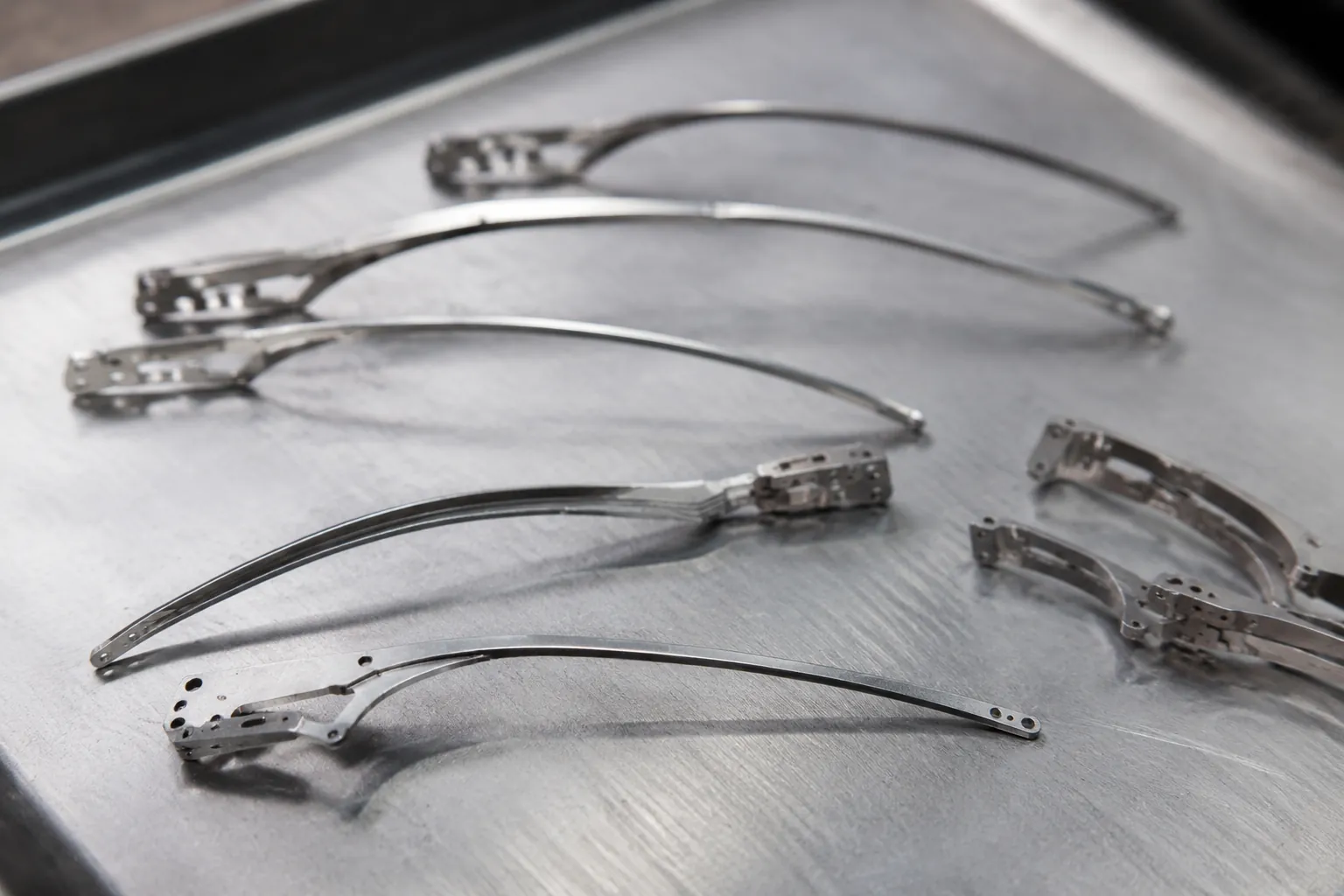
This guide is for brand owners, importers, distributors, and retailers buying custom plastic sunglasses in volume. A metal core in the temple can help the frame hold shape, keep decoration more consistent, and give the product a firmer feel in hand. But only if the build is specified clearly and checked in production. The job is simple: define the temple material, the core length and position, the cosmetic standard, and the QC checks the factory must pass. Do that early. It reduces fit complaints, appearance defects, and sample-to-bulk drift.
Start with the real question: do you need a metal core?
Not every plastic sunglass frame needs a metal core in the temple. For low-cost promotional sunglasses, short temples, or thick injected styles with limited fitting expectations, an all-plastic temple may be enough. A core matters more when the brief calls for better shape retention, a more solid feel, or tighter appearance control.
In practice, a metal core can help in three ways. First, it can improve the temple's ability to hold a minor set after adjustment, depending on the plastic and the wall thickness around it. Second, it can make the temple feel denser and less hollow in hand. Third, it can create a more stable internal structure for certain decoration layouts, especially when the outside surface needs to stay visually straight.
Use a metal core when your product brief includes conditions such as:
- Longer or slimmer temples that would otherwise feel too flexible or insubstantial.
- Retail channels where fit consistency and minor post-sale adjustment matter.
- Translucent or crystal colors where internal straightness and appearance are easy to see.
- Decoration zones that need a stable outer surface for repeatable logo placement.
- Models positioned above entry-level price points where hand feel affects perceived value.
Do not add a core just because it sounds more premium. If the temple is already thick, the target price is tight, and the product is not expected to be adjusted after sale, the extra component may add cost and complexity without solving a real problem.
A simple buyer rule helps here: if you expect retailers, opticians, or end users to make minor temple-end adjustments, a core is worth evaluating. If the frame is basic, thick, and designed for short-term use, it may not be necessary.
Choose the right core construction, not the heaviest one
"Metal core" is not a full specification. The result depends on core material, diameter or profile, length, and position inside the temple. Those choices affect stiffness, twist resistance, visible appearance, weight balance, and manufacturability.
For most commercial sunglass programs, the right choice is the one that matches the temple geometry. A round steel wire is common because it is simple and cost-effective. A flat or shaped core can improve directional stability in slimmer temples by reducing twist. A full-length core usually gives a more even feel along the temple, while a partial-length core concentrates reinforcement near the hinge.
| Option | Typical Use | Strengths | Trade-offs |
|---|---|---|---|
| Round steel wire core | Value to mid-range injected temples | Widely used, economical, straightforward to source | Less resistance to twist than shaped cores in slim profiles |
| Flat or shaped metal core | Slim temples needing directional stability | Better control of bend direction and temple straightness | Higher tooling and process-control demands |
| Partial-length core | Cost-controlled models with reinforcement near the hinge | Lower component weight and lower material usage | Less support toward the tip and less consistent overall feel |
| Full-length core | Mid to premium sunglasses with fitting expectations | More uniform structure, better support for minor adjustment | Higher assembly sensitivity and somewhat higher cost |
Buyers often talk about core diameter in broad terms, but the correct size depends on temple thickness, material, and whether the core is round or shaped. There is no universal best diameter. Extremely slim temples may need a flatter or lower-profile core to avoid read-through, edge exposure, or cosmetic distortion. Heavier is not better by default. If the core makes a light front feel tail-heavy, wear balance can get worse.
Ask the supplier for a section drawing or a marked cross-section sample. You need to see where the core sits, how much plastic covers it at the thinnest point, and whether the core runs straight, tapers, or stops before the tip. If the supplier cannot show the embedded structure clearly, you are approving the construction without enough information.
Put the right details in the tech pack
If you want repeatable production, "plastic temple with metal core" is too vague. The tech pack needs to define the construction, the visible standard, and the performance expectation. This matters most on translucent colors, decorated temples, and slim profiles where small deviations are easy to spot.
At minimum, specify the temple material, core length, core position, and minimum cover over the core in critical zones. For injected TR90 or polycarbonate temples, plastic flow and cooling can affect core position and visibility. For acetate temples, channel depth, insertion method, and polishing allowance determine whether the core stays centered and hidden.
- Temple material: specify TR90, polycarbonate, acetate, or laminated acetate so the factory can use the correct build method.
- Core length: state full length or define the start and stop points from the hinge or tip in millimeters.
- Core position tolerance: for translucent styles, require centered placement and define the acceptable cosmetic limit for visible offset.
- Minimum wall thickness: define the minimum cover over the core at the hinge side, logo zone, bend zone, and tip transition.
- Hinge interface: clarify whether the hinge anchor is separate from the core or integrated into the same reinforcement area.
- Adjustment requirement: state whether the temple must tolerate minor fitting adjustment without whitening, cracking, or excessive spring-back.
Tolerance targets should be discussed with the factory against the actual design, not copied from another project. On translucent temples, some buyers use a visible placement limit such as about plus or minus 0.3 mm as a starting point for discussion, but the right tolerance depends on profile thickness, color transparency, and finishing method. The point is simple: define a measurable acceptance standard before sample approval.
Opaque black temples can hide small internal variation. Clear, smoke, tea, and pastel temples cannot. On those colors, review samples under daylight and backlight, then repeat the check after polishing. For acetate styles where the core is intentionally visible as part of the design, approve the visual effect itself, not just the mechanical layout.
Factory process will decide the result
A metal-core temple is not just a design choice. It is a process choice too. The production route affects the risk of cosmetic defects, structural inconsistency, and decoration problems. A capable supplier should be able to explain the route clearly for the temple material you are buying.
For injected temples, the core is usually positioned before the plastic is molded around it. The result depends on how securely the core is held, how the plastic flows, and how the part cools. If the core shifts, the temple may show uneven wall thickness, local sink, or visible shadowing where the core sits too close to the surface.
Finishing matters just as much. If trimming or polishing removes too much material at the tip or edge, the core can become exposed. That risk rises on tapered tips and slim sidewalls. Good process control means leaving enough material for finishing and checking the part again after each finishing stage.
For acetate temples, the workflow is usually more manual. The core is inserted into a milled channel, then the temple is closed, shaped, and polished according to the factory's process. Channel accuracy matters. A shallow channel can cause read-through. A loose or oversized channel can allow movement and inconsistent alignment.
Decoration also depends on outer-surface stability. Pad printing needs a predictable print area. Laser engraving needs consistent material thickness and response. Logo plates or inlays need enough wall thickness and a stable recess. If decoration shifts or sinks, the root cause may be structural, not just cosmetic.
Ask the supplier to describe the actual sequence: molding or milling, core placement, cooling or curing, trimming, polishing, decoration, and final inspection. If that description stays vague, the production result is more likely to drift from sample to bulk.
Watch the common failure modes
Most claims involving metal-core temples come from weak control of dimensions, finishing, or sample approval standards, not from the basic idea of adding a core. These problems are predictable. That means they can be managed.
- Wire read-through on translucent temples: reduce the risk by requiring centered placement, adequate cover over the core, and approval under backlight before mass production.
- Temple cracking at the bend zone: reduce the risk by avoiding overly thin sections and confirming that the temple material can tolerate the level of adjustment expected after sale.
- Loose feel despite a core: check the hinge fit, hinge anchoring, and assembly quality, because looseness often starts at the hinge rather than in the core area.
- Weight imbalance: match the core profile to the weight of the front so the product does not feel excessively back-heavy.
- Exposed core after polishing: set a minimum finishing allowance and inspect tapered tips and edges after final polishing.
- Decoration misalignment: approve decoration on finished parts, not unfinished samples, because polishing and shaping can change the usable print area.
For production QC, add a simple adjustment check. On finished samples, apply a small controlled outward bend at the temple end and verify whether the temple holds the set within the expected range without whitening, cracking, or snapping back immediately. This is not a substitute for formal durability testing. It is still useful because it reflects real handling in retail and dispensing settings.
If the product will ship through hot climates or long transit routes, ask the factory to confirm how the temple behaves after mild heat exposure appropriate to the material. Keep the purpose practical. You are checking that the approved construction does not visibly relax, twist, or distort under foreseeable handling conditions.
Also inspect symmetry from front, side, and top view. Small differences in temple angle or spring response are easy to notice on a finished pair, especially on slim or transparent styles. Requiring multi-angle pre-shipment photos is a practical control when you cannot inspect in person.
Understand the real cost, MOQ, and lead-time impact
Adding a metal core usually changes the sourcing logic more than it changes raw material cost. The main cost drivers are the added component, the handling steps needed to place or insert it, and the tighter cosmetic control often required around it. Whether that premium makes sense depends on product positioning and order size.
At low volumes, setup time and inspection time are spread across fewer pairs, so the cost impact is easier to feel. At higher volumes, the same construction may be easier to justify because process setup is absorbed more efficiently. The exact price change varies by factory, temple material, core type, and decoration requirement, so buyers should ask for comparisons by construction option rather than a single "wire core upcharge."
| Order Level | What Changes | Buyer Impact | Typical Recommendation |
|---|---|---|---|
| Low-volume custom runs | Setup and inspection weigh more heavily | Higher sensitivity to each added process step | Use a core when fit retention, appearance control, or hand feel are part of the product brief |
| Mid-volume runs | Process cost spreads more efficiently | More room to justify full-length or shaped-core options | Compare partial-length and full-length builds against the target retail position |
| Large-volume runs | Production planning becomes more stable | Better consistency if the build is frozen early | Lock the core spec and QC standard before bulk scheduling |
| Carryover programs | Repeated production improves process familiarity | Easier to standardize successful temple construction | Keep the same approved build across replenishment orders unless a formal revision is issued |
Lead time depends on how early the construction is frozen. If the temple drawing, material, color, core type, and decoration position are already defined, sampling and bulk planning are usually more straightforward. Late changes to core position, temple thickness, or logo recesses can trigger rework because they affect molding, channeling, or finishing setup.
For price planning, ask the factory to quote meaningful alternatives: partial-length versus full-length core, round versus shaped core, and opaque versus translucent temple material. Those comparisons give you more useful buying information than asking for the cheapest possible wire.
Tie compliance and QC back to temple design
The metal core is not the main compliance driver for sunglasses, but temple construction still affects whether the approved sample and the shipped product perform the same way. If you are buying for the EU, US, Australia, or New Zealand, the frame build should stay aligned with the destination market's product and chemical requirements.
For sunglasses sold as protective eyewear in those markets, buyers commonly work with CE EN ISO 12312-1, ANSI Z80.3, and AS/NZS 1067 as applicable. Lens performance sits at the center of those standards, but poor temple construction can still lead to complaints about durability, fit consistency, and sample-to-bulk mismatch.
For material control and supply-chain documentation, buyers often request alignment with REACH where applicable, along with supporting factory paperwork where needed. In the US, some buyers also ask suppliers to confirm their FDA registration status or provide related support documents where relevant to the sales channel. On factory qualification, ISO 9001 and BSCI remain common screening points for buyers focused on repeatability and social compliance.
What should you ask for? Keep the approved sample, bill of materials, and material declaration tied to the same temple build. If the supplier changes resin grade, metal finish, or decoration process after approval, the paperwork and the physical product can separate fast.
Your QC checklist should therefore include temple symmetry, core visibility, hinge feel, adjustment response, and post-polish edge condition. Those are the points where metal-core designs most often drift from the approved sample.
Use this checklist before you approve bulk
Use this checklist before you release mass production. It is basic by design. It still catches common metal-core problems early.
- Confirm whether the core is full length or partial length and record it on the approved spec sheet.
- Approve the temple cross-section, especially for translucent, crystal, smoke, or slim-profile designs.
- Check sample weight and front-to-back balance on face, not only in hand.
- Review decoration placement after final polishing, not on unfinished parts.
- Ask for evidence of a controlled minor temple adjustment on finished samples.
- Match the approved sample, BOM, and compliance paperwork to the same resin, core, and finish build.
- Set an appearance standard for core visibility, sink marks, tip finishing, and symmetry.
- Freeze core-related changes before bulk, because late revisions often affect tooling or finishing setup.
If this is your first metal-core style, start with one or two proven shapes rather than a full collection rollout. That gives you a cleaner read on how material, logo treatment, target price, and fit expectations work together in production.
One rule matters more than many buyers expect: keep the same temple construction through sample approval, pre-production review, and bulk manufacturing. Quiet substitutions in core length, wall thickness, or finishing sequence are a common cause of avoidable claims. Control that, and you reduce much of the risk.
Have a custom sunglasses project in mind?
Send us your styles, target market and quantities and we will return a detailed quote with MOQ, lead time and a sample plan.
Get a QuoteWhy source this from Wenzhou with LumiShades
Wenzhou in Zhejiang Province is widely regarded as China’s eyewear manufacturing capital, producing a large share of the world’s sunglasses. That concentration matters to buyers: a deep local supply chain for acetate sheet, hinges, lens blanks, plating and packaging means shorter component lead times, easier color and material matching, and a workforce with decades of eyewear-specific skill. LumiShades has manufactured in this ecosystem since 2009, and our vertical integration — in-house injection molding, acetate cutting, CNC milling, lens tinting, decoration and quality control — means no part of your order is quietly subcontracted to a workshop you cannot audit.
For international buyers, that vertical control translates into accountability. When a single factory owns every step, defects are traced and fixed at source rather than bounced between vendors, and your specifications survive intact from first sample to bulk. We back this with 15+ years of experience, shipments to 60+ countries, more than 5 million pairs produced per year and a 98.5% on-time delivery rate. Our certifications — CE EN ISO 12312-1, FDA registration, ANSI Z80.3, AS/NZS 1067, REACH, ISO 9001 and BSCI audit — mean the compliance documentation your market requires already exists. Explore our manufacturing capabilities and quality control process to see how this works in practice.
Frequently asked questions
Does a metal core make sunglasses feel much heavier? Usually not, if the core is matched to the frame design. The more noticeable effect is often a denser hand feel and better shape retention rather than a large weight increase. To judge it properly, ask for the sample weight in grams, compare balance on face rather than only in hand, and check whether the temples make the frame feel back-heavy relative to the front.
Should I use metal-core temples on transparent colors? You can, but the approval standard needs to be tighter. Transparent and translucent temples make core position, waviness, and uneven wall thickness much easier to see. Ask for a cross-section sample, require visual review under daylight and backlight, and define an acceptance standard for visible offset before bulk approval. Do not approve transparent colors from front-view photos alone.
Can retailers or opticians adjust metal-core plastic temples after delivery? Often yes, but only within the limits of the temple material, wall thickness, and core construction. Do not assume adjustability without checking the actual sample. Tell the supplier that minor post-sale adjustment is required, then ask for a finished-sample check where the temple end is bent slightly outward and inspected for set retention, whitening, cracking, or immediate spring-back.
What is the main cost trigger for adding a metal core? The main cost impact usually comes from process complexity rather than from the metal itself. Core placement or insertion, additional handling, tighter finishing control, and more appearance inspection often drive the price change. Ask the factory to quote the difference between all-plastic, partial-length core, and full-length core constructions so you can see which build makes sense for the target retail position and order volume.
Does the temple core affect CE or ANSI compliance? Indirectly, yes. The core is not the primary optical compliance element under CE EN ISO 12312-1 or ANSI Z80.3, but poor temple construction can create durability issues, fit inconsistency, or sample-to-bulk mismatch that still lead to claims. Keep the approved sample, BOM, and material declarations aligned, and include temple symmetry, hinge feel, edge condition, and adjustment response in your QC review alongside the required market compliance documents.
Ready to start?
Explore our shield & oversized sunglasses or request a quote — our sales team replies within 12 hours.
Request a Quote