
OEM vs ODM Sunglasses: Cost, Speed, Margin
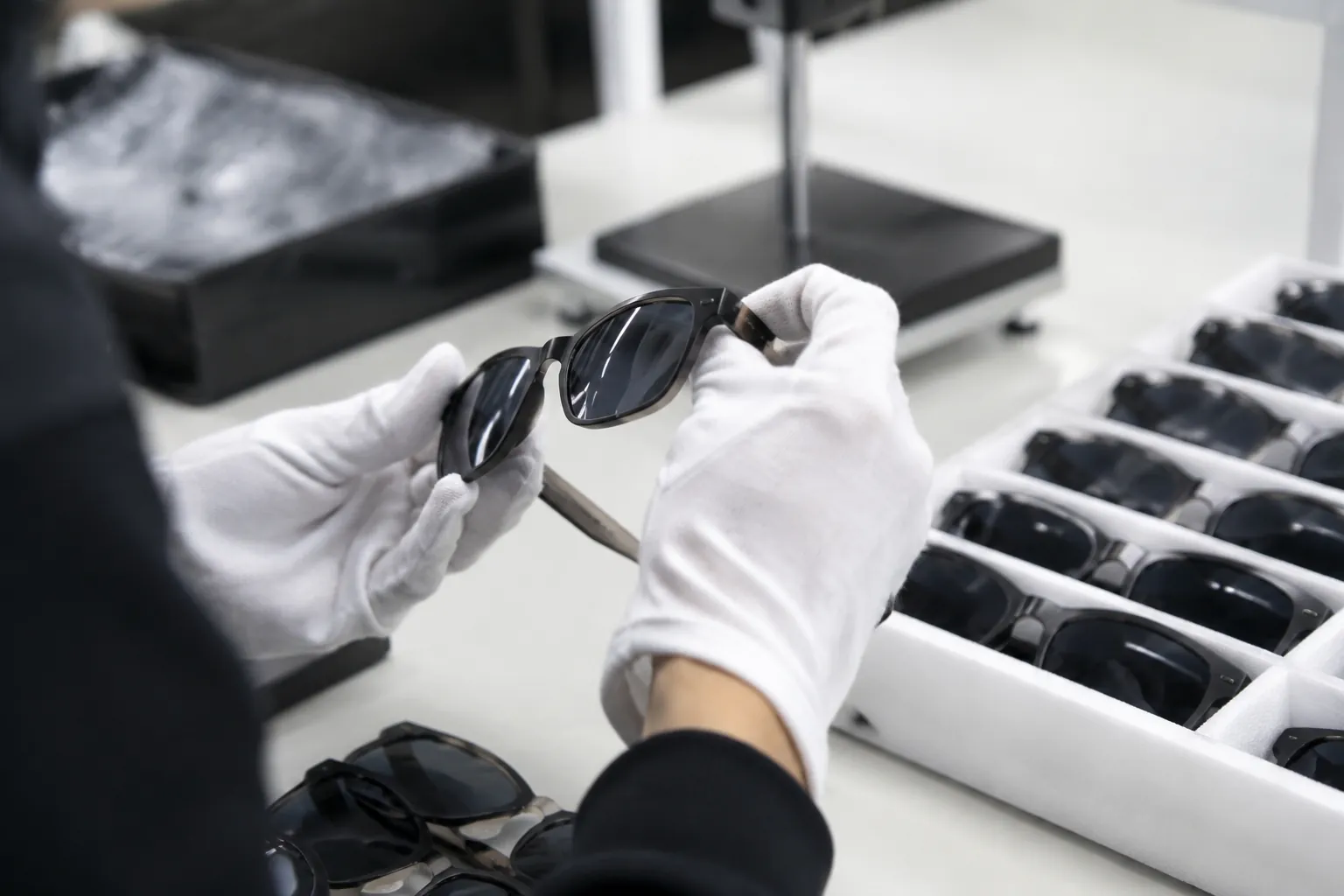
This guide is for brand owners, importers, distributors, and retail buyers choosing between OEM and ODM sunglasses. That choice affects development cost, launch timing, margin, quality risk, and how different the product will look in market. Use the framework below to compare tooling, MOQ, compliance, materials, and factory process so you can choose the route that fits your sales plan.
Start with the real choice: modify fast or build deeper
Buyers often use OEM and ODM as if they mean the same thing. In eyewear sourcing, they usually do not.
ODM is usually the faster route. You start from an existing factory style with a proven frame structure, lens shape, hinge position, and assembly method. Then you change visible brand elements such as frame color, lens tint, mirror coating, logo placement, temple print, pouch, box, and barcode label. In many ODM projects, sample work is mostly about color, decoration, and packaging approval, not structural engineering.
OEM usually means a product based on your drawing, tech pack, 3D file, reference sample, or a heavily modified existing style. That can include a new front shape, new temple profile, custom metal ornament, changed base curve, revised dimensions, different material thickness, or a new mold. You get more design control. You also get more risk.
Every structural change can affect manufacturability. Shrinkage. Fit balance. Hinge alignment. Lens seating. Polishing consistency. Assembly yield.
The practical difference is simple: ODM compresses decisions because the structure is already known. OEM expands decisions because each change can create a new problem to solve.
So the real question is not which route is better. It is where the commercial risk sits. If margin depends on hitting a selling season, supporting a retailer reset, or filling a distributor program on time, ODM is often the safer choice. If your brand sells design first and cannot look like a standard catalog frame with a different logo, OEM may be worth the extra development cycle.
Factory capability matters here. A supplier that controls molding, frame machining, lens processing, decoration, and QC in-house can usually revise samples faster and fix problems earlier than a trader coordinating several subcontractors. Ask directly which steps are done in-house, which are outsourced, and how sample corrections are handled.
Head-to-head: cost, timing, and risk
| Factor | ODM using existing style | OEM with new or heavily changed style |
|---|---|---|
| Starting point | Factory archive sample or current production frame | Your drawing, spec sheet, reference sample, 3D file, or new concept |
| Typical sample timeline | Often faster because structure already exists; timing depends on color, logo, lens, and packaging changes | Usually longer because prototype method, tooling, and revision rounds must be confirmed |
| Bulk lead time after approval | Typically shorter to schedule because the style is already production-proven | Bulk timing may be similar after final approval, but development usually adds extra time before PO release |
| MOQ logic | Often more flexible if materials and decoration are standard | Usually higher once tooling, custom hardware, or exclusive materials are involved |
| Tooling | No new mold in most cases | May require new front mold, temple mold, lens cutting path, or custom metal parts |
| Unit price behavior | Lower entry cost; pricing improves as volume increases | Higher at low volume due to setup loss, engineering time, and yield risk |
| Main technical risk | Cosmetic consistency, logo position, packaging accuracy | Fit, hinge balance, front warp, lens seating, trim attachment, and finishing yield |
| Brand distinctiveness | Moderate unless visual customization is strong | Higher if the design language is truly proprietary |
| Best use case | Fast launch, market testing, retail programs, promo and distributor lines | Signature collections, higher ASP programs, and long-term branded lines |
The margin point is often misunderstood. ODM usually protects first-order cash flow better because engineering cost and scrap risk are lower. OEM can produce better margin later, but only if the product supports a higher sell-through price, repeat orders, or stronger channel differentiation.
A custom shape that costs more to make but still sells at commodity pricing is not a brand asset. It is just expensive.
As a sourcing rule, low-volume launches often lean toward ODM because the development burden is lighter. As volume rises and reorder confidence improves, selected OEM features become easier to justify. The break point depends on tooling cost, component complexity, and your selling price.
A 10-minute decision framework
- Check your launch window. If you need samples approved fast and bulk production scheduled right after approval, stay close to ODM or limit OEM changes to a proven base style.
- Check your first-order volume. Full OEM is rarely efficient on a small first run unless the style is strategically important. Ask the factory to quote the same style at multiple volume tiers so you can see where setup cost starts to dilute.
- Check your sales channel. Chain retail and distributor programs usually care more about compliance, repeatability, and delivery reliability than radical originality. Boutique and DTC launches often need a stronger visual identity.
- Check your landed price ladder. If the product must land near an entry price point, use existing tooling and standard hardware. Ask the supplier to separate frame cost, lens upgrades, branding, packaging, and tooling so you can see what is really driving price.
- Check compliance before design freeze. If you are shipping to the EU, US, Australia, or New Zealand, align lens category, labeling, and test path early against CE EN ISO 12312-1, ANSI Z80.3, AS/NZS 1067, REACH, and any applicable FDA registration requirements.
- Check whether exclusivity is structural or cosmetic. New logo art, temple print, or box design does not create a hard-to-copy product. New molds, unique hardware, or a proprietary trim layout are more defensible.
Short version: if speed, MOQ flexibility, and cash discipline matter most, choose ODM. If the frame itself is the brand story and you can absorb slower development with more engineering review, choose OEM.
What actually happens on the factory floor
Buyers make better decisions when they understand the process behind the quote.
For an ODM project, the factory usually pulls an existing style from current production or archives, checks whether the tooling is active, confirms frame dimensions, and then prepares your sample using the chosen colors, lens tint, mirror finish, logo method, and packaging. Because the geometry is already known, the main quality checks are cosmetic and assembly-based: color match, logo placement, hinge feel, lens category, and visible defects.
For an OEM project, the process starts earlier and gets technical fast:
- Review the tech pack: eye size, bridge, temple length, front curve, pantoscopic angle, logo location, and material thickness.
- Choose construction: injection plastic, acetate, or mixed material with metal trim.
- Build a prototype through CNC, hand sample, or first mold trial.
- Check assembly points: lens seating pressure, hinge alignment, temple opening angle, and front warpage.
- Revise tooling or CNC paths if the sample shows shrinkage, imbalance, lens-edge stress, or poor trim fit.
- Approve a golden sample that matches decoration, packaging, and final specification before bulk production.
Several details matter more than buyers expect:
- Logo placement tolerance: visible logo position should be agreed in writing on the approved sample and inspection standard. Curved temples, small metal plates, and manual placement steps usually increase variation risk.
- Lens fitting tolerance: too loose and the lens may rattle; too tight and edge stress can cause cracking or whitening around the groove. OEM designs with unusual lens geometry often need repeated fitting trials.
- Temple alignment: if left and right opening force differs noticeably, the frame will feel cheap even if it passes a basic visual check.
- Color consistency: transparent injections and gradient tints usually show batch variation more clearly than solid black or tortoise effects.
Material changes the work too. Injection styles tend to offer better repeatability once the mold is stable, but shrinkage, sink, and gate marks still need control. Acetate styles need more finishing attention: sheet cutting, shaping, tumbling, polishing, hinge fitting, and often CNC detailing. Injection is usually more efficient. Acetate is usually more labor-sensitive but visually richer.
If a factory claims in-house production, ask for a clear process map covering molding, frame finishing, lens processing, logo application, assembly, and final QC. That tells you more than a broad capability claim.
The hidden costs that hit margin
Many buyers compare only the quoted unit price. That is a mistake. The expensive part is often delay, rework, or a design choice that creates unstable QC.
Common margin traps include:
- Too many colorways too early. Splitting a first order across many colors can increase changeovers, approvals, and packing complexity.
- Decoration chosen without durability review. Pad print is cost-efficient, but depending on placement it may wear faster than laser engraving, debossing, hot stamping, or inset metal branding.
- Custom hardware on low volume. A special hinge or ornament can add fitting labor, mold adjustments, and attachment yield loss.
- Late packaging changes. Box size, insert card revisions, barcode relabeling, and pouch fabric changes often create hidden rework costs after frame production is finished.
- Ignoring reject visibility. Mirrored lenses, transparent frames, crystal colors, and high-gloss dark surfaces reveal scratches, dust, flow marks, and polishing issues more easily.
Sometimes ODM gives better margin for one simple reason: the process is more stable. A proven mold, known lens shape, familiar assembly sequence, and predictable defect pattern can outperform a more original frame that absorbs hours in adjustment and inspection.
If your goal is better gross margin over time, use OEM selectively. Put development budget into the styles you expect to reorder, not every SKU in a launch assortment. One strong signature frame can justify tooling. A wide assortment of unproven concepts often cannot.
Also remember that MOQ is not only about the frame. Minimums can rise because of mirrored lens color, custom pouch fabric, foil-stamped boxes, unique stickers, or a metal logo badge that needs separate tooling. Ask what part of the MOQ comes from the sunglasses and what part comes from accessories or decoration.
Compliance, materials, and why OEM schedules slip
Sunglasses are not just fashion items. They are regulated consumer products. That is one reason OEM timelines often slip.
For export programs, the sample should be built with the destination market in mind from the start. Relevant standards and compliance points may include CE EN ISO 12312-1, ANSI Z80.3, AS/NZS 1067, REACH, and any applicable FDA registration requirements. The exact paperwork, test scope, and labeling path depend on market, lens type, and product claims. Discuss that before bulk planning, not after cartons are packed.
Material choice also affects compliance and yield:
- Injection plastic: efficient for larger runs, usually lower cost at volume, and more repeatable once tooling is proven.
- Acetate: often has a more premium hand feel and visual depth, but color variation, polishing consistency, and fitting work are more labor-sensitive.
- Lens tinting: buyers should define category, visible light transmission range, color tolerance, and whether the style is a fashion tint or intended for sun-protection positioning.
OEM programs often slip because one of these variables changes late. A buyer approves the frame shape, then changes the lens color, then asks for a stronger mirrored finish, then switches the target market. Each change can affect the test plan, labeling, documentation, and timing.
Here is the practical rule: if you are taking an ODM frame that already has a known compliance path for your destination market, risk is usually lower. If you change lens specification, frame geometry, materials, or product claims in an OEM program, validate again. Do not assume an old test report covers a new build.
If the brief does not state target market, applicable standard, lens category, material, labeling requirements, and required documents, the factory is filling in blanks. That is where avoidable delay starts.
Beyond product compliance, some buyers also need factory management and social compliance records. If those matter to your program, verify whether the supplier holds current ISO 9001 or BSCI documentation rather than accepting a verbal claim.
Buyer scenarios: which route fits which case
Scenario 1: Seasonal retail drop with a fixed delivery window. Choose ODM. Start from an existing style, keep structural changes minimal, and focus brand work on lens color, temple print, pouch, and packaging consistency.
Scenario 2: New DTC brand testing demand. Usually ODM first. Use a simple, low-risk setup to test shape acceptance, return rate, and price elasticity. If one style performs, convert that winner into a more original OEM follow-up once you have sales data.
Scenario 3: Distributor wants a house line with a protected look. Use a hybrid route. Start from a proven base architecture, then change temple profile, trim, end-piece detail, and branding enough to reduce obvious catalog overlap without taking full OEM risk.
Scenario 4: Premium brand building a signature frame. Choose OEM, but keep the assortment narrow. One strong shape with disciplined revisions is usually better than several half-developed ideas. Plan extra time for prototype review, mold correction, compliance validation, and packaging alignment.
Scenario 5: Promotion or event program with price pressure. ODM is usually the right answer. Prioritize simple frame construction, standard smoke or brown lenses, basic pouch packing, and low-complexity decoration to protect margin and timing.
The rule is simple: use ODM to learn; use OEM to defend. Most brands should not launch every style as OEM. Market feedback should decide which products deserve deeper development spend.
A sourcing checklist before you choose
- For ODM: ask whether the style is current production, archive stock, or reopened from older tooling.
- For OEM: send a dimensioned tech pack, not only reference photos.
- State quantity by color and by design, not only total pairs.
- Confirm whether the MOQ applies to your exact lens, logo, and packaging plan.
- Ask how price changes across higher volume tiers for the same style.
- Define lens type, category, tint, and compliance target in writing.
- Approve a golden sample that includes frame, logos, pouch, carton marking, and barcode labels.
- Set inspection points: logo position, hinge alignment, lens defects, color variance, mirror consistency, and outer carton data.
- Ask what is done in-house versus outsourced. It affects timing, traceability, and problem-solving speed.
- Build your calendar backward from ship date, not PO date.
Also request the documents that matter to your program instead of asking broad questions. For example: current test reports for the relevant market, REACH-related material declarations if required, FDA registration information if applicable, and current ISO 9001 or BSCI records if those are part of your vendor approval process.
The best decision is usually not the most creative one. It is the one that reaches market on time, meets compliance requirements, and leaves enough margin to reorder with confidence.
Have a custom sunglasses project in mind?
Send us your styles, target market and quantities and we will return a detailed quote with MOQ, lead time and a sample plan.
Get a QuoteWhy source this from Wenzhou with LumiShades
Wenzhou in Zhejiang Province is widely regarded as China’s eyewear manufacturing capital, producing a large share of the world’s sunglasses. That concentration matters to buyers: a deep local supply chain for acetate sheet, hinges, lens blanks, plating and packaging means shorter component lead times, easier color and material matching, and a workforce with decades of eyewear-specific skill. LumiShades has manufactured in this ecosystem since 2009, and our vertical integration — in-house injection molding, acetate cutting, CNC milling, lens tinting, decoration and quality control — means no part of your order is quietly subcontracted to a workshop you cannot audit.
For international buyers, that vertical control translates into accountability. When a single factory owns every step, defects are traced and fixed at source rather than bounced between vendors, and your specifications survive intact from first sample to bulk. We back this with 15+ years of experience, shipments to 60+ countries, more than 5 million pairs produced per year and a 98.5% on-time delivery rate. Our certifications — CE EN ISO 12312-1, FDA registration, ANSI Z80.3, AS/NZS 1067, REACH, ISO 9001 and BSCI audit — mean the compliance documentation your market requires already exists. Explore our manufacturing capabilities and quality control process to see how this works in practice.
Frequently asked questions
Can I make an ODM style exclusive to my brand? Sometimes, but usually only to a limited extent unless you pay for structural changes. Cosmetic exclusivity can include your own colorways, logo application, packaging, and certain trim details. Structural exclusivity usually requires OEM-level changes such as a new mold, a custom temple profile, unique hardware, or a proprietary ornament layout. If exclusivity matters, ask the supplier these questions in writing: Is the base frame sold to other buyers? Can any colorway or trim detail be reserved? Who owns new tooling? And for how long will the factory keep that tooling exclusive?
Is a low MOQ realistic for custom sunglasses? Yes for many ODM programs using standard materials, standard lenses, and simple decoration such as pad print or laser logo. It becomes less realistic when the project includes custom hardware, specialty mirrored lenses, custom logo plates, or packaging components with separate production minimums. To assess MOQ properly, ask the supplier to break it into parts: frame MOQ, lens MOQ, logo or hardware MOQ, pouch MOQ, and box MOQ. That shows whether the minimum is driven by the sunglasses themselves or by accessories and decoration.
How much faster is ODM than OEM in practice? ODM is usually faster because the frame structure already exists and has already been assembled before. OEM usually takes longer because the factory must review drawings, build prototypes, check lens fitting and alignment, and sometimes revise tooling before bulk production can begin. The exact difference varies by material, complexity, and how complete your brief is. A better buyer question is not only "How many days?" but "What are the approval gates?" Ask for a step-by-step timeline covering sample submission, revision rounds, golden sample approval, testing if needed, and bulk scheduling.
Which route gives better margin? ODM often gives better first-order margin because development cost, scrap risk, and setup loss are lower. OEM can support better long-term margin if the design justifies a higher selling price, reduces direct comparability with standard market styles, and generates repeat orders that spread development cost over more units. To compare routes properly, do not look only at unit price. Ask for the full cost picture: tooling, sample charges, packaging cost, expected defect allowance, and whether any custom components create separate minimums or rework risk.
What compliance documents should I discuss before ordering? Start with the destination market and confirm which standard applies: CE EN ISO 12312-1 for many EU programs, ANSI Z80.3 for the US, AS/NZS 1067 for Australia and New Zealand, plus REACH where chemical compliance is relevant. If the product or market requires it, also confirm FDA registration expectations. Then ask the supplier exactly what they can provide: product test reports, labeling support, declarations for materials if required, and sample markings for review before production. The key buyer action is to define the target market, lens category, product claims, and required documents before approving the final sample, because those decisions affect both testing and labeling.
Ready to start?
Explore our sport wrap sunglasses or request a quote — our sales team replies within 12 hours.
Request a Quote