
Metal-Acetate Hybrid Sunglasses: Buyer Guide
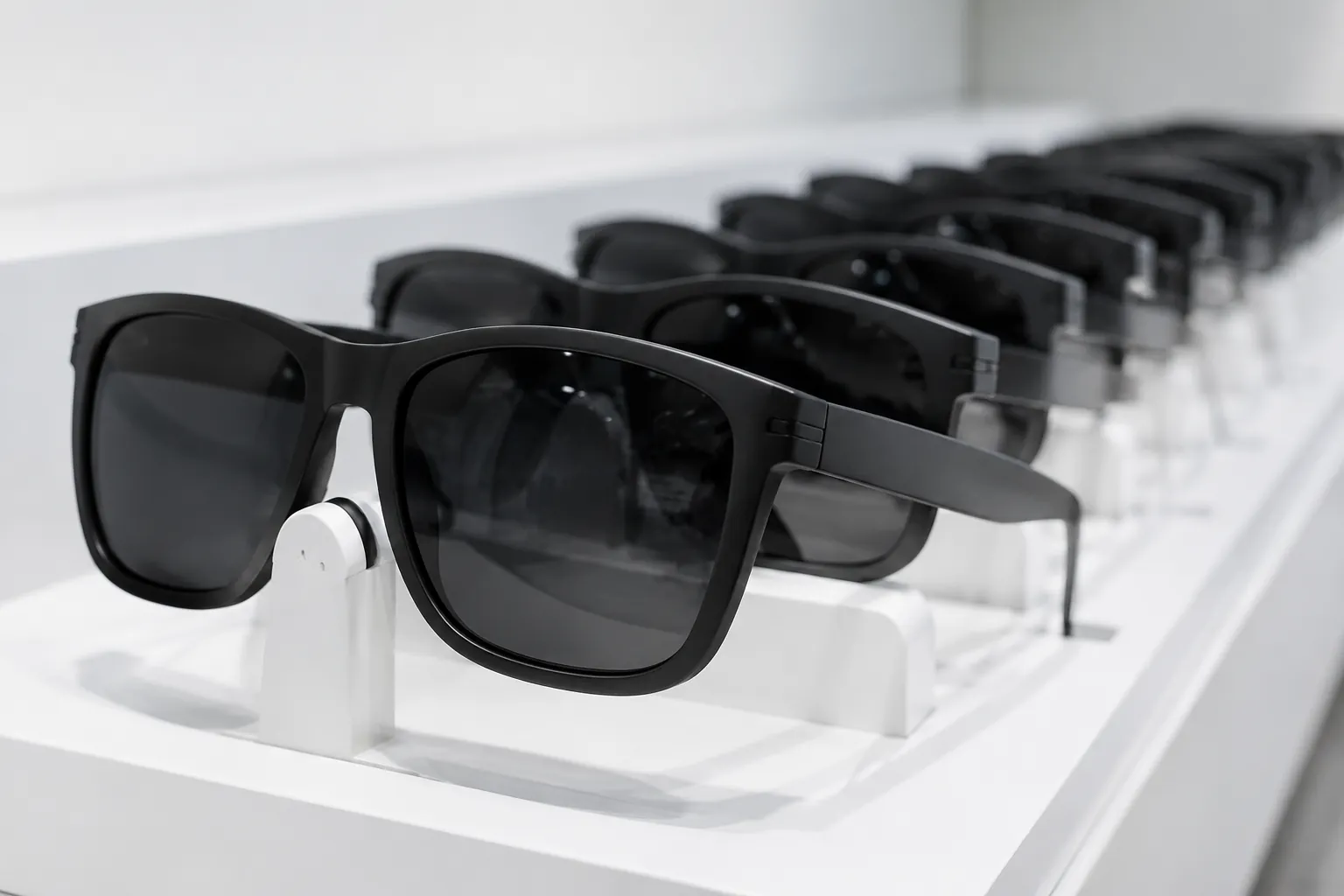
This guide is for brand owners, importers, and retail buyers sourcing metal-acetate hybrid sunglasses. Hybrid frames can look right in CAD or on a showroom sample and still fail in dry fitting, finish matching, lens retention, or after-sales repair. That is the problem. The aim here is simple: identify the construction details that affect yield, lead time, unit cost, and warranty risk before you approve samples or release bulk.
Start with failure points, not the sketch
Metal-acetate hybrids are not just a style category. They are an assembly project. Two manufacturing routes. Two material behaviors. One frame.
Acetate parts are usually cut, milled, beveled, tumbled, and hand polished. Metal parts are formed or machined, welded or brazed where needed, polished, and then finished by plating, paint, or PVD-type coating. Those process chains do not produce the same dimensional behavior or the same surface appearance.
So review the interfaces before the silhouette. The biggest losses on combo frames usually do not come from the front shape. They come from the bridge connection, hinge seat alignment, trim recess depth, lens groove consistency, and visible finish mismatch under light.
- Mechanical fit: screw holes, slots, rivet points, and hinge seats must align across parts made by different methods. A small shift on each side can turn into a visible assembly defect.
- Thermal behavior: acetate moves with heat during adjustment and lens insertion. Metal does not respond the same way. That matters when the fit depends on a tight joint or a flush insert.
- Cosmetic match: gloss black acetate, matte black paint, and black plating or PVD are not visually identical, even if all are called black.
- Repairability: screwed parts are usually serviceable. Hidden connectors, glued overlays, and decorative inserts often are not.
Typical weak points include metal brow bars bonded onto acetate fronts, custom bridge connectors buried inside the rim, decorative side shields with limited bonding area, and flush logo plates that need consistent recess control. Cost a combo frame like a standard acetate frame and the estimate is often wrong. Usually low.
How hybrid frames are built on the factory floor
In production, hybrid styles split into separate process routes early. They only come together at fit and assembly. That alone slows them down versus simple full-acetate or full-metal styles.
- CAD breakdown and engineering review: the drawing is split into acetate parts and metal parts. Critical dimensions are marked at bridge width, end-piece angle, hinge position, trim recess depth, lens groove line, and lens size.
- Acetate processing: sheet cutting, CNC milling, groove cutting, beveling, tumbling, polishing, and dimensional recheck.
- Metal processing: stamping, wire forming, or CNC work depending on the part; welding or brazing where required; polishing; then plating, painting, or another approved finish.
- Dry fit stage: acetate and metal parts are assembled before final cosmetic approval. This is where gap issues, twisted fronts, uneven contact points, and stressed lens channels usually show up first.
- Decoration: laser engraving, pad printing, foil logo, riveted or glued logo plate, inside temple print, and model or size marking are added after structural fit is confirmed.
- Lens edging and fitting: lenses are edged to shape, checked for retention, and fitted with the level of heat and handling the construction allows.
- Final alignment and QC: front alignment, temple opening angle, hinge function, screw security, lens retention, logo placement, and finish defects are checked.
Lead time depends on whether the build is standard or custom. A basic acetate sample may move fast. A hybrid style with custom hardware, multiple finish approvals, or revised fit points usually does not. Dry fit often exposes problems that require changes to acetate milling files, metal tooling, or both. Bulk production becomes more predictable only after the pre-production sample reflects the real route, not a hand-corrected display sample.
Tolerance stack-up: where acceptable parts fail
Hybrid frames are sensitive to tolerance stack-up. A part can meet its own drawing tolerance and still fail in assembly when it meets a second part made by a different process. Buyers need to ask about interface tolerances, not just broad claims that the style is checked.
Useful control dimensions usually include lens groove depth and width, bridge seat width, hinge pad flatness, trim recess depth, end-piece angle, and left-right temple spread. On visible details such as flush inserts, even a small variation can stand out after polishing and final assembly.
| Control point | Recommended control focus | Typical risk if loose | Buyer check |
|---|---|---|---|
| Lens groove depth and width | Keep groove dimensions consistent across multiple sample pieces | Popped lenses, stress marks, cracking during hot fitting | Request lens fit checks on several sample units, not only one showroom piece |
| Bridge interface | Watch width, flatness, and screw or connector position | Skewed front, uneven nose stance, visible gap at bridge joint | Compare measurement reports from initial sample and pre-production sample |
| Hinge seat position | Check left-right symmetry and seat flatness | Temple splay, poor fold, screw loosening over time | Open and close both temples and compare resistance and tip height |
| Metal trim recess in acetate | Control recess depth and edge finish after polishing | Proud edge, glue line visibility, sharp touch points | Inspect side profile under angled light and check by fingertip |
One practical rule: if the design depends on a flush metal insert inside acetate, add development time. Once acetate has been polished, reworking the recess can distort the surrounding surface and create a second cosmetic defect.
Material behavior and finish matching are harder than they look
Acetate and metal do not behave the same in production or in use. Acetate sheet can vary by batch in transparency, marble pattern, and color density. Metal parts may stay consistent in shape but shift in tone because of polishing level, plating conditions, topcoat, or paint application. Matching plated or coated metal to acetate is not the same as matching two painted parts.
Most finish disputes come from three causes:
- Base material variation: havana, crystal, and laminated acetate may vary by sheet batch. Confirm whether the approved sample used stock sheet or the same batch planned for production.
- Surface sheen: polished acetate and polished plated metal reflect light differently. Satin, brushed, sandblasted, matte, and gloss surfaces also change the perceived tone.
- Decoration sequence: logo plates, pad print, foil stamp, and laser engraving may look balanced before final polishing or assembly and then shift visually afterward.
For approvals, review finishes under at least two lighting conditions, such as daylight-equivalent light and warm indoor retail light. Also define one master reference part. That may be the acetate front, the plated bridge, or the logo plate. Name it clearly. The supplier needs to know which part controls the match decision.
Common decoration methods on hybrid styles include:
- Laser engraving on metal: precise and usually durable, but often low in contrast unless filled or treated.
- Pad printing inside acetate temples: cost-effective, but print durability depends on the ink system, placement, and rub protection.
- Riveted or pinned logo plates: stronger than glue-only decoration in most cases, but they require accurate drilling and controlled setting pressure.
- Glued trim or logo appliqué: visually clean, but more sensitive to heat, handling, and long-term adhesion performance.
If the styling depends on close coordination between pale metal tones and translucent acetate colors, expect trial rounds. Good visual matching is realistic. Exact identity usually is not.
Repairability should be designed in
Repairability should be part of sample approval. Not an afterthought. Many hybrid frames are sold as premium products, but some premium-looking constructions are hard to service in the field. That may be acceptable for a short-life fashion program, but only if margin and replacement policy account for it.
| Construction choice | Repairability | Cost effect | Common failure mode |
|---|---|---|---|
| Standard screwed metal hinge on acetate temple | Good | Low | Screw loosening; usually serviceable by an optician |
| Decorative glued metal brow or side trim | Weak | Low to medium | Adhesive release after heat, sweat, or impact |
| Riveted logo plate through acetate | Medium | Medium | Plate movement or local cracking if set too tightly |
| Hidden bridge connector with custom hardware | Poor | High | Front may be difficult or impossible to repair if connector fails |
For price-sensitive channels, serviceable construction is usually the safer choice. Standard screws, accessible hinges, replaceable nose pads where relevant, and limited decorative overlays reduce warranty handling and spare-parts complexity. For short-life fashion programs, a buyer may accept weaker repairability. But make that decision on purpose.
A useful supplier question is blunt: if this part fails after sale, what can actually be replaced? Temple only, hinge only, logo trim only, or full front only? The answer tells you more about risk than a styling deck will.
Where extra cost and lead time really come from
Hybrid frames usually cost more than simpler constructions because they need more setup, more hand assembly, and tighter cosmetic control. The added cost is not just the metal content. It comes from managing the interface between materials and finishes.
When comparing quotes, split the price into four buckets:
- Development and tooling: custom bridge parts, logo plates, milling fixtures, drilling jigs, and sample revisions.
- Materials: acetate grade, metal type, finish specification, lens category, coatings, and packaging.
- Assembly labor: dry fitting, hand correction, insert mounting, alignment, and touch-up polishing.
- Yield loss: rejects caused by gaps, color mismatch, finish marks, glue overflow, logo offset, or lens stress.
MOQ changes how those costs land. At low volume, development cost and reject allowance push unit price up fast. At higher volume, setup and learning spread across more pairs. Even then, hybrid frames with custom hardware, plating, and multi-step finishing usually stay more expensive than basic injection styles and often more expensive than straightforward acetate styles.
Lead time works the same way. A straightforward hybrid using standard hardware and existing material colors is easier to schedule than a frame with custom plated logo plates, riveted trim, or several finish approvals. Change the bridge part, trim geometry, or finish tone after approval and the affected components may need to be remade. That can stall the whole program.
When comparing suppliers, ask what the quote assumes: sample revisions included or not, custom hardware included or not, and what cosmetic standard is being priced. A low quote may just mean a narrow scope. Nothing more.
Compliance, supplier controls, and the pre-bulk checklist
For export programs, frame construction is only part of the technical file. The finished sunglasses must also meet the product and lens requirements of the destination market. Buyers commonly request support for standards such as CE EN ISO 12312-1, ANSI Z80.3, and AS/NZS 1067, depending on market. For chemical compliance, REACH may also apply, especially for plated, coated, or skin-contact components.
Use documentation carefully. FDA registration is not a substitute for sunglass performance testing, and a general factory certificate is not the same as a product-specific test report. If the supplier refers to systems such as ISO 9001 or BSCI, treat those as supplier-control indicators, not proof that the finished sunglasses meet market product standards.
- Lens category and UV performance: verify the exact lens tint and lens specification being ordered, not just the sample appearance.
- Chemical controls: ask how plated and coated parts are managed for restricted-substance requirements where REACH applies.
- Marking and packaging: confirm market-specific labeling on product, pouch, and carton before artwork approval.
- In-house QC points: ask what is checked on hybrid assemblies specifically, including hinge function, trim adhesion, alignment, and lens retention.
Before releasing bulk, use a staged approval process:
- Approve CAD with critical dimensions marked. Do not approve from renderings alone.
- Review one raw fit sample. Check structure, gap control, hinge position, and lens seating before final finishing.
- Approve one finished counter sample. Check color, gloss, logo placement, opening feel, and comfort.
- Request a pre-production sample. It should represent the true bulk route, not a hand-corrected presentation piece.
- Set AQL or defect rules. Define rejectable gap size, finish marks, print offset, lens stress, and alignment error in writing.
- Confirm spare-parts policy. Screws, nose pads where applicable, replacement temples, or logo hardware if relevant.
For a first order, keep the spec simple: one acetate color, one metal finish, standard hinges, and straightforward decoration. Add complexity only after the supplier proves the build is stable.
Have a custom sunglasses project in mind?
Send us your styles, target market and quantities and we will return a detailed quote with MOQ, lead time and a sample plan.
Get a QuoteWhy source this from Wenzhou with LumiShades
Wenzhou in Zhejiang Province is widely regarded as China’s eyewear manufacturing capital, producing a large share of the world’s sunglasses. That concentration matters to buyers: a deep local supply chain for acetate sheet, hinges, lens blanks, plating and packaging means shorter component lead times, easier color and material matching, and a workforce with decades of eyewear-specific skill. LumiShades has manufactured in this ecosystem since 2009, and our vertical integration — in-house injection molding, acetate cutting, CNC milling, lens tinting, decoration and quality control — means no part of your order is quietly subcontracted to a workshop you cannot audit.
For international buyers, that vertical control translates into accountability. When a single factory owns every step, defects are traced and fixed at source rather than bounced between vendors, and your specifications survive intact from first sample to bulk. We back this with 15+ years of experience, shipments to 60+ countries, more than 5 million pairs produced per year and a 98.5% on-time delivery rate. Our certifications — CE EN ISO 12312-1, FDA registration, ANSI Z80.3, AS/NZS 1067, REACH, ISO 9001 and BSCI audit — mean the compliance documentation your market requires already exists. Explore our manufacturing capabilities and quality control process to see how this works in practice.
Frequently asked questions
How much more expensive is a metal-acetate hybrid frame than a standard acetate frame? There is no reliable fixed percentage across all programs. The premium depends on the construction, whether the hardware is custom, the finish specification, the lens package, and the order volume. To compare properly, ask the supplier to break the quote into development and tooling, materials, assembly labor, and expected reject allowance. Then compare that against a similar full-acetate frame. The real question is not just unit price. It is what revisions, hardware, and cosmetic standards that price actually includes.
What is the biggest technical risk on combo frames? The main risk is tolerance stack-up at the joining points. Acetate parts and metal parts can each be acceptable on their own and still fail when assembled together. The highest-risk areas are usually the bridge interface, hinge seat position, trim recess depth, and lens groove consistency. A practical buyer action is to request measurement checks on those interfaces across multiple samples, not only one display sample, and to compare the first sample with the pre-production sample before bulk release.
Can I match metal plating exactly to acetate color? Usually not exactly. Acetate and metal reflect light differently, and acetate can vary by sheet batch. A better approval standard is controlled visual matching, not exact identity. To manage this, define one master reference part, review the match under at least two lighting conditions, and state in writing whether tone, gloss, or contrast is the priority. If the acetate is translucent or patterned, ask the supplier to confirm whether the planned production sheet batch is close enough to the approved sample for the intended look.
Are glued metal trims acceptable for bulk production? They can be, but they should be treated as a managed risk, not an automatic premium feature. Before approval, ask what the trim is made of, how much bonding area is available, whether the trim is structural or decorative only, and what in-house checks are used to verify adhesion after assembly. Also ask what happens if the trim fails after sale: can it be replaced, or does the whole front become scrap? For higher-volume retail or a longer warranty window, pinned, riveted, or screwed solutions are usually safer than glue-only trim.
What documents should I ask for before shipment? Ask for documents that match both your market and the exact product version ordered. That may include product compliance support for CE EN ISO 12312-1, ANSI Z80.3, or AS/NZS 1067 as relevant, plus REACH-related material compliance support where required. If the supplier mentions FDA registration, confirm that it is a registration matter, not a substitute for performance testing. Also request approved labeling and packaging files, confirmation of the exact lens specification shipped, and any product-specific reports or declarations tied to the approved lens tint and finish. If supplier qualification matters to your company, you may also request ISO 9001 or BSCI records for the vendor file, but those do not replace product compliance documents.
Ready to start?
Explore our round sunglasses or request a quote — our sales team replies within 12 hours.
Request a Quote