
Memory Metal vs Stainless Steel vs Alloy Frames Guide
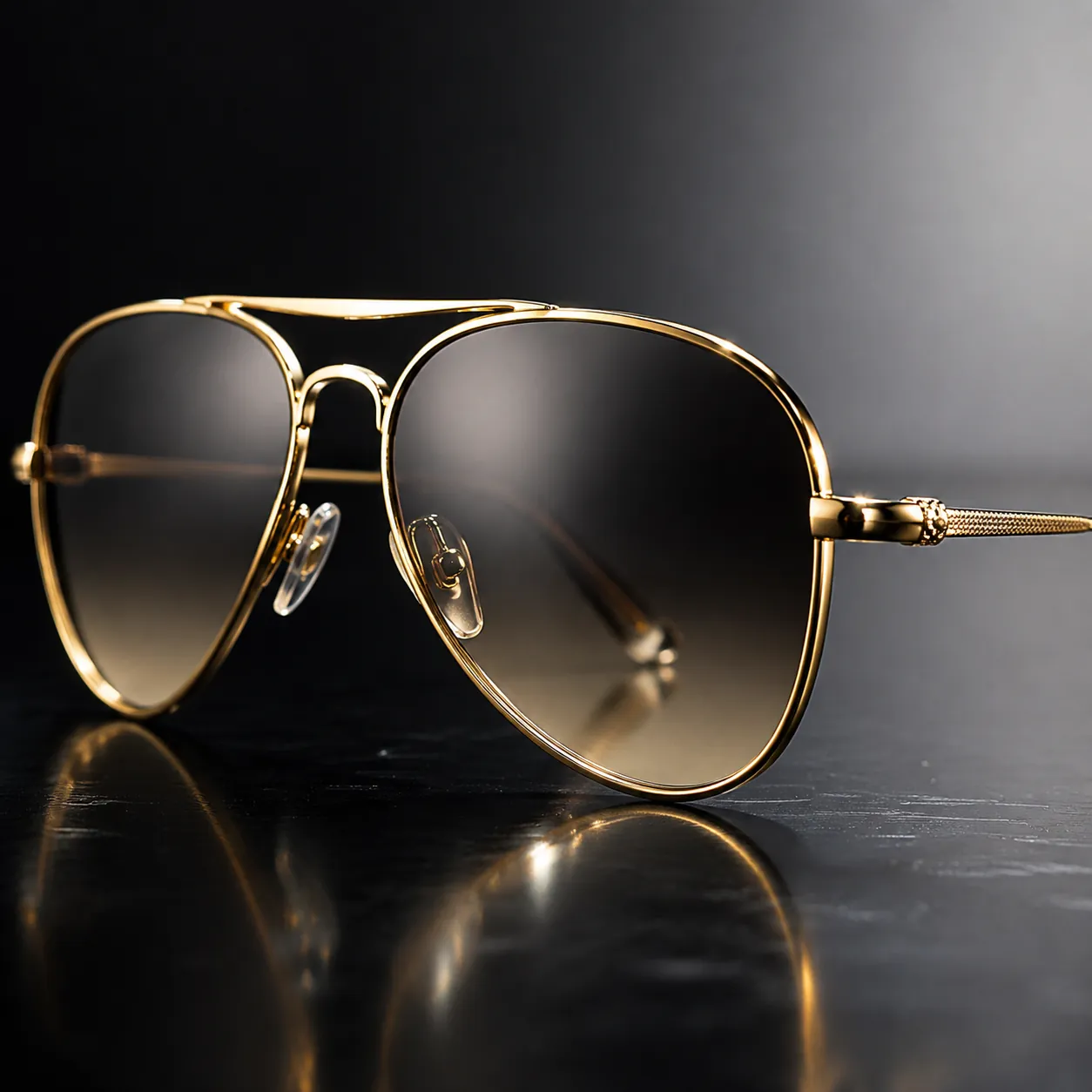
This guide is for brand owners, importers, distributors, and retail buyers comparing metal frame options for a real production program. Material choice affects far more than styling. It drives unit cost, process stability, hinge performance, finish consistency, logo options, tolerance control, and how closely approved samples match bulk output. The useful question is not which metal is best in general. It is which material route fits your target retail price, landed-cost ceiling, wear conditions, and quality standard without adding avoidable production risk.
Start With The Commercial Target, Not The Material Label
Buyers often start by asking for memory metal because they want flexibility, or stainless steel because they want a cleaner premium look. That is usually the wrong entry point. Start with the commercial target: target retail price, target ex-factory cost, expected wear conditions, and how well the frame shape must hold through production and use.
For most sunglass programs, the frame decision comes down to four variables:
- Target price band: For opening-price programs, alloy is often the easiest route to a lower cost structure. Some factories will accept low trial quantities, but pricing usually improves only when setup, finishing, and inspection labor can be spread across a larger order.
- Positioning: Stainless steel usually supports a slimmer, cleaner, more premium look. Memory metal supports a technical, comfort-led story. Alloy can work well for fashion programs, but basic finishing can make it read as value-driven.
- Durability profile: If customers are likely to over-bend temples, memory metal can reduce permanent deformation in that area. If the frame must keep a crisp geometric line and a stable front shape, stainless steel is often the more predictable option.
- Design and process limits: Rim construction, wall thickness, hinge mounting, nose pad assembly, finish choice, and logo decoration all vary by substrate and by factory capability.
In sourcing terms, material is not a slogan. It is a manufacturing route. If that route clashes with the cost target or design brief, revision loops, rework, and bulk-vs-sample disputes usually follow.
Head-To-Head: Cost, Tolerances, Feel, And Production Behavior
Memory metal, stainless steel, and common eyewear alloys should not be quoted as if they are interchangeable. They are not. Their forming behavior, finishing path, assembly requirements, and failure risks differ enough that the same drawing can produce very different bulk results.
| Frame route | Typical MOQ logic | Common thickness / tolerance behavior | Wear feel | Best-fit buyer use case | Main production caution |
|---|---|---|---|---|---|
| Memory metal | Usually makes more commercial sense when the order size is large enough to justify process validation and sample revision | Temple recovery matters more than static thickness alone; assembly consistency and left-right symmetry need close checking | Light, springy, technical | Comfort-led programs, active use, lower tolerance for bent-temple returns | Recovery performance and joint stability should be confirmed on production-representative samples |
| Stainless steel | Can work at moderate MOQs when the structure is straightforward and finishing is controlled | Can support thin, clean sections with good shape stability; alignment is usually easier to control than on low-grade alloy when tooling and forming are well managed | Firm, refined, stable | Mid-range to more premium programs needing precise shapes and a cleaner visual language | Thin forms and polished edges require disciplined forming and finishing to avoid twist, stress marks, or uneven edge quality |
| Alloy | Often the most flexible route for low-volume trials and cost-sensitive programs | Allows broad styling freedom, but dimensional consistency and finish consistency can become weaker if sections are pushed too thin or the cost target is too aggressive | Usually heavier; can feel solid or basic depending on section design | Entry to mid-level fashion launches, retailer private label, promotional programs | Hinge alignment, finish consistency, and overall weight are common pressure points on low-cost builds |
Cost always depends on structure, finish, and order size, so a serious supplier should not quote by material name alone. As a broad sourcing pattern, alloy is often the lowest starting point on simple styles. Stainless steel usually sits above alloy because forming, polishing, and appearance control are more demanding. Memory metal can add further cost because recovery behavior, assembly method, and pass rate need tighter control.
That is why some concepts look fine at sample stage and become unstable in bulk. The issue is not just raw material cost. It is the full cost of making repeatable frames within the required tolerance and finish standard.
Where Each Material Wins And Fails In Actual Wear
Memory metal is valued mainly for flex recovery. In eyewear, that matters most in temples, where repeated outward bending can permanently spread more conventional metals. A well-made memory-metal temple can recover better after store try-ons or one-handed removal. That does not make the whole frame indestructible. Hinges, screws, end-piece joints, nose pad arms, and lens retention still depend on sound engineering and assembly.
Stainless steel is often the safer choice when the design depends on line accuracy. Aviators, geometric wire forms, and slim combination frames often perform well in stainless because the frame front can stay visually cleaner through forming, polishing, and assembly. Depending on the finish spec and wear conditions, stainless can also hold its appearance well over time.
Alloy is widely used because it offers design flexibility and a lower entry cost. It is common in trend-driven launches where visual impact matters and the budget is tight. The tradeoff shows up quickly if cost is pushed too hard. Common problems include loose hinge feel after repeated opening and closing, plating-tone variation across components, bridge deformation in thin sections, and cosmetic wear at high-contact points.
A low-cost alloy sample can photograph well and still fail in use. Stainless steel usually offers better shape stability. Memory metal is most useful when the main risk is temple deformation, not when the design requires a rigid, sharply defined silhouette.
Manufacturing Limits Buyers Usually Learn Too Late
Metal eyewear is not one process. It is a chain of forming, joining, finishing, assembly, and alignment steps. Material choice changes which step becomes the main risk point.
- Forming and section control: Stainless steel can support thin, precise sections, but only with stable tooling and controlled forming. Alloy suits decorative forms and broader sections, but lower-grade production often drifts more on symmetry and thickness. Memory metal can be harder to fine-adjust because of its spring behavior.
- Joining and hinge block stability: End pieces, bridges, hinge blocks, nose pad arms, and decorative inserts all depend on sound joining methods and stable assembly. Weak joints lead to hinge play, cracking around stress points, or early in-use failure.
- Surface preparation and finishing: Brushed, polished, painted, and plated finishes do not behave the same on every substrate. Stainless steel often supports a clean technical finish and usually takes laser marking well. Alloy often needs more careful surface preparation before plating to reduce adhesion issues and tone variation.
- Decoration method selection: Laser engraving is often crisp and durable on stainless steel. Pad printing is flexible for logos and size marks, but durability depends heavily on placement, curing, and topcoat. Attached metal logo plates can raise perceived value, but they also add labor, parts, and another failure point if the base section is too thin.
- Final alignment: A frame can pass cosmetic inspection and still fail fit inspection. Temple opening angle, front curve, bridge balance, lens seating, and left-right symmetry all need final QC, not just incoming-part checks.
Better-run factories use defined checkpoints, not subjective visual judgment alone. Ask how the supplier checks alignment, hinge action, finish consistency, and lens fit before shipment, and whether those checks are recorded against an approval standard.
Lead Time, MOQ, And Why Sampling Changes By Material
Sample lead time is never fixed. It depends on construction, finish, tooling readiness, and whether the first sample is only for visual review or for production-level validation. In many programs, metal sunglass samples can be made within a short development window, while bulk production follows several weeks after sample approval. Actual timing still varies by factory load, finish complexity, and the number of revision rounds.
Alloy samples are often the fastest route when the structure is simple and the finish is standard, such as basic plating or paint. Stainless steel may need more careful shaping and edge finishing, especially on thin symmetrical forms where even a small twist is obvious. Memory metal usually needs extra validation for temple recovery, hinge feel, and assembly behavior after repeated bending.
MOQ changes the decision logic as well. A very small trial order can help validate design acceptance or market demand, but it is usually a poor fit for complex memory-metal construction or heavy custom detailing. As order volume rises, buyers typically gain more room to request custom temple tips, upgraded finishing, tighter inspection, or branded metal trim.
- Low trial MOQ: Best for validating design acceptance or a simple alloy or stainless concept with limited decoration.
- Mid-volume MOQ: A better stage for comparing two material routes on a more realistic cost basis.
- Higher-volume MOQ: More suitable for memory-metal programs, added metal logos, more demanding finishing, or tighter quality requirements.
A practical RFQ rule is simple: if the order is small and the design already includes several custom details, simplify the frame route before negotiating price. Low-volume complexity raises quality risk faster than it adds commercial value.
Compliance And QC: What Actually Needs To Be Checked
Material choice does not determine compliance by itself, but it does affect how consistently the finished product can meet the required standard. For export programs, the frame route should be aligned from the start with lens specification, labeling, and target-market testing.
Common references in this category include CE EN ISO 12312-1, ANSI Z80.3, AS/NZS 1067, REACH, FDA registration, ISO 9001, and BSCI. Buyers should treat them correctly. CE EN ISO 12312-1, ANSI Z80.3, and AS/NZS 1067 relate to sunglass product requirements in their respective markets. REACH is relevant for chemical compliance in the EU. FDA registration may matter in the U.S. depending on product classification and importer arrangements. ISO 9001 is a quality-management-system certification, and BSCI is a social compliance audit framework. None of these replaces product-specific testing and inspection for the actual frame and lens combination being sold.
QC on metal frames should go beyond cosmetic appearance. A useful inspection plan usually includes:
- Alignment check: left-right balance, temple opening consistency, front symmetry, and stable resting position.
- Hinge cycle review: repeated opening and closing to identify early loosening, screw instability, or hinge binding.
- Plating or coating review: adhesion, color consistency, edge coverage, and visible wear points.
- Corrosion-oriented review: especially important for plated parts, sweat-contact areas, and humid-climate distribution.
- Lens fit verification: secure retention without visible stress, looseness, or distortion at the groove.
- Hardware security: screw torque consistency, nose pad attachment security, and decorative-part attachment.
System credentials such as ISO 9001 and BSCI can be useful indicators. They are not enough. Buyers still need written QC points tied to the actual frame design and target market.
A Practical Selection Framework For Common Buyer Scenarios
Use the framework below during quotation and sample review.
| Buyer scenario | Best first option | Why | Main caution |
|---|---|---|---|
| Retailer private label, opening price point, trend-led styles | Alloy | Lowest barrier to visual variety and cost control | Monitor finish quality, hinge feel, and excess weight |
| Brand collection targeting a cleaner premium look at mid volume | Stainless steel | Better shape discipline, slimmer visual language, stronger perceived value | Do not overload a lower-volume order with too many decorative extras |
| Active or comfort-led line where temple abuse is expected | Memory metal | Flex recovery can help reduce bent-temple complaints and handling damage | Approve against production-representative recovery performance, not prototype feel alone |
| Small trial order with several custom details | Usually stainless steel or simple alloy | Easier to control than complex memory-metal construction at low volume | Keep structure and decoration disciplined |
If two routes look viable, ask for both quotations on the same basis: same lens specification, same logo method, same finish, same packaging, and the same inspection assumption. Otherwise the comparison is weak. One option may include upgraded decoration or heavier construction while the other does not.
A frame that looks cheaper on paper but creates more rework, more alignment failures, or more returns is not really lower cost. It is under-specified at quotation stage.
What To Put In The RFQ So The Factory Quotes The Right Route
Factories miss the target when the RFQ describes only the look. A useful RFQ gives the supplier enough detail to cost construction risk, finishing complexity, and inspection expectations, not just silhouette.
- Target market: EU, U.S., Australia/New Zealand, or mixed, so the supplier can align the compliance path.
- Frame architecture: full rim, semi-rim, wire form, combination frame, nose pad type, hinge type, and target weight range.
- Material preference with fallback: for example, stainless steel as the first option, alloy as the backup if the target cost cannot be met.
- Finish specification: polished, brushed, matte paint, plated, mixed finish, and any color-matching requirement across components.
- Decoration method: laser engraving, pad print, stamped mark, attached logo plate, or no external branding.
- Volume ladder: sample quantity, trial quantity, and expected follow-up volumes.
- Wear profile: occasional fashion wear, daily carry, active use, or heavy retail try-on handling.
- QC points required in writing: alignment standard, hinge-cycle expectation, cosmetic inspection level, finish review, and lens-fit confirmation.
That level of detail gives the factory a realistic basis to plan forming, decoration, lens fitting, and final QC. It also reduces a common dispute: the buyer expects premium stainless-steel behavior from a cost-driven alloy structure.
The right material choice is rarely about trend language. It is about whether the frame can be produced consistently, shipped on time, and sold without preventable quality problems.
Have a custom sunglasses project in mind?
Send us your styles, target market and quantities and we will return a detailed quote with MOQ, lead time and a sample plan.
Get a QuoteWhy source this from Wenzhou with LumiShades
Wenzhou in Zhejiang Province is widely regarded as China’s eyewear manufacturing capital, producing a large share of the world’s sunglasses. That concentration matters to buyers: a deep local supply chain for acetate sheet, hinges, lens blanks, plating and packaging means shorter component lead times, easier color and material matching, and a workforce with decades of eyewear-specific skill. LumiShades has manufactured in this ecosystem since 2009, and our vertical integration — in-house injection molding, acetate cutting, CNC milling, lens tinting, decoration and quality control — means no part of your order is quietly subcontracted to a workshop you cannot audit.
For international buyers, that vertical control translates into accountability. When a single factory owns every step, defects are traced and fixed at source rather than bounced between vendors, and your specifications survive intact from first sample to bulk. We back this with 15+ years of experience, shipments to 60+ countries, more than 5 million pairs produced per year and a 98.5% on-time delivery rate. Our certifications — CE EN ISO 12312-1, FDA registration, ANSI Z80.3, AS/NZS 1067, REACH, ISO 9001 and BSCI audit — mean the compliance documentation your market requires already exists. Explore our manufacturing capabilities and quality control process to see how this works in practice.
Frequently asked questions
Is memory metal always the most durable option? No. Memory metal is mainly valuable for flex recovery, especially in temples. It can reduce permanent spreading from outward bending, but total durability still depends on hinge construction, joint quality, screw retention, lens fit, and final assembly. If you are evaluating memory metal, ask the supplier to confirm where it is used in the frame, request repeated bend testing on the sample, and compare hinge stability and alignment after the test rather than judging durability from feel alone.
When should I choose stainless steel over alloy? Choose stainless steel when the frame needs thin, precise sections, a cleaner premium appearance, and better shape stability through forming and wear. Choose alloy when the program is more price-sensitive, styling variety matters more, and the construction can tolerate a less demanding mechanical target. In practice, ask for matched quotations in both materials using the same lens spec, finish, logo method, and QC standard. That is the only reliable way to compare the tradeoff.
Can I run a custom metal frame at a very low MOQ? Yes, but keep the structure and decoration simple. Low-volume orders are best used to validate market demand or approve a basic design. They are usually a weak fit for complicated memory-metal builds, multiple attached logos, or tightly matched multi-part finishes because the cost and process risk rise quickly. For a low-MOQ RFQ, specify one finish, one logo method, and a straightforward hinge and nose pad construction.
What is a realistic sample and bulk lead time for these metal frames? There is no single reliable number that applies to every factory and style. Lead time depends on structure, finish, tooling readiness, order size, and how many sample revisions are needed. Ask the supplier to separate timing into three stages: first sample, revised sample if required, and bulk production after approval. Also ask which steps are most likely to add time, such as plating approval, symmetry correction, logo placement changes, or temple recovery validation.
Which decoration method works best on metal frames? The best method depends on the substrate, location, and durability requirement. Laser engraving is often the cleanest and most durable option on stainless steel. Pad printing works for graphics and small marks, but durability depends on surface preparation, curing, and whether the print sits in a wear zone. Attached metal logo plates can improve perceived value, but they add assembly risk and should not be placed on sections that are too thin. In sourcing, ask the factory for the exact decoration method, placement drawing, and a wear review of that placement on the approved sample.
Ready to start?
Explore our rimless sunglasses or request a quote — our sales team replies within 12 hours.
Request a Quote