
Sunglasses Logo Methods: Cost, MOQ, and Premium Look
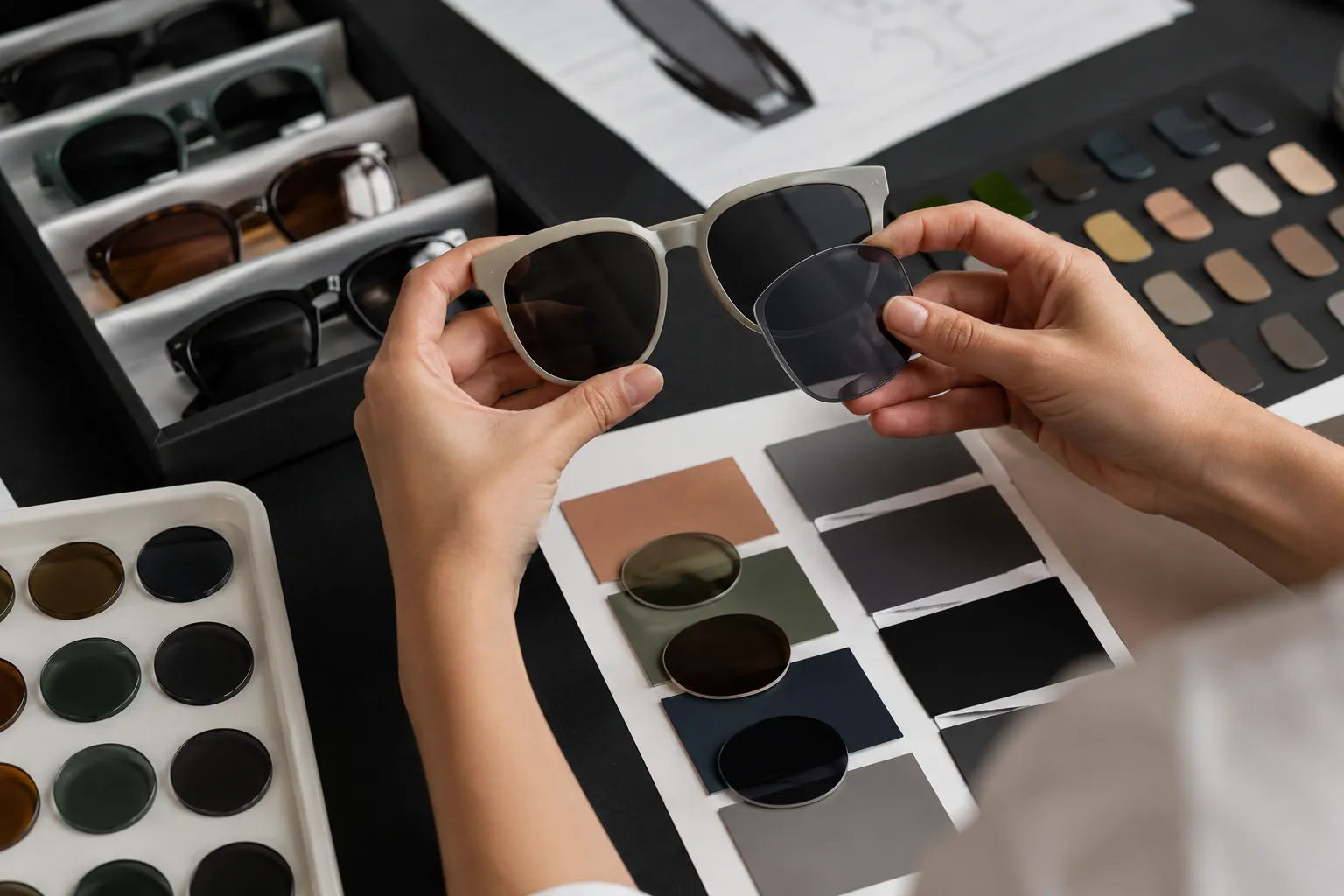
This guide is for brand owners, importers, distributors, and retailers buying custom sunglasses in volume. It compares three common logo methods—pad printing, laser engraving, and metal logo plates—against the factors that drive a real sourcing decision: material fit, setup cost, MOQ efficiency, positioning control, durability, perceived value, and lead time. The goal is simple. Help buyers choose a logo method that fits the frame material, target ex-works price, and order size before sampling starts. The notes below reflect standard factory logic in bulk eyewear production, not generic branding advice.
Start with the buying decision, not logo preference
Many buyers start with the logo effect they want. That is usually backward. A better sequence is: frame material first, target ex-works price second, order volume third, logo method fourth. Decoration has to fit the product economics and the substrate.
A logo treatment that works on a thick acetate temple may be a poor choice for a slim TR90 sports frame. A metal plate that makes sense on a repeat core style may add cost and approval risk on a small seasonal run. In bulk eyewear, the wrong decoration choice usually shows up fast: placement variation, adhesion problems, fit issues, delayed approvals, or rework.
- Choose pad printing when you need the lowest setup barrier, flexible logo color, and a practical option for smaller runs.
- Choose laser engraving when the frame material can produce a clean visible mark and you want a more wear-resistant result without adding a separate component.
- Choose metal logo plates when the product needs a stronger premium signal, the temple geometry can accept hardware, and the order size can absorb added tooling and assembly cost.
This choice can affect more than decoration. It may change temple design, usable flat area, finishing sequence, assembly flow, and QC checkpoints. A metal plate inset may require a machined seat on acetate. Pad printing may require a flatter print zone and stricter cleaning before printing.
Head-to-head comparison: cost, MOQ, durability, and look
Use the table below as a first filter before sampling. Actual cost will vary by logo size, artwork, frame construction, and factory process, but the production logic is consistent.
| Method | Best frame materials | Typical added unit cost | Typical setup/tooling impact | Durability | Visual position tolerance | MOQ efficiency |
|---|---|---|---|---|---|---|
| Pad printing | Injected PC, TR90, coated plastics, some flatter acetate areas | Usually the lowest-cost option for simple logos | Print plate, ink matching, and positioning fixture; generally low setup cost | Moderate; depends on ink system, curing, and surface preparation | Depends on part geometry and fixture quality | Usually the most practical option for small runs |
| Laser engraving | Acetate, PC, some coated or painted temples, some metal parts | Usually higher than simple pad printing and lower than metal plates | Artwork cleanup, parameter testing, and fixture setup; no ink mixing | Generally high when the mark is well matched to the material | Depends on curvature, fixture control, and visual centering requirements | Often efficient for mid-volume repeat programs |
| Metal logo plates | Acetate and thicker injected temples with enough wall thickness | Usually the highest-cost option because it adds hardware and assembly | Logo part tooling or stamping plus insertion and/or adhesive assembly | High if seat design, fit, and retention method are correct | Depends on seat accuracy, fixture control, and attachment method | Usually most efficient on larger or repeat orders |
On a price-sensitive sunglass program, logo choice can affect margin even if the decorated area is small. Pad printing is usually the cheapest route. Laser engraving often sits in the middle. It adds machine time and parameter testing, but avoids ink mixing and color matching. Metal plates usually cost the most. They add a second component, more handling, and more failure points.
MOQ logic follows setup efficiency. On very small orders, setup cost and approval speed often matter more than visual sophistication. That is why pad printing is common. As volume rises, laser becomes easier to justify on suitable materials. Metal plates make more sense when the style is expected to repeat and the added cost can be spread across more units.
Material compatibility is the first technical filter
Decoration success depends on how the substrate behaves under ink, heat, pressure, adhesive, and handling. This is where many first orders fail.
Pad printing works best on stable, smooth surfaces with suitable surface energy. Injection-molded PC and many coated plastics can print well with the right ink system. On low-surface-energy, heavily textured, or rubberized finishes, adhesion can be less reliable unless the process includes proper pretreatment. A logo may pass sample review and still fail rub or tape checks if the surface was not cleaned correctly or the ink was a poor match for the material.
Laser engraving depends on material response and visible contrast. On acetate, a tuned laser can produce a clean frosted or lightly recessed mark. On some glossy black or highly polished surfaces, the mark may be too subtle unless the artwork is adjusted for legibility. On thin temples or strongly curved areas, excess energy can create whitening, heat shadowing, or uneven edges. Do not approve laser marks on substitute material. Approve them on the exact production material and color.
Metal logo plates require real estate and wall thickness. The temple must support a machined seat, locating feature, adhesive bond, or a combination of these without distorting the visible outer surface. Acetate is often suitable because it can be machined to create a repeatable recess. Very slim injected temples are less forgiving. Review them case by case.
Always approve decoration on the exact material, color, and finish intended for production. A logo that reads clearly on tortoise acetate may look weak on crystal smoke, matte olive, or soft-touch black. Same artwork. Different result.
What the factory actually controls: process, tolerance, and failure points
Branding quality depends less on the logo file than on process control. A disciplined factory usually follows a sequence like this:
- Artwork review: check line weight, enclosed spaces, text legibility, and whether the logo is realistic for the selected method.
- Fixture setup: hold left and right temples in a repeatable position so placement is controlled by tooling, not operator judgment.
- Surface preparation: remove dust, polishing residue, release agents, and handling contamination before decoration.
- Trial pieces: run test parts to verify position, contrast, edge quality, adhesion, or hardware fit.
- First-article approval: confirm physical samples or approval photos before bulk decoration starts.
- In-process inspection: check for drift in position, contrast, registration, or fit during production.
- Final QC: evaluate logo appearance alongside frame alignment, hinge function, lens fit, and cosmetic finish.
For pad printing, common failure modes include fuzzy edges, incomplete fills, color variation, poor adhesion, and left/right placement inconsistency. Ask whether position is fixture-controlled and what internal adhesion or rub check the factory uses.
For laser engraving, common issues include inconsistent contrast between material batches, burn shadows on curved temples, and visual mis-centering even when the measured location is technically correct. Good factories check both measured position and visual balance on the assembled frame.
For metal plates, typical risks are skewed placement, edge gaps, visible adhesive squeeze-out, and plate loss over time if the retention method is weak. Mechanical location is generally safer than adhesive-only attachment. If adhesive is used, curing time must be built into the production plan.
Cost and lead-time math to run before sampling
Decoration changes more than unit price. It also changes sample timing, approval risk, and the chance of rework.
| Method | Typical sample impact | Typical bulk impact | Where hidden cost shows up |
|---|---|---|---|
| Pad printing | Usually the fastest to sample if artwork is ready | Usually causes the least disruption to a standard bulk cycle | Extra color passes, reprints, adhesion failures, and color approval rounds |
| Laser engraving | Usually requires testing on the actual material and color | Often stable once parameters are approved, but adds machine time | Trial waste, contrast tuning, and slower throughput on larger marks |
| Metal logo plates | Usually the slowest if custom hardware or tooling is required | Most likely to add assembly steps and extra QC checkpoints | Hardware tooling, attachment labor, curing time, and fitment rejects |
If a factory quotes sample and bulk timelines, those dates are only realistic if the decoration method is fixed early and the artwork is production-ready. Change from print to laser after sample review, or add a custom plate after temple dimensions are approved, and the timeline usually slips. Even if the paper schedule does not.
Practical planning rules:
- For small trial quantities, avoid hardware unless the retail positioning clearly supports the added cost and delay.
- For mid-volume acetate or suitable injected frames, laser often offers a useful balance of durability and moderate cost.
- For repeat core styles with stable demand, metal plates become easier to justify because tooling and setup are spread over more units.
- If the logo needs multiple print colors, pad printing may stop being the lowest-cost option once extra passes and approval time are included.
One more cost point matters: reject risk. A method with a higher unit price can still be cheaper overall if it reduces rework, replacement claims, or repeated approval rounds.
Premium appearance depends on execution, not method alone
Buyers often pay for a premium-looking treatment that does not suit the frame. A metal plate can look expensive in a rendering and disappointing in hand if it is oversized, badly seated, or applied to a temple that flexes too much.
Laser engraving is often underrated in premium programs. On suitable acetate and some darker or matte finishes, a small engraved mark near the hinge can look restrained and deliberate without adding a second material or creating color mismatch. It also avoids some of the wear concerns of surface print.
Pad printing is the easiest method to overdo. Large, high-contrast logos on glossy temples often read as promotional rather than branded. For a better result, keep the logo size disciplined, specify the intended ink finish, and make sure the print area supports clean edges. A gloss print on a matte temple can look wrong if the finish is not defined in the PO.
Practical rule: if the logo treatment has to carry all of the perceived value, the frame design and material story probably need work.
Consistency matters more than aggression. A subtle logo placed in the same position and angle on every pair usually creates a stronger retail impression than a louder treatment with visible variation.
Compliance, QC specs, and what to write into the PO
Decoration does not replace product compliance. Sunglasses still need to meet the applicable performance, labeling, and chemical requirements of the destination market. Branding should not interfere with those obligations.
Common references in eyewear sourcing include CE EN ISO 12312-1, ANSI Z80.3, AS/NZS 1067, and REACH. Depending on the product category and market channel, buyers may also review FDA registration status where relevant. System certifications such as ISO 9001 and social audit programs such as BSCI can support process credibility, but they do not replace product testing or buyer-side quality approval.
What buyers should specify in the purchase order or decoration spec sheet:
- Logo location: left temple, right temple, or both.
- Reference dimension: measure from a defined feature such as the hinge edge, temple front edge, or a specified datum point.
- Orientation: parallel to the temple edge or aligned to a defined datum line.
- Logo size: approved overall length and height, based on final artwork.
- Appearance standard: no broken lines, no blur, no burr, no visible adhesive squeeze-out, and no unacceptable edge gap for plated parts.
- Durability check: the agreed internal rub, tape, or attachment verification method.
The best control tool is still a golden sample. Approve one physical sample showing exact placement on both left and right temples, then reference it in the PO. Without that, decoration disputes get subjective fast.
Selection framework for real purchasing scenarios
If you need a fast decision, use the framework below:
- New style launch, small initial quantity: start with pad printing unless the product story depends on a more premium finish. It usually keeps setup cost and sampling risk lower.
- Mid-tier house brand, repeatable medium volume: laser engraving is often a strong choice on acetate or other suitable materials because it improves wear performance and can look cleaner over time.
- Proven core style, larger repeat order: use metal logo plates when temple geometry supports them and the retail price can absorb the added cost and assembly complexity.
- Chain-store or distributor business with tight repeatability requirements: avoid very fine pad-print details, request first-article approval, and insist on fixture-controlled positioning.
If the choice is unclear, sample the same frame in two methods rather than three. Too many options create approval noise. The most useful comparisons are usually pad print vs laser for entry and mid-tier programs, or laser vs metal plate for premium acetate styles.
Short version: if you need speed and a low setup burden, use pad printing. If you need durability without hardware complexity, use laser engraving. If you need a stronger premium cue on a stable, proven style, use a metal plate.
Have a custom sunglasses project in mind?
Send us your styles, target market and quantities and we will return a detailed quote with MOQ, lead time and a sample plan.
Get a QuoteWhy source this from Wenzhou with LumiShades
Wenzhou in Zhejiang Province is widely regarded as China’s eyewear manufacturing capital, producing a large share of the world’s sunglasses. That concentration matters to buyers: a deep local supply chain for acetate sheet, hinges, lens blanks, plating and packaging means shorter component lead times, easier color and material matching, and a workforce with decades of eyewear-specific skill. LumiShades has manufactured in this ecosystem since 2009, and our vertical integration — in-house injection molding, acetate cutting, CNC milling, lens tinting, decoration and quality control — means no part of your order is quietly subcontracted to a workshop you cannot audit.
For international buyers, that vertical control translates into accountability. When a single factory owns every step, defects are traced and fixed at source rather than bounced between vendors, and your specifications survive intact from first sample to bulk. We back this with 15+ years of experience, shipments to 60+ countries, more than 5 million pairs produced per year and a 98.5% on-time delivery rate. Our certifications — CE EN ISO 12312-1, FDA registration, ANSI Z80.3, AS/NZS 1067, REACH, ISO 9001 and BSCI audit — mean the compliance documentation your market requires already exists. Explore our manufacturing capabilities and quality control process to see how this works in practice.
Frequently asked questions
Which logo method is safest for a 50-pair trial order? Pad printing is usually the safest starting point for a 50-pair trial order because it typically has the lowest setup burden and the least impact on sampling speed. To make the decision usable, ask the factory for: 1) the exact print location drawing, 2) confirmation of the ink system for your frame material, 3) one approved physical sample, and 4) the factory's internal adhesion or rub check. If the order is only for market testing, avoid custom metal hardware unless the branding is essential to the test.
Does laser engraving work on all black frames? No. "Black" only describes color, not material. Laser performance depends on the actual substrate, surface finish, density, coating, and curvature. On some black acetate or coated plastics, the mark can look clean and premium. On other glossy or coated surfaces, it can be too low-contrast or show heat shadowing. Request a burn test on the exact production material and color, review it under normal viewing light, and confirm that the logo stays legible at the final approved size.
Are metal logo plates always more durable than pad printing? Not automatically. A well-made metal plate is often more durable in daily handling, but only if the temple design supports it and the retention method is sound. A poorly seated or adhesive-only plate can detach, shift, or show edge gaps. That is a more serious failure than normal print wear. Before approving plates, ask the supplier how the plate is retained, whether the temple has a dedicated seat or locating feature, and what attachment verification the factory uses during QC.
How should I write logo position requirements on the PO? Write the requirement so a QC inspector can measure it without guesswork. Include: 1) which side is decorated, 2) the exact reference point for measurement, 3) the approved logo size, 4) the intended orientation, 5) the acceptable placement tolerance, and 6) the appearance standard. For example: "Right temple only. Logo starts 12.0 mm from hinge edge, parallel to top temple line, as per approved golden sample." Attach the artwork file and approved sample photos, and reference the golden sample directly in the PO.
Can decoration affect compliance testing? Yes, indirectly. Decoration materials such as inks, coatings, adhesives, and metal components can create chemical, cosmetic, or durability issues if they are poorly controlled. But the decoration method does not replace the need for the finished sunglasses to meet the applicable market requirements. Buyers should review the completed product against the relevant standards or requirements for the destination market, including CE EN ISO 12312-1, ANSI Z80.3, AS/NZS 1067, and REACH where applicable, and confirm any FDA registration relevance with the supplier based on product type and sales channel.
Ready to start?
Explore our round sunglasses or request a quote — our sales team replies within 12 hours.
Request a Quote