
Injection Sunglass Finishes: Crystal, Matte, Frosted, Soft-Touch
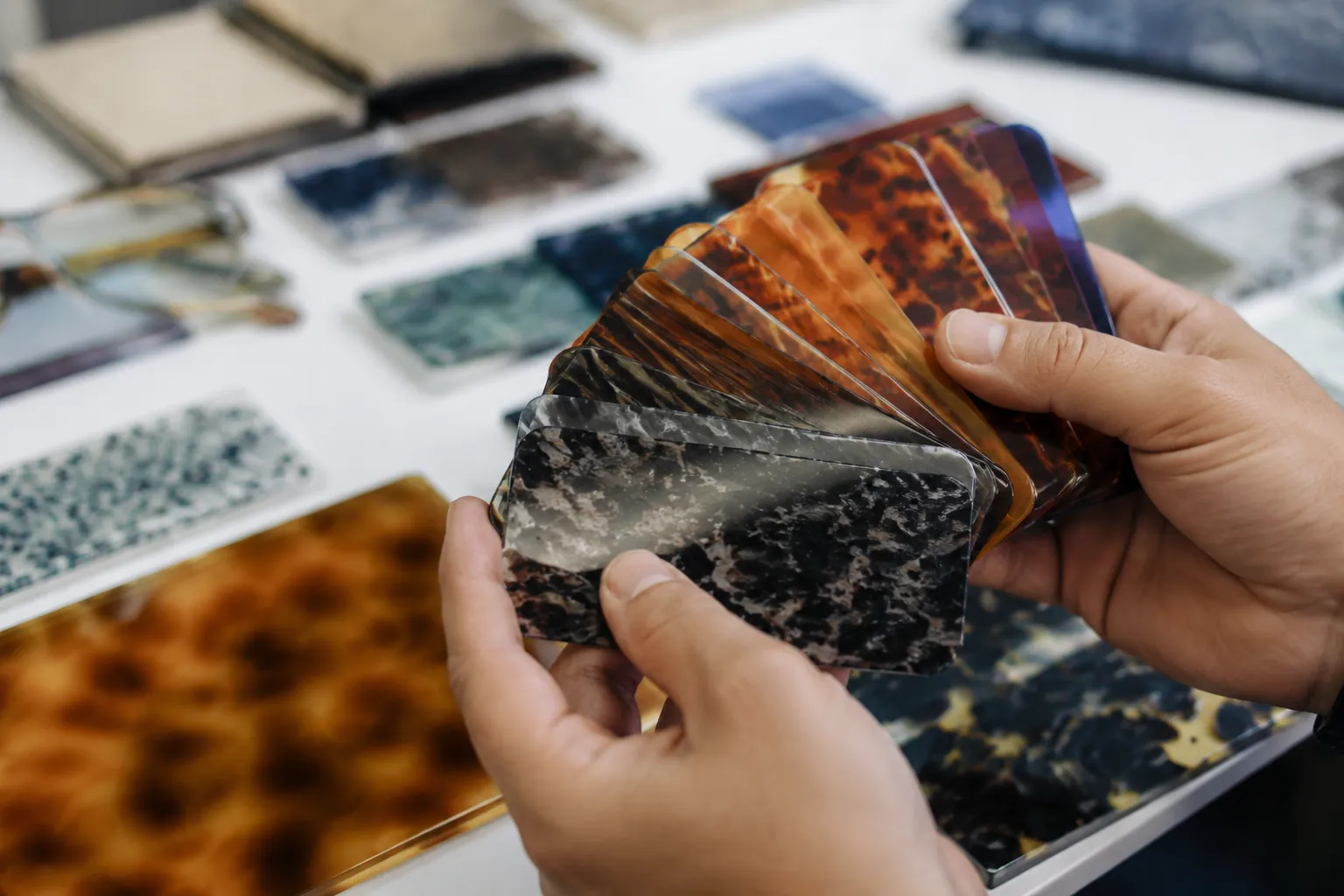
This guide is for brand owners, importers, retailers, and promotional buyers sourcing injection-molded sunglasses in volume. It compares crystal, matte, frosted, and soft-touch finishes in practical terms: how they are usually made, where they create risk, and which ones hold up better through packing, transit, shelf handling, and end use. On injection sunglasses, finish is not just styling. It changes mold preparation, coating steps, print yield, cosmetic inspection, and return risk. The goal is simple: choose a finish that fits the sales channel, handling level, and quality tolerance—not just the first sample.
Start with channel, cost, and abuse level
Many buyers begin with a trend board or a nice-looking sample. That is normal. It is also where avoidable problems start.
Choose the finish after three commercial questions are answered: where the sunglasses will be sold, what unit cost the program can carry, and how much rubbing, dropping, and mishandling the product will face before and after sale.
For giveaways, tourism, beach kiosks, and other price-driven channels, the safer options are usually crystal or mold-textured matte. These rely less on secondary coating steps, so there is usually less cosmetic variation and less handling risk. For value retail and mid-tier private label, matte and frosted often give a more considered look without adding as much coating risk as soft-touch. Soft-touch fits a narrower use case: gift sets, fashion capsules, or higher-perceived-value items with tighter packaging and QC control.
Order size matters too. At low volumes, extra setup, masking, curing, or manual inspection hits unit cost harder. At higher volumes, the issue shifts. The main concern becomes repeatability, inspection efficiency, and reject rate.
In practical sourcing terms:
- Low-volume programs: avoid complex coated finishes unless margin can absorb more processing and inspection cost
- Mid-volume programs: matte and frosted become easier to justify if the visual upgrade suits the channel
- Large-volume programs: focus on finish stability, decoration yield, and bulk-pack behavior across distribution
A simple rule helps: if the sunglasses will be bulk packed, sold from open trays, or handled often by shoppers, choose the finish that hides wear best. Not the one that feels best for ten seconds in a hand sample.
How each finish is made on an injection frame
These finishes are not made the same way. That is why their sourcing risks are different.
Crystal is usually created in molding, not by coating. The factory uses a polished mold cavity with a clear or translucent resin. Transparent materials show defects fast. Flow lines, weld lines, gate blush, haze, contamination, and light scratches are much more obvious on crystal parts than on opaque matte ones.
Matte is usually made in one of two ways: mold texture or post-mold matte coating. Mold-textured matte is generally more stable because the effect is built into the part. Coated matte can hit a specific low-gloss look, but then durability depends on coating adhesion, film build, cure, and edge coverage.
Frosted is usually a stronger light-diffusing effect than standard matte. On injection frames, it often comes from deeper mold texture or a specialty coating. A good frosted finish should look deliberate and even. Not just under-polished.
Soft-touch is usually a post-mold coating. The frame is molded first, then cleaned, coated, and cured. That adds variables: dust, uneven film build, blocked contact points, weak edge adhesion, and wear on temple tips or other high-contact areas. It can also complicate decoration because logo adhesion has to be checked on top of the coating layer.
In real production, finish quality depends on coordination across molding, coating, decoration, and final QC. Many disputes start late—after logo printing or after packing—because that is when weak finish control becomes visible. Ask not only what finish a supplier offers, but how that finish is controlled through the full process.
Head-to-head: process, cost logic, lead time, and wear
| Finish | How it is achieved | Typical sourcing implication | Lead-time effect | Wear performance | Best fit |
|---|---|---|---|---|---|
| Crystal | Polished mold cavity with clear or translucent resin | Usually simplest when the tool and resin are already validated for transparent parts | Often minimal if the mold surface is already approved | Structurally sound, but scratches, haze, and molding defects show easily | Transparent fashion styles, promo, value retail |
| Matte | Textured mold surface or matte coating | Mold-textured matte is usually easier to repeat than coated matte | Minimal for mold texture; coated versions may require extra process time | Generally strong; mold-textured matte usually wears better on edges than coated matte | Broad-use retail, promo, branded merchandise |
| Frosted | Heavier texture, micro-etch, or diffusion coating | Requires close control of texture consistency and visual approval standard | May need extra approval time if the texture effect is custom | Good at hiding fingerprints and light scuffs; consistency matters lot to lot | Mid-tier retail, seasonal collections, translucent colors |
| Soft-touch | Rubberized post-mold spray or dip coating | Adds coating, curing, handling, and stricter cosmetic inspection | Usually the longest because of coating and cure control | Highest cosmetic risk; can mark, chip, block, or become tacky if poorly specified or cured | Gift sets, premium-feel capsules, protected packaging |
Cost and lead time still depend on frame geometry, resin, color, decoration, and packout. They should be quoted case by case, not guessed from a sample. Still, some patterns are consistent. Crystal and mold-textured matte are often the easiest routes for price-sensitive production. Frosted can stay manageable if the effect is tool-based rather than heavily coating-dependent. Soft-touch usually needs more process control and more inspection, so buyers should expect tighter packaging and approval requirements.
For planning, treat special texture development, translucent color matching, and coated finishes as schedule-sensitive items. If the finish itself is custom, ask a blunt question: how many approval rounds are likely before bulk appearance is stable?
What fails in production and in the market
Each finish has predictable weak points. Ask direct questions. Not just, "Can you make this?" Ask, "What fails first, and how do you control it?"
- Crystal: visible weld lines, gate blush, haze, contamination, and micro-scratches. Clear and translucent parts do not hide much.
- Matte: gloss inconsistency, polished spots in high-contact areas, and rub-through on corners if the effect comes from coating rather than mold texture.
- Frosted: uneven texture depth, lot-to-lot visual shift, and inconsistent diffusion, especially on translucent colors.
- Soft-touch: blocking, tackiness, dust nibs, edge chipping, logo adhesion failure, and damage from alcohol-based cleaners, insect repellent, or sunscreen.
Soft-touch needs the most caution. A sample can feel great when new and still become a claims issue after storage, transit, or heat exposure if the coating does not match the substrate, packaging, or use environment. That does not make soft-touch wrong. It makes it conditional.
From a QC standpoint, define cosmetic standards before sample approval. That usually means how appearance will be judged, what level of surface marking is acceptable, what logo-position tolerance applies, and whether coated finishes must pass adhesion and rub checks before shipment. Photos alone are rarely enough for finish-sensitive programs.
Decoration and packout: where finish choice affects yield
Finish does not stop at the frame surface. It affects logo yield and packing performance too.
Pad printing is common on injection sunglasses and usually works best on stable, fairly even surfaces. Crystal and standard matte are typically easier than aggressive frosted textures or soft-touch coatings. On heavily textured frosted parts, fine print can look softer because the ink bridges an irregular surface. On soft-touch, there are two adhesion interfaces to manage: coating to frame, and ink to coating.
Laser engraving can reduce some print-related risk on certain matte or coated surfaces, but the result depends on substrate and coating contrast. Metal logo plates avoid some ink adhesion issues, though they add assembly steps and placement tolerances. For price-driven promotional programs, a simple one-color pad print often remains the most efficient option—if the finish supports it.
Packout matters more than many buyers expect:
- Crystal: use individual bags or tissue separation to reduce visible rub marks
- Matte: generally forgiving, but coated matte still needs edge protection
- Frosted: moderate protection is usually enough; avoid abrasive bulk contact
- Soft-touch: confirm bag material compatibility, full cure before packing, and pressure points during carton stacking
A finish that looks low-risk in production can become expensive later if it drives repacking, incoming rejection, or complaint handling. Review finish, decoration, and packout together. Always.
Best finish by program type
If the program is margin-sensitive, do not overspecify the finish. This is a common mistake. A premium-feel sample gets approved, then the real-world handling starts.
Budget programs: crystal or mold-textured matte are often the safest choices. They are usually easier to repeat and less dependent on coating consistency.
Promotional programs: keep the specification simple. Matte black, matte translucent colors, or clean crystal frames often perform well because they balance appearance, repeatability, and lower complaint risk.
Mid-tier retail: matte and frosted often give the best balance of visual impact and practical durability. They reduce glare, photograph well, and can make a basic injection shape look more intentional.
Soft-touch: use it only when hand feel is central to the product story and the retail environment is controlled. If the sunglasses will sit in heat, get tossed into bins, or stay in storage for long periods, look hard at the extra risk before approval.
For most commercial programs, the best finish is the one that still looks acceptable after molding, decoration, bagging, transit, unpacking, shelf display, and customer use. That is the test that matters.
Specification points buyers should lock before sampling
A finish decision is not complete until it is written into the specification. Too many programs are approved from one hand sample and a few photos, then bulk arrives with a different gloss level, texture depth, or logo result.
- Base material: identify the frame resin because finish and decoration performance vary by substrate
- Color standard: use a defined reference and keep a retained physical approval sample on the same substrate and finish
- Texture definition: state clearly whether matte or frosted is mold-textured or coating-based
- Decoration method: specify pad print, laser, metal logo plate, or other method, with location and tolerance
- Packout: define bag type, pouch material, separation method, and any cure waiting period required before packing coated parts
- Inspection criteria: define surface-mark limits, texture uniformity expectations, logo adhesion requirements, and acceptance standard
Keep frame-finish discussion separate from lens-performance requirements. Finish alone does not determine sunglass compliance, but the complete product may need to align with CE EN ISO 12312-1, ANSI Z80.3, or AS/NZS 1067 depending on the target market. Chemical controls may also need review against REACH. If a supplier references systems or social-audit credentials such as ISO 9001 or BSCI, treat those as factory-management indicators, not as proof that the finished sunglasses meet market-entry lens requirements. If the supplier mentions FDA registration, confirm exactly what product scope that registration covers, because registration does not replace market-specific sunglass testing.
A practical approval sequence to avoid finish surprises
Use a disciplined approval flow and most finish problems can be reduced before bulk production.
- Shortlist two finishes, not five. Choose one lower-risk option and one higher-style option.
- Ask how the effect is created. Confirm whether the finish comes from mold texture or from a coating step.
- Inspect under direct light. Rotate the frame and check for weld lines, dust, uneven texture, edge wear, and logo sharpness.
- Run a simple handling test. Bag and unbag the sample repeatedly, rub likely contact points, and inspect bridges, temple ends, and corners first.
- Approve decoration and packout together. A finish that looks good before packing may still fail after packing.
- Retain a sealed production-approved sample. Use it as the reference for incoming inspection and any quality dispute.
If the finish is custom, ask what records will be kept for repeat orders: retained sample, mold texture reference, coating code, print ink system, and packing method. Those records matter more than a note that says "same as last time."
Practical rule: if the finish needs a long explanation, it usually needs a tighter approval process.
For many buyers, the safest all-around answer remains mold-textured matte. Crystal works when transparency is the product story. Frosted can add style with manageable risk if the effect is controlled well. Soft-touch should be chosen only when the hand feel clearly justifies the extra process control, packaging discipline, and claim exposure.
Have a custom sunglasses project in mind?
Send us your styles, target market and quantities and we will return a detailed quote with MOQ, lead time and a sample plan.
Get a QuoteWhy source this from Wenzhou with LumiShades
Wenzhou in Zhejiang Province is widely regarded as China’s eyewear manufacturing capital, producing a large share of the world’s sunglasses. That concentration matters to buyers: a deep local supply chain for acetate sheet, hinges, lens blanks, plating and packaging means shorter component lead times, easier color and material matching, and a workforce with decades of eyewear-specific skill. LumiShades has manufactured in this ecosystem since 2009, and our vertical integration — in-house injection molding, acetate cutting, CNC milling, lens tinting, decoration and quality control — means no part of your order is quietly subcontracted to a workshop you cannot audit.
For international buyers, that vertical control translates into accountability. When a single factory owns every step, defects are traced and fixed at source rather than bounced between vendors, and your specifications survive intact from first sample to bulk. We back this with 15+ years of experience, shipments to 60+ countries, more than 5 million pairs produced per year and a 98.5% on-time delivery rate. Our certifications — CE EN ISO 12312-1, FDA registration, ANSI Z80.3, AS/NZS 1067, REACH, ISO 9001 and BSCI audit — mean the compliance documentation your market requires already exists. Explore our manufacturing capabilities and quality control process to see how this works in practice.
Frequently asked questions
Is soft-touch worth the extra cost on a 1,000-pair order? It can be, but only if hand feel is central to the product positioning and the packaging protects the coated surface. Before approving soft-touch, ask the supplier four things in writing: how the coating is applied, what adhesion test they use, how long parts cure before packing, and what bag or pouch material will touch the frame. If those points are not defined, mold-textured matte is usually the lower-risk choice.
Which finish hides scratches best during shipping? Frosted and mold-textured matte usually hide light shipping scuffs and fingerprints better than crystal because they break up reflected light. Crystal tends to show rub marks fastest, especially on clear and translucent colors. To reduce complaints, specify the separation method in the packout: individual polybag, tissue, or another non-abrasive barrier, and request a packed-sample check before bulk shipment.
Can logos be printed cleanly on all four finishes? Yes, but not with the same risk level. Crystal and standard matte are usually the easiest for pad printing. Aggressive frosted textures can reduce fine-detail sharpness, and soft-touch needs both coating adhesion and ink adhesion to be checked. Request a decorated sample on the final finish, confirm the logo method in the specification, and ask for the adhesion test standard before bulk approval.
Does a matte finish affect CE EN ISO 12312-1 or ANSI Z80.3 compliance? Not directly. Those standards apply to the finished sunglass product, especially lens performance and related product requirements, not simply to whether the frame surface is matte or gloss. Ask for compliance documents or test reports tied to the exact lens-and-frame configuration being purchased. Do not rely only on a general factory certificate list.
What is the lowest-risk finish for promo sunglasses at low unit cost? Standard crystal and mold-textured matte are usually the safest starting points because they are commonly more repeatable and less sensitive to coating-related cosmetic issues. To choose between them, consider the sales use: if transparent styling matters, crystal may be appropriate; if handling and abrasion resistance matter more, mold-textured matte is often the safer commercial option. In either case, approve the finish together with logo method and packout, because shipping damage can erase any savings from a low-cost finish choice.
Ready to start?
Explore our cat-eye sunglasses or request a quote — our sales team replies within 12 hours.
Request a Quote