
When a New Sunglasses Mold Is Worth the Cost
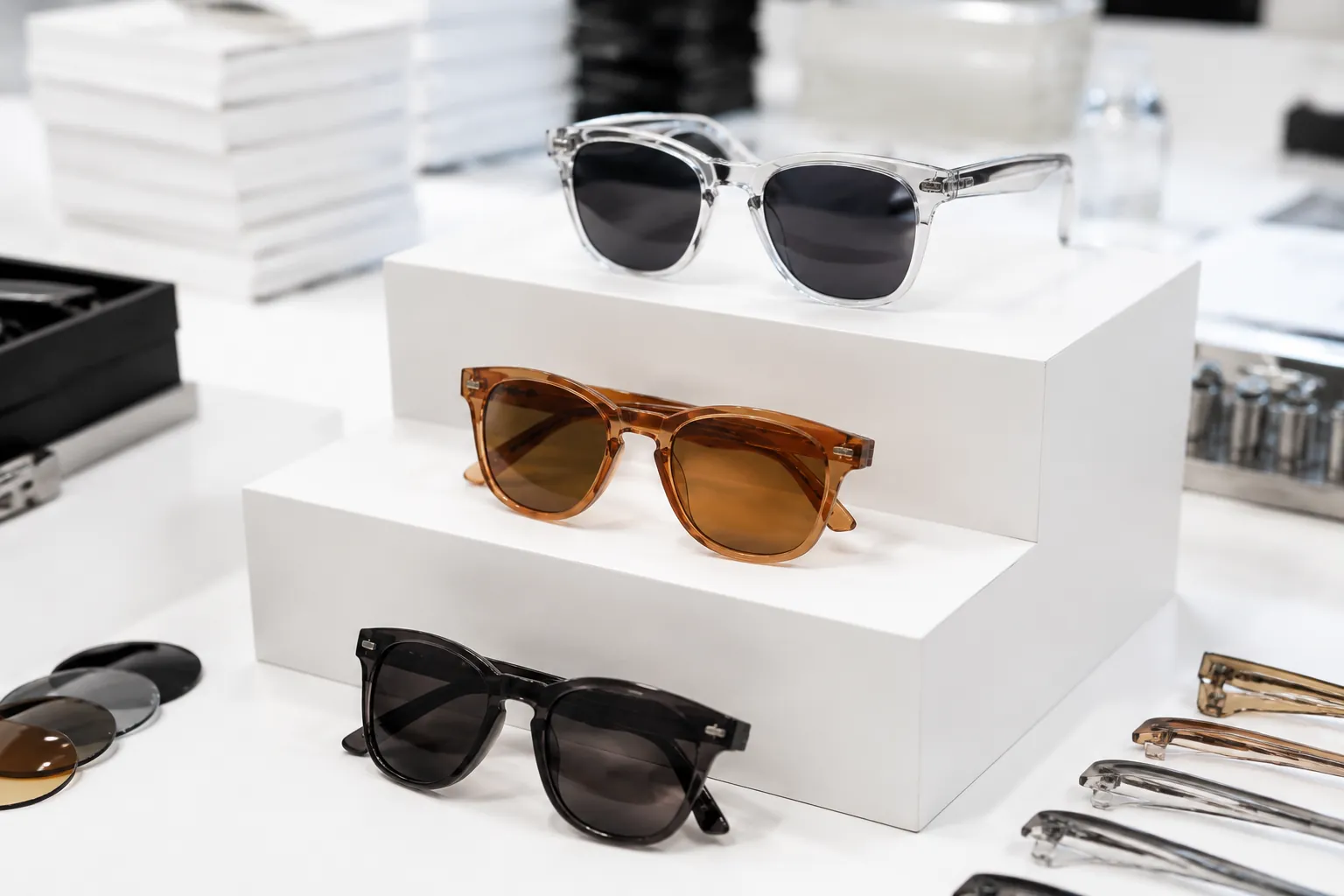
This guide is for brand owners, importers, distributors, and retailers deciding whether to fund a new injection mold for a sunglasses program. In eyewear, this is not just a design choice. It is a commercial one. The right answer depends on expected lifetime volume, gross margin, launch timing, technical risk, and whether shape exclusivity creates a real sales advantage. If you are weighing a proprietary frame against customizing an existing shape, this article breaks down the cost logic, development path, tolerance risks, and compliance checks to review before you commit money to tooling.
Start with the real question: exclusivity or speed
Buyers often frame new tooling as a design decision. That is incomplete. It is really a capital-allocation decision.
A new mold makes sense only if the added development cost can be recovered through higher selling price, better gross margin, repeat orders, channel exclusivity, or a frame shape competitors cannot easily pull from the same catalog.
For injection-molded sunglasses, there are usually three sourcing routes:
| Route | What changes | Typical upfront cost | MOQ logic | Lead-time impact | Best fit |
|---|---|---|---|---|---|
| Use existing mold | Color, lens tint, logo, packaging | No mold charge; sample, setup, or decoration charges may apply | Often the most practical route for small test orders | Fastest because frame geometry is already proven | Market testing, fast launch, tight budget |
| Modify existing mold or stock shape | Temple branding, logo recesses, surface details, limited non-critical geometry changes | Lower than full tooling, but depends on the change and whether steel must be altered | More practical when the order and reorder plan can absorb the added work | Moderate; requires review, sampling, and possible correction | Private label programs needing visible differentiation |
| Build new proprietary mold | Front curve, eye size, bridge, lens groove, temple architecture, full frame geometry | Highest upfront route; quote depends on frame complexity, mold structure, material, and cavity plan | Best justified when the same shape is expected to repeat | Longest; includes CAD, tooling, trial shots, corrections, and final approval | Brands seeking shape ownership and repeat programs |
If the first order is only a market test, full tooling is hard to justify unless the frame shape is the product or the retail price can absorb the development cost. A low MOQ helps limit exposure. It does not erase tooling cost.
Simple rule: if demand is still uncertain, start from an existing base. If the same silhouette is likely to repeat across seasons, retailers, or markets, tooling starts to act like a reusable product asset rather than a one-off expense.
Know what can change without a full new mold
Many buyers assume they need a new tool too early. Usually they do not.
The commercial look of a sunglasses frame can change a lot through color, lens, logo, finish, and packaging before the project crosses into full-tooling territory.
- Lower-cost, lower-risk changes: frame color, translucent or solid finishes, suitable soft-touch or rubberized coatings, lens color, smoke/brown/green tints, gradients, mirror coatings, pad print logos, laser engraving, hot-stamped temple marks, and customized packaging.
- Mid-cost changes: temple-tip details, logo plaque recesses, surface texture, localized thickness changes in non-critical areas, and some hinge-area adjustments if the existing structure allows them.
- Usually new-mold changes: new front silhouette, major eye-shape change, bridge redesign, wrap-angle change, lens groove redesign, different base curve, or a completely new temple construction.
The line is fit-critical geometry. Once a change affects front curvature, lens seating, bridge structure, hinge location, or temple balance, it is no longer cosmetic. It affects how the part fills, cools, shrinks, assembles, and fits.
Material choice matters too. Common injected eyewear materials such as polycarbonate, TR90, and injected nylon-based materials behave differently in shrinkage, flexibility, impact resistance, and processing. Uneven wall thickness can create sink marks or dimensional movement. An eyewire that is too thin around the lens groove can slow lens insertion or cause damage during assembly.
Ask this early: Which requested edits affect lens fit, bridge comfort, hinge alignment, temple spread, or warpage control? If the answer is yes, budget for engineering review, sampling, and possible correction. Do not treat the change like decoration.
Run the numbers before you cut steel
A new mold pays off only if its cost per pair is lower than the value it creates. That value can come from exclusivity, stronger margin, or repeatability. The math is simple. The discipline is not.
- Estimate realistic sell-through of the exact frame over its expected selling life.
- Divide tooling and development cost by that unit volume.
- Add extra sampling, testing, correction, decoration setup, and approval costs.
- Compare that burden per pair against target gross margin and the commercial value of owning the shape.
Example: if tooling and development total $4,500 and the frame sells 1,000 pairs, that cost alone adds $4.50 per pair before freight, duty, warehousing, packaging, marketing, and returns. If the same frame sells 5,000 pairs, the tooling burden drops to $0.90 per pair. At 10,000 pairs, it drops to $0.45 per pair.
That spread matters. In low-priced sunglasses, a few extra dollars can wipe out margin. In a higher-margin branded program with repeat orders, the same tooling cost may be acceptable if the shape helps protect price, improve sell-through, or avoid direct catalog comparison.
If the frame is a one-season test, avoid full tooling unless the shape itself is the selling point. If it is a carryover style that can repeat across accounts, channels, or regions, the case for tooling gets stronger.
Also look at opportunity cost. Tooling money cannot also fund better lenses, stronger coatings, better packaging, sell-through support, deeper inventory, or faster replenishment. More customization is not automatically better. Better economics are better.
Lead time changes fast when geometry is new
New tooling does more than add cost. It adds calendar risk.
With an existing shape, the supplier is usually validating color, branding, lens choice, and assembly. With a new frame, the supplier is also solving geometry. That means engineering review, tool fabrication, trial production, inspection, and correction.
Existing-shape programs move faster because the frame has already been molded and assembled before. A proprietary frame adds pre-production work that can extend development by weeks, depending on complexity, approval speed, material behavior, mold corrections, and test requirements.
A realistic new-frame process often looks like this:
- Reference sample, sketch, or 2D concept review
- 3D CAD creation and structural review
- Design freeze on eye size, bridge width, temple length, lens groove, hinge position, and branding zones
- Mold design and fabrication
- First trial shots and dimensional inspection
- Correction round for warpage, sink, flash, hinge alignment, lens insertion, or cosmetic issues
- Counter-sample approval
- Pre-production sample in final color, lens specification, decoration, and packaging
- Bulk production and final QC
Delays usually show up in predictable places: the design is not truly frozen, the first trial reveals molding or assembly problems, or the decoration method does not work cleanly with the material or surface. None of this is unusual. It still costs time.
Examples:
- A metal or mirrored logo detail may need more support behind the temple than originally planned.
- A lens groove may work on one sample but fail once bulk lens dimensions vary within production tolerance.
- A high-wrap front may need adjustment if lens insertion causes stress marks, cracking, or too much assembly force.
If the launch is tied to summer selling, a retailer reset, or a trade-show date, speed may be worth more than exclusivity. Many buyers reduce risk by launching first from a stock or modified stock shape, then funding proprietary tooling only after reorder demand is proven.
Where new molds usually fail
Most tooling failures do not look dramatic at first. They show up as lower yield, slower assembly, inconsistent fit, cosmetic rework, or higher return risk. A frame can look good in a rendering and still perform badly in production.
| Failure point | What happens in production | Commercial impact |
|---|---|---|
| Inconsistent wall thickness | Sink marks, longer cooling time, uneven shrinkage, warped fronts | Lower yield, cosmetic rejects, unstable fit |
| Bridge geometry not validated on face | Pressure points, poor comfort, unstable wear position | Returns, complaints, weak repeat sales |
| Lens groove too loose or too tight | Slow insertion, cracked lenses, weak retention, inconsistent seating | Assembly loss and possible field failures |
| Temple balance and hinge tension off | Frame sits crooked, opens poorly, or feels low quality | Lower perceived quality and higher rejection risk |
| Decoration added without structural support | Logo plate loosening, print wear, sink around recesses | Branding defects, rework, and delayed shipment |
Ask for process detail, not just polished sample photos. Useful checkpoints for molded sunglasses include lens opening size, bridge width, temple spread, hinge alignment, left-right symmetry, lens retention, surface finish, and assembly yield during trial production.
If the supplier talks clearly about trial correction for sink, gate marks, flash, shrinkage, or cooling distortion, that is normal. If the supplier cannot explain how those issues are checked and corrected, risk goes up.
Tolerances matter because sunglasses are assembled products. A small deviation in a lens groove, hinge seat, bridge, or temple angle can change lens fit, comfort, or frame balance. Buyers do not need to design the mold. They do need to ask which dimensions are critical and how those dimensions are checked during first-article inspection and bulk QC.
Integrated production can reduce communication errors when molding, lens processing, decoration, assembly, and QC sit with one supplier. Still verify the actual equipment, inspection flow, sample approval process, and responsibility for corrective action. Do not assume.
Compliance still applies to custom geometry
A custom frame shape does not exempt the product from compliance. The sunglasses still need to meet the rules of the destination market, and those requirements should be defined before bulk production starts.
Common references for sunglasses programs include CE EN ISO 12312-1 for relevant European market requirements, ANSI Z80.3 for nonprescription sunglasses in the United States, AS/NZS 1067 for Australia and New Zealand, REACH for chemical restrictions relevant to the European market, and FDA registration where applicable to the supplier or product category. Larger buyers may also require management-system or social-compliance standards such as ISO 9001 and BSCI.
Confirm the exact requirement with the importer of record, retailer, test lab, or compliance adviser for the destination market. Standards, labeling rules, and documentation needs vary by market, sales channel, lens category, and product claim.
Shape still matters even if the lens material stays the same. A more wrapped front can change lens cutting and seating. A thinner eyewire can weaken retention. New metal trim or coatings may require material declarations or chemical review. If the frame is overstressed during lens insertion, the lens may pass optical requirements while the assembled product still suffers from poor yield or durability problems.
Before approving tooling or bulk production, confirm these items in writing:
- destination market and applicable standard
- lens category, visible light transmittance target, UV requirement, and coating specification
- frame, coating, decoration, and metal-part material declarations where chemical compliance is relevant
- final branded sample with the actual lenses, finish, logo, trims, and packaging
- required warning labels, user information, product markings, and packaging language
Do this before steel is cut if possible. Late compliance changes can force rework in lens choice, decoration material, labeling, packaging, or local frame geometry.
A practical sourcing path for new and repeat buyers
The lowest-risk path is usually staged development. Do not jump straight from concept to proprietary tooling unless the business case is already clear.
Existing frames can help validate demand, fit, lens preference, price acceptance, and channel response before large development money is committed.
| Buyer situation | Recommended path | Why it works |
|---|---|---|
| New brand with unknown demand | Use an existing mold with custom color, lens, logo, and packaging | Lower cash exposure, faster sample cycle, cleaner demand test |
| Retailer testing private label | Modify a stock shape, then review sell-through after the first season | Adds differentiation without taking full tooling risk upfront |
| Distributor with reorder history | Build a proprietary mold for a proven top-selling silhouette | Known volume can absorb tooling, and exclusivity may protect repeat business |
| Premium brand with signature design language | Tool a new frame, define critical dimensions, and lock QC standards before bulk | Protects brand consistency, fit, and margin structure |
A disciplined sourcing sequence looks like this:
- Start from target retail price, landed-cost ceiling, and required margin.
- Define whether exclusivity is essential, commercially useful, or merely preferred.
- Review existing shapes before approving new tooling.
- If tooling is justified, freeze the geometry before mold design and cutting.
- Approve a trial sample with real lenses, finish, decoration, and branding.
- Set QC checkpoints for critical dimensions, hinge function, lens fit, cosmetic defects, logo placement, packaging accuracy, and labeling.
Blunt advice: if the team is still changing bridge shape, temple profile, eye size, or wrap after CAD sign-off, do not cut the tool yet. Late changes get expensive fast.
Use this checklist before saying yes to a new mold
Treat this as a gate review. If most answers are still uncertain, the project is probably too early for proprietary tooling.
- Volume: Do you have a realistic reorder plan for the same frame, not just optimism about the first order?
- Amortization: What is the tooling and development burden per pair at conservative, expected, and upside volume scenarios?
- Exclusivity: Is owning the front shape commercially important, or would color, lens, logo, finish, and packaging create enough distinction?
- Timing: Can the launch calendar absorb CAD review, tool fabrication, trial shots, corrections, testing, and sample approvals?
- Fit: Have the bridge, eye size, front curve, temple length, and temple spread been checked against the target wearer?
- Assembly: Have the lens groove, hinge position, lens retention, and decoration method been reviewed for production practicality?
- Compliance: Have the destination-market standard, lens category, labeling, documentation, and chemical requirements been defined?
- Factory capability: Can the supplier show how it controls molding, lens processing, decoration, assembly, inspection, and corrective action?
If the answers are mostly yes, tooling may be justified. If they are mostly no, start from an existing base and invest first in what customers notice fastest: fit, lens quality, finish consistency, packaging, and reliable delivery.
That staged approach gives better sales data and makes any later tooling decision easier to defend.
Have a custom sunglasses project in mind?
Send us your styles, target market and quantities and we will return a detailed quote with MOQ, lead time and a sample plan.
Get a QuoteWhy source this from Wenzhou with LumiShades
Wenzhou in Zhejiang Province is widely regarded as China’s eyewear manufacturing capital, producing a large share of the world’s sunglasses. That concentration matters to buyers: a deep local supply chain for acetate sheet, hinges, lens blanks, plating and packaging means shorter component lead times, easier color and material matching, and a workforce with decades of eyewear-specific skill. LumiShades has manufactured in this ecosystem since 2009, and our vertical integration — in-house injection molding, acetate cutting, CNC milling, lens tinting, decoration and quality control — means no part of your order is quietly subcontracted to a workshop you cannot audit.
For international buyers, that vertical control translates into accountability. When a single factory owns every step, defects are traced and fixed at source rather than bounced between vendors, and your specifications survive intact from first sample to bulk. We back this with 15+ years of experience, shipments to 60+ countries, more than 5 million pairs produced per year and a 98.5% on-time delivery rate. Our certifications — CE EN ISO 12312-1, FDA registration, ANSI Z80.3, AS/NZS 1067, REACH, ISO 9001 and BSCI audit — mean the compliance documentation your market requires already exists. Explore our manufacturing capabilities and quality control process to see how this works in practice.
Frequently asked questions
At what order volume does a new sunglasses mold usually start to make sense? It starts to make sense when the same frame is likely to repeat enough times to absorb tooling and development cost without crushing margin. Run the math directly: divide total tooling, sampling, correction, and testing cost by conservative expected unit volume. If the added cost per pair still fits your landed-cost target and the shape creates real commercial value, tooling may be justified. If the program is a one-time test, an existing or modified stock shape is usually the safer choice.
Can I get exclusivity without paying for a fully new mold? You can often get visible differentiation, but not full shape ownership. Custom colors, lens tints, mirror treatments, logo placement, temple decoration, packaging, and some limited non-critical edits can make a stock frame look proprietary to consumers. But if you need exclusive front geometry, bridge shape, wrap angle, lens groove, or temple architecture, a proprietary mold is usually required. Ask the supplier to state clearly in writing which elements are exclusive and which are shared stock components.
Will a new mold slow down my launch? Yes. A new mold adds CAD review, design freeze, mold fabrication, first trial shots, dimensional inspection, corrections, final decorated samples, and often compliance or lab testing before bulk shipment. Build time for at least one correction loop, especially if the design changes fit-critical areas such as the lens groove, bridge, hinge position, or wrap. If the launch date is fixed, use a stock or modified stock frame unless the proprietary shape is essential.
What is the biggest technical risk in custom molded sunglasses? The biggest risk is fit-critical geometry that looks acceptable in CAD but fails during molding, assembly, or wear. Watch the bridge, lens groove, eyewire thickness, hinge alignment, front curve, temple spread, and wall-thickness transitions. Before bulk production, require trial samples with actual lenses and decoration, check critical dimensions, confirm lens retention, and review assembly yield. Do not approve bulk based only on renderings or unbranded shape samples.
Do compliance requirements change if I use a custom frame shape? The obligation to meet destination-market requirements stays the same. Confirm the applicable standard before tooling, such as CE EN ISO 12312-1, ANSI Z80.3, AS/NZS 1067, REACH, FDA registration where applicable, and ISO 9001 or BSCI if required by the buyer or channel. Custom geometry can affect lens seating, retention, markings, coatings, chemical declarations, and labeling, so the final branded product should be checked, not just the base lens or an undecorated frame.
Ready to start?
Explore our wayfarer sunglasses or request a quote — our sales team replies within 12 hours.
Request a Quote