
How to Write Precise Polarized Lens Specs
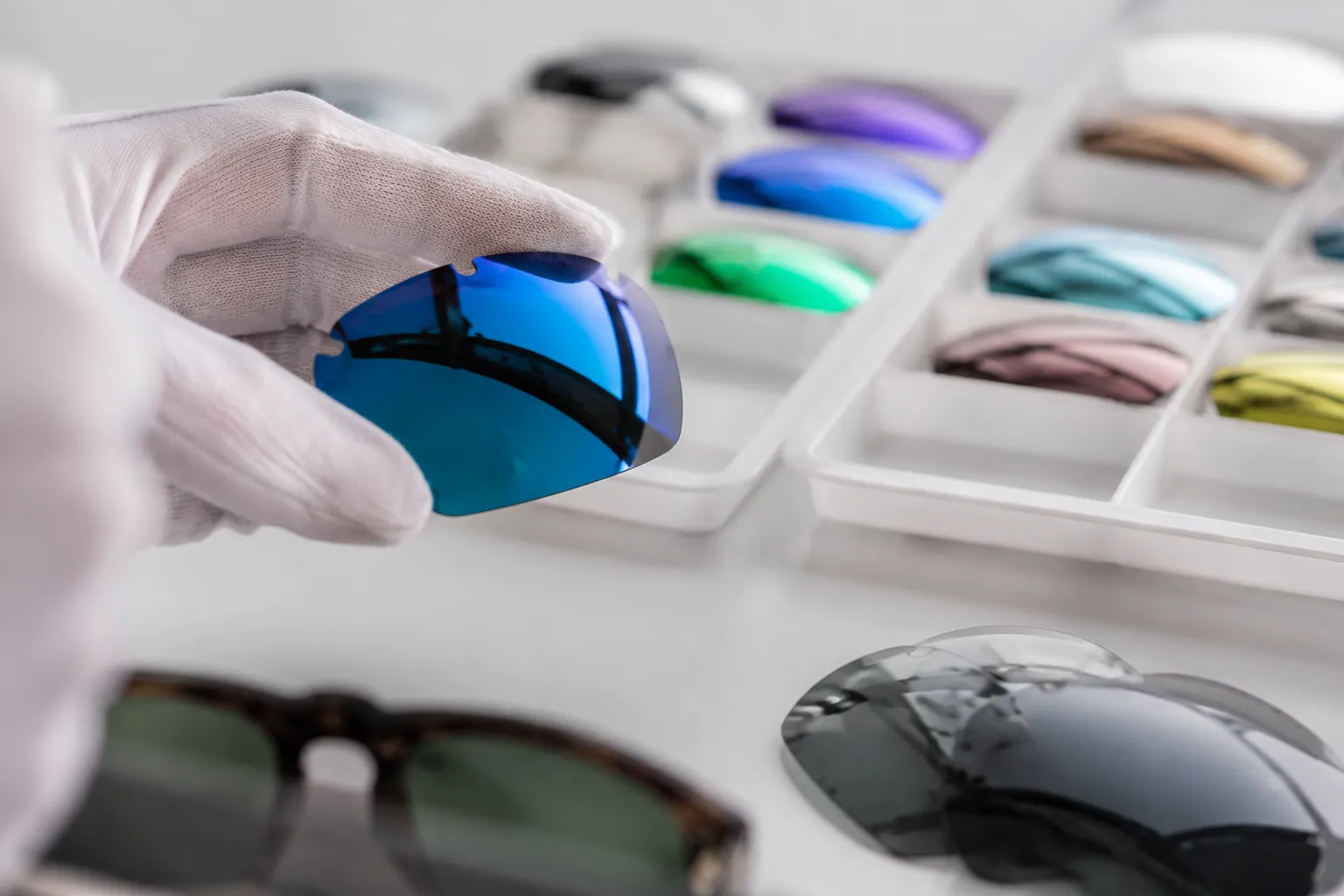
This guide is for importers, private-label brands, distributors, and retail buyers sourcing polarized sunglasses in volume. The aim is simple: turn "polarized" from a sales claim into a purchasing specification that can be quoted, inspected, and enforced. A usable lens spec should define construction, visible light transmission target, tolerance, polarization requirement, cosmetics, and substitution control. Those points reduce batch variation, make quotations easier to compare, and give buyers a clearer basis for sample approval and claim handling.
Start with failure modes, not the sales claim
Most polarization problems do not show up first on a compliance report. They show up in the goods. Left and right lenses look different in density. Glare reduction feels uneven. Stress patterns are visible in the center of vision. Tint drifts from lot to lot. End users complain that screens go dark at certain angles.
A lens can still be sold as polarized and still be inconsistent enough to trigger returns. That is the real risk.
Start with the failure modes that matter most for the product, then write the spec backward from those risks. If the main issue is appearance consistency in fashion retail, pair matching and cosmetic control may matter more than a premium label. If the product is meant for driving, fishing, or strong outdoor glare, visible light transmission and polarization performance need tighter definition. If the frame is a wrapped sport shape, material choice, stress behavior, and optical control matter more than they do in a flatter fashion frame.
Many RFQs still describe the lens as color, UV400, and polarized. That is too loose. A practical purchasing spec should define lens construction, target visible light transmission, tolerance range, polarization requirement, acceptable cosmetic condition, and left-right matching rules. Without those details, suppliers can quote very different lens routes under the same short description.
Construction matters because materials behave differently. TAC polarized lenses are common in fashion and lifestyle programs because they are widely used and support many tint options, but lamination quality and edge durability need control. PC polarized lenses are often chosen for lighter-weight or more impact-focused applications, especially in active or wrapped frames, but hard coating, mold consistency, and distortion control become more important. Nylon-based sport lenses also appear in some performance programs, but they usually demand tighter process control and a higher material budget.
The five specs that actually control lens quality
If you want an RFQ that produces comparable quotes, start with five measurable lens specifications. These points drive most quality outcomes in bulk production.
- Lens construction: define TAC polarized, PC polarized, or another exact construction. If relevant, also state finished thickness, such as 1.0 mm, 1.1 mm, or 1.2 mm TAC, or injection-molded PC with hard coating. Thickness affects handling, edging behavior, and frame fit.
- Visible light transmission: set a target and tolerance, not just a color name. If a dark smoke lens is required, specify the intended VLT range in the PO or approved sample record. Without a range, "same color" stays subjective.
- Polarization requirement: require a defined minimum performance value or a defined pass method agreed with the supplier or test lab. "Polarized" must be tied to a measurable standard in the purchasing documents. Otherwise it is just label language.
- Left-right consistency: require matched appearance and function within one frame. This should include no visible tint mismatch under agreed inspection conditions and consistent behavior when checked with a polarized test image, LCD screen, or other agreed method.
- Cosmetic and stress limits: define reject criteria for scratches, bubbles, pits, edge chips, delamination, and central viewing-area stress pattern. Many disputes are really about appearance or stress visibility, not whether a lens contains a polarizing filter.
Keep compliance documents separate from these commercial controls. CE EN ISO 12312-1, ANSI Z80.3, and AS/NZS 1067 relate to sunglasses performance and market requirements. REACH relates to chemical compliance. ISO 9001 and BSCI may matter when assessing supplier systems. None of those documents, by itself, sets the batch-to-batch consistency standard for your order.
Write the lens spec so the factory can quote it
Many purchasing problems start at quotation stage. If the buyer asks for "polarized TAC grey lens" and nothing more, suppliers may quote different film sources, thicknesses, tint routes, and cosmetic screening levels. The prices may look close. The goods are not.
A clearer RFQ or PO note should include the following points:
- Market destination: EU, US, Australia, or multi-market, so the supplier aligns testing and labeling with CE EN ISO 12312-1, ANSI Z80.3, or AS/NZS 1067 as required.
- Use case: fashion, promo, driving, fishing, beach retail, or sport. This affects the acceptable balance between cost, glare control, appearance, and durability.
- Lens type: for example, TAC polarized smoke lens, 1.1 mm finished thickness, matched pair required, no material substitution.
- Color control: approved master sample, signed tint chip, or sealed sample retained by both buyer and supplier. If no reference is named, pair matching is harder to enforce.
- Inspection rule: AQL level, viewing distance, light source, and defect classification. The exact rule should be written into the PO or quality agreement, not assumed.
One useful PO clause is: supplier shall maintain the same approved lens construction, film source, and tint route for production unless buyer approves the change in writing. This helps control substitutions, especially on repeat orders.
Decoration and assembly details can also affect lens quality. If a logo is applied near the lens area by hot foil, print, or laser marking, confirm that the process does not create handling damage after lens fitting. If one supplier manages tinting, edging, assembly, and decoration within the same production chain, traceability is often simpler. The need for a precise specification does not change.
What different polarization options really buy
| Lens option | Typical finished spec | Best use case | Main risk to control | Typical bulk cost effect |
|---|---|---|---|---|
| TAC polarized | 1.0-1.1 mm, dark tint, laminated film | Fashion, lifestyle, promo retail | Lamination consistency, edge durability, pair mismatch | Often used as an entry-point polarized option |
| PC polarized | Injection lens with hard coat, lighter weight | Sport, kids, wrapped active frames | Optical distortion, coating quality, mold consistency | Commonly quoted above basic TAC routes, depending on tooling and coating route |
| Matched-batch upgrade | Standard material with tighter tint and screening | Mid-range private label | Yield loss if process control is weak | Cost change usually comes from tighter sorting and rejection, not only raw material |
| Premium cosmetic screening | Extra QC on central viewing area and pairing | Brand programs with low defect tolerance | More rejects and slower packing speed | Cost change usually comes from added screening and yield loss |
Buyers often assume they are paying mainly for material. Often they are not. Price changes can also come from process control, screening intensity, and yield.
A lower-cost polarized lens can become expensive if the supplier must remake pairs because tint matching is unstable, edging exposes lamination, or too many lenses fail cosmetic inspection.
Order structure also matters. Very small development runs often carry a higher unit cost because setup, tint control, assembly handling, and packaging are spread across fewer units. Larger runs usually give the supplier more stable production planning and clearer material purchasing. If a supplier quotes different prices at different quantities, ask what portion of the change comes from raw materials, setup, and expected yield. That question tells you more than assuming the lens route changed.
Apply the same logic to lead time. Sample and bulk timing depend on frame construction, lens route, decoration method, packaging, and testing plan. If the buyer requires tighter cosmetic screening, a special lens source, or a new construction, treat those as lead-time variables and agree them before order confirmation.
Control consistency at sample stage and first bulk run
Do not approve polarization with a casual desk check alone. Use a short, repeatable approval routine. It catches many of the issues that later become claims.
- Approve a sealed reference sample. Mark it with style code, date, lens color code, and market destination. Keep one retained sample on the buyer side and one on the supplier side.
- Check lens function. Use a polarized test card, LCD screen, or other agreed method and rotate the frame to confirm both lenses respond consistently.
- Check transmission and color density. If a meter is available, record the result. If not, compare both lenses over a neutral white background under consistent light and document any visible mismatch.
- Check stress pattern. View each lens through a polarized viewer under bright light. Peripheral stress may occur in some constructions after edging and fitting, but strong stress visibility in the central viewing area should be evaluated against the approved standard.
- Check edge finishing after assembly. Look for chips, exposed lamination, insertion marks, and stress near the bevel or groove.
For the first bulk run, ask the factory to retain approved production samples from the actual lot and record which lens batch or material route was used. Keep matching retained references on the buyer side. This makes reorder comparisons more objective if a later shipment appears darker, lighter, or visually different.
Sampling should reflect the intended production route. A showroom prototype or appearance mockup may not be enough if it was built from a different lens source or process. For final approval, ask for at least one sample made with the intended production construction.
Do not confuse compliance paperwork with purchasing specs
A test report supports compliance. It does not replace a commercial quality standard written into the RFQ, PO, or quality agreement. That distinction matters because many disputes involve goods that may be saleable in the market but still fail the buyer's private-label standard.
For sunglasses, buyers commonly request alignment with CE EN ISO 12312-1, ANSI Z80.3, or AS/NZS 1067 depending on destination market. Chemical-control requests often include REACH. Some import processes also ask for FDA registration paperwork where relevant. Factory certifications such as ISO 9001 and social-compliance audits such as BSCI can support supplier evaluation. None of those items defines whether the left and right lenses in a shipment match closely enough for your brand standard.
To avoid confusion, write two separate layers into your documents:
- Compliance layer: target market, required reports, labeling, warnings, and chemical documentation.
- Commercial layer: lens construction, target VLT and tolerance, polarization requirement, cosmetic standard, pair matching, and substitution control.
Keep the two layers separate. It makes decisions faster. If a shipment passes market compliance but fails pair matching, the buyer still has a basis for rework, discount, or rejection if that requirement is written into the order. If the goods meet the commercial standard but one document is missing, the issue is administrative, not a lens-quality failure.
Where buyers overpay and where they should spend
Buyers overpay when they buy adjectives instead of controls. Terms such as "premium polarized" have little procurement value unless they are tied to a measurable change, such as a narrower VLT tolerance, stricter pair matching, tighter cosmetic screening, or a locked lens source.
Three common waste points appear in sunglasses programs. First, the buyer asks for a premium label without defining what must improve. Second, the buyer applies a strict cosmetic standard to a price-sensitive promotional program without confirming that the channel will support the extra rejection cost. Third, the buyer starts with a weak specification and later pays for sorting, remakes, delays, or claim settlements that could have been prevented at RFQ stage.
Spend where it cuts complaint risk or improves consistency. In many programs, that means better left-right pair matching, a fixed approved lens source, a defined tint window, and a clear no-substitution clause. Those controls may raise unit cost, but they also make the supplier's obligation easier to verify.
A practical buying approach is to ask for quotations at several volume levels and request an explanation of the main cost drivers: material, setup, process complexity, screening, and expected yield. That gives the buyer a better basis for deciding whether extra spend is tied to a real control point or simply to small-batch inefficiency.
A PO template buyers can actually use
Below is a practical structure for an RFQ or PO note. Simple enough for daily sourcing use. Specific enough to prevent many polarization disputes.
- Product: private-label sunglasses, style code, destination market, target retail channel.
- Frame: material, frame color, base curve, logo method such as pad print, hot foil, metal badge, or laser marking, approved sample reference.
- Lens construction: TAC polarized or PC polarized, color name, finished thickness, approved reference sample code.
- Performance: UV requirement, target visible light transmission and tolerance, minimum polarization requirement by agreed method.
- Consistency: no visible left-right mismatch under agreed inspection condition; no material, film source, or tint-route change without written approval.
- Cosmetics: no scratches, bubbles, chips, delamination, pits, or unacceptable central-view stress pattern beyond approved control sample.
- Compliance documents: required reports for CE EN ISO 12312-1, ANSI Z80.3, AS/NZS 1067, REACH, and import paperwork as applicable.
- Inspection: AQL level, viewing distance, light source, carton sampling plan, and retained sample requirement from the first bulk lot.
That structure is not complicated. It is disciplined. Once a supplier sees that polarized lenses are being purchased against defined controls rather than vague wording, quotations become easier to compare and production discussions become more efficient because the target is already on paper.
Useful rule: if a lens claim cannot be checked against a sample, a test result, or an inspection rule, it is not yet a complete purchasing specification.
Have a custom sunglasses project in mind?
Send us your styles, target market and quantities and we will return a detailed quote with MOQ, lead time and a sample plan.
Get a QuoteWhy source this from Wenzhou with LumiShades
Wenzhou in Zhejiang Province is widely regarded as China’s eyewear manufacturing capital, producing a large share of the world’s sunglasses. That concentration matters to buyers: a deep local supply chain for acetate sheet, hinges, lens blanks, plating and packaging means shorter component lead times, easier color and material matching, and a workforce with decades of eyewear-specific skill. LumiShades has manufactured in this ecosystem since 2009, and our vertical integration — in-house injection molding, acetate cutting, CNC milling, lens tinting, decoration and quality control — means no part of your order is quietly subcontracted to a workshop you cannot audit.
For international buyers, that vertical control translates into accountability. When a single factory owns every step, defects are traced and fixed at source rather than bounced between vendors, and your specifications survive intact from first sample to bulk. We back this with 15+ years of experience, shipments to 60+ countries, more than 5 million pairs produced per year and a 98.5% on-time delivery rate. Our certifications — CE EN ISO 12312-1, FDA registration, ANSI Z80.3, AS/NZS 1067, REACH, ISO 9001 and BSCI audit — mean the compliance documentation your market requires already exists. Explore our manufacturing capabilities and quality control process to see how this works in practice.
Frequently asked questions
Is TAC polarized always good enough for private-label sunglasses? Not always. TAC polarized lenses are widely used for fashion, lifestyle, and many retail programs, but suitability depends on frame design, use case, and the quality standard you need to hold. If the frame is a wrapped sport style, if impact resistance is a major concern, or if distortion control is critical, ask the supplier to quote an alternative such as PC and provide samples made in the actual construction. In all cases, write the specification around construction, VLT target, pair matching, cosmetic standard, and substitution control rather than treating TAC as shorthand for acceptable quality.
How do I stop a supplier from changing lens source after sample approval? Put the control into the order documents, not just email. State that production must use the same approved lens construction, polarization film source, and tint route as the sealed sample unless the buyer gives written approval for a change. Keep one sealed approval sample on your side and require the supplier to keep the matching sample. For the first bulk run, ask the factory to retain production samples and record the related lens batch or material route. On reorders, compare new samples against the retained reference before mass production starts.
Do I need a lab test on every order? Not necessarily. The decision should depend on supplier history, market risk, and whether the style or construction is new. For a new supplier, a new lens route, or a market-sensitive program, third-party testing early in the relationship is a sensible control step. For repeat orders with stable materials and a proven process, many buyers use retained samples, in-line factory QC records, and periodic independent testing rather than testing every shipment. The key is to define testing frequency in the sourcing plan instead of deciding case by case after production starts.
What should I check first when a polarized batch gets complaints? Start with the checks most likely to separate a true lens defect from a document issue. First, compare the complaint sample with the sealed approval sample for left-right tint mismatch and overall density shift. Second, check polarization function on both lenses using the same method each time, such as a polarized test card or LCD screen. Third, inspect the central viewing area for visible stress pattern, delamination, chips, or assembly marks. Fourth, confirm whether the shipment used the same approved lens construction, source, and tint route recorded for the original sample. Those checks usually show whether the problem is pair matching, process damage, substitution, or broader production variation.
Does compliance with CE EN ISO 12312-1 or ANSI Z80.3 guarantee good polarization quality? No. Those standards matter for compliance and market access, but they do not replace a commercial purchasing specification for lens consistency. A shipment can meet the required standard and still generate complaints if the left and right lenses do not match, if the tint window drifts, or if cosmetic screening is weaker than the buyer expects. The practical fix is to treat compliance and purchasing quality as two separate requirements in the same order file: one section for reports and labeling, and another for construction, VLT tolerance, polarization requirement, cosmetics, and substitution control.
Ready to start?
Explore our aviator sunglasses or request a quote — our sales team replies within 12 hours.
Request a Quote