
How to Source Sunglasses with Mixed Colorways in One Run
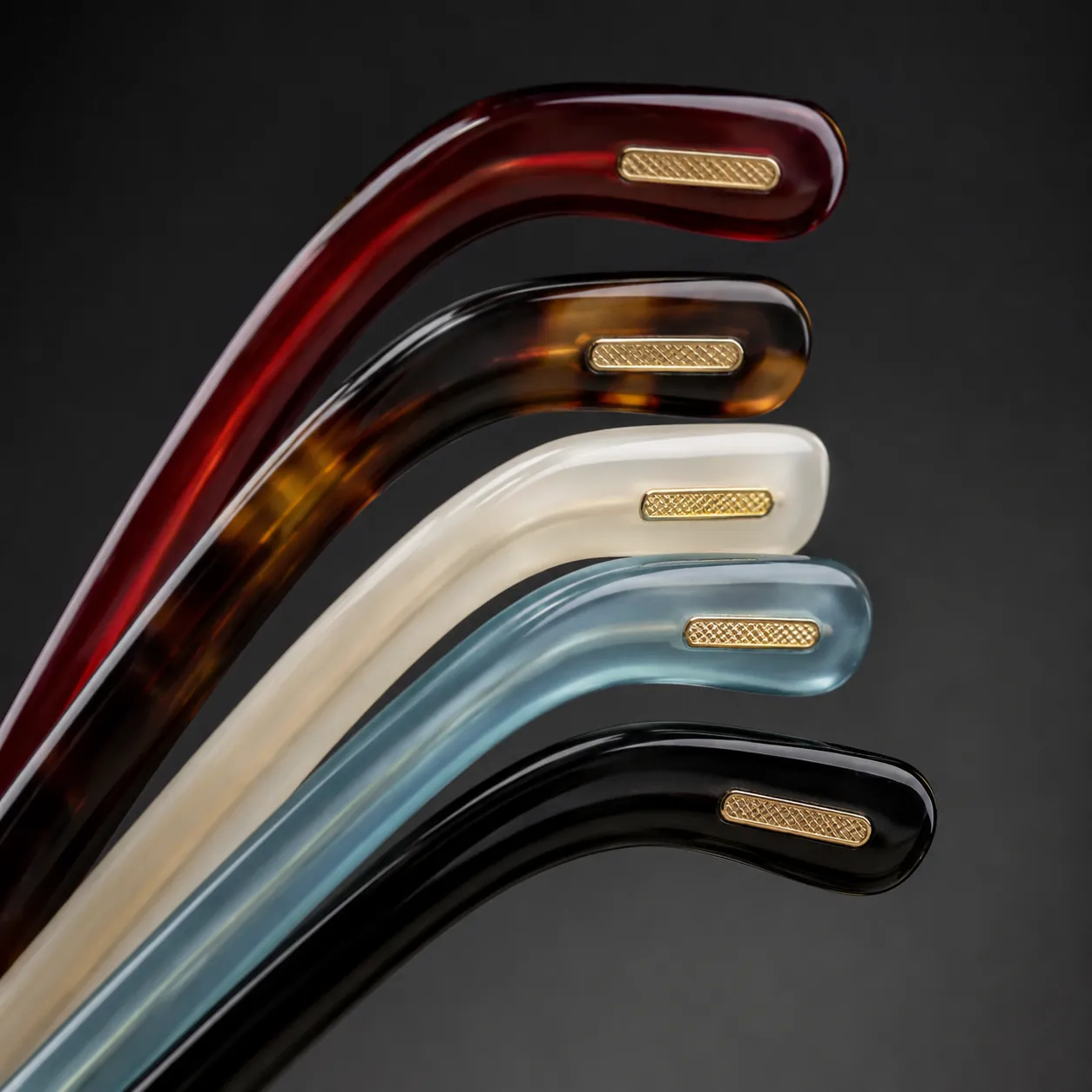
This is for brand owners, importers, distributors, and retailers who need several frame and lens colorways inside one purchase order. The goal is simple: keep the assortment broad without turning the job into a pile of setup fees, schedule slips, and approval errors. If the order is structured properly, you can run multiple colorways under one production plan and still protect margin. If it is structured badly, every extra color becomes a new problem.
Start With One SKU Logic
Do not start with colors. Start with the base product structure. A mixed-colorway order works best when all variants share the same frame model, same lens size, same hinge type, and same compliance route. If you change the silhouette, lens diameter, or hardware, you are no longer managing colorways. You are managing separate products.
For procurement, the clean way to brief a factory is to define one parent style and list each colorway as a child SKU. Example: one model, one tooling family, four frame colors, three lens tints, two logo placements. That gives the factory a clear build plan and keeps quoting honest. It also helps with replenishment later, because you can reorder only the colors that sell.
At LumiShades, mixed runs work best on products that stay inside one manufacturing route, such as injection frames, acetate frames cut in the same pattern family, or metal frames with the same front geometry. The more you split the build between different process routes, the more the cost and lead time separate.
Group Colors by Process, Not by Mood
Some color combinations are cheap to combine. Others are not. The difference is usually process, not pigment. A transparent injection frame and a matte solid injection frame can often share the same mold and line, but a full acetate color change may mean different sheet stock, different polishing behavior, and more cleaning between runs. Metal frames add another layer because plating, paint, and pad printing each have their own setup and rejection points.
Use this rule: group colorways that can run with the same tooling, the same lens cut, and the same decoration method. If a colorway needs a different logo plate, a different lens tint density, or a different temple finish, count that as a separate setup. If you ignore that, the quote will look cheap and the final cost will not.
| Option | Best Use | Cost Behavior | Main Risk |
|---|---|---|---|
| Single colorway per SKU | Core line, forecasted reorder | Lowest setup complexity | Weak assortment for launch or retail test |
| Several frame colors with one lens spec | Fashion assortment, e-commerce | Good cost balance if tooling stays the same | Color approval drift if samples are weak |
| Frame and lens color changes in one run | Retail sets, seasonal drops | More setup time, more QC points | Mislabeling and mix-up during packing |
| Mixed material family in one PO | Only if volumes are high | Usually the most expensive path | Multiple process bottlenecks and slower delivery |
Set the Quantity Mix Before Quoting
The price of a mixed-colorway run depends on how the total quantity is split. A PO with 1,000 pairs spread across eight colorways is not the same as 1,000 pairs split across two colorways. The factory still needs to stop, change resin or lens tint, clear bins, check first articles, and re-label packing. Those changeovers are where money disappears.
LumiShades' MOQ is 50 pairs per design, but the economics improve as volume rises at 300, 1,000, and 5,000+ pairs. On volume runs, pricing can drop to about $2.10 per pair depending on frame material, lens spec, and decoration. That does not mean every mixed order gets that number. It means the total run has to be large enough to absorb setup work.
If you want multiple colorways in one order, decide whether the total quantity is fixed by sell-through or by assortment breadth. Those are different planning models. A buyer who wants five colors at 100 pairs each should expect a different unit cost than a buyer who wants two colors at 250 each. The factory is not guessing. It is counting machine time and labor.
Build the Production Sequence Around Changeovers
Mixed runs should be scheduled in a way that reduces cleaning and line stops. The practical order is usually by shared material and shared finish. Keep the same resin or acetate batch together, then the same lens tint family, then the same decoration method. That limits waste and lowers the chance of contamination between colors.
LumiShades handles injection molding, acetate cutting, CNC milling, lens tinting, laser engraving, pad printing, metal logo plates, and QC in-house. That matters because the factory can sequence work without moving every change to a subcontractor. In real production, the bottleneck is usually not the molding machine. It is the handoff between coloring, decoration, and final inspection.
- Approve the master sample for each colorway before mass production.
- Lock the frame color, lens tint, and logo placement in one sheet.
- Schedule the longest-run color first, then the shorter variants.
- Keep packing and barcode labels separated by SKU from the start.
- Run first-article checks after each color change, not after the whole batch.
If the supplier cannot explain the order of operations, expect avoidable rework. Mixed-colorway orders are won or lost in the handoff details.
Specify Color and Finish Clearly
Most disputes on mixed orders are not about the model. They are about color interpretation. Words like black, smoke, tortoise, amber, and champagne are too loose on their own. A buyer should specify a frame color reference, a lens tint reference, surface finish, and any acceptable variation. If the order is for retail display, require the same finish across all colorways where possible. A glossy black frame next to a matte black frame can look like a mismatch even if both are technically correct.
Use an approved sample set and treat it as the control standard. For translucent frames, note that resin lot variation can slightly change depth and clarity. For tinted lenses, the same color name can still produce different visual density if the base lens material changes. Ask for each colorway to be checked against the approved sample under the same lighting condition before mass packing.
Do not overcomplicate the spec, but do not leave room for guesswork. A short written color sheet beats a long email thread. The factory needs one source of truth.
Put Compliance on Every Colorway
Color changes do not cancel compliance. If the product is sold in the EU, the UK, the US, Australia, or New Zealand, each final variant still needs to sit inside the relevant standard path. LumiShades works with CE EN ISO 12312-1, FDA registration, ANSI Z80.3, AS/NZS 1067, REACH, ISO 9001, and BSCI. Those certifications do not mean every colorway is automatically approved. They mean the factory has the documented framework to produce and test to those requirements.
Lens tint changes can affect visible light transmission and how a model is classified for a market. That is why a dark fashion tint, a mirrored lens, and a clear or light smoke lens should not be treated as the same thing in paperwork. The base frame may be unchanged, but the finished SKU may need separate internal tracking. This is especially important if one colorway is meant for sun use and another is meant as a lighter fashion variant.
Ask the supplier for the test and file set tied to the exact SKU list, not just to the parent style. That keeps customs, retailer compliance teams, and QA teams aligned.
Package and Label by SKU, Not by Guesswork
Mixed colorways fail at packing more often than at molding. If the carton label only says one model name, someone will mix colors. The fix is basic: each colorway needs its own SKU code, barcode, and carton identifier. If the same model has four frame colors and three lens tints, the packing list should show each combination clearly. No shorthand.
For retail-ready orders, separate inner boxes or polybags by SKU and keep a master carton map. For bulk pack orders, label each layer or bundle so warehouse staff can count without opening every unit. If your distributor wants assorted cartons, define the ratio in writing before production starts. Do not leave assortment to the shipping team.
One practical rule helps a lot: never mix finished colorways in the same unmarked working bin. It sounds obvious. It still causes errors. A good supplier treats packing as part of production, not as an afterthought.
Ask These Questions Before You Release the PO
Before you issue the order, get straight answers to the points that actually move cost and timing. If the supplier cannot answer them quickly, the mixed run is not ready.
- Which colorways share the same tooling, and which need separate setups?
- What is the minimum quantity per colorway inside the total PO?
- Which step changes the most between variants: molding, tinting, printing, plating, or packing?
- Will all colorways use the same compliance file set and same destination market?
- How will the factory label, pack, and separate SKUs during final packing?
- What is the approved sample for each colorway, and who signs off on it?
For many buyers, the right answer is not to force every possible color into one run. It is to group the fastest-moving colors together, place the slow movers in a second order, and keep the line efficient. That usually costs less than chasing a giant assortment that creates scrap and delay.
Have a custom sunglasses project in mind?
Send us your styles, target market and quantities and we will return a detailed quote with MOQ, lead time and a sample plan.
Get a QuoteWhy source this from Wenzhou with LumiShades
Wenzhou in Zhejiang Province is widely regarded as China’s eyewear manufacturing capital, producing a large share of the world’s sunglasses. That concentration matters to buyers: a deep local supply chain for acetate sheet, hinges, lens blanks, plating and packaging means shorter component lead times, easier color and material matching, and a workforce with decades of eyewear-specific skill. LumiShades has manufactured in this ecosystem since 2009, and our vertical integration — in-house injection molding, acetate cutting, CNC milling, lens tinting, decoration and quality control — means no part of your order is quietly subcontracted to a workshop you cannot audit.
For international buyers, that vertical control translates into accountability. When a single factory owns every step, defects are traced and fixed at source rather than bounced between vendors, and your specifications survive intact from first sample to bulk. For procurement review, buyers can request process records, approved samples, quality checkpoints and project-specific compliance files before placing a bulk order. Required testing and documentation are confirmed against the destination market and product specification rather than assumed from a generic certificate list. Explore our manufacturing capabilities and quality control process to see how this works in practice.
Frequently asked questions
Can I mix several frame colors under one sunglasses PO? Yes, if the frame model, lens size, and decoration method stay the same. The factory can usually combine them under one PO, but each color change adds setup and packing control.
What mixed colorway quantity makes sense for pricing? Anything above the MOQ can work, but pricing improves more clearly at 300, 1,000, and 5,000+ pairs. The best split is the one that reduces changeovers while matching your sell-through.
Do different lens tints require separate compliance checks? Often yes. The parent style may stay the same, but tint changes can affect visible light transmission and market classification. Keep the SKU-level compliance file clear.
Can one mixed run include acetate and injection frames? It can, but it usually costs more and slows the schedule. Different materials mean different processes, cleaning steps, and QC points. Group them only if the order is large enough to justify it.
How should I control color consistency across colorways? Use an approved master sample for each SKU, written color references, and a clear finish callout. For translucent or tinted parts, specify whether slight batch variation is acceptable before production starts.
Ready to start?
Explore our shield & oversized sunglasses or request a quote — our sales team replies within 12 hours.
Request a Quote