
Supermarket Sunglasses Sourcing Guide
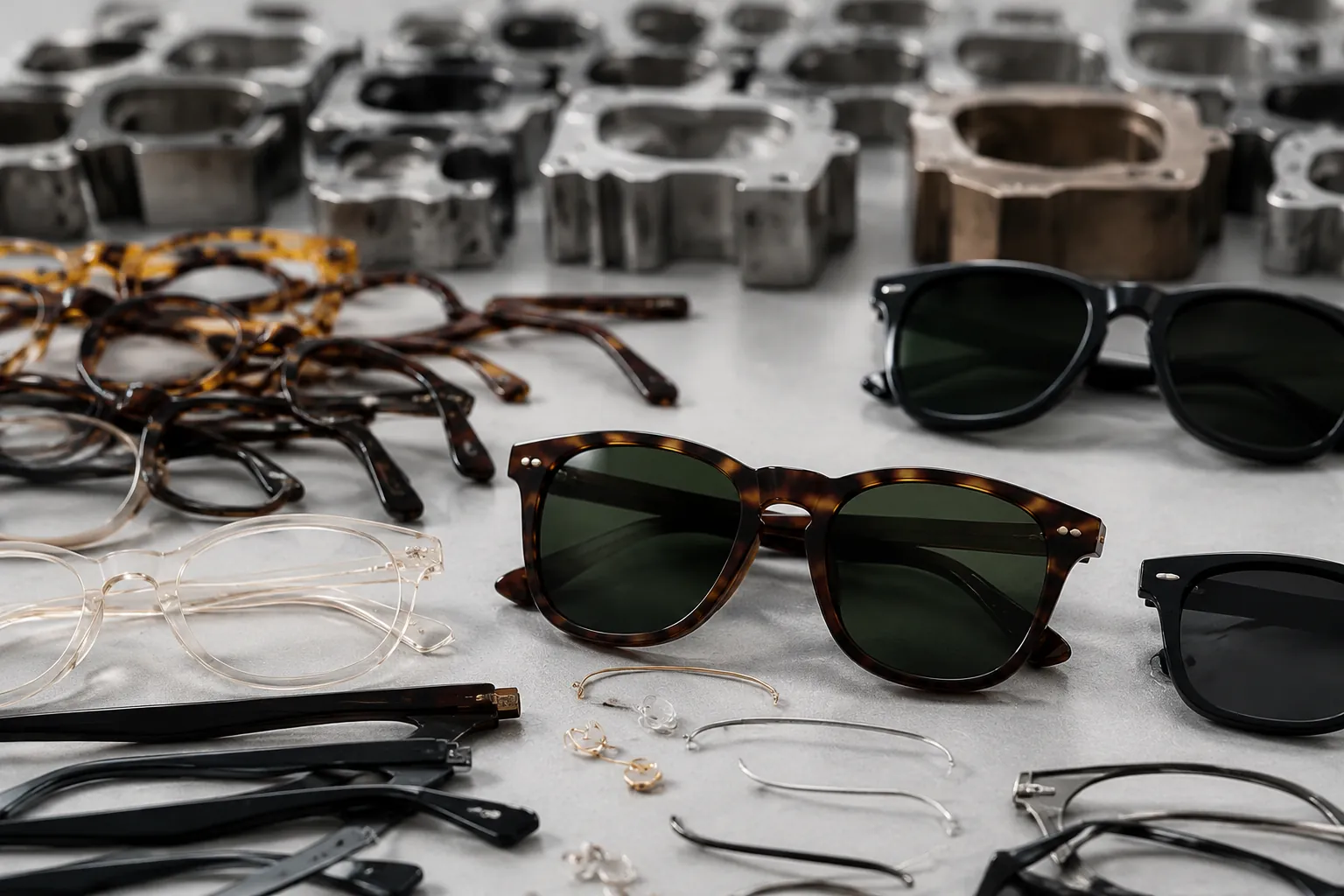
This guide is for buyers building sunglass programs for supermarkets, pharmacy chains, discount retailers, travel retail, and seasonal aisle promotions. This is not boutique eyewear development. It is retail program sourcing: predictable landed cost, clean barcode data, correct market labeling, reliable replenishment, and frames that survive heavy store handling. The focus is entry and mid-price sunglasses, where MOQ planning, material choice, packaging control, compliance review, and defect prevention decide whether the program runs smoothly.
Start With The Retail Program
Supermarket and pharmacy sunglasses are bought around shelf space, price points, seasonality, replenishment risk, and receiving accuracy. A buyer may need 12 to 48 SKUs. Every unit needs the right barcode. Lens categories must be marked where required. Cartons must move through a distribution center without manual relabeling. Frame design matters, but it should follow the retail system, not lead it.
Define the program role first. A seasonal dump bin can use simpler packaging and a tighter style range. A spinner rack needs clearer SKU separation and stronger replenishment planning. A pharmacy planogram usually calls for conservative shapes, controlled warning text, and reliable barcode mapping. A private-label chain program adds artwork approvals, brand color control, and carton-level ship marks.
| Retail Program | Typical SKU Count | Packaging | Main Sourcing Risk |
|---|---|---|---|
| Seasonal dump bin | 6 to 18 SKUs | Hang tag, polybag, UPC/EAN | Scratched lenses, mixed colors, weak hinges |
| Spinner rack | 18 to 36 SKUs | Hang card, price label, lens sticker | Slow movers and replenishment mismatch |
| Pharmacy planogram | 24 to 48 SKUs | Retail card, warning text, country label | Compliance wording and barcode accuracy |
| Private-label chain program | Core SKUs repeated seasonally | Branded card, carton labels, optional case | Late artwork approval and packaging rework |
For high-volume retail, keep the first range simple. Aviator, wayfarer, square, round, sport wrap, oversized women's, kids, polarized basics, and fit-over styles are easy to understand at shelf. If a frame needs explanation, it is usually a weak supermarket SKU.
Build The Assortment Around Price Ladders
A strong retail assortment uses a price ladder. It should not use the same lowest-cost specification across every SKU. Most chains need an opening price point, a core value tier, and a better-margin tier. That may mean basic UV400 non-polarized styles at entry level, polarized TAC lens styles in the middle, and selected feature SKUs such as fit-over, driving lens, kids' flexible frame, or reader sunglass styles.
At LumiShades, MOQ starts at 50 pairs per design. That level works for buyer samples, color tests, and planogram mockups. Commercial pricing should be quoted by SKU, quantity, lens type, frame material, logo method, packaging, and inspection requirement. As a planning model, buyers can request price breaks at 300, 1,000, and 5,000+ pairs per SKU. These tiers show which styles deserve deeper volume and which should stay limited or be cut.
- Entry tier: PC frame, PC lens, UV400 claim supported by testing, simple hinge, hang tag or polybag.
- Core tier: PC or TR90 frame, tighter lens tint approval, logo print or simple trim.
- Polarized tier: polarized TAC lens, retail card, lens sticker, polarization verification, stricter lens inspection.
- Kids tier: smaller fit, rounded edges, flexible temples, color checks, packaging and warning review.
- Pharmacy specialty: fit-over, clip-on, reader sunglasses, or brown driving lens styles with market-appropriate labeling.
Do not spread the opening order too thin. A range with 10 shapes, 8 colors, and 4 lens options may look strong in a spreadsheet. On the line, it can create slow movers, packing errors, and harder replenishment. A better first order often uses 6 to 10 proven molds, 2 to 4 colorways per mold, and shared packaging across the program.
Choose Materials For Store Handling
Mass retail sunglasses are touched, dropped, tried on, twisted, and often returned to the wrong slot. Material choice affects molding stability, hinge pull strength, lens insertion pressure, surface scratching, color consistency, and final reject rate. Cheapest is not always cheapest. A low unit cost can disappear if rejects, rework, or returns rise.
PC is common for entry-price programs. It supports fast injection molding, keeps unit cost controlled, and works well for many promotional fashion frames and kids' styles. TR90 costs more, but it has better flexibility and recovery. That makes it useful for sport wraps and active styles that are repeatedly opened and bent. Acetate can give richer color and stronger perceived value, but cutting, tumbling, polishing, and hinge installation add labor and lead time. It usually fits higher retail prices better than low-price dump bin programs.
| Material | Best Use | Process Behavior | Buyer Watchpoint |
|---|---|---|---|
| PC | Entry fashion, kids, promotional SKUs | Fast injection molding, stable cost control | Check lens fit, hinge strength, surface scratches |
| TR90 | Sport, active, flexible temple designs | Better flex recovery, higher material cost | Confirm color consistency and temple opening force |
| Acetate | Higher-value private label styles | Cut, tumbled, polished, and assembled manually | Allow longer lead time and tighter cosmetic QC |
| Metal combination | Aviator, brow bar, fashion upgrades | Needs plating, soldering, and screw assembly control | Check plating adhesion, nose pad fit, and corrosion risk |
Before confirming a material, ask for production-intent samples, not only showroom samples. Open and close the temples. Check lens retention, hinge screw tightness, surface finish, color consistency, and frame recovery after repeated handling. Keep a sealed approved sample as the reference for bulk production and inspection.
Specify Lenses, Hinges, And Decoration
A sample photo is not a production specification. Before approval, confirm lens material, lens thickness, visible light transmission category where applicable, UV claim, polarization, hinge type, screw size, temple opening resistance, logo position, and packaging method. These details decide whether a 20,000-pair run can be repeated consistently.
For mass retail, PC lenses are cost-effective and suitable for many entry programs when the UV claim and lens performance are verified against the required standard. TAC polarized lenses add cost but can improve perceived value and outdoor comfort. Lens thickness should be specified by style and confirmed on the approved sample. Curvature, lens material, and frame structure all affect fit and insertion pressure.
Define lens defects in writing. No visible central scratches. No edge chips. No stress marks after insertion. Lens tint must stay within the approved sample range. Short rules prevent long disputes.
Decoration should be chosen by durability, repeatability, and line speed, not only appearance. Pad printing is economical for temple logos, but it should pass agreed rubbing or adhesion checks. Laser engraving is cleaner on suitable surfaces, though it may be subtle on dark colors. Metal logo plates add perceived value but create placement and adhesion risk. Heat transfer or foil marks can look premium, but they need abrasion checks before launch.
For supermarket work, the best frame is not the most impressive sample. It is the frame that can be repeated at scale without hinge cracking, color drift, lens pop-out, or barcode confusion. Use a sealed pre-production sample as the shared reference for the factory, buyer, and inspection team.
Lock Compliance Before Artwork
Compliance mistakes are expensive because they often appear after hang cards, stickers, or cartons have been printed. Sunglasses should be tested, documented, and labeled for the destination market and product claim. Warning text, lens category, UV claim, importer details, country of origin, and barcode data must match the retail market.
For sunglass programs, commonly requested standards and systems include CE EN ISO 12312-1 for the European market, ANSI Z80.3 for the United States, AS/NZS 1067 for Australia and New Zealand, REACH for applicable chemical restrictions in the EU, FDA registration where relevant to US import context, ISO 9001 for quality management systems, and BSCI for social compliance audits. Buyers should confirm which documents are required by their retailer, importer, and destination market before artwork is released. Do not print a compliance mark or claim because another supplier used it last season.
| Market | Common Requirement | Buyer Checkpoint |
|---|---|---|
| European Union | CE EN ISO 12312-1 and REACH | Lens category, UV protection claim, CE format, warnings |
| United States | ANSI Z80.3 and FDA registration context | Impact, transmittance, UV claim, importer details |
| Australia and New Zealand | AS/NZS 1067 | Lens category, mandatory warnings, driving restrictions |
| Multi-country retail | Market-specific label pack | Languages, country of origin, barcode and SKU map |
Lens category is not decoration. Category 0 to 4 relates to visible light transmission, and many mass retail sunglasses sit in category 2 or 3 depending on lens darkness and use case. If a lens is too dark, mirrored, or unsuitable for driving, warning text may change. Test it. Document it. Approve the wording before printing high-volume hang cards or stickers.
Keep Packaging DC-Friendly
Packaging should make scanning, hanging, display setup, and replenishment easier. It should not add warehouse handwork. A common mistake is overdesigned packaging that looks strong in a presentation but slows packing, increases carton volume, or makes barcode scanning unreliable.
A basic retail pack may include a hang tag, UPC or EAN barcode, lens sticker, country of origin, warning text, importer details, and a polybag. A pharmacy pack may use a folded card or stronger hang card so staff can restock by SKU. Cases add perceived value, but they also add cost, weight, and carton space. For entry-price programs, a case can reduce margin faster than it improves sell-through.
- Freeze the barcode list before artwork release.
- Map every barcode to style, color, lens type, lens category where required, and retail price point.
- Approve market warning text before printing.
- Confirm carton labels show PO, SKU, color, quantity, gross weight, net weight, carton number, and country of origin where required.
- Run a pre-pack audit on the first 300 to 500 units before full packing.
Solid-SKU cartons are easier for inspection, receiving, and replenishment. Mixed cartons can help with store-ready distribution, but they increase picking and counting risk. If mixed cartons are required, define the exact ratio in the purchase order, packing instruction, carton label, and inspection checklist. Do not leave the ratio to the packing line.
Plan Lead Time By Approval Gate
Bulk sunglasses can often be produced quickly. Approvals are usually slower than molding. LumiShades can produce samples in 7 to 10 days and bulk orders in 25 to 35 days after final approval, depending on specification, packaging, order quantity, material availability, and inspection requirements. That timing assumes style, material, lens, decoration, packaging, barcode, and compliance wording are already confirmed. Artwork changes after pilot packing can add days and create printed packaging scrap.
A practical supermarket schedule starts with 2 to 4 days for specification cleanup, 7 to 10 days for samples, 3 to 7 days for buyer review, and 25 to 35 days for bulk production after approval. Shipping, customs clearance, retailer routing, and distribution-center booking are separate. Seasonal programs should be planned backward from the retailer's delivery window, not the shelf launch date.
| Gate | Factory Work | Buyer Must Approve | Risk If Late |
|---|---|---|---|
| Spec freeze | Confirm mold, material, lens, color | SKU list and target cost | Wrong price tier or mold conflict |
| Sample stage | Make physical samples in 7 to 10 days | Fit, color, logo, lens tint | Repeated sampling and missed season |
| Pre-production | Order materials and print packaging | Artwork, barcode, compliance text | Printed packaging scrap |
| Bulk production | Run molding, lens, assembly, packing | Inspection plan and ship marks | Carton relabeling or shipment hold |
Fast replenishment depends on repeatable SKUs. Keep molds active. Avoid rare colors. Use packaging that can be reprinted quickly. A special lens tint or custom trim may help a presentation, but it can become a replenishment problem if the component has a long procurement time.
Inspect Retail Defects And Negotiate Cleanly
Retail returns usually come from simple defects: scratched lenses, loose screws, crooked temples, color mismatch, weak printing, wrong barcode, broken nose pads, and lenses popping out during handling. These defects are preventable when the inspection standard is specific. For first orders, use stricter inspection controls. Relax them only after the same SKU has passed repeat shipments.
QC should cover incoming materials, in-process assembly, finished goods, and packed cartons. Define acceptance criteria clearly. "Good quality" is not an inspection standard. Practical checks include barcode scan accuracy, lens scratch visibility under normal light, hinge screw tightness, temple symmetry, logo position, color match against the approved sample, assortment ratio, and carton label accuracy. One wrong barcode can delay or block receiving for an entire PO.
Cost negotiation should also be specific. Clean negotiation changes volume, packaging, lens, decoration, or assortment. Messy negotiation asks the factory to hit a number without changing the specification. That pressure can move into weaker screws, thinner hinges, cheaper printing, or reduced inspection. Ask for pricing at 300, 1,000, and 5,000+ pairs per SKU. Then decide which styles deserve depth and which should be cut before launch.
Good cost reductions are operational: repeat molds, reduce color count, use shared packaging, print fewer label versions, increase volume on proven SKUs, and avoid decoration that slows the line. Bad cost reductions remove QC steps, skip testing, or shift production to an unverified subcontractor. That is how cheap sunglasses become expensive.
Have a custom sunglasses project in mind?
Send us your styles, target market and quantities and we will return a detailed quote with MOQ, lead time and a sample plan.
Get a QuoteWhy source this from Wenzhou with LumiShades
Wenzhou in Zhejiang Province is widely regarded as China’s eyewear manufacturing capital, producing a large share of the world’s sunglasses. That concentration matters to buyers: a deep local supply chain for acetate sheet, hinges, lens blanks, plating and packaging means shorter component lead times, easier color and material matching, and a workforce with decades of eyewear-specific skill. LumiShades has manufactured in this ecosystem since 2009, and our vertical integration — in-house injection molding, acetate cutting, CNC milling, lens tinting, decoration and quality control — means no part of your order is quietly subcontracted to a workshop you cannot audit.
For international buyers, that vertical control translates into accountability. When a single factory owns every step, defects are traced and fixed at source rather than bounced between vendors, and your specifications survive intact from first sample to bulk. For procurement review, buyers can request process records, approved samples, quality checkpoints and project-specific compliance files before placing a bulk order. Required testing and documentation are confirmed against the destination market and product specification rather than assumed from a generic certificate list. Explore our manufacturing capabilities and quality control process to see how this works in practice.
Frequently asked questions
What MOQ should a supermarket buyer use for a first sunglass program? Use 50 pairs per design for samples, color checks, or planogram mockups when working with LumiShades. For a commercial launch, request price breaks at 300, 1,000, and 5,000+ pairs per SKU. Use 300 pairs to test breadth, 1,000+ pairs for proven core SKUs, and 5,000+ pairs for styles with confirmed shelf space and replenishment demand.
Can one sunglass label work for the EU, US, and Australia? Sometimes, but do not assume it. Check destination market requirements before printing. A multi-market label may need CE EN ISO 12312-1 information for the EU, ANSI Z80.3 and FDA registration context for the US, AS/NZS 1067 information for Australia and New Zealand, REACH-related chemical compliance for the EU, correct lens category, warnings, importer details, country of origin, and accurate barcode data.
What is the safest frame material for low-price retail sunglasses? PC is usually the safest entry-cost choice because it supports high-volume injection molding and stable pricing. Confirm hinge strength, lens retention, surface scratching, and color consistency before bulk approval. Use TR90 when flexibility and recovery are important. Use acetate only when the retail price can support longer lead time, more handwork, and tighter cosmetic inspection.
How long should we allow from sample request to bulk shipment? Plan samples at 7 to 10 days and bulk production at 25 to 35 days after final approval with LumiShades. Add time for buyer review, artwork approval, compliance text confirmation, barcode verification, inspection, shipping, customs clearance, retailer routing, and distribution-center booking. For seasonal programs, work backward from the retailer delivery window rather than the planned shelf date.
Should pharmacy chains choose polarized lenses for every SKU? No. Use polarized lenses for a better tier or selected outdoor, driving, and high-perceived-value styles. Keep non-polarized UV400 styles for opening price points and faster replenishment. Before committing, compare lens cost, retail price, margin target, label requirements, and whether shoppers can understand the benefit at shelf.
What defects should be included in the inspection checklist? Include lens scratches, chips, stress marks, UV claim verification, polarization verification where applicable, tint consistency, hinge tightness, screw condition, temple symmetry, logo position, barcode scan accuracy, warning text, SKU match, carton label, quantity, and assortment ratio. Use the sealed approved sample as the physical reference for color, fit, logo position, and packaging.
Ready to start?
Explore our rimless sunglasses or request a quote — our sales team replies within 12 hours.
Request a Quote