
Source Sunglasses Across Retail Tiers From One Factory
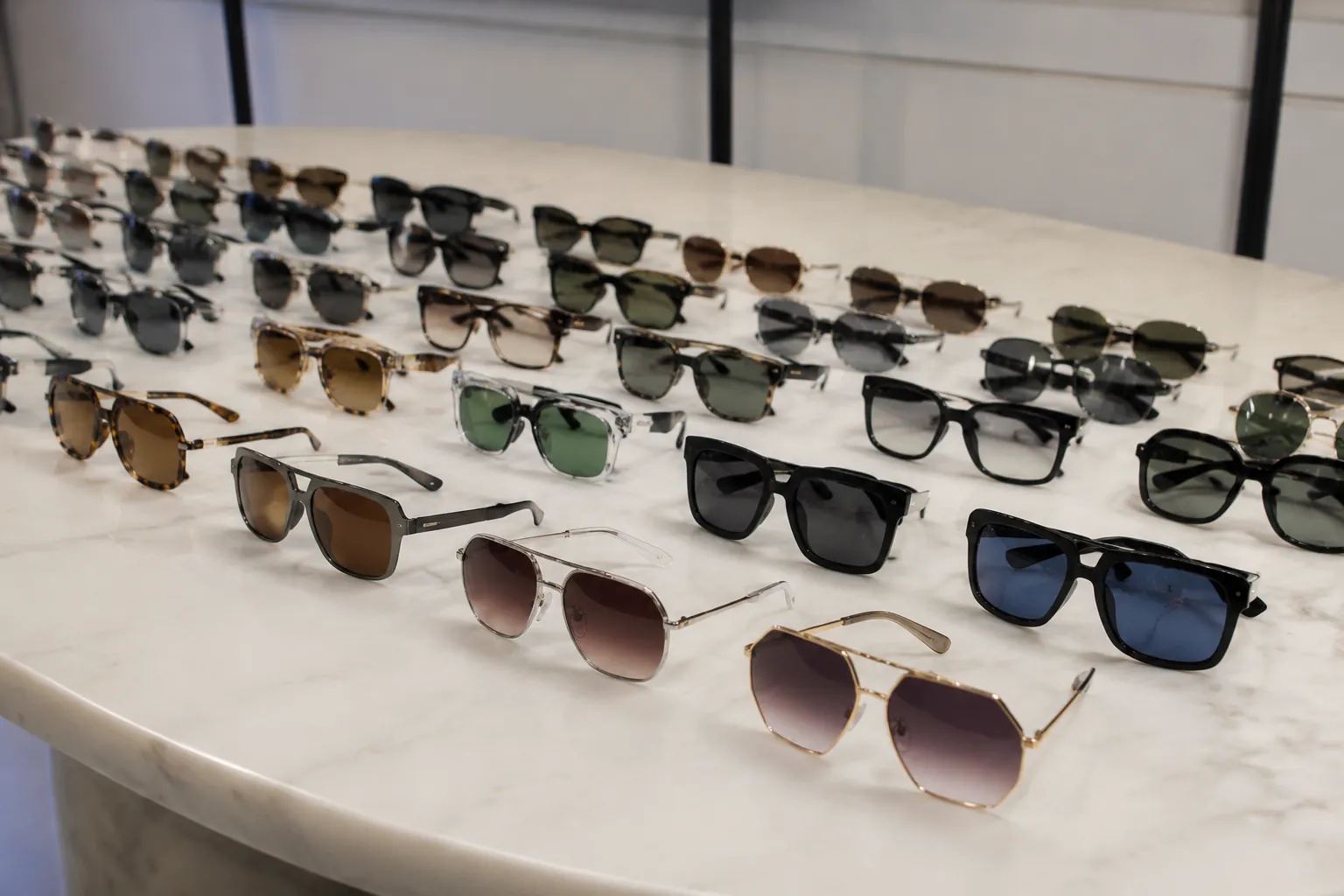
If you buy sunglasses for more than one retail tier, splitting orders across multiple factories usually adds more work than value. Entry, mid, and premium lines can come from one manufacturing partner if that partner controls the needed processes in-house: injection molding, acetate cutting, CNC machining, tinting, decoration, assembly, and final QC. That setup can simplify tooling, paperwork, and samples. It also gives you clearer control over MOQ, unit cost, tolerances, and lead time.
Start with the tier map, not the catalog
Most sourcing problems start with a product-first brief. Buyers ask for one frame, then another, then a "better" version, and the factory quotes them as separate jobs. That is the wrong order. Start with the retail tiers you need to cover, then map each tier to material, finish level, compliance route, and target landed cost.
A useful tier map defines the commercial role of each line. Entry tier is for promo, giveaway, convenience retail, and price-led channels. Mid tier is for core volume styles where margin matters but the buyer still wants accessible pricing. Premium tier is where surface quality, fit, and perceived value drive conversion. The goal is not to make every line identical. The goal is to keep the sourcing logic consistent enough that one partner can run it without constant re-qualification.
The advantage of a factory with broader in-house capability is process control. Injection molding supports lower-cost plastic frames. Acetate cutting supports a heavier, more polished look. CNC machining helps with precise metal parts and tighter shape control. In-house tinting, decoration, assembly, and inspection reduce the need to coordinate outside vendors. Every outsourced step adds another handoff, another approval point, and another place where defects can enter.
For planning, a typical retail tier map might look like this: entry styles at 50-300 pairs per design for testing; mid-tier styles at 300-1,000 pairs for repeat volume; premium styles at 1,000+ pairs when the design is already validated and the brand can justify more expensive finishing. If the role of each line is unclear, the supplier will optimize for what is easiest to manufacture rather than for your channel strategy.
Match the frame material to the retail job
Material choice affects cost, feel, breakage risk, and lead time. Do not pick acetate only because it feels premium, and do not pick injection only because it is cheaper. Choose by channel economics, expected wear cycle, and how much cosmetic variation the buyer will accept.
| Tier | Typical frame route | Typical landed manufacturing target | Strengths | Watch-outs |
|---|---|---|---|---|
| Entry | Injection molded frame | Low-$2 range at scale, depending on lens and packaging | Fast tooling, lower resin cost, broad color options, light weight | Wall thickness must be controlled or the frame can feel flimsy; hinge seats can crack if tooling is rushed |
| Mid | Injection or acetate | Mid-$2 to low-$4 range, depending on finish and decoration | Better perceived value, more branding room, more room for upgraded lenses | Requires tighter control of hinge fit, temple alignment, and lens seating |
| Premium | Acetate plus CNC metal details | Often $4+ before freight and duty, depending on specification | Heavier feel, richer polish, stronger brand signal, more design flexibility | Longer processing, more handwork, and more scrap risk if thickness, polishing, or metal fit is inconsistent |
Injection frames are usually the most efficient when the shape is simple and the brand wants repeatable color. A practical wall thickness target for many fashion frames is about 1.6-2.2 mm on non-load-bearing sections, with reinforced hinge areas made thicker as needed. If plastic is thinned too aggressively to save cost, the frame may flex at the temples, distort after heat exposure, or fail screw-retention checks.
Acetate behaves differently. It gives better depth, richer translucency, and a more premium hand feel, but it also magnifies poor finishing. Temple edges should feel smooth, not sharp. Polishing should remove machining marks without rounding the intended shape. A rushed polish cycle can leave haze or drag lines that shoppers notice under store lighting. For premium acetate, buyers should specify thickness, bevel style, lens groove depth, and the acceptable polish standard rather than relying on a vague "good sample" explanation.
For metal or mixed-material styles, CNC work matters because the fit tolerance is tighter. If a bridge plate or temple insert is off by even a small amount, the assembly can wobble or shift. Buyers should ask how the factory controls symmetry, because left-right mismatch is a common cosmetic complaint in higher-tier sunglasses. A strong supplier will talk about repeatability, fixture control, and post-machining inspection instead of only showing polished photos.
Use one factory only if its process map is real
One supplier can cover multiple tiers only when the factory controls enough of the process. Otherwise you are just outsourcing coordination back to yourself. Ask who handles injection molding, acetate cutting, CNC machining, lens tinting, UV coating, pad printing, laser engraving, assembly, and packaging in-house. If those steps sit with different subcontractors, tier management becomes harder and quality responsibility becomes less clear.
The practical benefit of an integrated partner is faster correction. If the frame is fine but the lens color is off, the factory can adjust the tint formula or coating process. If the logo is too soft, decoration can move from pad print to laser engraving, hot stamping, or a metal plate insert. If the temples feel loose, the hinge torque specification can be adjusted before bulk production starts. Fewer handoffs usually means fewer chances to lose the original design intent.
When evaluating a factory, ask for a process map rather than a product album. A credible partner should be able to show where each process happens, what equipment is used, how many days each step adds, and which steps have dedicated inspection gates. If the factory cannot explain that clearly, it is harder to trust it with a real multi-tier portfolio.
If you need to know whether a supplier is truly set up for tiered sourcing, ask for examples of how a single frame family can be produced in different materials and finish levels without redesigning the whole product. The answer should be based on process control, not just styling options.
Treat MOQ and price breaks as a portfolio decision
Many buyers focus on the MOQ for one SKU and miss the larger portfolio picture. If a factory offers MOQ 50 pairs per design, that is useful for testing. But the real savings often appear at 300, 1,000, and 5,000 pairs because setup time, decoration prep, lens cutting, and packaging overhead are spread over more units. The task is to align order size with the point where a style has proven demand.
A clean way to think about it is below:
- 50 pairs/design: test a shape, market, colorway, or retail tier without overcommitting.
- 300 pairs: commit to a small seasonal run and improve unit economics through setup amortization.
- 1,000 pairs: anchor a core seller, distributor launch, or replenishment program.
- 5,000+ pairs: pursue the lowest landed manufacturing cost, where frame cost, decoration, and packaging are usually more efficient.
Price usually moves in steps, not in a straight line. Going from 50 to 300 pairs may cut unit price meaningfully because mold setup, color change, and logo tooling are spread across more units. Going from 300 to 1,000 pairs can create another drop because the factory can improve batch scheduling and reduce changeovers. Beyond that, savings may flatten unless the design is simple enough for automation.
Do not treat MOQ only as a minimum. Treat it as a risk-control tool. If you are launching three tiers at once, you can test the entry line first, read sell-through, then move the best-performing shape into better materials or upgraded decoration for mid and premium placement. That keeps cash tied to validated demand instead of to assumptions.
When comparing offers, ask the supplier what actually drives the price break: frame material, lens grade, packaging, or decoration complexity. A small decoration change can matter more than a minor resin difference if it adds handwork or a new process step. Good buyers cost the full job, not just the frame shell.
Build one spec sheet, then vary only what matters
Keep the base geometry stable across tiers whenever possible. Same lens width range. Same bridge logic. Same temple length. Same general fit target. Then vary the visible value markers: frame material, lens type, finish, logo method, and packaging. That keeps development cost down and makes SKU management easier.
For control, define hard numbers in the spec sheet instead of broad adjectives. A practical brief should include a lens width tolerance of ±0.5 mm, bridge tolerance of ±0.3 mm, temple length tolerance of ±1.0 mm, and a weight target with a small tolerance band by tier. If the supplier does not propose tolerances, you are likely to receive samples that look good but do not scale cleanly into production.
- Specify the UV protection target and lens curve for each style, not just "UV400."
- Set the acceptable weight band, especially for premium acetate and metal styles.
- Define hinge cycle expectations and screw-retention checks before bulk release.
- Use a physical master sample for color reference, not only Pantone or screen images.
- State logo placement size, depth, and finish so decoration is repeatable across reorders.
Do not let every tier drift into a new shape. If the entry frame is a rectangle and the premium frame becomes a completely different silhouette, you are paying for new development, new fit approval, and new market testing. Keep the family resemblance. Change the parts the customer actually notices. In sunglasses, that usually means lens treatment, surface polish, logo execution, and packaging perception more than the overall silhouette.
Put QC where the real failure happens
QC for sunglasses is not just "check for scratches." Failure points differ by tier and by process. Entry-tier issues are often cosmetic and packaging-related: print alignment, lens haze, dust under the lens, and scuffs from bulk packing. Mid-tier problems usually show up in hinge feel, lens alignment, and logo placement. Premium failures are more visible because the buyer pays more and notices small asymmetries and polish inconsistency.
At a minimum, a supplier should inspect lens tint consistency, frame symmetry, temple opening resistance, coating defects, and surface marks after decoration. For production control, many buyers use AQL-based inspection, with tighter sampling on premium lots than on entry lots. That is sensible: the premium line should have stricter cosmetic acceptance, while the entry line may allow a broader finish window as long as safety and fit are intact.
Practical defect checks should include:
- Lens center and left-right tint match under consistent lighting.
- Temple opening force that feels uniform across the batch.
- Hinge screw torque and retention after repeated opening cycles.
- Frame symmetry measured on a flat surface, not by eye alone.
- Coating and decoration placement after final assembly, before packing.
For compliance, only request the standards that match your market and product type. Real certifications and references commonly used for sunglasses sourcing include CE EN ISO 12312-1, ANSI Z80.3, AS/NZS 1067, REACH, FDA registration, ISO 9001, and BSCI. CE, ANSI, and AS/NZS are not interchangeable, and a factory should be able to show which test route applies to the destination market before bulk production starts. Ask for the exact reports that support the claim, not just a certificate logo.
Use lead time as a planning tool, not a promise
Sample and bulk timing only helps if you know what sits inside it. A realistic partner can often sample in 7-10 days and ship bulk in 25-35 days when the brief is frozen early and no mold, color, or artwork revisions are added late. If the order needs new tooling, extra logo plates, or a custom lens tint formula, add time. Process changes always show up in the calendar, even when they look small on paper.
Here is the practical sequence serious buyers should follow:
- Approve the base shape and material route.
- Lock lens tint, logo method, and packaging structure.
- Check sample fit, surface, and decoration under real lighting.
- Confirm test reports and the target market standard.
- Release bulk only after the golden sample is signed.
Lead time also depends on the tier. Entry styles may move faster because they rely on simpler tooling and simpler decoration. Premium acetate styles usually move slower because polishing, assembly, and final inspection require more labor. If you launch all three tiers at once, the premium schedule often becomes the bottleneck unless the factory has separate lines or dedicated finishing capacity. That is why the process map matters before you commit to a calendar.
If you need to protect a sales window, freeze the highest-volume or highest-risk style first and let the other tiers follow. A disciplined release sequence is better than forcing three undeveloped SKUs through the line at the same time. In most sourcing programs, the delay is not the machining time. It is late buyer changes.
Run the portfolio from one partner, but segment the order logic
The best one-factory setup is not one large blanket PO. It is a structured portfolio with separate tier logic under one commercial relationship. That gives you leverage without losing control. One supplier can centralize tooling, paperwork, and quality accountability, while you still keep each tier tied to its own commercial goal and risk level.
| Action | Entry tier | Mid tier | Premium tier |
|---|---|---|---|
| Purpose | Test price and turnover | Build core volume | Protect margin and brand image |
| Material | Injection | Injection or acetate | Acetate plus CNC detail |
| Logo method | Pad printing | Laser engraving or clean pad print | Metal logo plate or engraving |
| Purchase size | 50-300 pairs | 300-1,000 pairs | 1,000+ pairs |
| QC focus | Packaging, print, basic symmetry | Hinge feel, lens alignment, decoration accuracy | Polish, weight, symmetry, surface finish |
That structure keeps procurement manageable. One supplier. Three commercial bands. Separate QA targets. Separate launch risk. It also gives you room to move styles up or down as sell-through data comes in. A shape that starts as a promo piece can become a permanent mid-tier line if the factory can repeat it cleanly, and a mid-tier seller can be upgraded into premium by changing the lens treatment, material thickness, decoration, and packaging rather than rebuilding the entire SKU.
If you want to avoid supply-chain sprawl, keep manufacturing capability centralized and assortment decisions segmented. That is how you cover more shelf levels without multiplying failure points. The right factory partner should help you manage the portfolio, not just quote individual frames.
Have a custom sunglasses project in mind?
Send us your styles, target market and quantities and we will return a detailed quote with MOQ, lead time and a sample plan.
Get a QuoteWhy source this from Wenzhou with LumiShades
Wenzhou in Zhejiang Province is widely regarded as China’s eyewear manufacturing capital, producing a large share of the world’s sunglasses. That concentration matters to buyers: a deep local supply chain for acetate sheet, hinges, lens blanks, plating and packaging means shorter component lead times, easier color and material matching, and a workforce with decades of eyewear-specific skill. LumiShades has manufactured in this ecosystem since 2009, and our vertical integration — in-house injection molding, acetate cutting, CNC milling, lens tinting, decoration and quality control — means no part of your order is quietly subcontracted to a workshop you cannot audit.
For international buyers, that vertical control translates into accountability. When a single factory owns every step, defects are traced and fixed at source rather than bounced between vendors, and your specifications survive intact from first sample to bulk. We back this with 15+ years of experience, shipments to 60+ countries, more than 5 million pairs produced per year and a 98.5% on-time delivery rate. Our certifications — CE EN ISO 12312-1, FDA registration, ANSI Z80.3, AS/NZS 1067, REACH, ISO 9001 and BSCI audit — mean the compliance documentation your market requires already exists. Explore our manufacturing capabilities and quality control process to see how this works in practice.
Frequently asked questions
Can one sunglasses factory really handle entry, mid, and premium lines well? Yes, if it genuinely controls the needed processes in-house and can document them. Ask whether it handles injection molding, acetate cutting, CNC machining, tinting, decoration, assembly, and final inspection itself. If key steps are subcontracted, lead time and quality control become harder to manage. The best proof is a process map, a sample route, and clear ownership for each production step.
What MOQ makes sense for testing a new tier? A practical starting point is 50 pairs per design for a first test, because that lets you check fit, finish, and market response without overcommitting. Move to about 300 pairs when the shape is ready for a small seasonal run. Use 1,000 pairs when the style is showing repeat demand and you want to build a core seller or replenishment program.
How should I split materials across tiers? Use injection for entry price points, injection or acetate for mid tier, and acetate with CNC metal detailing for premium. That gives you a clear cost ladder and makes the product role of each tier easier to explain internally and to the factory. If a style needs to move up a tier, change the finish, lens treatment, logo method, or packaging before redesigning the full frame family.
What tolerances should I ask for on custom sunglasses? A useful starting brief is lens width within ±0.5 mm, bridge within ±0.3 mm, and temple length within ±1.0 mm. Also ask the supplier how it controls symmetry, hinge torque, screw retention, lens seating, and surface finish. For premium styles, request tighter cosmetic acceptance and a signed golden sample before bulk release.
What certifications should I ask for on export orders? Ask for the standards that match your market and product type: CE EN ISO 12312-1, ANSI Z80.3, AS/NZS 1067, REACH, FDA registration, ISO 9001, and BSCI where relevant. Do not collect logos without supporting documentation. Ask for the actual test reports or registration evidence tied to the destination market before production starts.
How fast can samples and bulk orders move? If the specification is complete and no late changes are added, samples can often be turned in 7-10 days and bulk can often ship in 25-35 days. New tooling, custom metal parts, extra decoration steps, or revised lens tint formulas will add time. The fastest way to protect schedule is to freeze the base shape, material route, logo method, and packaging before sampling.
Ready to start?
Explore our round sunglasses or request a quote — our sales team replies within 12 hours.
Request a Quote