
Deadstock and Overrun Sunglasses Buyer Guide
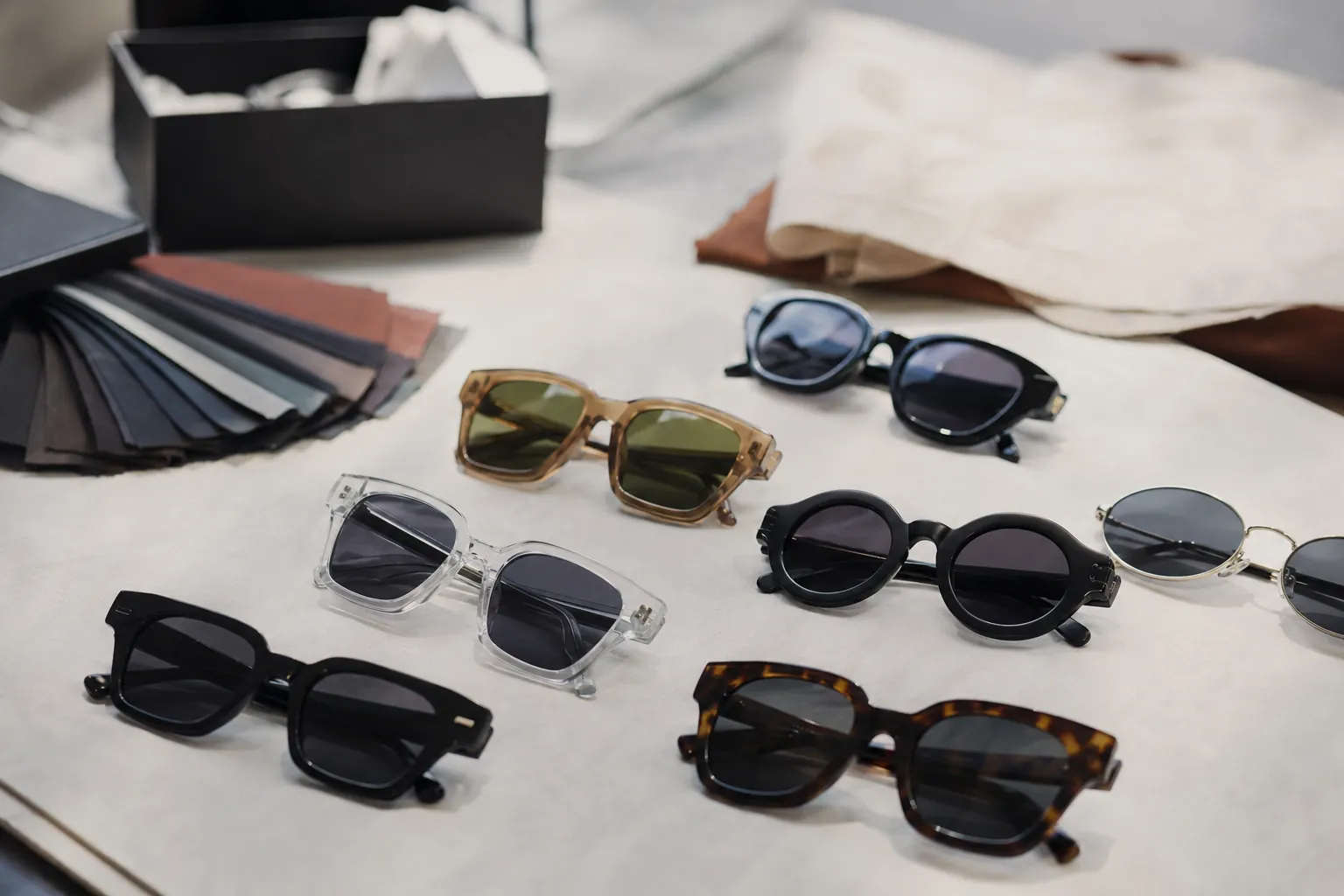
Deadstock and overrun sunglasses can help brands, importers, distributors, and retailers move faster when demand is uncertain or the selling window is short. The advantage is not only price. It is the chance to buy existing goods, test the market, and avoid new tooling before the business case is proven. The risk is also clear: surplus eyewear can vary in material, lens build, finish, packaging, documents, and market fit. Start with verification. What is in the lot, what standards it supports, what packaging is included, and whether it can be sold legally in the destination market.
What deadstock and overrun mean
Buyers often use deadstock, overrun, and surplus as if they were identical. They are related. They are not the same.
- Deadstock is finished or near-finished product that was made but never entered the intended sales channel. It may come from a cancelled order, a discontinued style, an unlaunched program, or stock held by a factory, trader, brand, or distributor.
- Overrun is extra quantity produced beyond the ordered amount. Factories may do this to cover yield loss, QC rejects, color variation, trim waste, or order tolerance.
- Surplus inventory is the broader bucket. It can include deadstock, overruns, cancelled orders, discontinued styles, packaging leftovers, mixed lots, or goods that need relabeling or repacking before sale.
For sunglasses, the first question is simple: are the goods sale-ready? A finished frame with lenses installed, clean hinges, correct warning labels, barcodes, and retail packaging is a different product from a frame set that still needs lenses, country-specific labeling, or carton work.
Surplus does not automatically mean poor quality. A factory may hold usable goods because a buyer changed the color, logo placement, lens tint, packaging, or delivery plan after production. Other lots are messier. Mixed. Incomplete. Old. Hard to document. The value comes from what can be verified, not from the surplus label itself.
That is the key difference from a new custom run. With deadstock or overrun sunglasses, the tooling decision and part of the production learning curve are already behind you. Your job is to confirm consistency, compliance, and channel fit.
Why buyers use surplus inventory
Surplus inventory is useful for speed, testing, and lower early commitment. That is the whole point.
Speed matters for seasonal windows, trade shows, promo drops, retail fills, marketplace tests, and short-term assortment gaps. If the goods are packed, documented, and ready, the process can be much shorter than a new custom order.
Testing matters because sunglasses demand changes by channel, region, price point, frame shape, lens color, and packaging. A controlled surplus buy lets a buyer measure sell-through before paying for a proprietary mold, custom finish, or full branded pack-out.
Cash control matters too. A custom program can require development, samples, artwork setup, packaging work, and production scheduling before any sale happens. Surplus can cut that exposure. It does not remove risk. It shifts it.
Channel fit matters. A fashion retailer may sell a one-off style quickly if it matches the season. A distributor or chain retailer usually needs repeatable supply, stable packaging, and consistent colorways. Surplus works best where continuity is not the main requirement.
Where the cost advantage comes from
The cost advantage is not automatic. It usually comes from work that another program already paid for.
In a custom eyewear run, the buyer may fund product development, samples, tooling decisions, color approval, logo setup, packaging setup, compliance review, and production scheduling. A surplus purchase can bypass some of that because the goods already exist. That lowers first-order cash need. It does not eliminate inspection, documentation review, relabeling, repacking, or freight planning.
| Option | Typical upfront cost | Typical lead time | Best use case | Main risk |
|---|---|---|---|---|
| Deadstock buyout | Low to moderate, depending on quantity, packaging, and inspection needs | Shorter than new production if the lot is packed, documented, and ready to ship | Fast launch, short seasonal drop, marketplace test, retail fill | Limited continuity, mixed condition, missing labels, or incomplete documentation |
| Overrun from an existing run | Often lower than a new custom start, if no rework is needed | Depends on whether goods are finished, inspected, and released | Short-term fill, small restock, or validation of a proven style | Quantity may be limited, and exact color, lens, or packaging may not repeat |
| New custom tooling or custom production | Higher, especially if new molds, custom colors, packaging, or approvals are required | Longer because sampling, approval, production, QC, and packing must be completed | Stable program, proprietary design, brand consistency, planned reorders | Development cost, approval delays, minimum order requirements, and demand risk |
For B2B buyers, unit price is only one line in the model. Add sampling, inspection, labeling, packaging correction, compliance review, freight, duties, storage, and the cost of slow-moving inventory. Then compare.
The rule is blunt: surplus is usually better for proof of demand or a short selling window. Custom production is usually better when the style must repeat, match a brand spec, or support replenishment.
What to inspect before you buy
Surplus sunglasses are only a good deal if the physical goods are under control. Photos alone are not enough. Ask for the actual lot, a sample review, and a clear list of what is included.
The minimum inspection set should cover material, dimensions, lenses, finish, hinges, decoration, packaging, and documents. If the seller cannot give basic details, the risk is higher. Full stop.
- Frame material: confirm whether the frame is acetate, injection-molded plastic, TR90, polycarbonate, stainless steel, alloy, or another stated material. Material affects weight, flex, durability, and perceived value.
- Lens type: confirm lens material and build, such as polycarbonate, TAC, CR-39, polarized, non-polarized, solid tint, gradient tint, or mirrored coating. The claim should match the sample.
- Dimensions: request lens width, bridge width, temple length, front width, frame height, and weight. Poor fit drives returns.
- Symmetry and alignment: check that the frame sits level, the temples open evenly, the lenses sit correctly in the rim, and the bridge is not twisted.
- Hinge and temple action: open and close the temples several times. Look for loose screws, uneven resistance, grinding, weak spring action, or misaligned end pieces.
- Decoration method: confirm whether the logo or mark is laser engraved, pad printed, hot stamped, embossed, applied as a metal plate, or only on the packaging. Check durability and placement.
- Packaging: verify pouch, case, box, insert card, warning label, barcode label, polybag, inner carton, outer carton, and carton markings. A good frame in the wrong pack-out still needs work.
- Surface finish: inspect polish marks, coating defects, dust inclusions, lens scratches, uneven plating, rough temple tips, sharp edges, and color variation.
For acetate frames, ask whether the bridge, rims, and temple tips were polished properly. For metal frames, inspect plating consistency, solder points, nose pads, screws, and hinge action. For TR90 or injection-molded frames, check warping, flex, surface marks, and fit after handling.
Ask for measured samples or a pre-shipment inspection report if the order value justifies it. A serious supplier should verify the actual lot condition, not just point to a catalog image or an old production photo.
Compliance is not optional
Sunglasses are not generic fashion goods. They must be fit for the destination market and supported by the right documents for the claims being made.
Common references include CE EN ISO 12312-1 for sunglasses sold in the European market, ANSI Z80.3 for non-prescription sunglasses in the United States, AS/NZS 1067 for Australia and New Zealand, and REACH substance compliance for the EU supply chain. Some suppliers also provide FDA registration, ISO 9001, or BSCI information. These are not interchangeable.
Keep the wording tight. CE EN ISO 12312-1, ANSI Z80.3, and AS/NZS 1067 relate to sunglass performance requirements. REACH relates to restricted substances in the EU. FDA registration is not a product performance test. ISO 9001 is a quality management system. BSCI is a social compliance audit. None of them replaces lot-specific product verification.
If a surplus lot is sold against a certificate or test report, match the document to the actual goods. Check the product description, frame material, lens category or tint, lens coating, model reference, test date, applicant or manufacturer, and any lot or batch identifier available. A report for one lens color does not automatically cover every variant in a mixed lot.
If the paperwork does not match the physical pair, treat the goods as unverified for that market until the issue is fixed. Older stock and relabeled stock need extra caution. So do mixed cartons and inventory moving through traders instead of the original manufacturer.
How surplus compares with a custom run
The choice between surplus and custom production comes down to demand certainty, brand control, and product life.
Surplus is strongest when you need a limited quantity quickly, want to test a shape, or need to fill a short sales window. It can also help you compare several silhouettes before committing to a custom program.
Custom production is stronger when the product must support repeat orders, exclusive design, consistent branding, defined packaging, controlled lens colors, specific fit requirements, or long-term channel commitments. You get more control. You also carry more responsibility.
Use this rule:
- Buy surplus if you need market proof, faster stock availability, or a short-term seasonal fill.
- Order custom if the style must repeat, the brand needs exclusivity, or the channel requires stable replenishment.
- Use both if you want to launch with existing stock, gather sales data, and then turn the best-performing elements into a controlled custom program.
If a deadstock or overrun style performs well, use the sales data and customer feedback to write the custom brief: frame material, lens tint, fit measurements, temple length, logo location, packaging format, barcode needs, compliance documents, carton count, and target landed cost.
That is the real value of surplus. It is not just a cheap buy. It is a test with evidence.
How a practical buying workflow should look
Surplus should move faster than a full custom program, but it should not be bought on impulse. A disciplined process protects margin and cuts avoidable returns.
- Request current photos or video of the actual lot, including front, side, hinge, lens, logo, packaging, labels, and cartons.
- Ask for the quantity available by style, color, lens type, and packaging format.
- Confirm frame material, lens construction, dimensions, decoration method, and included accessories.
- Request compliance documents tied as closely as possible to the actual goods.
- Order samples or arrange inspection before committing to the full lot.
- Check fit, hinge action, lens alignment, surface finish, logo quality, and packaging condition.
- Confirm whether relabeling, repacking, barcode work, warning label updates, or carton corrections are required.
- Lock the commercial terms, approved sample reference, packing list, shipping marks, and payment terms before the lot is released.
Ask one question on the factory side: did the stock come from one run or multiple batches? Mixed lots can still work, but the buyer needs to know whether color, lens tint, hinge tension, logo placement, and packaging are consistent across the quantity.
Do a real inspection. Open and close the temples. Check that both lenses sit flush. Look at the frame from the front and top. Use light to find scratches. Compare units from different cartons. Small defects matter in eyewear. Customers notice.
Keep the sample-to-shipment path clean. The approved sample should represent the lot. The packing list should match the goods. The commercial invoice should describe the product accurately. That is the line between a controlled inventory purchase and a blind clearance buy.
What surplus cannot solve
Surplus inventory is useful, but it has limits. It cannot guarantee repeat supply, exclusive design rights, stable future colorways, or long-term packaging continuity. It also cannot make a weak market fit strong.
That matters for distributors and retailers. A one-time buy can fill a shelf or test a category. If the style sells through, you still need a follow-on plan. Without one, the first win becomes a replenishment problem.
If the product is meant to live beyond one purchase, custom production usually gives the better structure. You can control material, fit, lens tint, logo placement, packaging, carton configuration, compliance documents, and reorder planning. You can also refine the spec based on what the surplus test taught you.
Use surplus for speed and proof. Use custom production for control and repeatability. Keep that line clear, and the buying decision gets easier.
Have a custom sunglasses project in mind?
Send us your styles, target market and quantities and we will return a detailed quote with MOQ, lead time and a sample plan.
Get a QuoteWhy source this from Wenzhou with LumiShades
Wenzhou in Zhejiang Province is widely regarded as China’s eyewear manufacturing capital, producing a large share of the world’s sunglasses. That concentration matters to buyers: a deep local supply chain for acetate sheet, hinges, lens blanks, plating and packaging means shorter component lead times, easier color and material matching, and a workforce with decades of eyewear-specific skill. LumiShades has manufactured in this ecosystem since 2009, and our vertical integration — in-house injection molding, acetate cutting, CNC milling, lens tinting, decoration and quality control — means no part of your order is quietly subcontracted to a workshop you cannot audit.
For international buyers, that vertical control translates into accountability. When a single factory owns every step, defects are traced and fixed at source rather than bounced between vendors, and your specifications survive intact from first sample to bulk. We back this with 15+ years of experience, shipments to 60+ countries, more than 5 million pairs produced per year and a 98.5% on-time delivery rate. Our certifications — CE EN ISO 12312-1, FDA registration, ANSI Z80.3, AS/NZS 1067, REACH, ISO 9001 and BSCI audit — mean the compliance documentation your market requires already exists. Explore our manufacturing capabilities and quality control process to see how this works in practice.
Frequently asked questions
How do I know if surplus sunglasses are compliant for my market? Ask which standard applies to your destination market and request supporting documents tied to the actual product. For the EU, check CE EN ISO 12312-1 and REACH where relevant. For the United States, ask about ANSI Z80.3 for non-prescription sunglasses and clarify any FDA registration statement. For Australia and New Zealand, check AS/NZS 1067. Match the report to the frame, lens type, tint or coating, model reference, and lot information where available. If the paperwork is generic or does not match the physical pair, treat the lot as unverified until corrected.
Is deadstock cheaper than a custom order? It can be cheaper on first-order cash because the goods already exist and may not require new molds, sampling, or packaging development. It is not automatically cheaper after inspection, relabeling, repacking, compliance review, freight, duties, and slow-moving inventory are included. Deadstock is usually the better fit when you need speed or demand testing. Custom is usually the better fit when you need repeat supply, exclusive branding, controlled specifications, and stable replenishment.
What details matter most when checking a surplus lot? Start with frame material, lens construction, dimensions, hinge quality, lens alignment, surface finish, logo method, packaging, and compliance documents. Ask for photos or video of the actual lot, not only catalog images. Review samples from the cartons that will ship, check several units for consistency, and confirm whether the lot is one batch or mixed inventory. The most common buyer problems come from mismatched paperwork, inconsistent packaging, weak hinges, scratched lenses, poor fit, and undocumented lens claims.
Can I add my own logo to overrun stock? Sometimes, but only after checking the surface and decoration method. Finished temples, lenses, cases, or boxes may accept laser engraving, pad printing, hot stamping, a metal logo plate, sticker labeling, or packaging-only branding. The safe option depends on the frame material, coating, available logo area, existing marks, and whether decoration will damage the finished goods. Ask for a decorated sample before approving the lot.
What documents should I request before buying deadstock sunglasses? Request a specification sheet, current lot photos or video, packing details, available quantity by style and color, sample approval record, compliance documents, and a draft packing list. For compliance, ask for CE EN ISO 12312-1, ANSI Z80.3, AS/NZS 1067, REACH, FDA registration, ISO 9001, or BSCI only where those documents are relevant and actually available. Check that product descriptions, lens details, and model references match the goods being shipped.
When should I move from surplus to a custom program? Move to custom when sales are repeatable and you need control over frame material, fit, lens tint, color, logo placement, packaging, documentation, and replenishment. Use the surplus sale as evidence: which shapes sold, which price points worked, which returns occurred, and what customers said about fit or finish. That information should become the custom brief for the next production run.
Ready to start?
Explore our wayfarer sunglasses or request a quote — our sales team replies within 12 hours.
Request a Quote